
When to Visit Southeast Asia: A Photographer's Monthly Guide
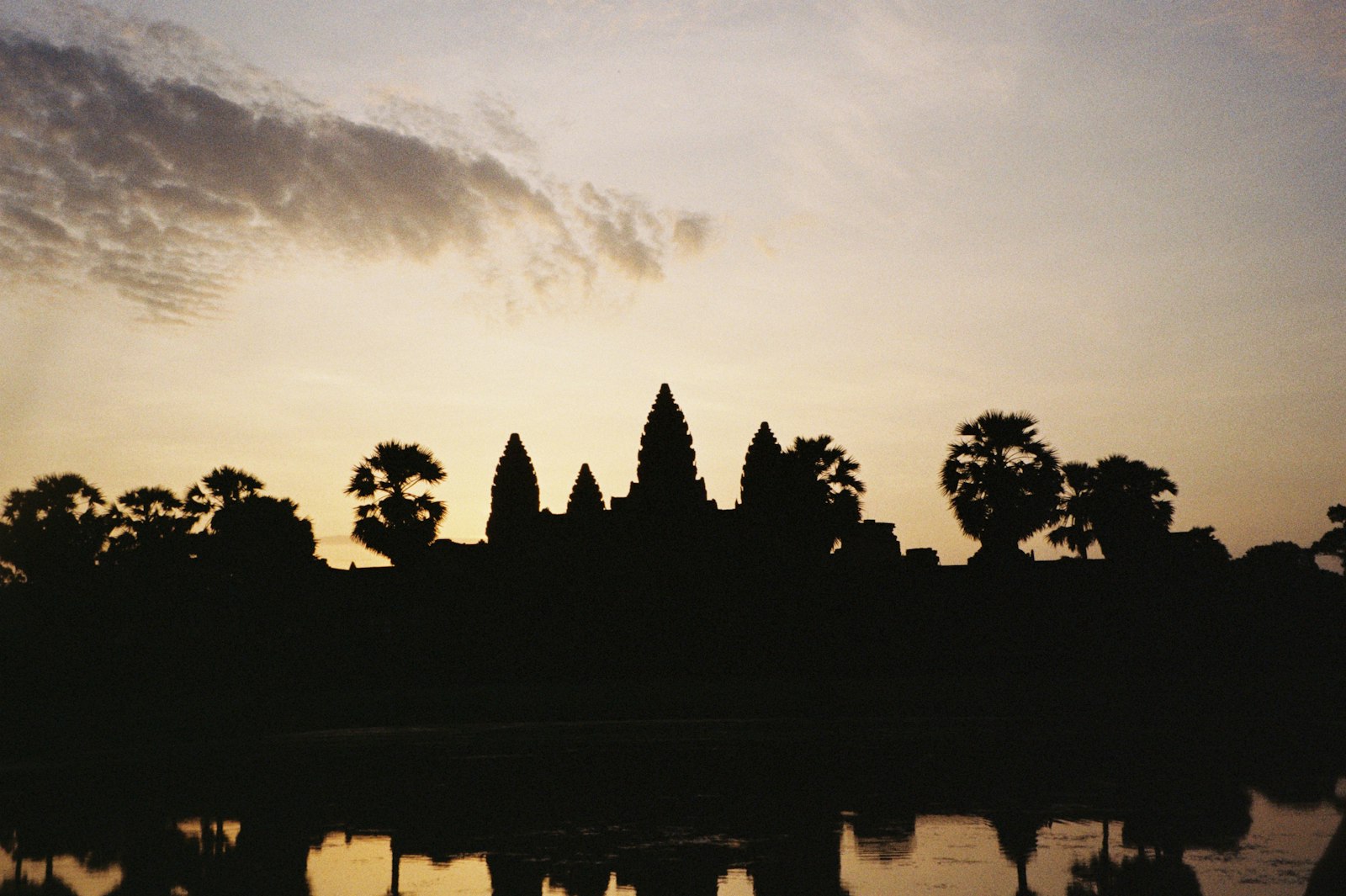
At five-fifty in the morning in late December, the air at the northern reflecting pond at Angkor Wat is twenty-three degrees and almost dry. There is no haze yet — burning season hasn't started. A film of mist sits on the lily pads. The sandstone of the five central towers is still grey-blue, holding the previous night's cool; in twenty minutes it will be the colour of weak tea. The sky behind the towers is the green-tinted indigo of a sky about to be wrong-footed by the sun.
This is the answer most people are searching for when they type best month to visit Southeast Asia into a phone at midnight. The dry, cool dawn over a mainland temple. The postcard. And it isn't wrong — late December into early February is the postcard window, and the searcher's instinct toward it is sound. It is also not the whole answer, and the whole answer is more interesting.
Because Southeast Asia is not one weather system. It is two. They run on different clocks, in opposite directions, and the trip you are about to take depends almost entirely on which one you understand you are walking into.
The honest answer: there is no single best month — SEA has two weather systems, not one
The mainland — Thailand, Vietnam, Cambodia, Laos, Myanmar — runs on a northeast-monsoon clock. Cool, dry winds push down from the Asian landmass roughly November through February; the heat builds through March, April, and May; then the southwest monsoon arrives in late May or June and the sky stays wet through September. October is the negotiation.
The maritime south — Bali, Lombok, Java, the southern Philippines, parts of peninsular Malaysia and Singapore — runs on the inverse. Their dry season is roughly April to October, peaking June through August. Their wet season is November through March: exactly the months a traveler is being told are "best for Southeast Asia" by every airline newsletter.
The mainland's postcard months are the maritime south's monsoon. The maritime south's clearest skies are the mainland's wettest weeks. There is no single right answer because the question itself contains two countries pretending to be one.
This is why "best month to visit Vietnam and Cambodia" is a tidy question and "best month for Vietnam and Bali" is a trap. A two-week sweep that includes both mainland temples and maritime beaches is, on some level, a sweep that includes both weather systems. You will be wet somewhere. The trick is choosing where.
The map: mainland (TH, VN, KH, LA, MM) vs. maritime (ID, PH, MY, SG) monsoon patterns
The cleanest way to plan is to picture a horizontal line drawn just below Bangkok. North of that line — the mainland — is a continental climate with two distinct seasons. South of it — peninsular Malaysia, Singapore, Indonesia, the Philippines — is an equatorial climate with more rain year-round but a definite dry-season window that runs opposite to the mainland's.
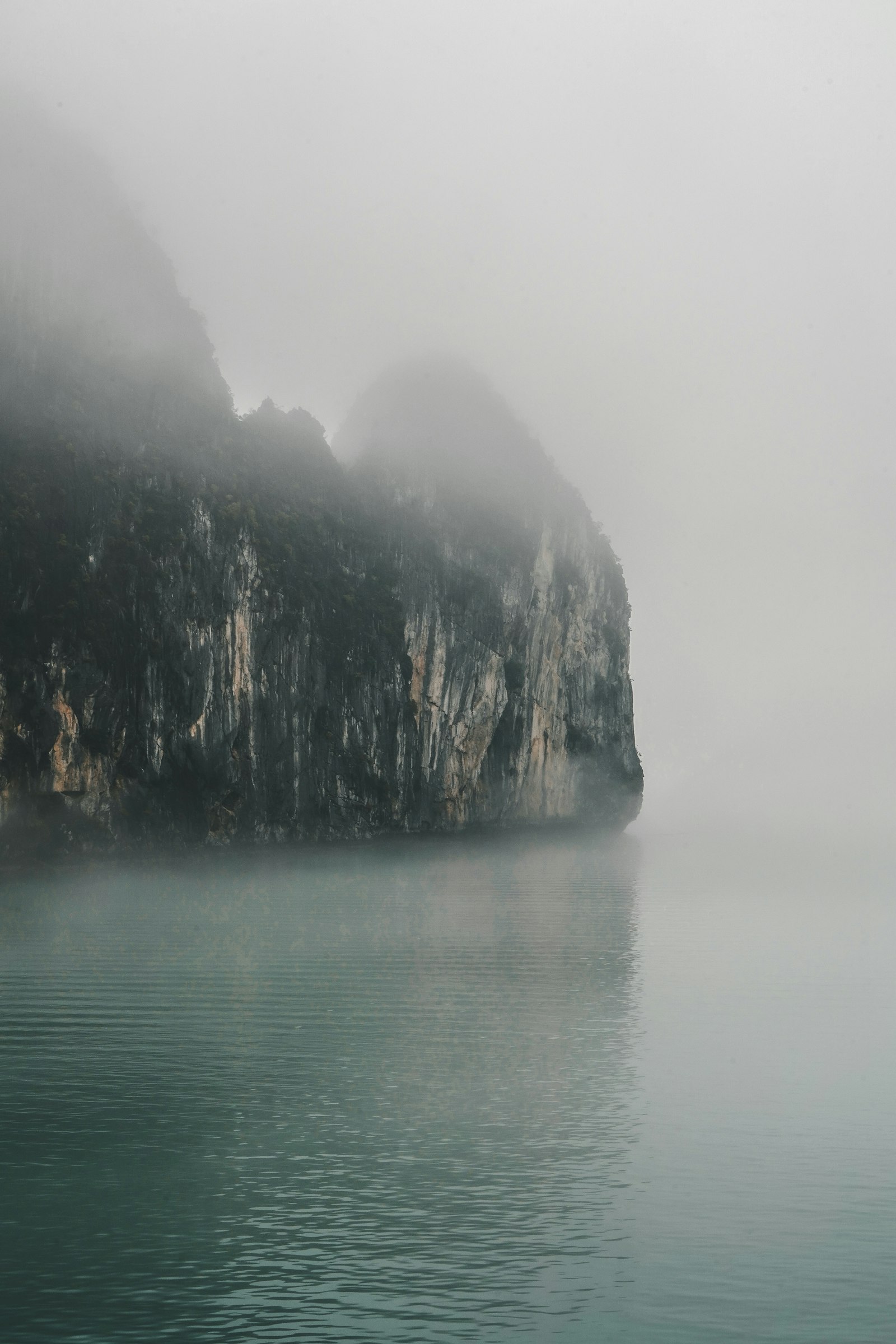
There are two important caveats to this map. The first: Vietnam is long. The country reaches from the latitude of Bangkok in the south to nearly the latitude of Hong Kong in the north, which means Saigon and Hanoi don't experience the same year. Saigon has a tidy April-to-October wet season, Mediterranean in its predictability. Hanoi has a cold, drizzly January and a brutal humid July. Hoi An and Da Nang, in the middle, catch the central-coast typhoon season from September to November — which is precisely when the rest of the mainland is drying out.
The second: peninsular Malaysia is two coasts. The east coast (Perhentian, Tioman, Redang) closes for the northeast monsoon roughly November through February. The west coast (Penang, Langkawi) is open through those same months and frequently at its best. Singapore sits below it all, a degree off the equator, with no real dry season — only a slightly wetter November-to-January window.
If you remember nothing else, remember this: the further south you go, the more your calendar inverts. Bali's worst weeks are mainland Thailand's finest. Plan accordingly.
December–February: the postcard window
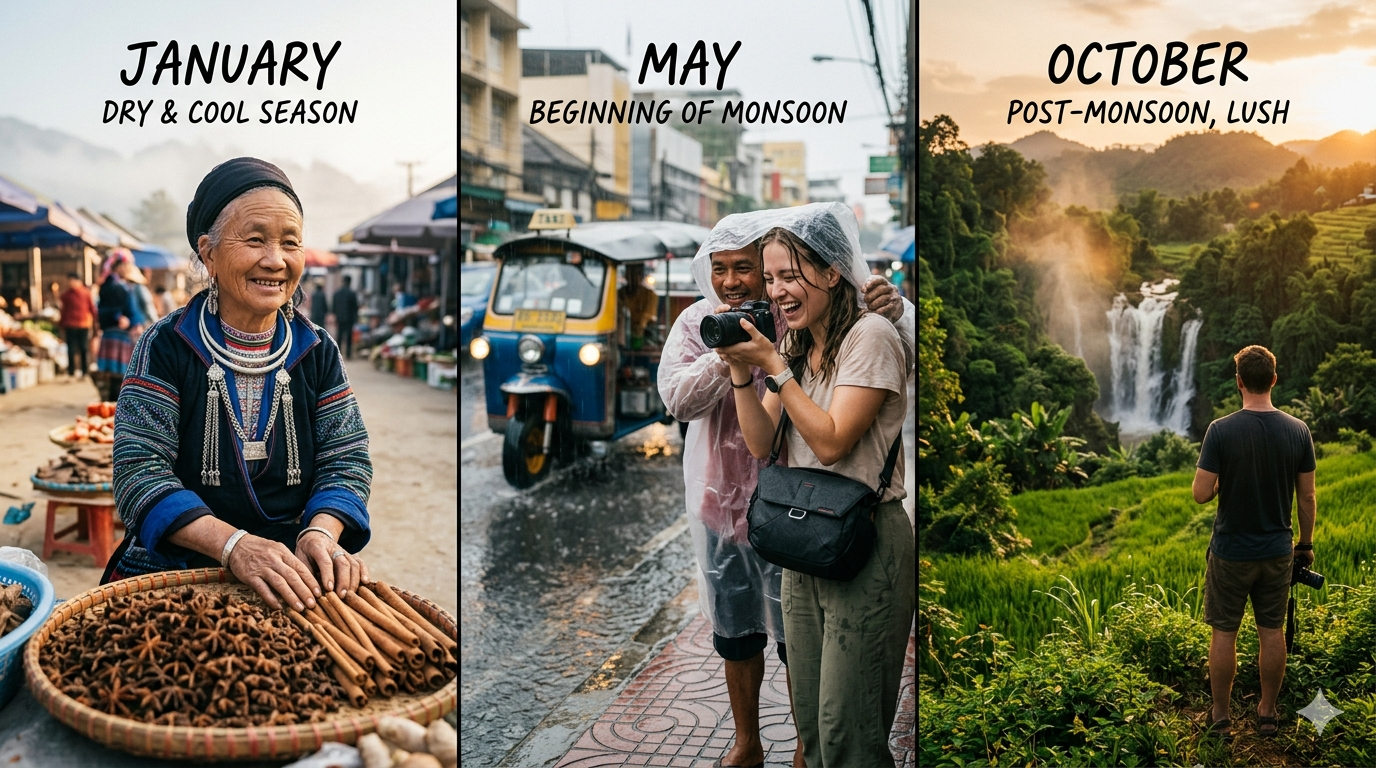
This is the answer most people want. Mainland Southeast Asia in late December and January is at its best — daytime temperatures in the high twenties Celsius, nights cool enough for a linen jacket in the highlands, almost no rain, and the dry-season light that makes sandstone and laterite glow at low sun angles. Sunrise at Angkor in late December is around 6:23am; the temples open at 5:00; the reflecting pond is, yes, crowded — but the light is real, and it earns the crowd.
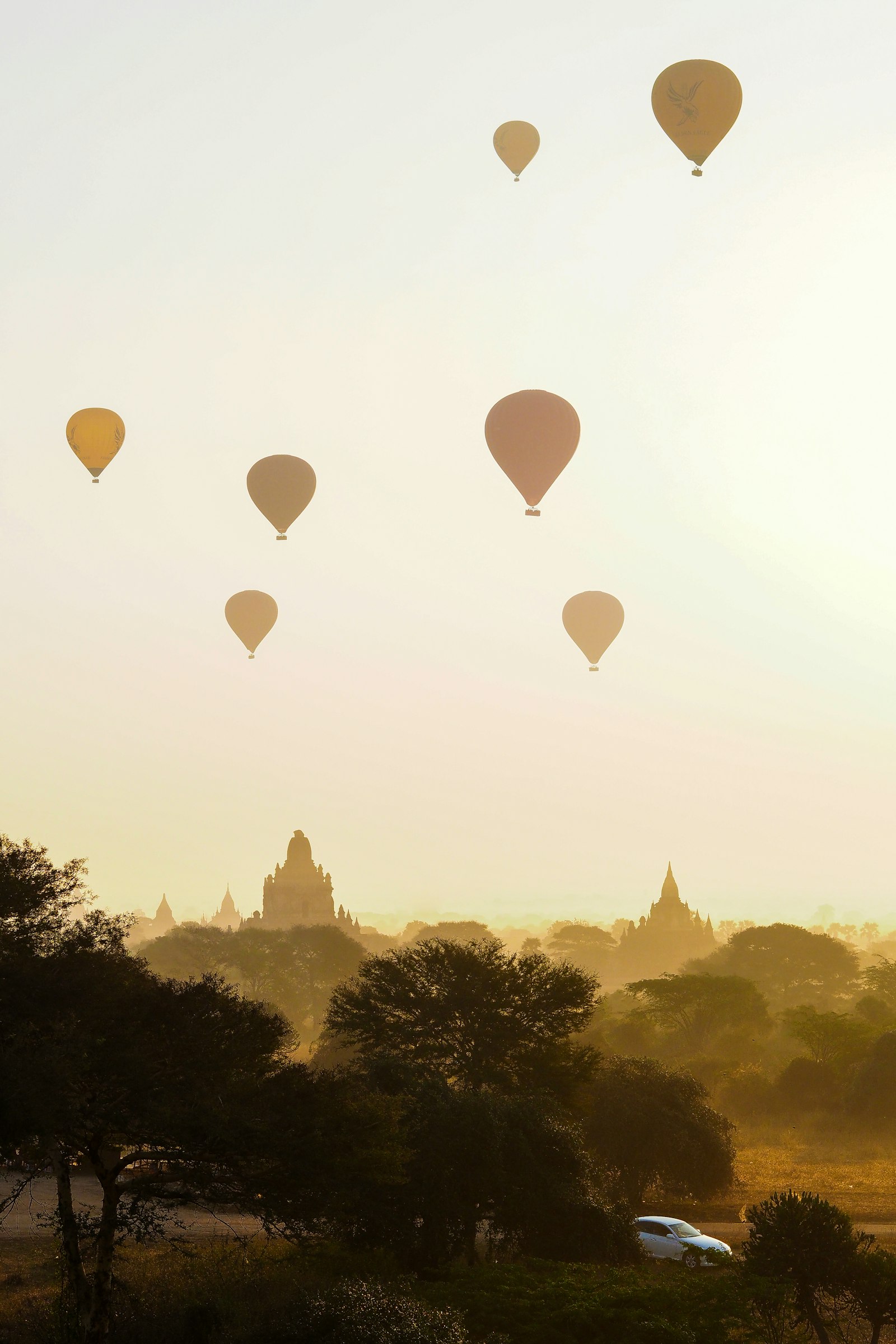
Bagan in January is the same proposition with a slightly different palette: drier, dustier, hotter by mid-afternoon, but the dawn ascent of the hot-air balloons over the temple plain is one of the few travel clichés that genuinely repays the trip. Luang Prabang in January wakes up in a layer of river fog that doesn't lift until eight. Sapa and Mù Cang Chải are sharply cold, occasionally below five degrees, and the rice paddies are bare brown after harvest — beautiful in a stark, contour-only kind of way, not the green-velvet way Instagram has trained you to expect.
What you pay for this window is the price tag. Flights into Bangkok, Hanoi, and Phnom Penh between mid-December and the Chinese New Year holiday — which in 2026 falls on 17 February (Tet, the Vietnamese Lunar New Year, runs 14–22 February) — are at their peak. Hotels in Hoi An, Siem Reap, and Luang Prabang sell out months ahead. Tet itself is a complicated time to be in Vietnam: deeply atmospheric in cities like Hanoi and Hoi An if you stay put, frustrating if you'd planned to move because half the country is closed.
Late December into early February is the answer the search engine gives you. It is not wrong. It is just expensive, crowded, and — by 11am — already too bright for the photographs that made you want to come.
Avoid the maritime south in this window if your priority is sea and sky. Bali in December and January is in full wet season — humid, with afternoon thunderstorms that arrive on schedule and leave the rice terraces a vivid, almost neon green, but the surf is blown out and the beaches are not what the brochure promised. The exception is the southern Philippines and the west coast of Malaysia, both of which are at or near their best.
March–May: the heat
By mid-March, the mainland is dry to the point of dust. Burning season is in full swing across northern Thailand, Laos, and Myanmar — agricultural land is set alight to clear fields, and the air quality in Chiang Mai, Luang Prabang, and Pai becomes genuinely poor through late March and most of April. Sunsets turn an alarming orange that has nothing to do with romance. If you have a respiratory condition, do not book the north of mainland SEA for these weeks. This is not a soft warning.
The lowlands compensate with heat. Phnom Penh, Vientiane, and Bangkok all push into the high thirties by April; Sukhothai and Ayutthaya can touch forty in early May. The light at midday is a flat white that bleaches colour out of everything; the only photographs worth taking are at six in the morning and seven at night, and even then you are working in low golden light through a layer of haze.
And then, in the middle of all this heat, comes the most important festival in the mainland calendar.
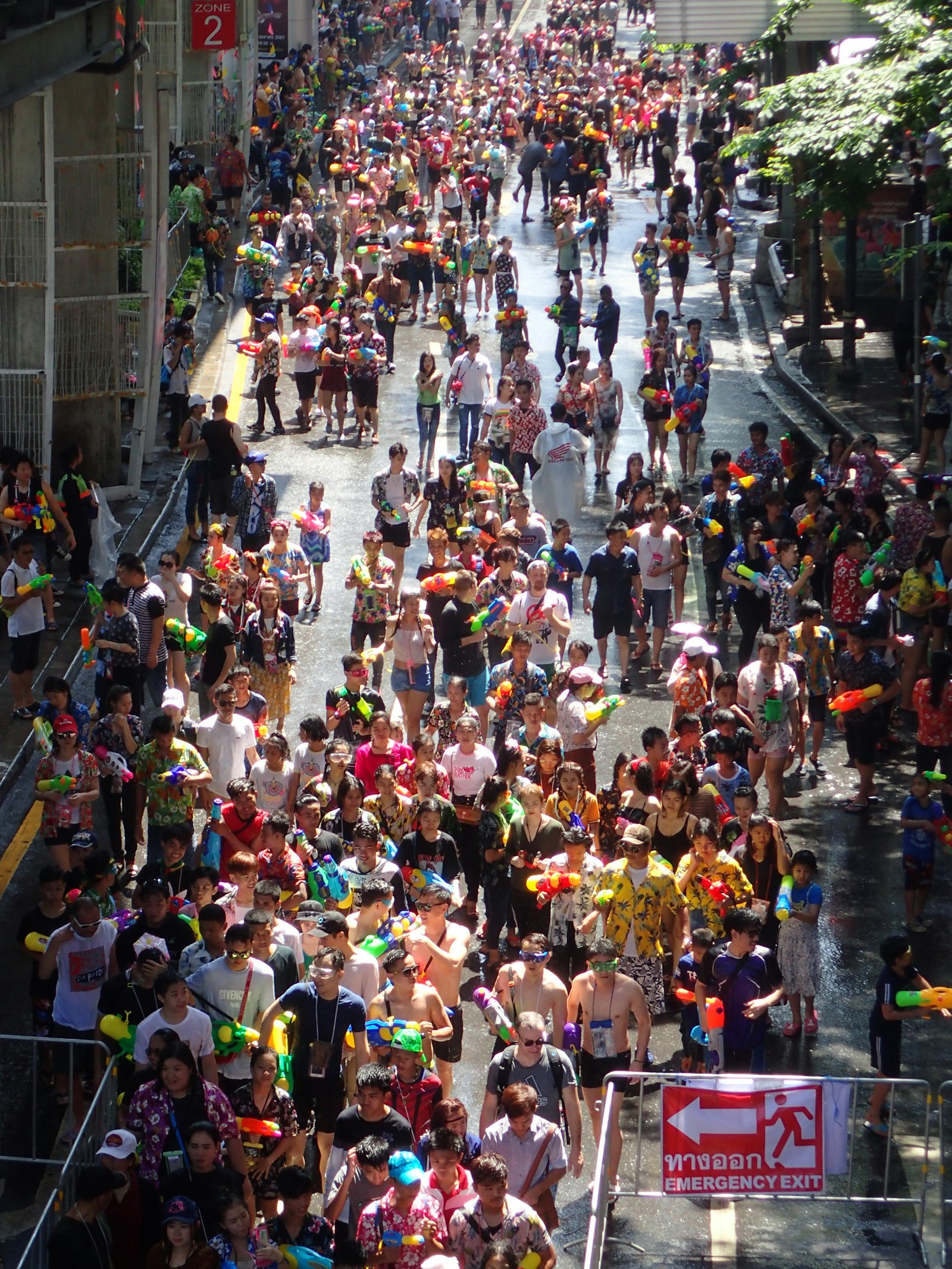
Songkran in Thailand, Boun Pi Mai in Laos, and Chaul Chnam Thmey in Cambodia all fall on 13–15 April 2026. Three days, fixed by solar reckoning rather than lunar, when the entire mainland stops moving and pours water on itself. In Chiang Mai it is a city-wide water battle, sustained from breakfast to bedtime. In Luang Prabang it is quieter, processional, more obviously Buddhist. In a small Khmer village near Battambang it might be three children with a hose and a grandmother laughing on a plastic chair. Treat the festival with the respect it deserves — water from Buddhist temples is being used to bless statues and elders before it ends up in the street fight — and the heat becomes the point rather than the obstacle.
The savvy compromise in this window is to skip the burning north and run the coast. Koh Lanta, Krabi, and the Andaman side of Thailand are calm, hot, and at their flat-sea best. The Mekong Delta is unbearable by midday but lovely at dawn. And — here is the swing — the maritime south is just starting its dry season. April in Bali is the beginning of the good months.
June–August: the maritime sweet spot
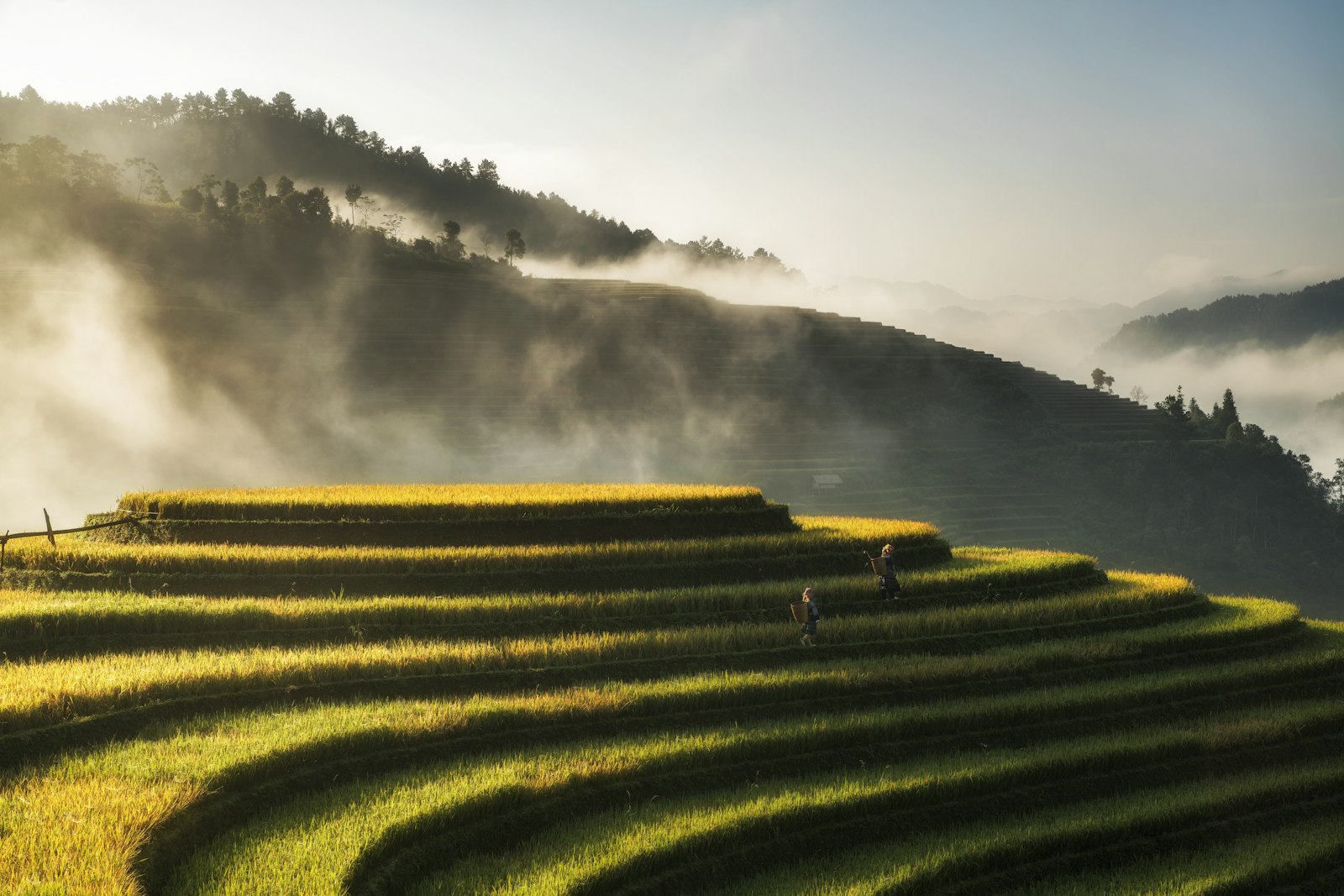
This is when the calendar flips. The southwest monsoon hits the mainland in late May or early June, and from June through August Bangkok, Vientiane, Phnom Penh, and Hanoi are in their wet season — not unrelentingly so, but reliably so. Rain comes in short, theatrical afternoon bursts; the sky clears by dusk; the rice paddies of Mù Cang Chải and Hà Giang go through their most photographed phase, an electric green that no dry-season picture can match. If you don't mind being wet for two hours of every afternoon, mainland SEA in July is cheaper, emptier, and in many ways more interesting than it is in January.
But the real story in June, July, and August is south of the equator.
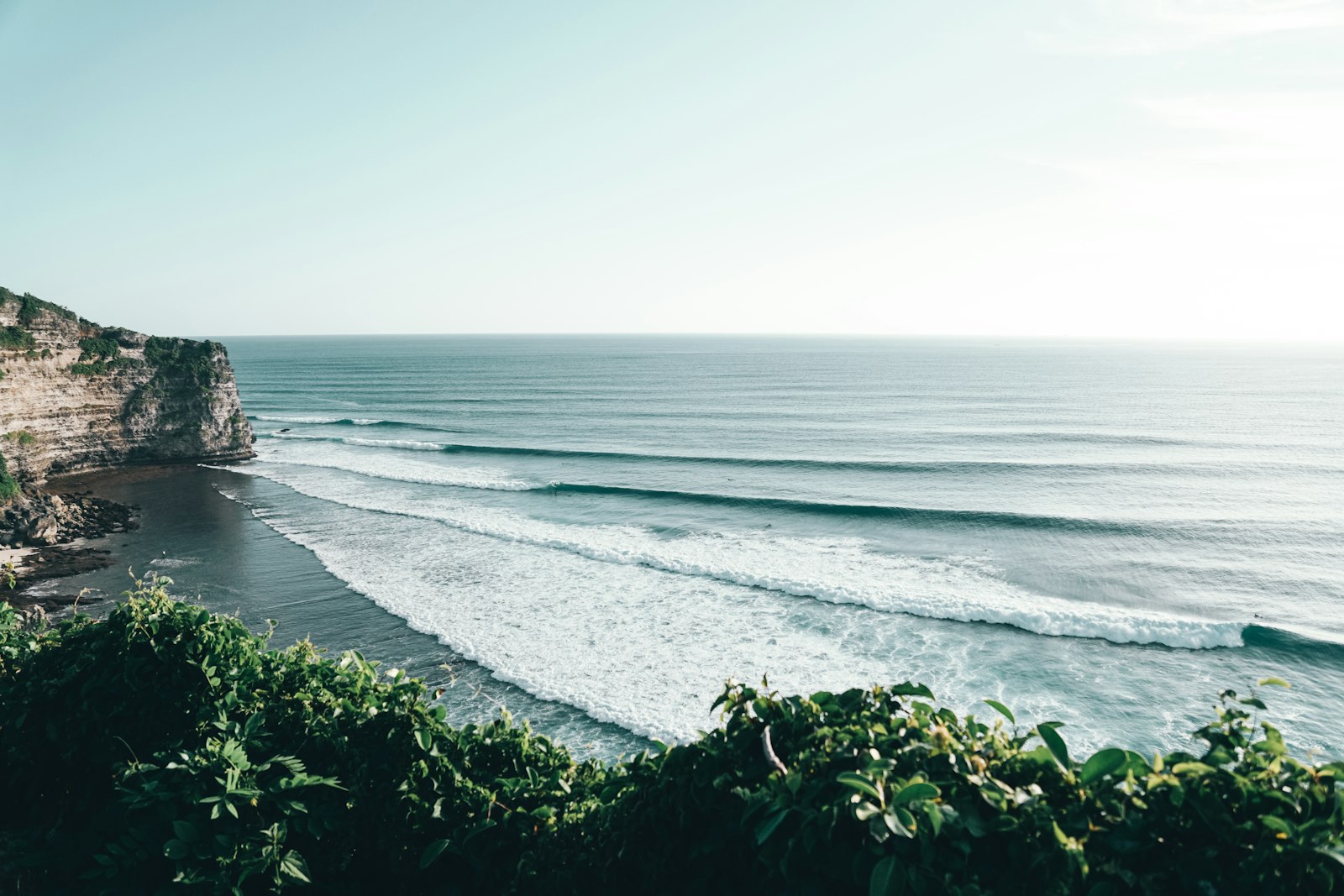
Bali, Lombok, Flores, and Komodo are at their peak. June brings consistent four-to-eight-foot swells to the Bukit peninsula; Uluwatu, Padang Padang, and Impossibles are firing with offshore southeast trade winds shaping the wave faces clean. The diving on the Komodo crossings is at its visibility ceiling — twenty-five metres on a good day. The Gili islands look the way they're supposed to: turquoise water against white sand against a flat blue sky, not a generic teal but the green-tinted colour of light filtered through coral sand. Sumba, still relatively quiet, is dry-grassland gold.
The southern and central Philippines — Palawan, Cebu, Bohol, Siargao — are in the same window for similar reasons, though slightly more humid. Singapore and Kuala Lumpur are warm and humid year-round but reliably non-rainy in this stretch. Java's volcanoes (Bromo, Ijen) are at their cleanest sightline conditions for sunrise hikes.
June in Bali is the only month I'd ask a beach to defend itself against the rest of my year. It does — quietly, predictably, with that specific copper-green water and the offshore winds you can hear in the palms before you can feel them.
What you trade for this is European-summer crowd density in Bali and Phuket. Shoulder this with a week somewhere quieter — Sumba, southern Cebu, the less-developed end of Lombok — and you have a trip that doesn't feel like a queue.
September–November: the gamble
This is the most interesting window, and the most misunderstood. The mainland's southwest monsoon retreats from north to south through September, October, and into early November. Late October — roughly the third week — is when the monsoon trough finally clears the central Vietnamese coast, the burning haze hasn't yet started, the dry-season crowds haven't yet arrived, and prices haven't yet spiked. There is, in any given year, a savvy two-week window in late October and early November where the mainland is at its quiet best.
The catch — and 2025 made this catch very clear — is typhoon season. The Western Pacific typhoon season runs roughly June to November, with peak intensity from August through October. Storms form east of the Philippines, travel west across Luzon and the Visayas, and frequently make second landfall on central Vietnam. 2025 was a notably bad year: Typhoon Kalmaegi in late October and early November caused severe flooding across the Philippines, Vietnam, and Thailand; Fung-wong followed almost immediately. Climate attribution studies from Imperial College in London estimated that climate change increased the economic damages of Fung-wong by 42% and Kalmaegi by 9%, and the overall trend is toward more storms travelling further south — into the central Philippines and Vietnam — rather than recurving toward Japan.
This is not a season to write off. It is a season to plan with a buffer. Don't book non-refundable hotels on a coast in early October. Don't fly into Manila during the height of typhoon activity on a tight connection. If the typhoon track is clean, late October in Hoi An is one of the loveliest weeks Southeast Asia offers — soft post-monsoon light, the river still high but no longer brown, the lanterns lit and the streets emptier than they will be six weeks later.
Maritime SEA is in its shoulder in this window. Bali begins to soften by October; surf size drops; afternoon showers return by mid-November. The Philippines is at its riskiest in October; by late November the country has reset to its postcard months again.
Country-pair guidance: the trip you're actually planning
Vietnam + Cambodia — the most-searched pair. The clean answer is mid-November through February. Hanoi is cool, Hoi An is dry and lantern-lit, Saigon and Phnom Penh are warm but not heavy, Angkor is at its dry-season best. Avoid August and September when central Vietnam catches the late-monsoon swell.
Vietnam + Thailand — same window, December through February, with the same caveats. If you must travel in May or June, do the south of both (Saigon + the Mekong + the southern Thai islands) rather than the north of either.
Cambodia + Laos — December through February, with a slight preference for January over December for crowd reasons. Luang Prabang in late January and Angkor in early February is a near-perfect ten days, weather-wise.
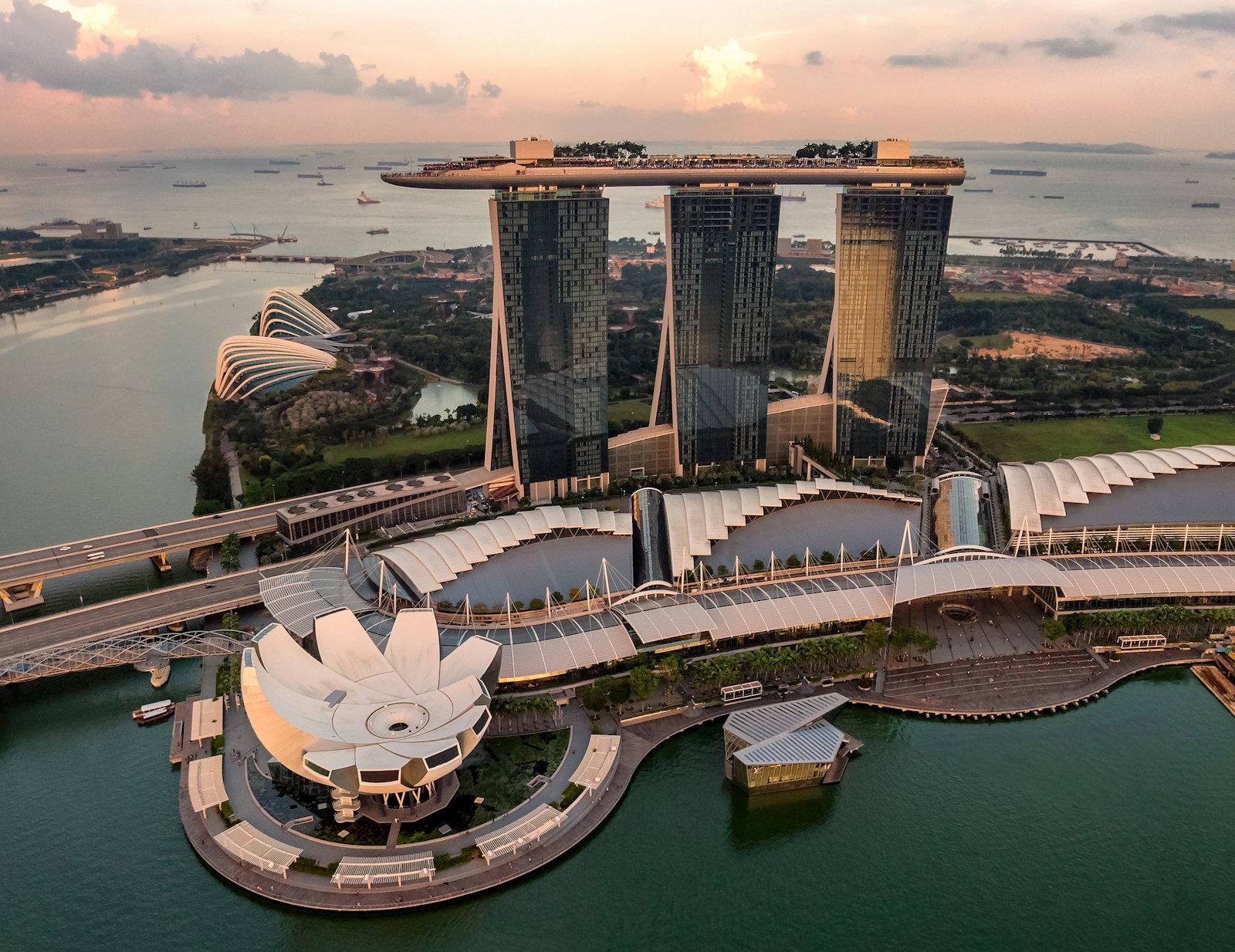
Malaysia + Singapore — this pair runs on its own clock. February through April is the cleanest stretch — Singapore at its driest, west-coast Malaysia (Penang, Langkawi, KL) reliable, the east-coast monsoon finished. Avoid November and December for the east coast, when many resorts simply close.
Indonesia + Timor-Leste — May through September, peak June to August. Both countries share the maritime dry season. Komodo and East Timor are at their best in July and August.
Three-country sweeps (e.g., TH + KH + VN, or VN + LA + KH) — you have one viable window: mid-December through mid-February. Outside that, you will be making weather compromises somewhere on the route. Accept this rather than fight it; the compromise can be the most interesting part of the trip, but pretend otherwise and you will be disappointed.
Maritime + mainland sweep (e.g., TH + Bali, or VN + Bali) — there is no clean answer. The least-bad windows are late April through early May (mainland's last dry weeks, Bali's first dry weeks) and late September through early October (mainland drying out, Bali still firmly dry). Both come with risk on one side or the other.
The festival calendar that's worth re-timing your trip for
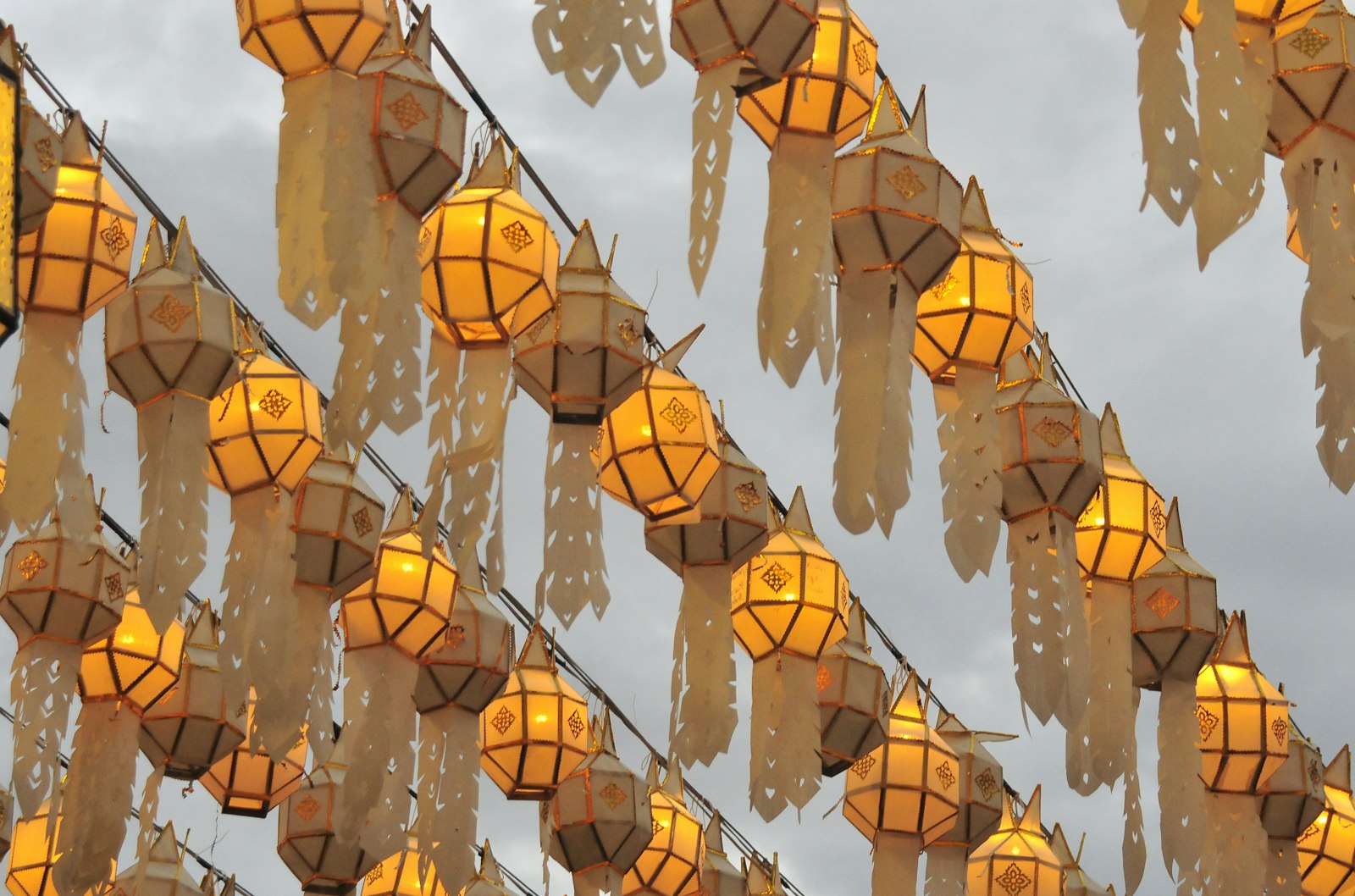
A trip booked around weather is a trip booked correctly. A trip booked around a festival is a trip booked memorably. These are the dates worth bending an itinerary around.
Tet — Vietnamese Lunar New Year — 17 February 2026 (holiday period 14–22 February). The country slows, families gather, peach blossoms appear in Hanoi and yellow apricot in Hoi An. Stay in one city; don't try to move during the holiday week. Hanoi's old quarter in the days leading up to Tet is one of the great walks in Asia.
Songkran / Boun Pi Mai / Chaul Chnam Thmey — 13–15 April 2026. Mainland New Year. The water festival is in Thailand at its loudest and in Laos at its most beautiful. Plan three days in one city, not a transit day.
Vesak (Visakha Bucha) — 31 May 2026 in Thailand (the date varies by country and by lunar reckoning; Sri Lanka observes earlier, on a different full moon). The most important Buddhist day of the year. Temples are at their most active; candle processions at dusk in places like Sukhothai and Borobudur are quiet, slow, and worth the seat on the late train.
Galungan — 17 June 2026 in Bali, with Kuningan ten days later on 27 June. The Pawukon calendar's 210-day cycle means Galungan rotates against the Gregorian calendar every year; in 2026 it falls beautifully inside the dry-season peak. Bamboo penjor poles arch over every village road. This is the week Bali looks the way it looks in the books.
Loi Krathong / Yi Peng — November 2026. Loi Krathong is set by the full moon of the twelfth Thai lunar month, which in recent years has fallen in early-to-mid November; Chiang Mai's Yi Peng lantern release runs concurrently and is the visual centerpiece. (As of writing, the 2026 date had not yet been confirmed by Thai authorities — check closer to October.) The image of ten thousand paper lanterns rising at once over a Lanna temple is, for once, a cliché that exceeds its photograph.
You can read every climate chart for Southeast Asia and still miss the thing the charts cannot show: that the region's seasons are not interruptions to travel but the substance of it. The dry-season light over Angkor is one kind of trip. The monsoon's afternoon thunderstorms in Hanoi, the wet streets reflecting neon at 7pm, the smell of warm asphalt and frangipani — that is another kind of trip, and not a lesser one. The maritime dry season's offshore wind on a Bukit cliff at dusk is a third.
The right month, in the end, isn't a single month. It is the one whose particular light you came to see. Choose that — the light, not the destination — and the calendar will sort itself.
Sources:
Italian travel photographer-writer. Architecture, landscape, the light. Slow, deliberate, image-led essays.
✦ More from Marco Rossi


✦ Keep reading
More from this region


More in Activities
✦ Discussion
Start the discussion
No replies yet — yours could be the first.