
Vietnam Belly, Bali Belly: a food critic's guide to not getting sick
The first time I got flattened by Southeast Asia, it wasn't at a street stall. It was at a four-star hotel buffet in Ubud, eating a fruit plate. Pre-cut, room temperature, sitting under a sneeze guard since breakfast. Twenty hours later I was crawling between bed and bathroom convinced I'd been poisoned by a warung. I had not. I had been poisoned by a buffet.
I tell this story to every food writer I train through Southeast Asia, because it explains the whole game. Bali Belly and Vietnam Belly and Cambodia Belly aren't really about the country. They're about three specific failure modes that exist everywhere in the region, including in places designed to feel safe. Once you understand the failure modes, you can eat the bún chả on a plastic stool with confidence and skip the resort buffet with regret.
This is a guide for travelers who want to actually eat the food. Which, in this part of the world, is the only sensible plan.
The premise — it isn't "the country," it's three failure modes
"Bali Belly" sounds like a regional phenomenon. It isn't. It's enterotoxigenic E. coli, Campylobacter, Salmonella, the occasional Shigella — and very occasionally a virus or parasite. Roughly 80–90% of traveler's diarrhea is bacterial, and the bacteria don't care which country they're in. They care about temperature, water, and time.
That means a warung in Seminyak and a hawker stall in George Town and a com tam cart in Saigon are all running the same risk calculus. The relevant question isn't which country am I in but which of the three vectors does this specific plate of food expose me to. The vectors are:
Water and the things washed in it. Tap water in most of Southeast Asia is not potable. Anything washed in tap water and eaten unwashed — raw greens, pre-cut fruit, salad garnishes — carries whatever's in the water. Ice made from tap water is the same problem.
Uncovered protein at ambient temperature. Cooked meat, fish or seafood that's been sitting out in a 30-degree kitchen since lunch service. The original cooking killed the bacteria. The four hours on the counter let new ones colonize.
The tourist-restaurant cross-contamination paradox. A quiet sit-down place that turns over slowly, with a tired prep cook, with a chopping board that did raw chicken at 11am and a Caprese salad at 2pm. The high-velocity stall doesn't have this problem because nothing sits.
The rest of this piece is, essentially, how to read a meal for those three vectors.
The three actual risk vectors — water, ambient protein, and the slow-restaurant paradox
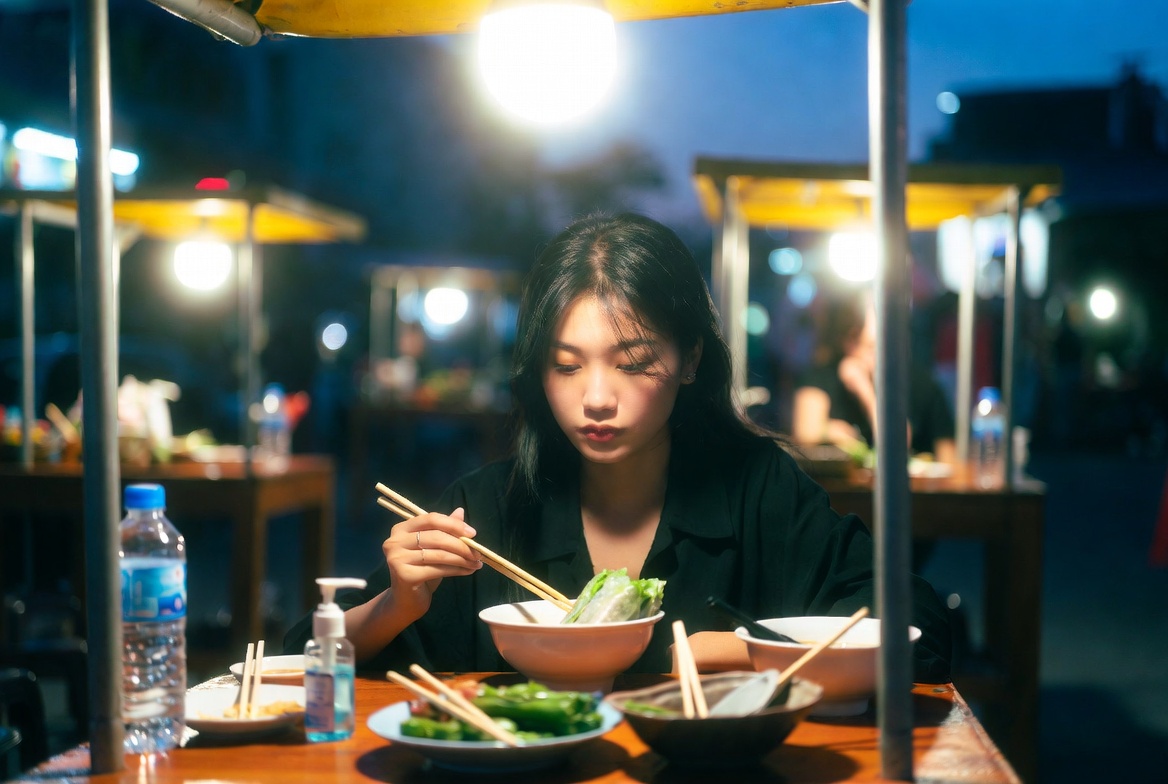
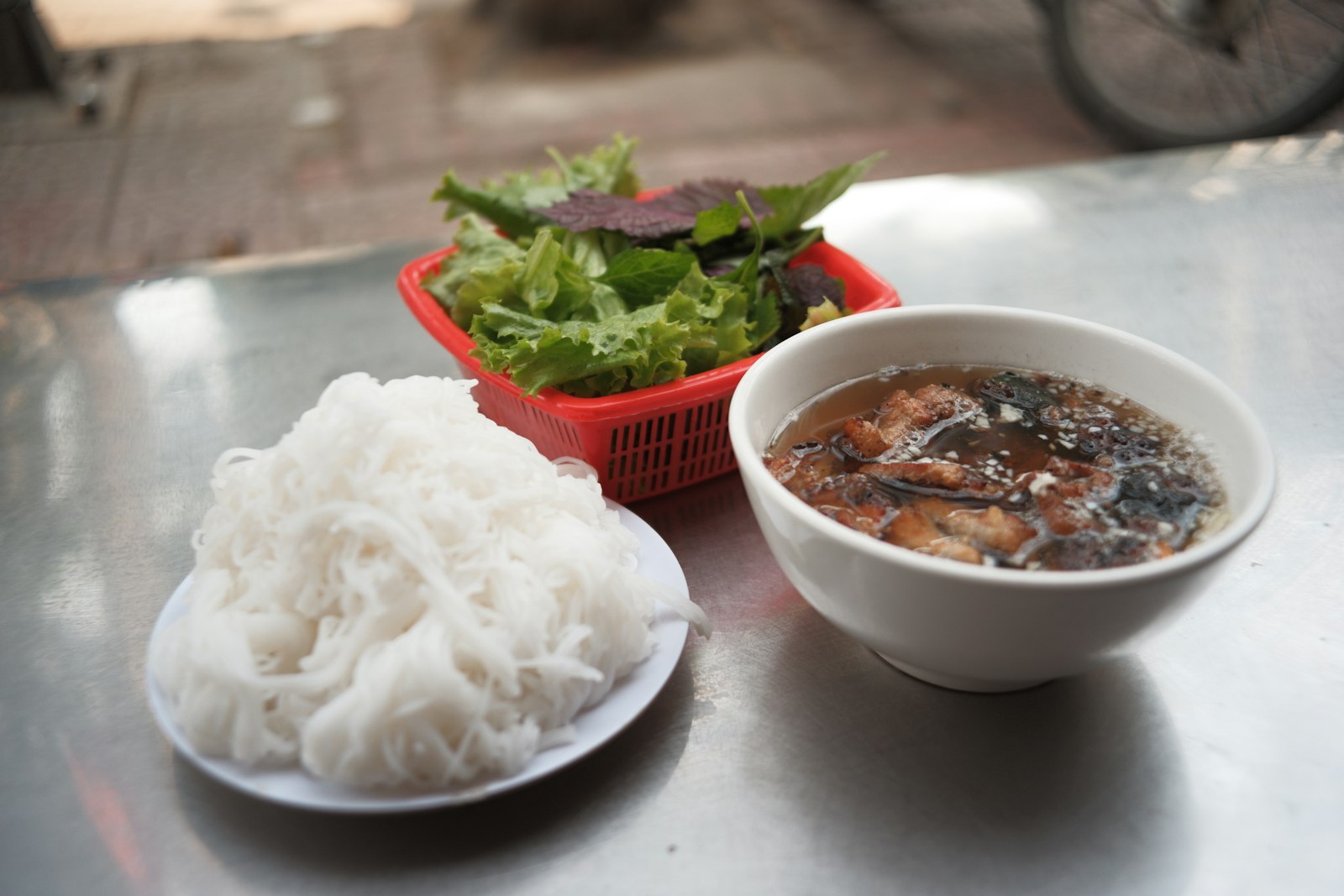
Water and produce. This is the biggest one. A raw herb plate in Vietnam was rinsed in something. If the something was clean filtered water, you're fine. If it was the tap, you're rolling dice. The same plate of rau sống (raw herbs) at the bún chả joint with a constant queue has been washed and consumed within the hour. The same plate at the half-empty place across the street might have been washed at 9am and is now wilting on the counter at 2pm. Same herbs, different risk.
Ambient protein. Cambodian amok sitting in a warming tray at a backpacker café. Thai gaeng (curries) at a buffet that opens at 11 and closes at 9 with no replenishment cycle. Resort fruit plates pre-cut at dawn. Cooking kills bacteria; cooling and sitting invites them back. The rule is: was this cooked in the last hour, or could it have been cooked yesterday?
The slow-restaurant paradox. This is the counterintuitive one and worth understanding before I get to the next section. A busy street stall — one wok, one cook, one menu, fifty turns an hour — has almost no opportunity for cross-contamination. The cook is doing one thing. The pan is at 200°C. The food is moving. A quiet tourist restaurant with a twelve-page menu, two cooks, six prep stations and a refrigerator that gets opened forty times a day is a cross-contamination engine. The kitchen with more SKUs has more failure modes.
This is why some of the safest meals I've ever eaten in Vietnam have been at the phở place at 6am with a queue down the street, and some of the worst have been at the "international cuisine" place attached to my hotel.
Why a busy street stall is safer than a quiet sit-down
The mental model travelers bring from home — that the cleaner-looking restaurant is the safer one — does not survive contact with Southeast Asia. The relevant variables here are velocity and focus, not floor-tile color.
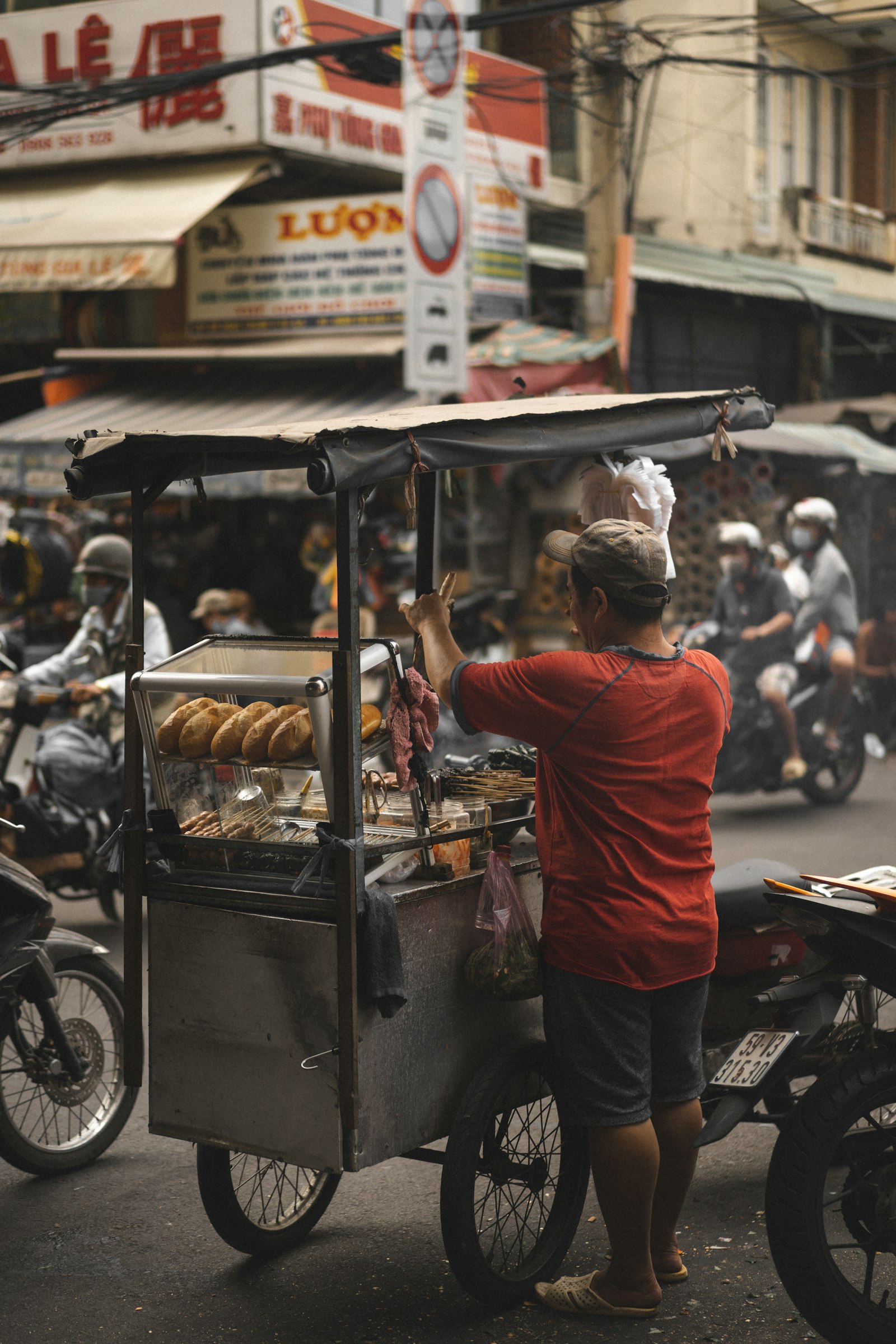
Velocity means turnover. A stall that sells out by 11am cooked everything that morning. A stall with a queue means the phở broth on the burner has been at a rolling 95°C all morning; the meat hits boiling stock, not a warming tray. A quiet restaurant might have a beautiful menu but it might also have the tom yum base from yesterday's service sitting in a stockpot at room temperature.
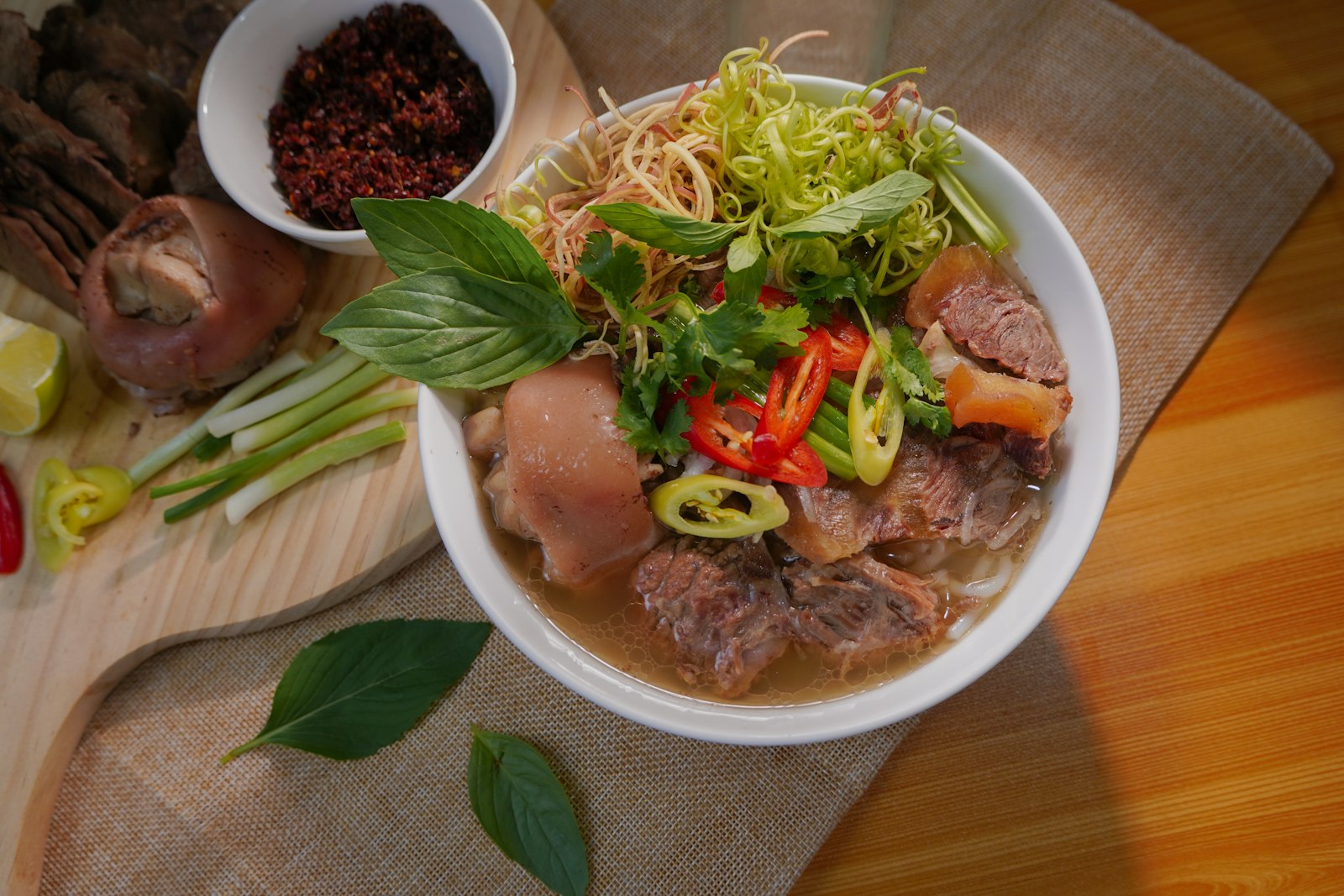
Focus means SKU count. A bún bò Huế lady making one dish, all day, every day, since 2003 has nailed her process. The ingredients arrive in the morning, get prepped, get cooked, get served, get gone. There's no fridge full of half-prepped mise en place from last week. There's no English-language menu with thirty options requiring thirty different sub-recipes.
The visible signals to read at a stall: queue length, ingredient turnover (is the prep tray emptying?), where the cook's hands go between handling money and handling food, and the heat — is the wok ripping or is it a sad warm pan? An honest char kway teow hawker in Penang will let you watch the wok flare to fire-engine red before each portion. That heat is your friend.
The signals to read at a sit-down place: is the kitchen visible? Is the menu absurdly broad? Are the dishes leaving the pass fast or are they sitting under heat lamps? A small place with six items, a tight kitchen, and a chef who eats their own food is doing the same job as a stall — just with chairs.
The fruit map — peel, peel, peel, and the Bali warung sweet spot
Fruit is where Bali, in particular, has the worst undeserved reputation. The fruit isn't the problem. The handling is.
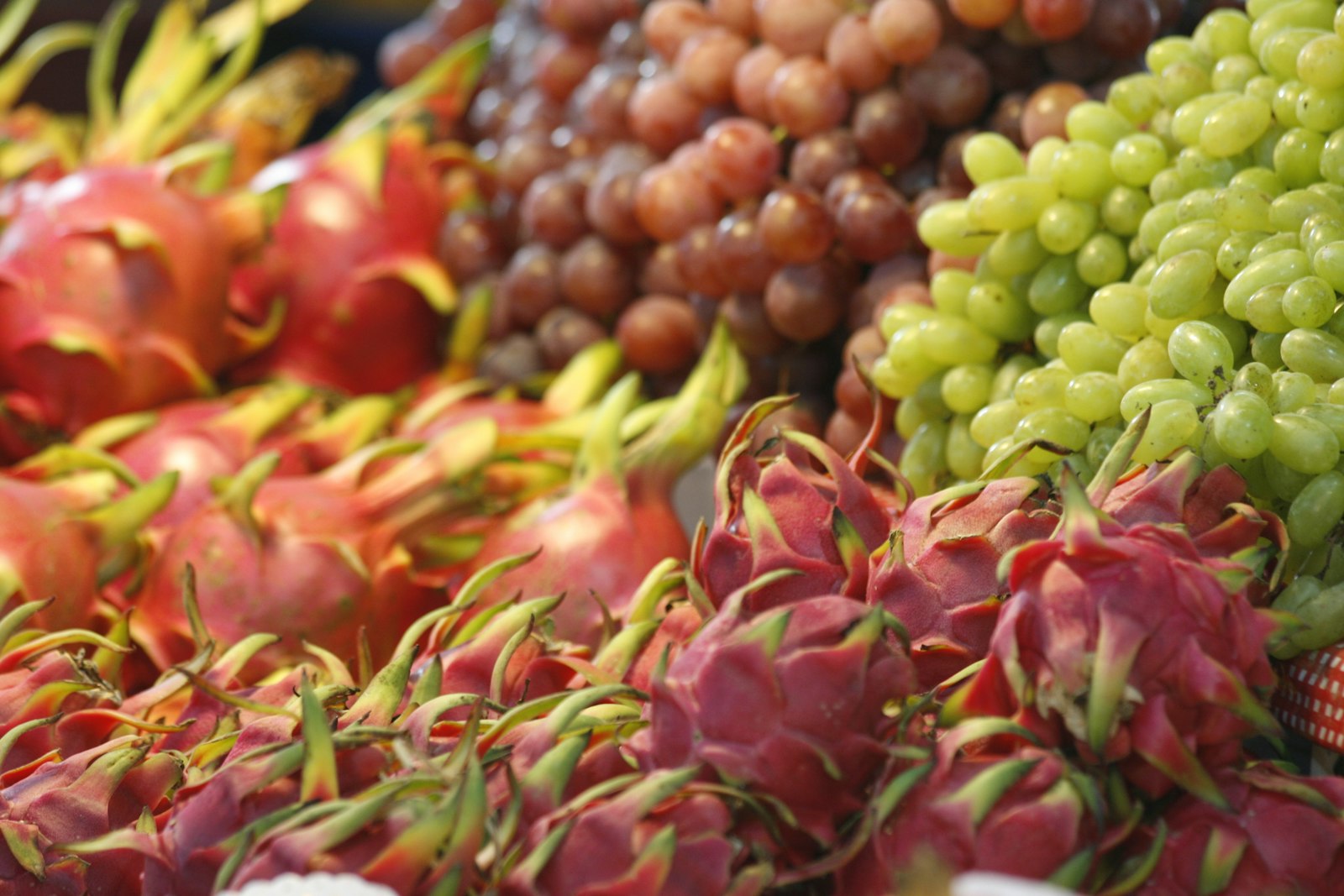
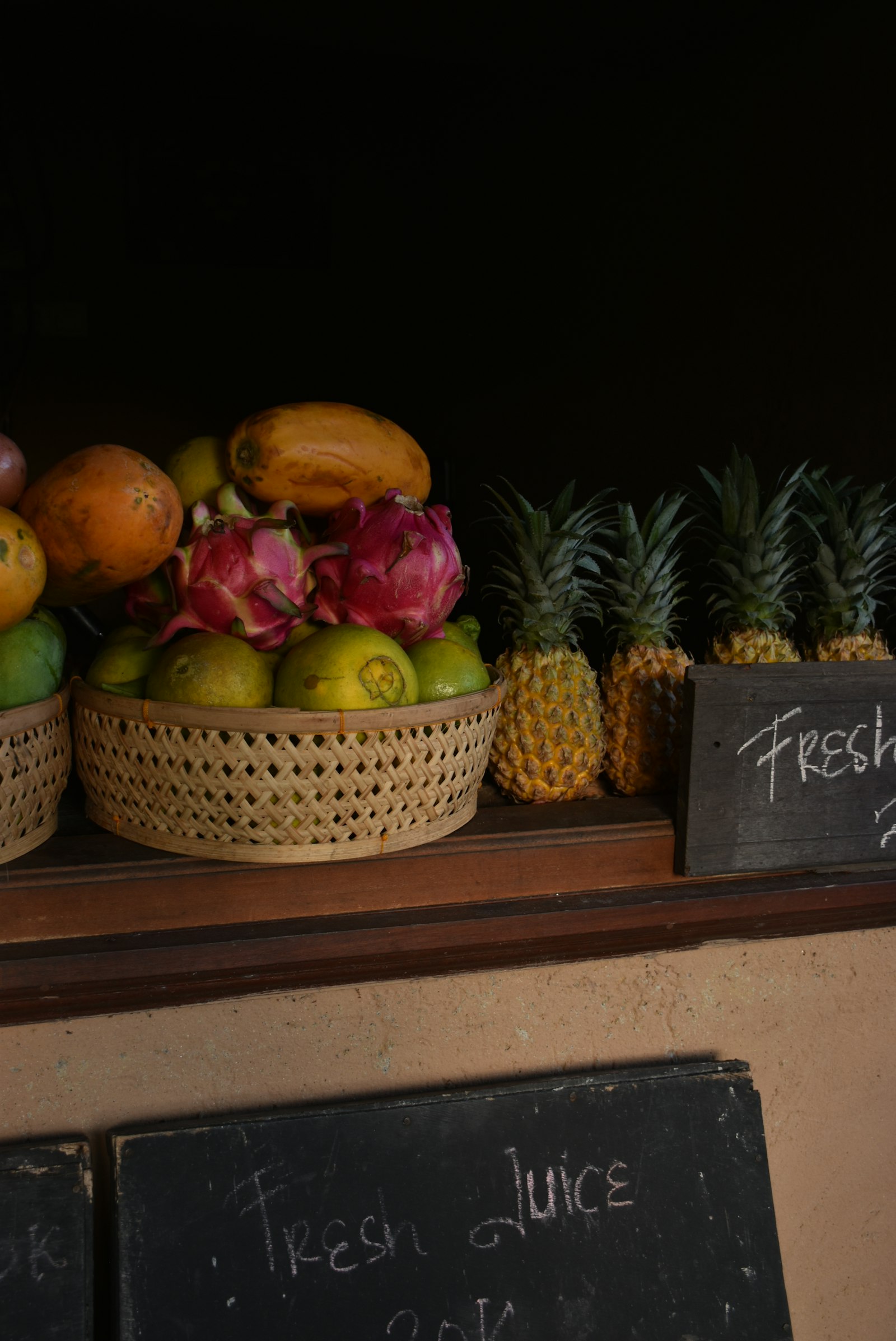
Peel-it-yourself fruit is essentially always safe. Mango with the skin on, dragon fruit you split open, banana, mangosteen, rambutan, snake fruit (salak), durian. These come with a sterile-on-the-inside guarantee — their own skin. Buy whole, peel yourself, eat. I have eaten my body weight in mangosteen across two decades in Southeast Asia and never once regretted it.
Fruit cut by someone else, at ambient temperature, sitting uncovered: absolutely the highest-risk category in your day. Pre-cut watermelon at a hotel buffet. Cubed jackfruit on a vendor's tray. Pineapple slices in a ziplock from a 7-Eleven cooler that may or may not have actually been cold. The knife that cut it was washed in tap water. The board it sat on was wiped with a tap-water rag. The fruit was cut at dawn and it's now 2pm.
The exception, and it's an important one for Bali specifically, is the warung buah (fruit warung) sweet spot. A busy local fruit stall in Ubud or Canggu or Sanur that cuts to order — you choose the fruit, they slice it now, you eat it now — runs on the same velocity logic as the phở stall. The knife is in active use, the board is being rinsed all day, the fruit hasn't been pre-prepared. Made-to-order and busy are the magic words. Pre-cut and quiet are the alarm bells.
Practical map:
Eat freely, anywhere: mango, dragon fruit, banana, mangosteen, durian, rambutan, snake fruit, longan, lychee, coconut (drink straight from the husk with a straw), pomelo segments you peel yourself.
Eat at a busy made-to-order stall: papaya, pineapple, watermelon, jackfruit — these all need cutting, so velocity matters.
Avoid in tourist hotel buffets: pre-cut anything. The same fruit at a cart on the street with a queue is safer than at a five-star buffet that's been open since 6am.
The protein map — which cuisines cook themselves safe
Some Southeast Asian dishes are essentially self-sterilizing through their cooking method. Others rely entirely on prep hygiene. Knowing which is which lets you eat broadly without constantly hedging.
The very safe category — boiling and high-heat finish, served hot:
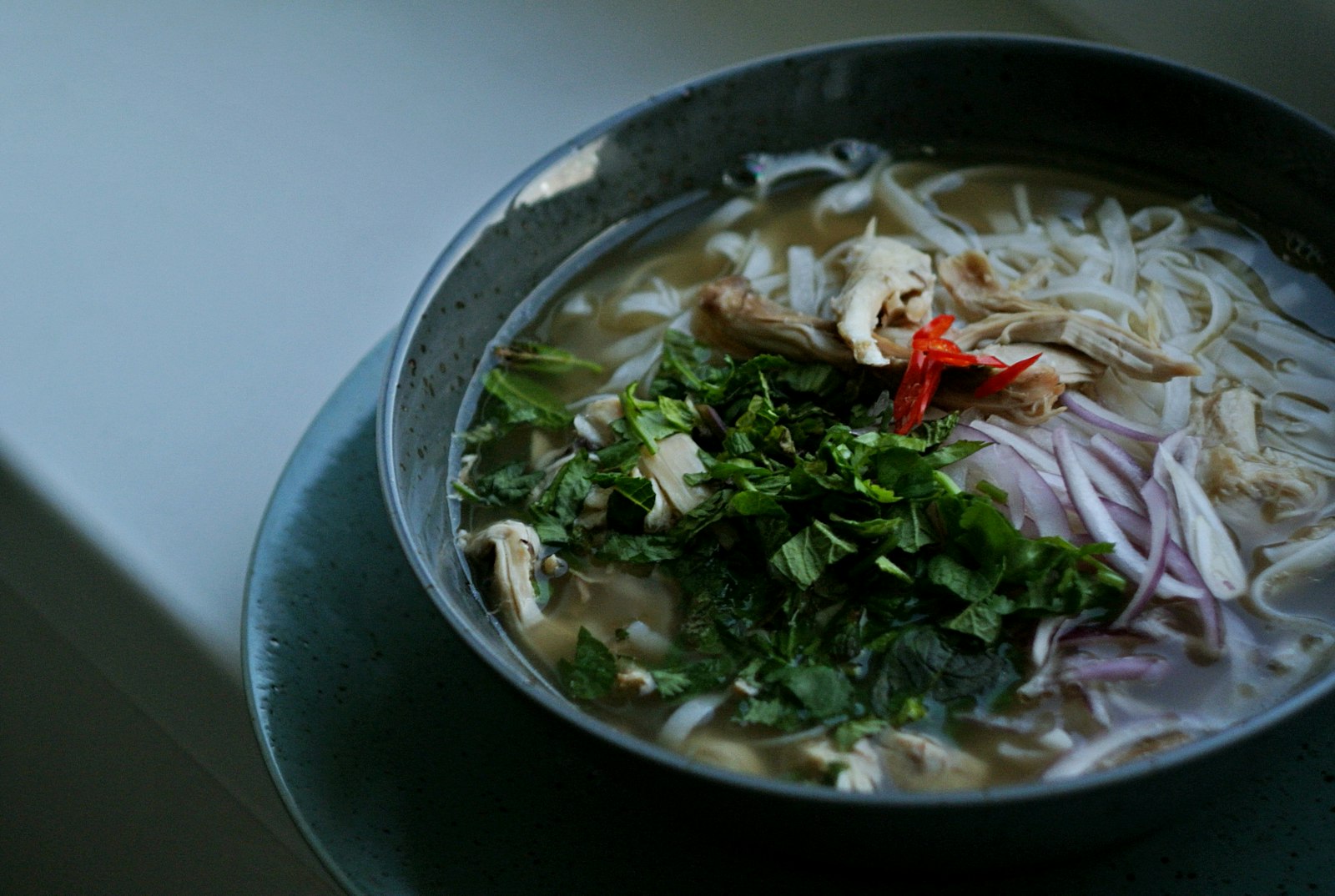
Phở (Vietnam): broth at 95°C, raw beef slivers cooked by the liquid hitting them in the bowl, served immediately. The herbs and bean sprouts on the side are your only variable — if the place is busy, eat them; if it's dead, skip them.
Bún chả (Hanoi): pork patties grilled to order over live charcoal, dropped into hot fish-sauce broth. The grill is the friend.
Tom yum / tom kha (Thailand): boiling soup, made to order. Same logic as phở.
Laksa (Malaysia / Singapore / Penang): boiling broth poured over noodles. Eat it.
Wok-fried anything served immediately — char kway teow, pad see ew, kway teow goreng, com chien. Wok hei is bacteriologically your friend.
The middle category — cooked and held, watch for ambient temperature:
Nasi padang (Sumatra / spread across Indonesia): pre-cooked curries laid out on display. At a busy place where the trays empty by 1pm, fine. At a quiet place at 3pm, not fine. Look at the trays — are they sweating? Has the rendang been there since dawn? Velocity question.
Nasi campur (Bali): same logic. The busy locals' warung at lunch is safer than the tourist warung at 4pm.
Khao kha moo (Thai pork-leg rice): the pork sits in a simmering vat, which is great, but the chili-vinegar sauce is room temperature and the boiled egg has been sitting. Eat the pork hot, treat the sides cautiously.
The high-attention category — raw or partially raw, prep-hygiene-dependent:
Larb (Lao / Isan Thai): cooked meat tossed with raw herbs, lime, fish sauce, toasted rice powder. The meat is cooked, but the dressing is mixed in a bowl that handles raw ingredients all day. Stick to a busy place, and consider larb suk (fully cooked) over larb dip (raw blood version that exists in Lao tradition).
Som tam (Thai green papaya salad): unpeeled green papaya, raw chili, raw garlic, sometimes raw shrimp paste or pla ra (fermented fish). Pounded in a mortar that also did last hour's batch. Skip the pla ra version your first week. Eat the standard version at a stall with constant turnover.
Kinilaw (Philippines): raw fish "cooked" in vinegar. This one I will only eat at coastal places, made within an hour of the catch landing. Inland Manila version, no.
Gỏi cuốn (Vietnamese fresh spring rolls): cold, with raw herbs and rice paper soaked in tap water. Busy place, fine. Slow place, no.
The drink layer — the ice question matters more than the water question
Bottled water is universal and obvious. The interesting question is ice.
The Vietnam tell is genuinely useful: factory-made ice is a clear, hollow cylinder with a hole through the middle. It's produced commercially in a sterile process by large manufacturers and trucked to vendors in plastic bags. This ice is fine. Drink it. The same ice form factor — cylinder with a tube hole — is used across Vietnam, Cambodia, Laos, parts of Thailand and parts of Indonesia, because the same industrial ice machines have spread region-wide.
Hand-chipped or irregular crushed ice at a roadside drinks cart is a different category. That came from a block, the block sat outside, the chipper is whatever's nearby, and the underlying water is whatever the vendor had. This is one of the most reliable sources of E. coli in the region. Visually distinguish: factory ice is uniform and clear, with a signature hole. Block ice is cloudy, uneven, in random shapes.
Other drinks:
Beer (cold) and any factory-bottled drink: universally safe. The brewing process is sterile and the bottle is sealed.
Hot tea, coffee, hot Milo: boiled water. Safe by definition.
Vietnamese cà phê đá (iced coffee): depends entirely on the ice. At a real café using factory cylinders, yes. From a roadside cart with mystery crushed ice, no.
Sugarcane juice pressed to order: the pressing is mechanical and clean; the ice it's poured over is the variable. Order it without ice if you can't see the cylinder.
Fresh coconut from the husk: safe. The coconut is its own sealed container; you're drinking through a straw.
The medicine kit — what to pack, and the 48-hour rule
This is general public-health advice, not personal medical guidance — see a doctor before your trip if you have any underlying GI conditions, are pregnant, or are traveling with kids.
The standard travel kit a doctor will assemble for a Southeast Asia trip generally includes three things:
Loperamide (Imodium) — an antimotility agent. It doesn't cure anything; it stops the diarrhea so you can take the eight-hour bus ride. CDC dosing guidance is 4mg initial dose, then 2mg after each loose stool, capped at 16mg in 24 hours. It should not be used if there's blood in the stool, or a high fever — those are signs of an invasive infection (dysentery), and slowing the gut down lets the pathogen multiply. Loperamide is for ordinary watery diarrhea where you need to function.
Buscopan (hyoscine butylbromide) — an antispasmodic. This is the one travelers ask about and don't fully understand. It doesn't treat the infection. It relaxes the smooth muscle of the gut to reduce the cramping pain that makes traveler's diarrhea so miserable. Standard dose is 10mg up to three times a day. It pairs with rehydration and rest; it is not a substitute for either. Note that most medical guidance considers it adjunctive rather than primary treatment.
Oral rehydration salts (ORS) — the most important item in the kit, full stop. The reason traveler's diarrhea kills people in the developing world is dehydration, not the infection itself. ORS sachets dissolved in (bottled or boiled) water replace the electrolytes and glucose you're losing. One sachet per litre, drink steadily. Available at any pharmacy in any SEA city, usually under the brand Oresol or Hydralite or local equivalents.
The 48-hour rule, framed as general guidance. Ordinary bacterial traveler's diarrhea typically resolves within 24–48 hours of symptom onset, with ORS and rest. If after 48 hours you are still actively symptomatic, or at any point you develop a fever above 38.5°C, blood in the stool, severe abdominal pain that doesn't pass between cramps, or signs of dehydration (no urination for 8+ hours, dizziness, confusion), you should see a doctor that day. This is not the moment for stoic backpacker pride. International hospitals in Bangkok, Saigon, Phnom Penh, Jakarta, Bali (BIMC, Siloam) and Manila are excellent and will run a stool culture and prescribe targeted antibiotics within hours. Travel insurance covers it. Get seen.
A practical pre-trip move: take a photo of your medication labels in case you need to replace anything in-country, and know your nearest international hospital before you need it.
Country-by-country sharp tips
Vietnam. The raw-herb plate (rau sống) is the local signature and the one variable people undercook in their own thinking. At a busy place, the herbs were rinsed an hour ago and are getting eaten now — fine. At a slow place at 3pm, they're not. Use the queue as your filter. The factory ice cylinder tell applies everywhere here.
Cambodia. The Tonle Sap is a richer ecosystem than most river systems in the world, and Khmer cuisine reflects it — but freshwater fish carry a different parasite profile than saltwater. Trei riel (silver fish) preparations and any river-fish amok should be eaten hot and made to order, never lukewarm. Khmer barbecue (sach kak) is generally a safe category because the grilling is done in front of you. Watch out for prahok (fermented fish paste) in dressings if your gut is already sensitive — it's not unsafe per se, but it's an aggressive ingredient for an unprepared digestive system.
Indonesia. Two specific watch-outs. The sambal in Indonesia is often a raw paste — raw chili, raw shallot, raw garlic, lime, sometimes raw shrimp paste — and even when the nasi padang itself is cooked, the sambal you spoon on top is not. At a busy warung, fine. At a tourist place where the sambal jar has been on the table for who knows how long, less fine. Second, jamu (the traditional turmeric-ginger-tamarind tonic) is genuinely great but is sometimes diluted with water that may or may not be filtered — ask, or buy bottled brands like Acaraki.
Thailand. Som tam deserves a specific note because of the pla ra version. Standard som tam Thai (papaya, peanuts, dried shrimp, fish sauce) is a fine first-trip dish at a busy stall. Som tam pla ra and som tam pu (with fermented fish or pickled crab) are regional Isan specialties that carry meaningfully higher risk for an unacclimatized gut — these are the dishes where I've watched seasoned Bangkok expats get caught out. Earn your way up.
Philippines. Kinilaw (raw fish in vinegar) and kilawin (the broader raw category) are coastal dishes and should stay coastal. In Cebu or Davao or General Santos, near the water, made within hours of the catch — exceptional eating. Inland in Manila at a chain restaurant where the fish came in on a truck two days ago, no. The country's national pride dish, adobo, is cooked to within an inch of its life and is essentially bombproof; eat it with confidence anywhere.
The verdict
Bali Belly, Vietnam Belly, Cambodia Belly — they're not country diseases. They're velocity diseases, and temperature diseases, and cross-contamination diseases, which happen to be more visible in countries where the supply chain runs hotter and shorter. The traveler who learns to read those signals eats better in Hanoi than they do at home, because the food chain is shorter and the cook is closer.
Eat at the busy stall, especially the one with locals queueing. Peel your own fruit. Look at the ice. Carry ORS and Loperamide and Buscopan and know the 48-hour rule. Skip the buffet.
The country isn't the problem. Bad reading is the problem.
If you can only do one thing
Before you eat anywhere, ask one question: is this food moving, or is it sitting? If the wok is firing, the broth is at a rolling boil, the grill is loaded, the queue is six deep, the ingredient tray is half-empty by 1pm — eat. If the food has been on display since you sat down, if the curry tray is sweating, if the pre-cut fruit is glistening with condensation, if the place is empty at peak hour — walk away. Velocity is the single best food-safety signal in Southeast Asia, and it's free to read.
Food journalist based in Seoul. Restaurant criticism, regional cuisines, comparative analysis. Hawker stalls and tasting menus, same standards.
✦ More from David Park


✦ Keep reading
More from this region


More in Destinations
✦ Discussion
Start the discussion
No replies yet — yours could be the first.