


The Cheapest Time to Visit Vietnam (And What Low Season Costs You)
The cheapest week I ever spent in Vietnam, I paid $4 a night for a dorm bed in Hanoi's Old Quarter and the owner knocked it to $3.50 because I booked three nights walking in off the street. It was late September. It also rained sideways for two of those days and I watched a guy's flip-flop float down a flooded Ta Hien street like a tiny boat. That's the deal nobody puts in the headline: Vietnam is cheapest exactly when the weather is doing the most. The trick is knowing which "cheap" is a smart trade and which one is just you, soaked, in a town that's half-closed.
So let's actually break it down. Real numbers, real months, and the honest version of what low season takes from you.
The short answer: September is the cheapest, but it's complicated
If you want one month, it's September. Flights bottom out, dorm and room rates drop, and tour operators start discounting because the crowds thinned in August.
A round-trip from the US West Coast that runs $900–1,100 in peak season can land around $628–700 in early September, and I've seen one-ways from $369. From the UK and Europe you're looking at roughly £450–600 return into Hanoi or Saigon in the cheap window versus £700+ at Christmas. Book on a Tuesday or Wednesday, book 6–8 weeks out minimum, and don't fly in or out on a weekend if you can help it.
But here's why "cheapest" isn't the same as "best value" — and why I'm not going to just tell you to book September and hang up.
Vietnam is a 1,650-km-long country. The weather in Hanoi has almost nothing to do with the weather in Saigon on the same day. So "low season" isn't one thing. It's three different things happening in three different places, and one of them — the centre, September to December — comes with actual flood risk, not just drizzle.
The genuinely cheap months are cheap because something is wrong with the weather somewhere. Your job is to pick the region where the "something wrong" is mild, and skip the region where it's a typhoon.
What low season actually costs you, region by region

Vietnam has three weather zones. Learn them once and you'll never get the timing wrong again.
The North — Hanoi, Sapa, Ha Giang, Ha Long Bay. Cold-ish winter (December–February can drop to single digits in Sapa, genuinely cold), hot wet summer (June–August), and two beautiful dry shoulders. Low season here is roughly May–August: hot, humid, afternoon thunderstorms. July and August are the worst for the mountains — Sapa trails turn to mud, Ha Giang gets landslides, visibility dies. Rooms are cheap but you're trading mountain views for fog.
The Centre — Hue, Da Nang, Hoi An. This is the one to respect. The wet season runs September into January, and October–November is peak typhoon-and-flood time. This isn't "pack a poncho" rain. In late 2025 the Thu Bon River in Hoi An rose to 5.62 metres — past the historic 1964 record — and the Old Town went under. Hoi An's Old Town floods most years when that river tops 3.5 metres, which it does regularly in October. Hotels here drop prices hard in October–November because they have to. The cost of that cheap room is a real chance your trip gets rearranged by a flood.
The South — Ho Chi Minh City, Mekong Delta, Phu Quoc. Two seasons only: dry (roughly November–April) and wet (May–October). The southern "wet season" is the friendliest low season in the country — it rains hard for an hour, usually late afternoon, then it's done. May and August are cheap-flight months into Saigon, and honestly the south in low season is barely a downgrade. Phu Quoc is the exception; its rough sea and grey skies July–September make it a genuine skip.
So when someone says "Vietnam is cheap in October," that's true — but it's cheap because central Vietnam is the part on sale, and central Vietnam in October is the part that floods. See how that works?
The shoulder-season sweet spots (where I'd actually put my money)
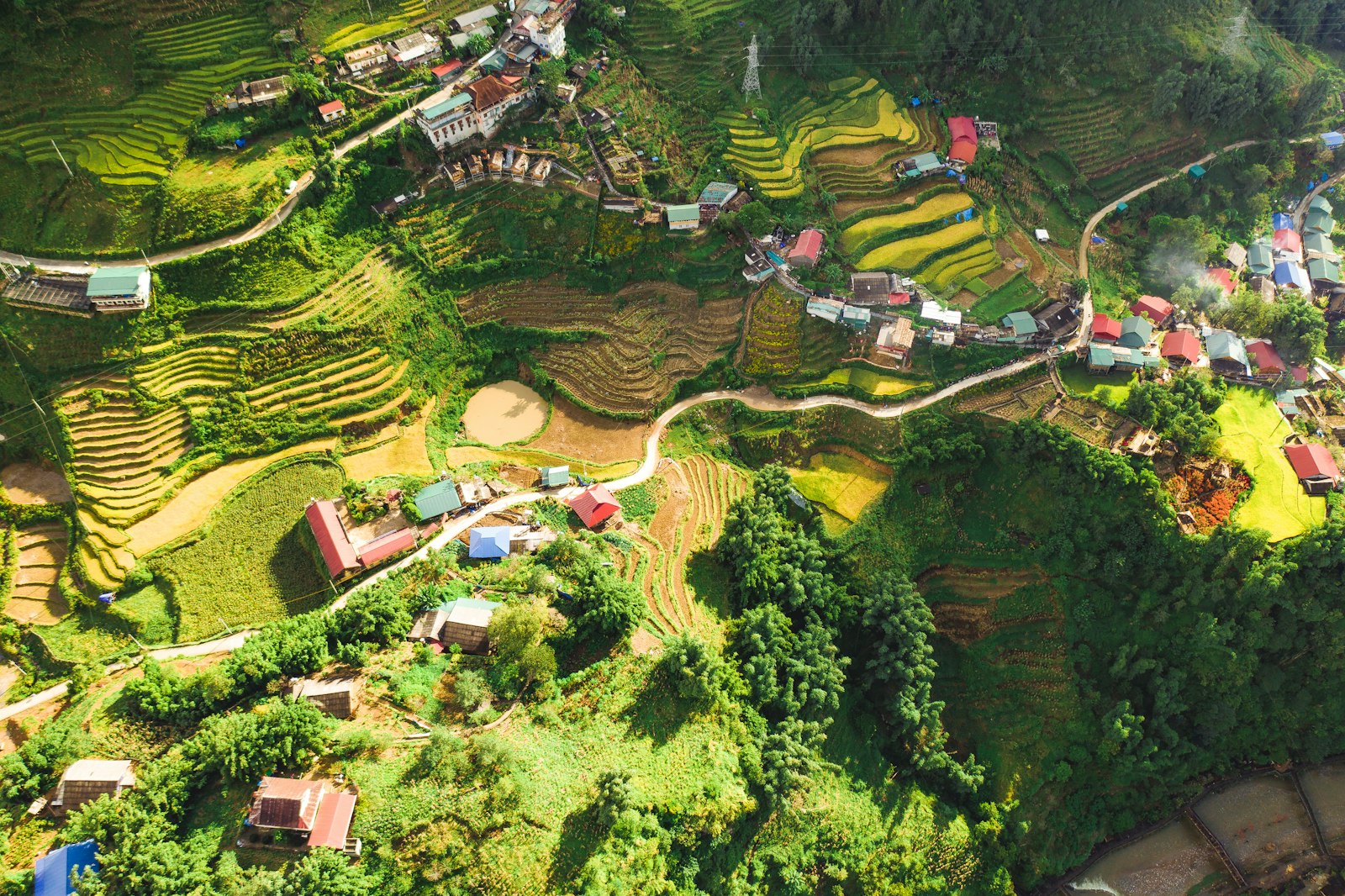
Here's the move most budget guides bury: you don't want rock-bottom low season or peak season. You want the shoulders — the weeks where prices haven't fully climbed but the weather has turned good.
For the north and the country overall, that's late March to April and late September to October. For Sapa specifically, March–April gives you dry trails and clear mountain views, and late September catches the rice terraces going gold for harvest. I did the Ha Giang loop in October once — crisp, dry, the karst going green-gold — and a 3-day self-ride package ran me about $130–150 all in, with homestays at $6–13 a night and the Dong Van geopark permit a flat ₫200,000 (about $7.60).
In the shoulders you're still getting near-low-season prices: dorms at $4–8, private guesthouse rooms at $10–18, a bowl of bún chả for ₫40,000–50,000 ($1.50–1.90), a bánh mì for ₫20,000–30,000. The difference versus deep low season is maybe $2–5 a night on a room — and for that you get dry trails, running boat tours, and towns that are fully open. That's the best value Vietnam offers, full stop.
Use the cash rate as your baseline reality check: in May 2026, $1 is around ₫26,350. So a "150,000-dong room" is about $5.70, a "200,000-dong tour add-on" is about $7.60. Keep that ₫26k-per-dollar number in your head and you can do the maths on any chalkboard menu in seconds.
One low-season hack that works year-round: don't pre-book everything online. In quiet months, walk into a guesthouse and ask the nightly rate face to face. It's routinely ₫50,000–100,000 cheaper ($2–4) than the Booking.com price, because the platform takes a cut and the owner would rather have your cash than an empty bed.
The Tet trap: the one window to plan hard around

Now the warning. There is exactly one stretch where Vietnam gets more expensive and less functional at the same time, and it will wreck a trip if you walk into it blind: Tet, Vietnamese Lunar New Year.
Tet 2027 falls on 6 February — Year of the Horse. The official public holiday runs roughly 3–11 February 2027, but that's the government calendar, not reality. In practice, family-run guesthouses, street stalls, and small restaurants start shutting from a few days before and many don't fully reopen until a week or more after. The closer to Tet eve, the more shuttered the country gets.
Here's the counter-intuitive part. Domestic flights and trains around Tet spike — every Vietnamese person working away from home is travelling back to their village at once, so Hanoi–Saigon flights can triple. Intercity buses sell out. At the same time, the street food you came for thins out, because the bún chả lady is home with her family, exactly as she should be.
It's not all bad — Tet is genuinely beautiful, kumquat trees and peach blossom everywhere, fireworks, a whole country in a good mood. If you want to experience Tet, do it on purpose: pick one city, book accommodation and any internal transport weeks ahead, and accept you'll eat at hotels and the bigger restaurants that stay open. What you must not do is treat the first half of February 2027 like a normal cheap shoulder month. It isn't.
Same logic applies to the 30 April–1 May public holiday and 2 September National Day — short domestic-travel surges, beaches and big sights crowded with local tourists, prices nudged up. Not Tet-level, but worth dodging if you can.
Month-by-month: what it costs, what you trade

Quick-reference rundown. "Cheap" here means flights and beds at or near their floor; "trade" is the catch.
January — Mid-range prices, dry and pleasant in the south, cool/grey in the north. Trade: watch the Tet date creep — Tet 2026 was mid-Feb, but always check.
February — Tet month in 2027 (6 Feb). Avoid the first half unless you're doing Tet on purpose. Late Feb settles back down; the north stays cool.
March — Shoulder gold. Prices still soft, weather turning dry nationwide. One of the best value months. Minimal trade-offs.
April — Excellent in the north and centre, hot building in the south. Late April carries the 30/4 holiday bump. Still good value.
May — Cheap flights into Saigon. Southern wet season starts (afternoon storms), the north gets hot. Solid value if you base in the south or centre. Trade: heat and humidity climbing.
June — Low season proper. Cheap beds, hot and wet up north, southern storms predictable. Trade: sweat, and not for the mountains.
July — Cheapest end of the range. Avoid Sapa and Ha Giang (mud, landslides, fog). South is fine. Trade: north basically off the table for trekking.
August — Cheap flights, deep low season. Same as July. Central coast typhoon risk starts ramping at month's end. Trade: weather genuinely working against you in two of three regions.
September — The cheapest month overall. Flights bottom out, crowds gone. Trade: central Vietnam entering flood season — do not base a Hoi An-heavy trip here.
October — Cheap, and a gorgeous shoulder for the north (dry, clear, Ha Giang at its best). But central Vietnam is at peak flood risk. Trade: a north/Hanoi trip in October is fantastic value; a central trip is a gamble.
November — Prices still low, north crisp and dry, south entering its lovely dry season. Centre still wet but easing late month. Trade: skip the centre, and the rest of the country is great value.
December — Prices climbing toward Christmas/New Year peak. South is dry and perfect, north is cold. Trade: the year's last week is the priciest in the country.
Bottom line: what I'd actually do
If you only care about the lowest possible number, fly into Saigon in September, base yourself in the south and the mountains of the north, and just don't build the trip around Hoi An.
If you want the smart-money version — and you should — go late March to April or late September into October. You'll pay maybe $3–5 more a night than rock bottom and get dry trails, open towns, running tours, and weather that doesn't fight you. That's not low season, that's the shoulder, and it's the best deal Vietnam quietly offers.
Whatever you do, put Tet 2027 (6 February) in your calendar in red and plan around it. The cheapest mistake you can make in Vietnam is showing up the week the whole country went home for dinner.
Sources: Skyscanner cheap flights to Vietnam, VinWonders — cheapest time to travel to Vietnam, Indochina Voyages — Tet 2027 guide, timeanddate — Vietnamese New Year 2027, VnExpress — record floods sweep Vietnam 2025, Highlights Travel — best time to visit Sapa 2026, The Ha Giang Loop — cost 2025–2026, Hostelz — hostels in Vietnam 2026, Trading Economics — USD/VND
Vietnamese backpacker, 5 years zigzagging across SE Asia on a shoestring. Budget travel, street food, hidden gems — the honest version.
✦ More from Alex Nguyen


✦ Keep reading
More from this region

More in Destinations
Where this happens
✦ Discussion
Start the discussion
No replies yet — yours could be the first.