
Laos or Cambodia First? A Photographer's Honest Comparison
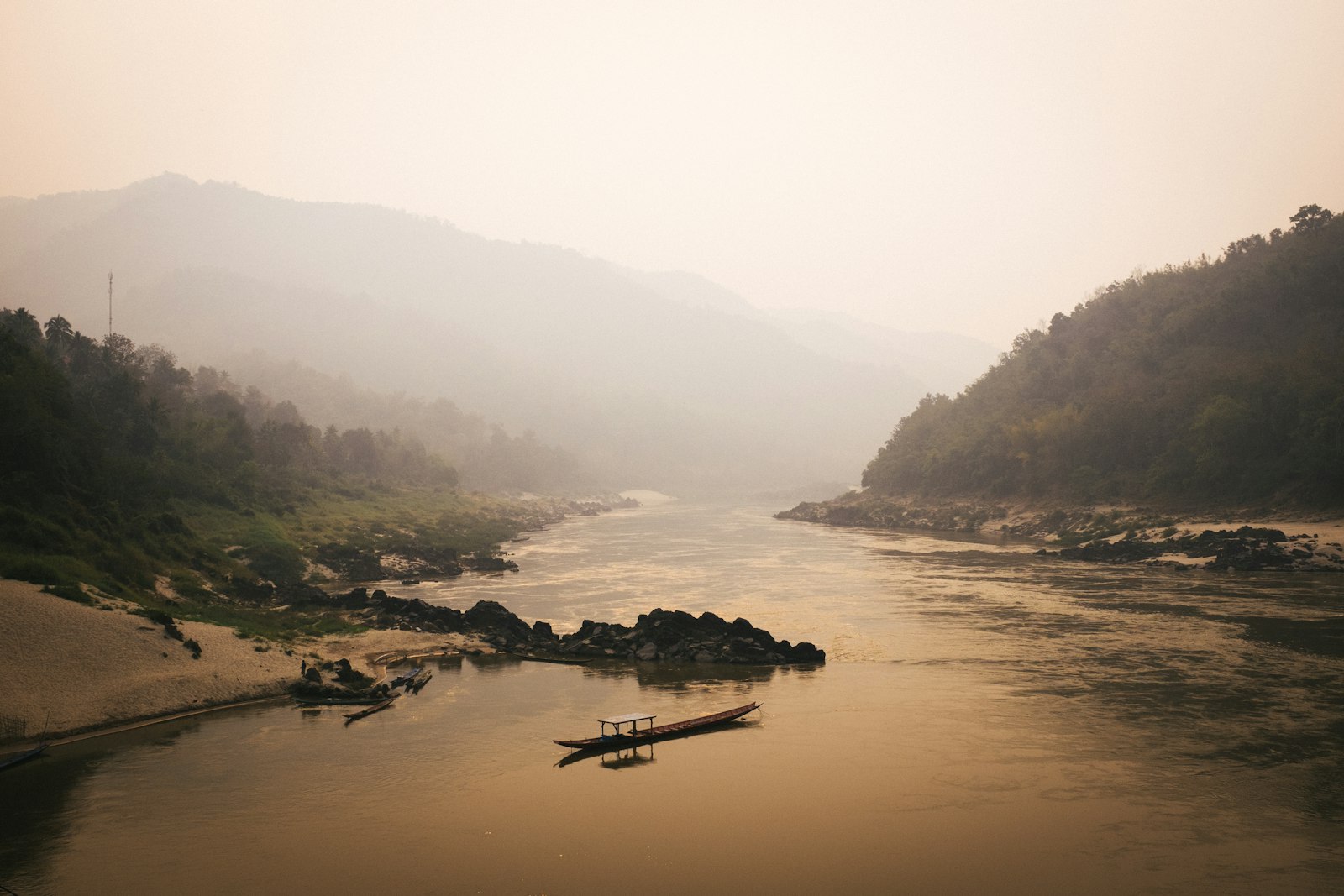
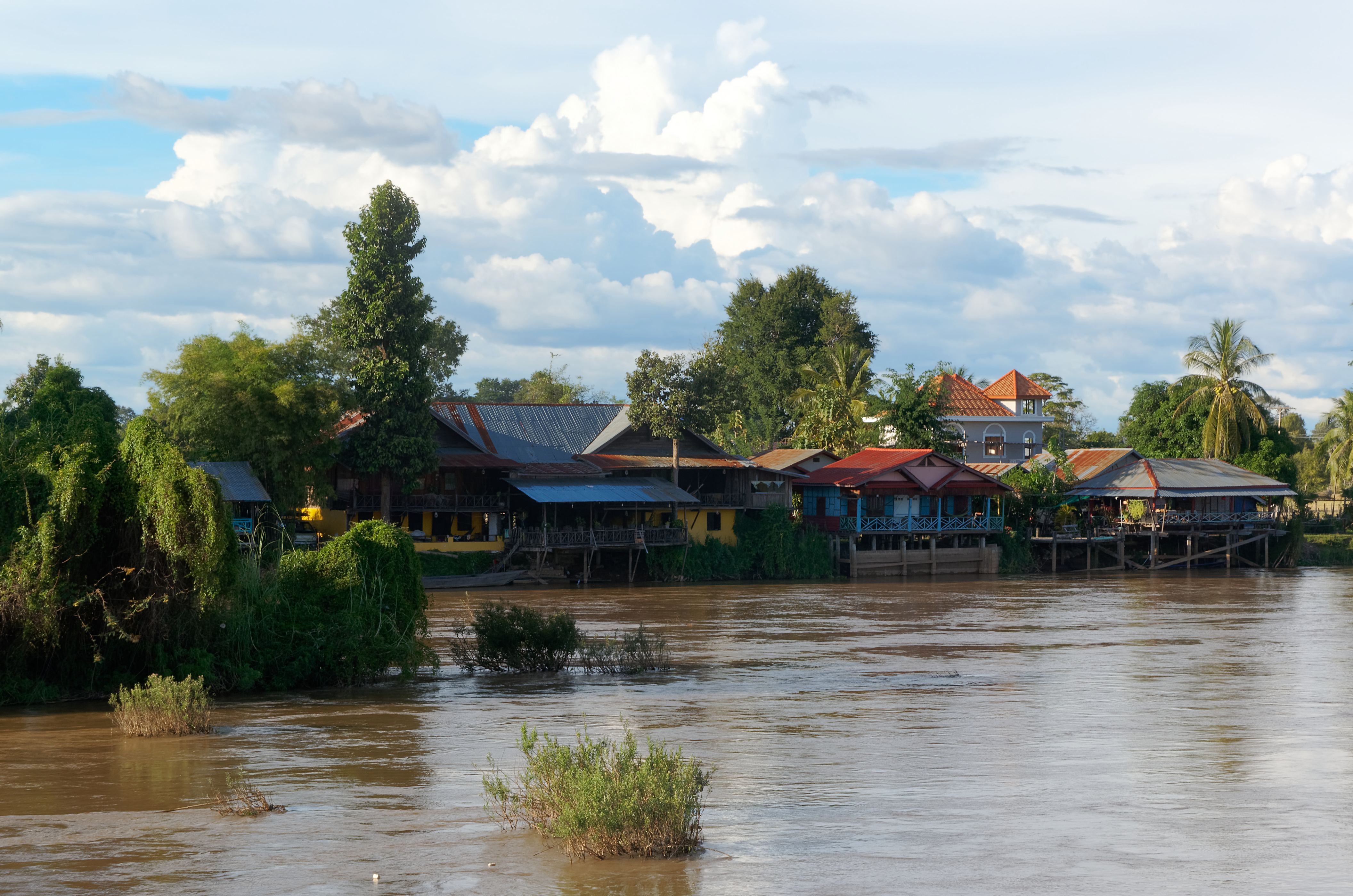
There is a stretch of the Mekong, just north of the Cambodian border, where the river opens out and seems to forget itself — splitting into four thousand islands, slowing to a walking pace, the colour shifting between green-tea and milky terracotta depending on the hour. You can stand on the Laos bank at six in the evening and watch a wooden longtail cross to Cambodia with the same easy diagonal it has taken for a hundred years, and the question that has brought you here — which of these two countries should I see first? — feels suddenly the wrong shape. They are the same river. They share a script of monsoon and dust and monk and stupa. And yet they feel, in the hand, completely different.
This is a comparison piece, not a verdict. I have shot in both countries across a decade — five trips to Laos, seven to Cambodia, two of them the same trip with a bus across the Stung Treng border. What follows is the framework I would use to choose, if I were choosing for the first time. The honest one-sentence answer is at the bottom for impatient readers; I'd rather you arrive at it slowly.
Same Mekong, different rhythm — why the question is asked so often
The query trends, I think, for a structural reason: most Western itineraries enter mainland Southeast Asia through Thailand or Vietnam, and once those are done — Bangkok, Chiang Mai, Hoi An, Hanoi — the remaining map flattens into a single category called the smaller two. Cambodia and Laos get bundled together as if they were a single country with two airports. They are not. They share a French colonial layer (1893 for Laos, 1863 for Cambodia), a Theravada Buddhist majority, a French-loanword presence in the language (pa-tê, bia), the croissant-and-coffee morning. But the resemblance ends at breakfast.
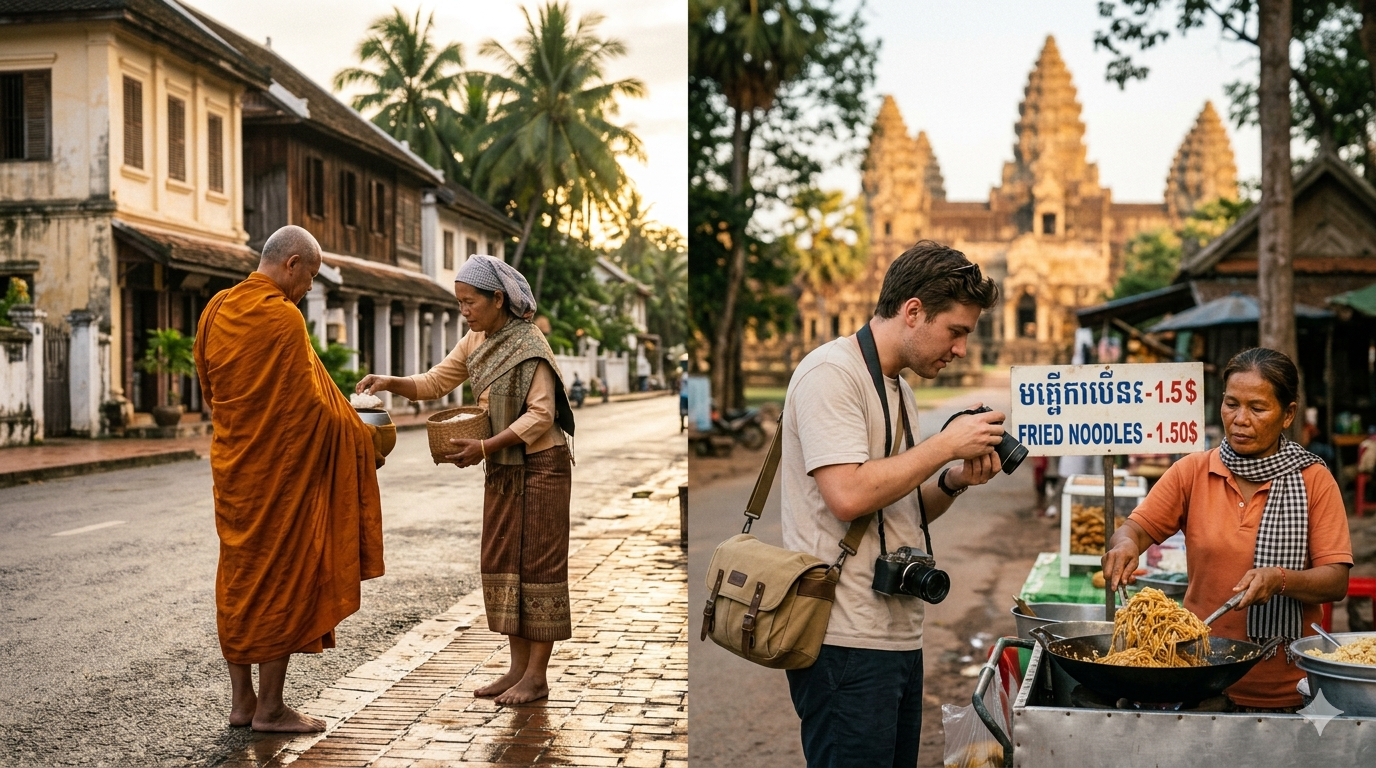
Cambodia is warmer in every sense — climate, social register, the way a stall vendor will lean into a conversation. Laos is cooler — the highlands literally, but also the volume, the tempo, the visible density of people on a street. If you've come from the kinetic energy of Hanoi or Bangkok and you want continuity, Cambodia matches it; if you want the opposite — silence, distance, the absence of horn — Laos rewards that choice.
The headline difference: Laos is northern-highland slow; Cambodia is southern-coastal warmth
Geography decides more than people give it credit for. Most of where you want to go in Laos sits between 200 and 700 metres above sea level — Luang Prabang at 305m, the Bolaven Plateau at 1000–1300m, Phongsali higher still. The climate in the dry season (November to February) is genuinely cool at altitude; mornings in Luang Prabang in December can sit at 14°C with a mist on the Mekong that doesn't lift until ten. The light, photographically, is colder and bluer; the colour palette is forest-green, ochre, the deep red of laterite paths.
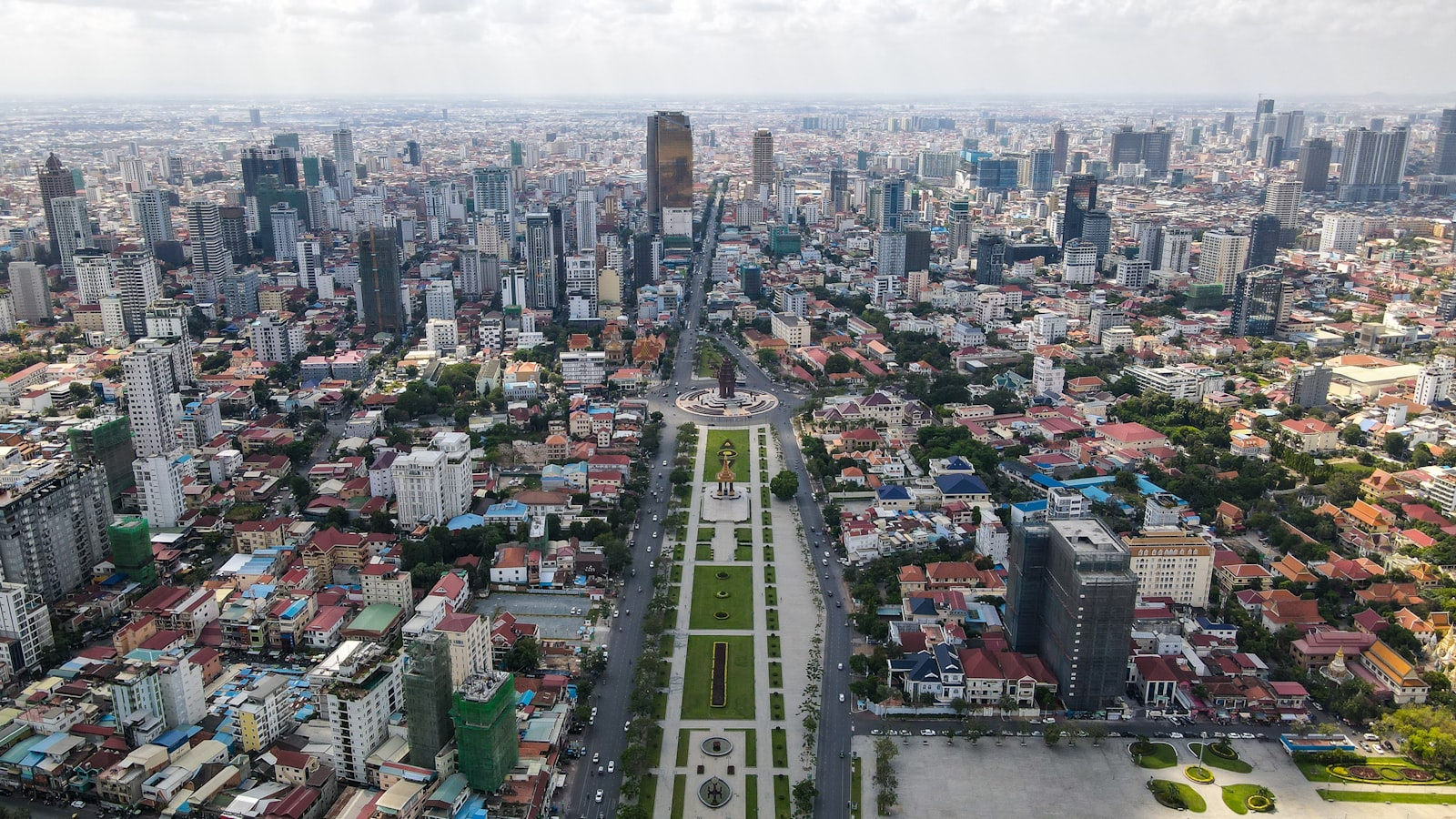
Cambodia, by contrast, sits low and warm. Phnom Penh is at 12m above sea level; Siem Reap at 18m; Sihanoukville and Kep at sea level. Even in the dry season, the day-time temperature in Siem Reap rarely falls below 28°C. The light is harder, more vertical, and the dry-season sky bleaches white by 10am. The colour palette is sandstone, palm-green, the chalky pink of frangipani against laterite.
This is the single biggest practical difference. It dictates what you pack, how you photograph, and whether you spend your afternoons walking or hiding from the sun. A traveller who hates heat has a country, and it isn't Cambodia.
The choice is not really between two countries. It is between altitude and sea level, between cool-mist mornings and white-hot afternoons, between a forested north and a sandstone south.
Angkor versus Luang Prabang — they are not the same scale
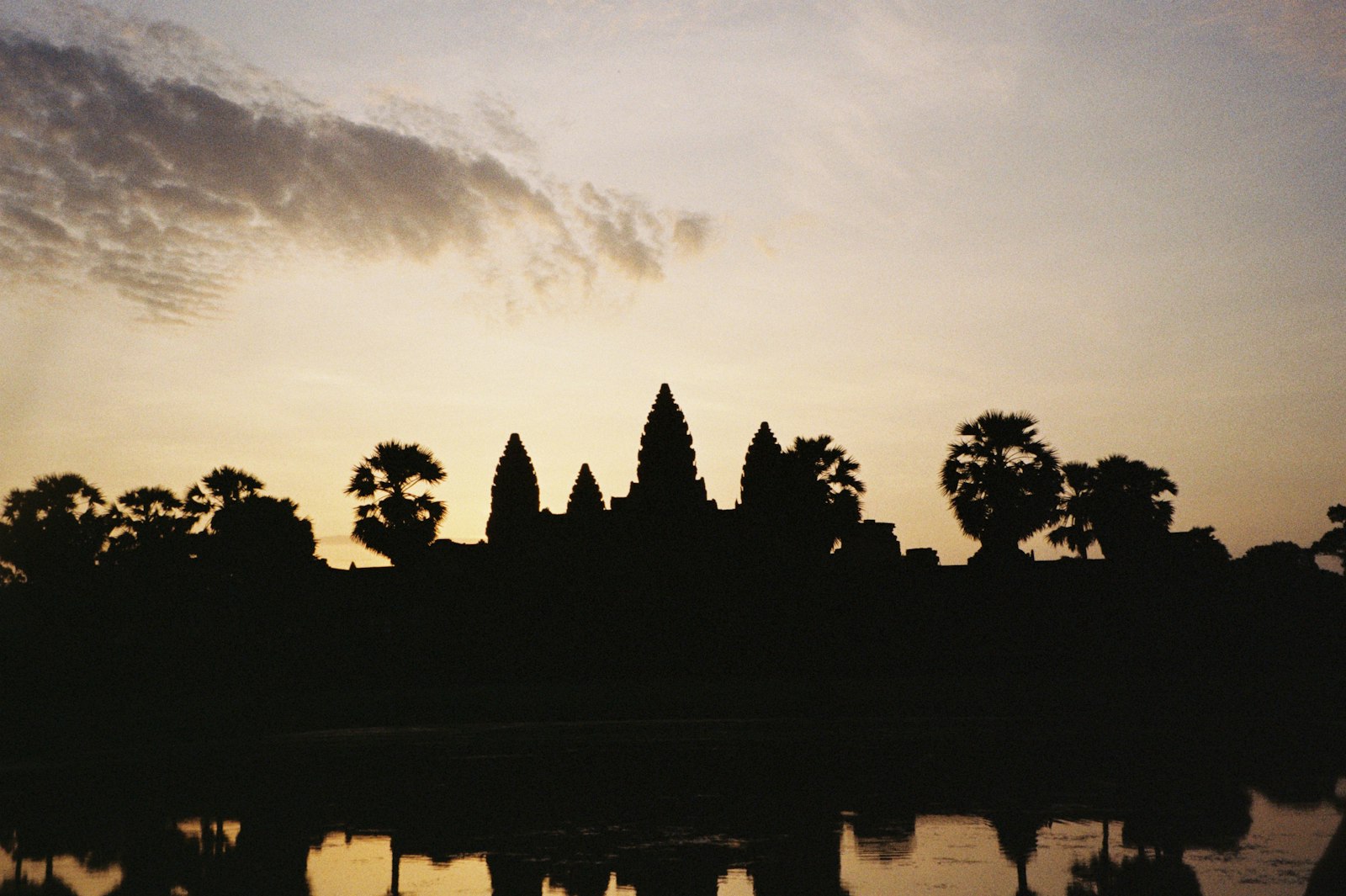
This is where most comparison articles fail. They line up Angkor Wat against Luang Prabang as if both were "the country's main temple complex". They are not comparable. One is the largest religious building on the planet. The other is a small town.
Angkor Archaeological Park covers 400 square kilometres. The central temple, Angkor Wat, was built between roughly 1113 and 1150 under Suryavarman II, oriented westward (unusual for a Hindu temple), and faced in sandstone over a laterite core. To shoot the central towers from the north reflecting pool at 5:55 in the dry season — sun still below the horizon, the towers black against a sky going from indigo to coral — is to be one of perhaps 400 people doing the same thing at the same moment. It is not solitude. It is, however, one of the great architectural sights of the world, and the scale is not negotiable. You will need at least three days for Angkor, four if you want to see Banteay Srei (the pink-sandstone tenth-century carving site, 37km north-east) and Beng Mealea (jungle-overgrown, an hour east) without rushing.
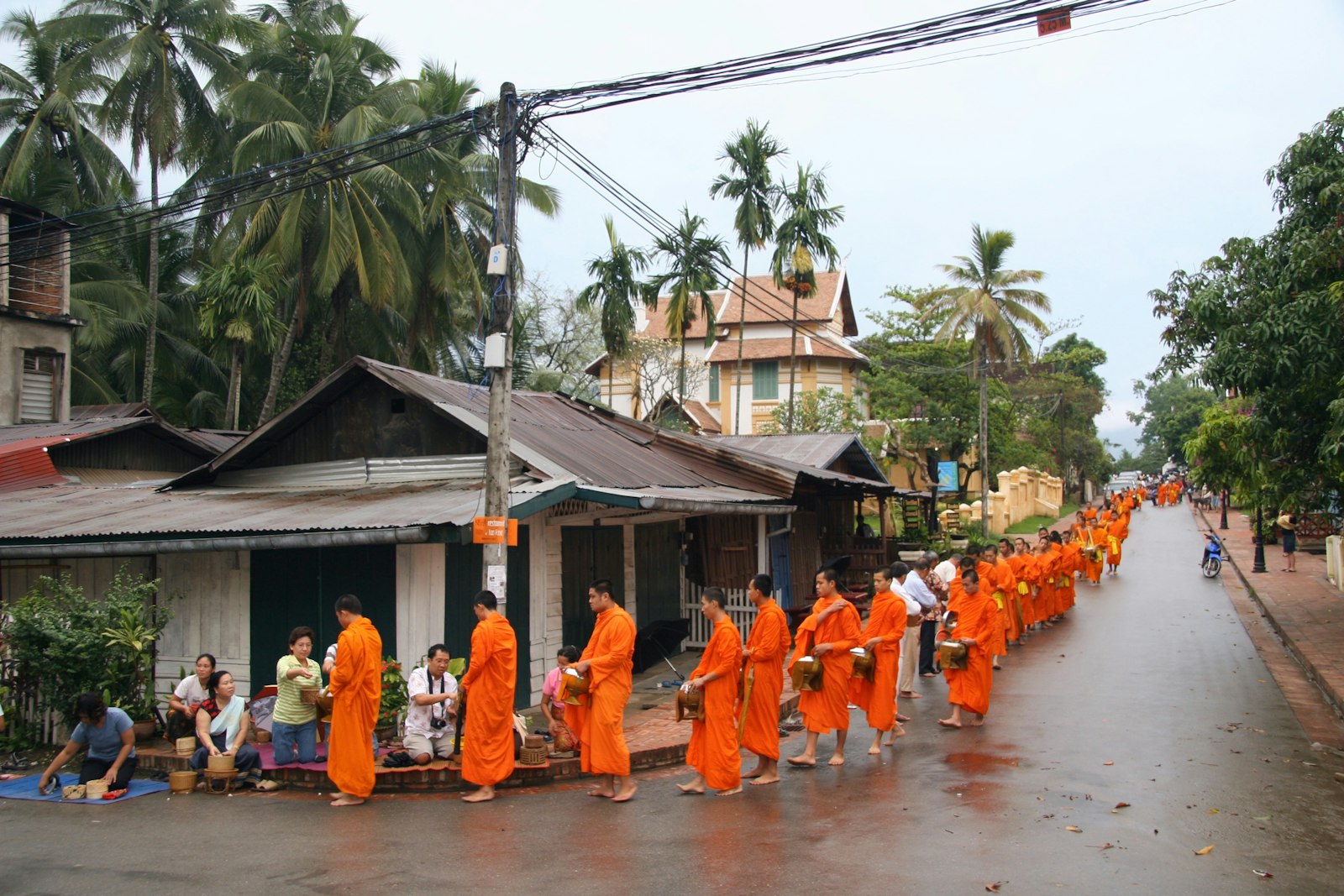
Luang Prabang is a different proposition entirely. It is a UNESCO-listed peninsula at the confluence of the Mekong and the Nam Khan, with around 30 active wats (the most famous, Wat Xieng Thong, was founded in 1559), French shophouses with green-shuttered windows and lime-washed plaster, and a population of around 50,000. You can walk it in an afternoon. What it offers is not scale but atmosphere — the alms ceremony (tak bat) at 5:45 each morning, the night market on Sisavangvong Road, the late-afternoon climb up Mount Phousi for a view of the rivers meeting in pewter light. It is a town that rewards a week of slow looking, not a destination that demands three days of hard shooting.
If you want monumental architecture, Cambodia wins by a margin that is not close. If you want a place to live in for a week, Luang Prabang is one of the most photogenic small towns in Asia.
The road experience — Laos's new train versus Cambodia's NR6 reality
For years the answer to how easy is it to get around? was not very in both countries. That changed in Laos in December 2021, when the China-Laos Railway opened. As of 2026 there are four daily high-speed EMU departures plus a standard service between Vientiane and Luang Prabang, with the fastest train (D88, departing Vientiane at 08:00) covering the 422km in 1 hour 46 minutes for a second-class fare around USD 22 — a stretch that used to be eleven hours by bus on the mountain road. The line continues north to Boten on the Chinese border. Tickets sell out; book a day or two ahead.
The train transforms Laos's road map. You can now do Vientiane–Luang Prabang–Vang Vieng in a week without ever sitting on a windy mountain switchback, which historically was the single biggest filter against people doing Laos at all.
Cambodia has nothing equivalent. The country's spine is National Route 6 between Phnom Penh and Siem Reap — about 320km, six hours by Giant Ibis or Mekong Express bus, USD 13–17. The road is paved and decent; the experience is a bus, not a train. There is a seasonal express boat service between the two cities run by Cambodia River Express (Saturdays and Tuesdays, around 6–7 hours, river-only since they dropped the bus leg) and by Angkor Express Boat — but both operate only at high water, roughly August to late March. As I write this in May, the dry-season suspension is on; the Angkor Express resumes 1 July 2026. Verify before you plan around a boat.
The practical read: Laos is now easier to traverse than Cambodia for the first time in either country's modern history. If you've been told Laos is "hard to get around", that information is from before 2021.
The food: laab versus amok
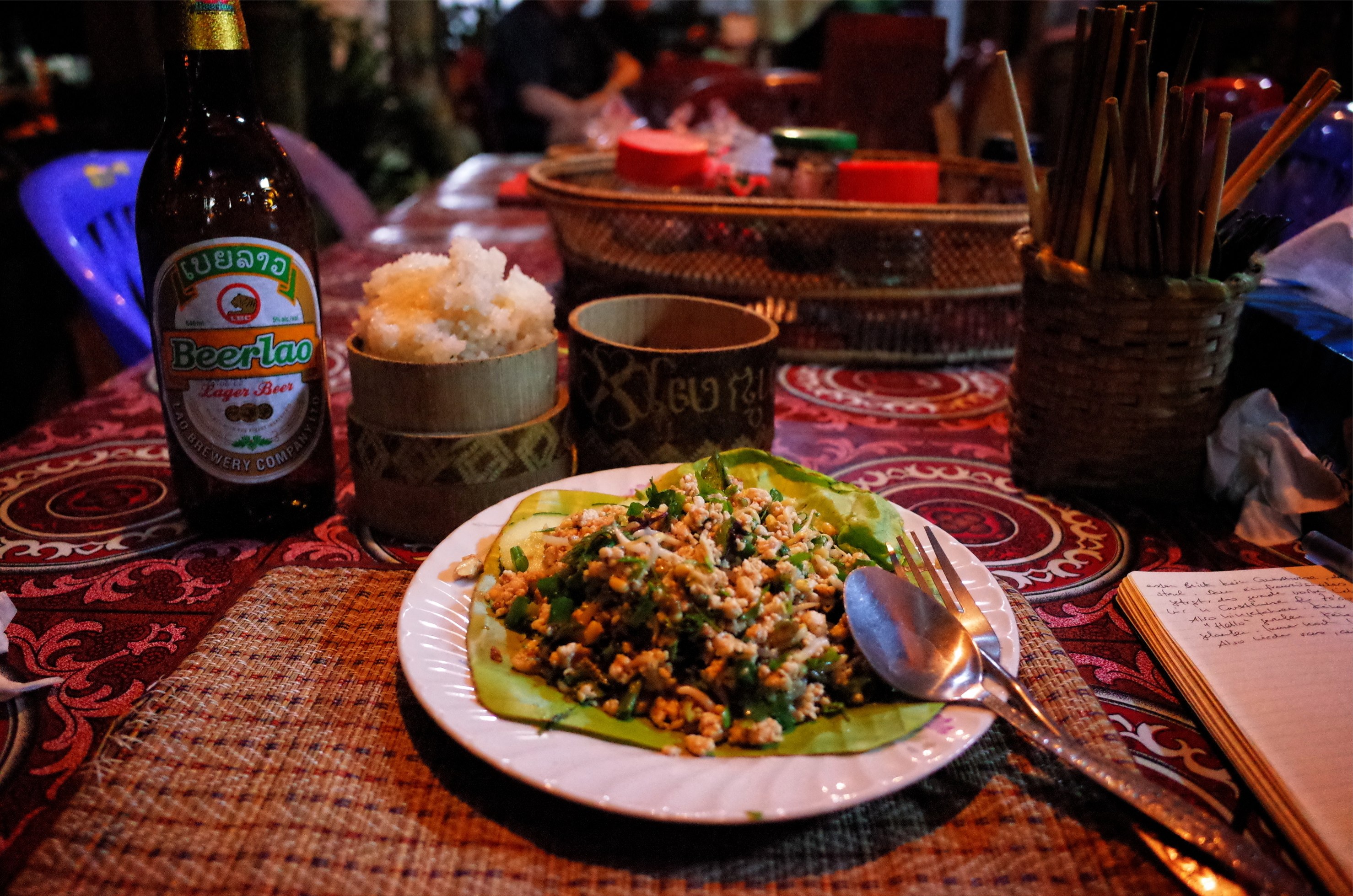
The two countries' signature dishes occupy opposite ends of the Southeast Asian flavour map, and the difference is more telling than any cultural comparison I could write.
Lao laab (also spelled larb or laab) is the national dish — a minced-meat salad of beef, pork, chicken, duck or fish, mixed raw or briefly cooked with toasted ground rice (khao khoua), lime, dried chilli, a forest of mint and coriander and saw-leaf, and crucially padaek: a thick, chunky fermented fish paste that tastes the way a strong washed-rind cheese smells. Lao laab is not sweet. It is funky, herbal, alive with chilli, and very specifically itself. The Thai version most travellers know — the one with palm sugar and a clearer fish sauce — is the cousin, not the parent. Eat it at a roadside place in Vang Vieng or Luang Prabang with a basket of sticky rice and a Beerlao, and the country's whole pantry is on the plate.
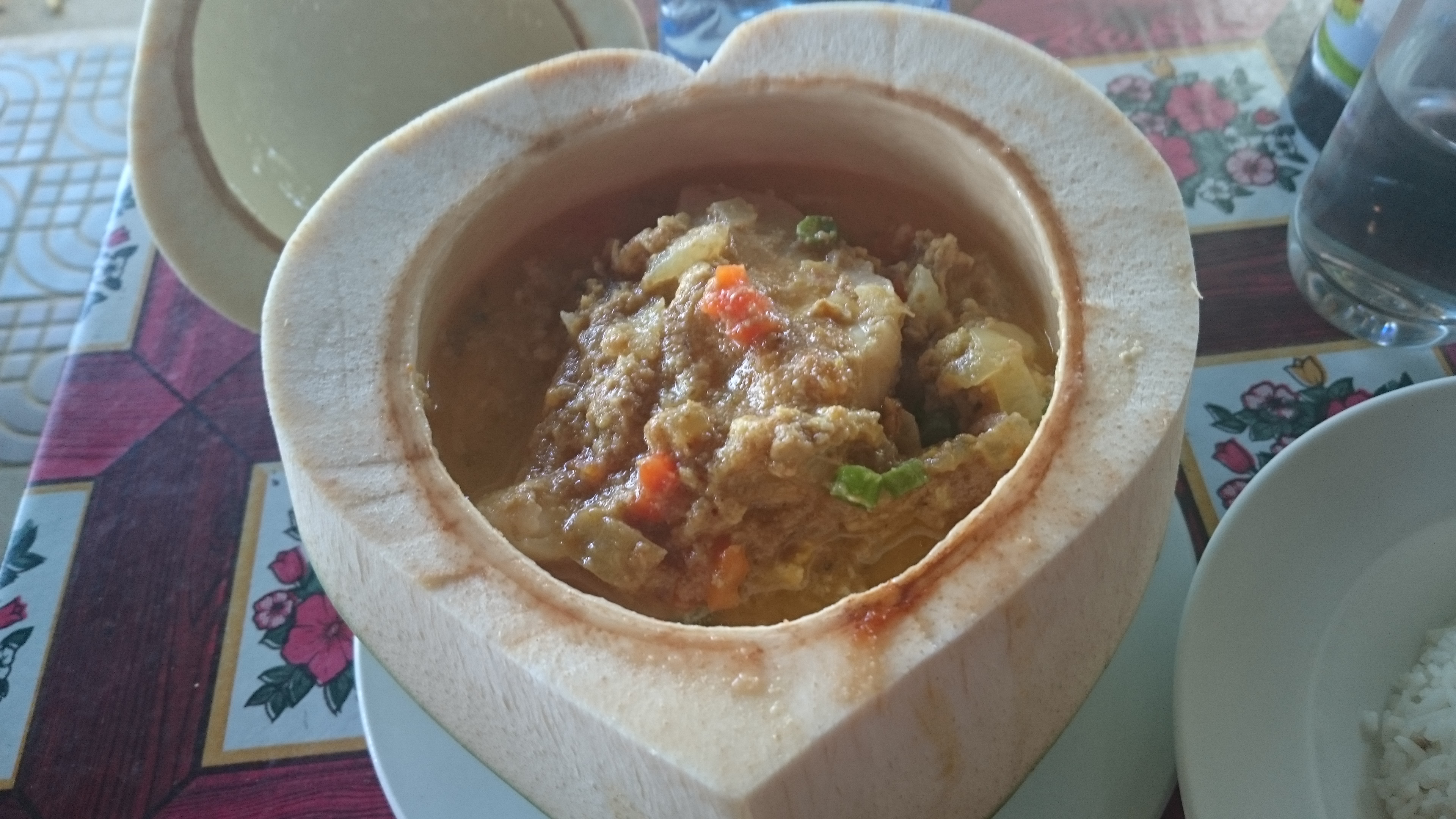
Khmer fish amok (amok trei) is the opposite dish in every variable. It is sweet, creamy, gently spiced — fresh white river fish (catfish, snakehead, or goby), marinated in kroeung (a pounded paste of lemongrass, galangal, turmeric, kaffir lime peel, garlic, shallot), folded into coconut cream and egg, and steamed inside a banana-leaf cup for 25–30 minutes until the consistency lifts to something between custard and soufflé. The flavour is rich and round and not at all fiery; the banana leaf adds a green, tropical perfume. It dates, in some form, to the Khmer Empire — older than Angkor Wat itself.
If you like funk, fermentation, chilli, and herb intensity, Laos is your country. If you like creamy, coconut-based, gently aromatic curries, Cambodia is. Neither is wrong. Most travellers learn they prefer one and not the other within three meals.
Cost in 2026 — Laos crept past Cambodia on accommodation
For a decade the easy line was Laos is the cheaper of the two. That stopped being true around 2024. As of mid-2026 (rates pegged to April/May; both currencies have moved against the dollar):
Dorm bed, Luang Prabang: USD 6–9. Siem Reap: USD 5–8. Roughly even, slight Cambodia edge.
Budget private room with fan, Luang Prabang: USD 14–20. Siem Reap: USD 12–18. Cambodia mildly cheaper.
Mid-range guesthouse with AC, Luang Prabang: USD 35–55. Siem Reap: USD 25–45. Cambodia noticeably cheaper.
Street meal, both countries: USD 2–4. Even.
Local beer (Beerlao / Angkor): USD 1.20–2.00. Even, with Beerlao the better beer by some distance.
Bus, capital to second city: Laos train USD 22 / Cambodia bus USD 13–17. Cambodia cheaper.
Headline attraction: Angkor 3-day pass USD 62. Laos has no equivalent gate fee; the Luang Prabang temples charge USD 1–3 each.
Net: a backpacker doing both countries in 2026 should expect Cambodia to come in roughly 10–15% cheaper on accommodation and ground transport, with Angkor as the one big-ticket spend that closes the gap. Both remain among the most affordable countries in Southeast Asia.
The "easier first" pick
For backpackers and first-time SEA travellers: Cambodia. The hostel scene is denser, the English wider, the bus network more legible, and Angkor is the kind of destination that anchors a trip. Pub Street in Siem Reap will be too much for some readers; the river towns (Battambang, Kampot, Kep) are the antidote.
For couples on a slow trip: Laos. The pacing rewards it. Luang Prabang in particular is built for two — small restaurants, a sunset hill, a river crossing to a quieter bank, the kind of town where you eat the same breakfast at the same place for four mornings and the woman who runs it remembers your coffee on day three.
For families with children: Cambodia, marginally. Flatter terrain, more international medical infrastructure in Phnom Penh and Siem Reap, beaches at Kep and on Koh Rong if the kids need a reset day. Laos is doable with kids but the highland roads and longer transfers wear on small humans.
For solo female travellers: a near-tie, both well within the safe range for the region. Laos is quieter and arguably easier in terms of unwanted attention; Cambodia has the larger expat infrastructure and more visible women travelling alone. I've covered the safety detail separately for each — short version, both are fine. Trust your instincts; the usual precautions apply.
The 10-day combined route, if you actually have time
If your trip allows it, the answer to which one? is both, overland, north-to-south or south-to-north. The route most travellers do, and the one I'd recommend:
Days 1–2 Phnom Penh — Royal Palace, the National Museum, dusk on the Sisowath Quay riverfront where the Tonle Sap meets the Mekong.
Days 3–5 Siem Reap — Angkor at sunrise on day one, Bayon and Ta Prohm on day two, Banteay Srei and an afternoon off on day three.
Day 6 Long day overland: Siem Reap to Stung Treng by bus (around 8–9 hours via Phnom Penh or via Kampong Thom). Stay in Stung Treng.
Day 7 Stung Treng to Don Det. Cross the border at Trapeang Kreal / Nong Nokkhian; boat over to Don Det in Si Phan Don. You are now in Laos, in a hammock.
Day 8 Don Det — kayak with the Irrawaddy dolphins at Anlong Cheuteal in the morning, do nothing in the afternoon.
Day 9 Don Det to Pakse (bus + boat, around 4 hours), then onward train or flight north to Vientiane.
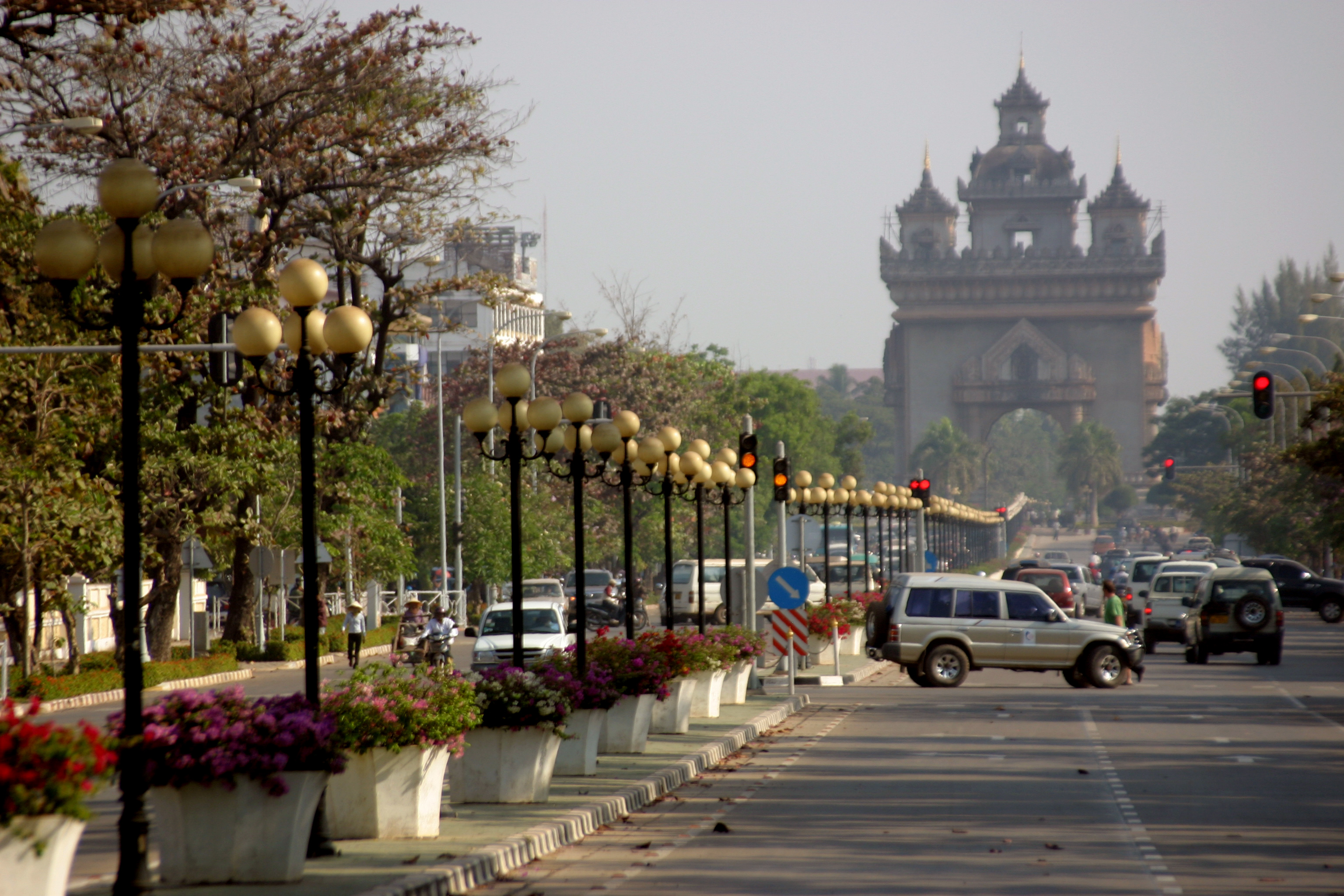
Day 10 Vientiane — Patuxai, Pha That Luang, the riverfront night market — and the morning train to Luang Prabang to start a second week, if you have one.
This route works in either direction. The border crossing is straightforward but small; bring USD cash for the Laos visa on arrival, and don't believe the touts who will tell you the stamping fee is "USD 5 extra at this border" (it's a long-running scam, low-grade, just smile and pay the published rate).
For the Cambodian deep-dive beyond Angkor — Battambang's bamboo train, Kampot's pepper farms, Mondulkiri's elephants — you'd want another week, and I'd send you to our piece on Cambodia beyond Angkor rather than try to compress it here.
The honest one-sentence answer
If you have to choose one and you've already done Thailand and Vietnam: do Cambodia first, because Angkor is unmissable and the road network is more forgiving for a 14-day add-on; save Laos for the trip where you have time to go slow, because rushing it is the surest way to miss the country it actually is.
The Mekong waits, in any case. It is the same river either way.
Italian travel photographer-writer. Architecture, landscape, the light. Slow, deliberate, image-led essays.
✦ More from Marco Rossi


✦ Keep reading
More from this region

More in Destinations
✦ Discussion
Start the discussion
No replies yet — yours could be the first.