
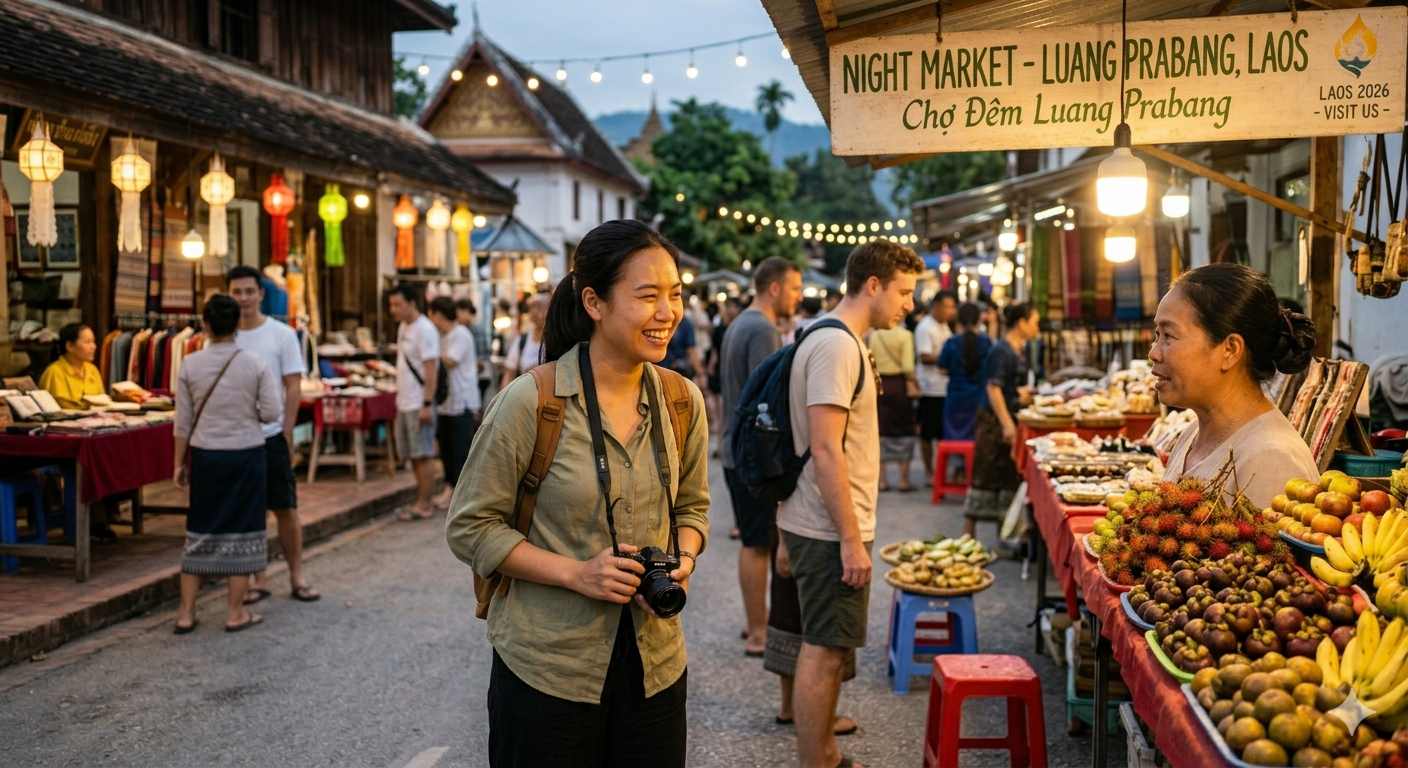
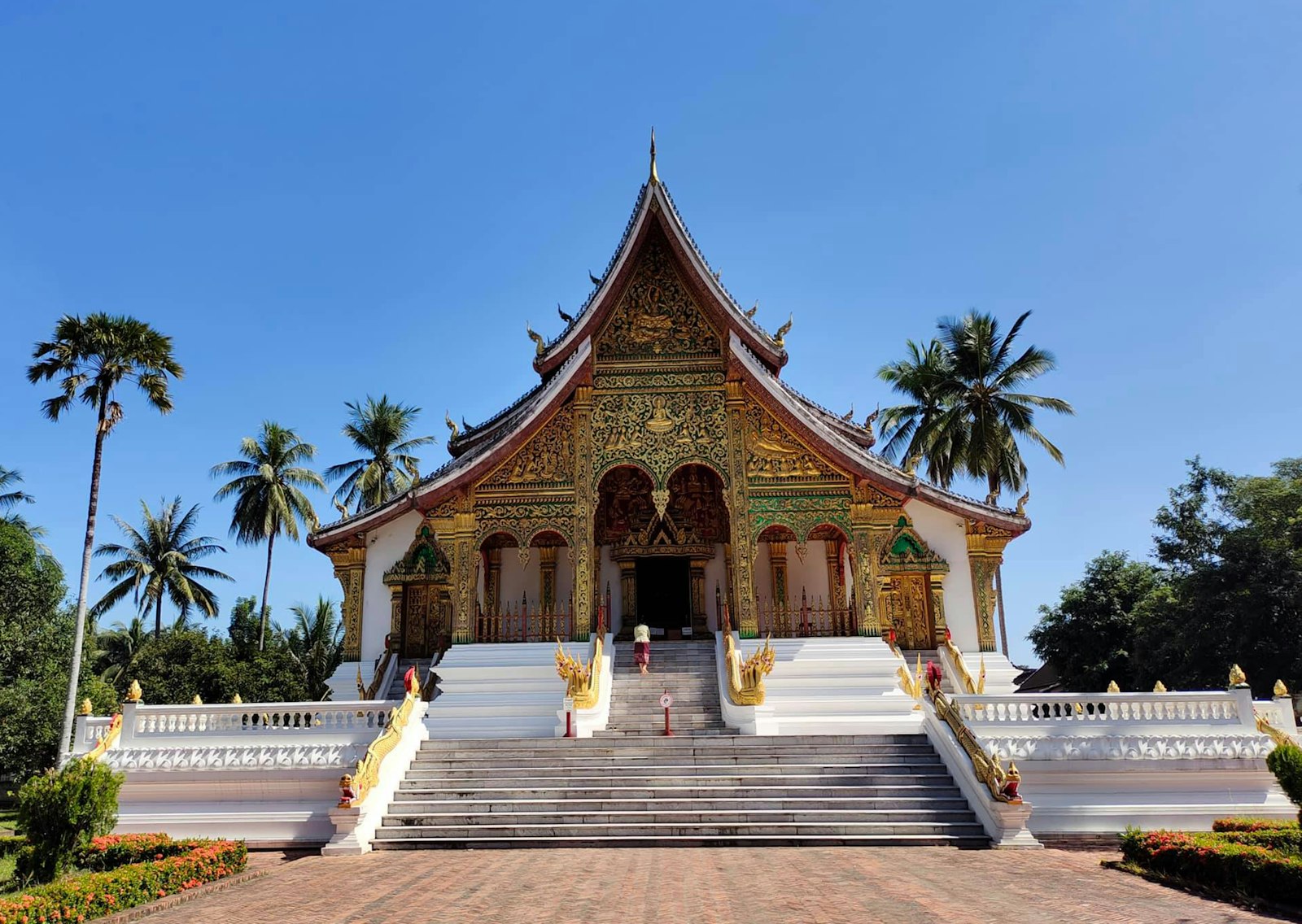
Source: Unsplash · License: Unsplash License · Credit: Photo by Life on the road on Unsplash
Is Laos Safe to Travel Alone? An Honest 2026 Answer
If you're asking whether Laos is safe to travel alone, you've probably also read about the six backpackers who died from methanol-tainted alcohol in Vang Vieng in November 2024. That story shadowed the country in the international press for months, and it's fair to want a clear answer before you book. I'll give you one.
The honest answer
Laos is genuinely one of the safer countries in Southeast Asia for solo travelers, including women and non-binary travelers. Violent crime against foreigners is rare, scams are mild by regional standards, and Lao social culture is famously low-confrontation — people are reserved, gentle, and quick to help. The U.S. State Department, UK FCDO, and Australian DFAT all keep Laos at their lowest or second-lowest advisory tier (with a specific carve-out for Xaisomboun Province, which you have no tourist reason to visit).
What is not zero-risk: bootleg alcohol in backpacker towns, motorbike and minivan accidents on mountain roads, and unexploded ordnance (UXO) if you go off-trail in the bombed provinces. All three are manageable with specific behavior changes — not vague "be careful" energy.
This piece is written solo-traveler-first, with women-traveler notes where they actually differ. If you've done one SEA trip before and you're considering Laos as your second, you're the right reader.
What to know before you go
Visa. Most Western passport holders get a 30-day tourist eVisa for USD 50, applied for online before arrival via laoevisa.gov.la. Processing is around three business days. You can also get visa-on-arrival at major entry points, but the eVisa is cleaner — fewer cash-only surprises at the counter, fewer chances of being shaken down for an unofficial "processing fee." From September 2025 Laos rolled out a Digital Arrival and Departure Card; complete it within three days of your arrival date.
Passport validity: six months from entry, two blank pages. Standard.
Vaccinations. The CDC and NaTHNaC both recommend Hep A, typhoid, and being current on routine shots. Japanese Encephalitis is worth a conversation with a travel clinic if you're going rural or staying longer than three weeks in monsoon season. Rabies pre-exposure is sensible — Laos has stray dogs and post-exposure treatment isn't reliably available outside Vientiane.
Period logistics. Tampons are very hard to find outside Vientiane and Luang Prabang. Pads are everywhere. If you use tampons or a cup, bring them in from Bangkok or home. A menstrual cup is genuinely the easiest answer for Laos — water for rinsing is universally available, including in guesthouse bathrooms.
Cash. ATMs work in cities but cap at around 2 million kip per withdrawal (~USD 95) with hefty fees. Bring USD in clean, unmarked notes as a backup. Many guesthouses and tours quote in dollars.
The methanol question, directly
Six tourists — two Australian teenagers, two Danish women, an American man, and a British woman — died in November 2024 after drinking free shots offered at the Nana Backpacker Hostel in Vang Vieng. The contaminated alcohol is believed to have entered the supply chain as bootleg "vodka" or "whisky," common in tourist bars across SEA. In January 2025, a Lao court convicted ten hostel workers — but only on charges of destroying evidence. No one has been held accountable for the deaths themselves, and the hostel reportedly attempted to reopen in mid-2025 under the name "Vang Vieng Central Backpackers Hostel."
This isn't a Laos-specific problem. Methanol contamination of cheap spirits has killed travelers in Indonesia, Cambodia, India, and Vietnam. What's specific is the cluster, the venue, and the lesson:
What to actually do:
Skip free shots, welcome drinks, and infused/mixed drinks at backpacker bars and hostels. This is the single most protective behavior. The Vang Vieng cluster was free shots. So were earlier clusters in Bali and Sumatra.
Stick to beer (Beerlao is excellent, locally brewed, and effectively impossible to fake), wine in sealed bottles, or spirits poured from a sealed, branded bottle you watched the bartender open. If they can't show you the bottle, don't drink it.
Treat "local rice whisky" / "Lao-Lao" served at backpacker venues as higher-risk than the same drink in a village homestay context, where it's made for the family and shared with you. The risk is industrial-volume bootlegging, not traditional distillation.
Know the symptoms. Methanol poisoning is delayed — usually 12 to 48 hours after drinking. Symptoms are blurred vision, severe headache, confusion, abdominal pain. If you or someone you're with shows these signs after drinking, get to a hospital immediately and say the word "methanol." The antidote is ethanol or fomepizole, time-critical, and Thai hospitals (Udon Thani or Chiang Mai) are far better equipped than Lao ones — medevac fast.
I want to be clear: this is not a reason to skip Laos. It's a reason to drink Beerlao.
Getting around safely
Source: Unsplash · License: Unsplash License · Credit: Photo by Pascal Müller on Unsplash
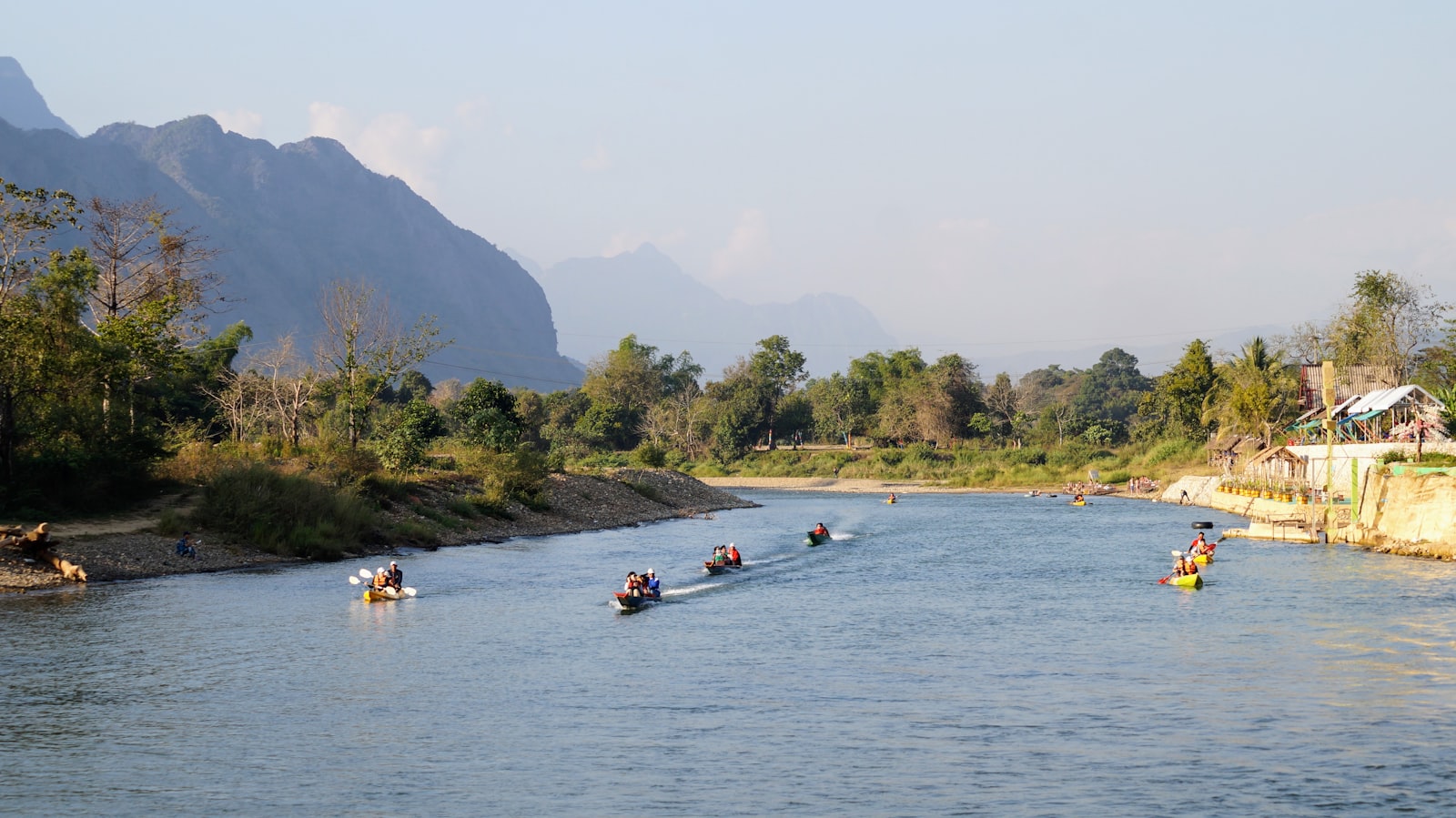
Slow boat, Huay Xai → Pakbeng → Luang Prabang (two days). Still the best way into northern Laos and broadly safe — solo-female-friendly, no harassment culture on board. Get there early for a seat away from the engine at the back (it's loud and exhaust-y). Your big bag goes into the hold and is unreachable until you dock, so put your valuables, water, medication, and a layer in your daypack. The overnight stop in Pakbeng is a one-street town; book accommodation in advance (signal on the boat is unreliable) and ask for a guesthouse with proper mosquito nets — bedbugs are a known problem in the cheapest places. A boat capsized on a rock in December 2025; no fatalities, but luggage was lost. Pack your passport and electronics in a dry bag inside your daypack. Worth doing anyway.
Avoid night buses on mountain roads where you can. The Vientiane–Luang Prabang and Luang Prabang–Vang Vieng routes wind through hills with reckless overtaking and fatigued drivers. The high-speed train (Laos-China Railway), opened in 2021, is the better option for both — fast, cheap, and orders of magnitude safer. Book seats one to two days ahead through your guesthouse or the LCR app.
Motorbikes. Statistically the biggest danger to tourists in Laos, not crime. If you haven't ridden before, Laos is not the place to learn — gravel, monsoon mud, and animals on the road. If you do ride, wear a real helmet (bring your own or buy one in Vientiane), have an International Driving Permit with a motorcycle endorsement (without it, travel insurance will refuse a claim), and don't ride at night.
Tuk-tuks and ride apps. Loca and inDrive both work in Vientiane and Luang Prabang and remove fare-haggling, which I appreciate at midnight. For tuk-tuks, agree the price before you get in.
Where to stay
Source: Unsplash · License: Unsplash License · Credit: Photo by CJ on Unsplash
A few options I or women I trust have used and would book again:
Mad Monkey Vang Vieng — clean, well-run, organizes its own tubing trips with their own (safer) bar setup. Backpacker scene without the wild-west alcohol energy.
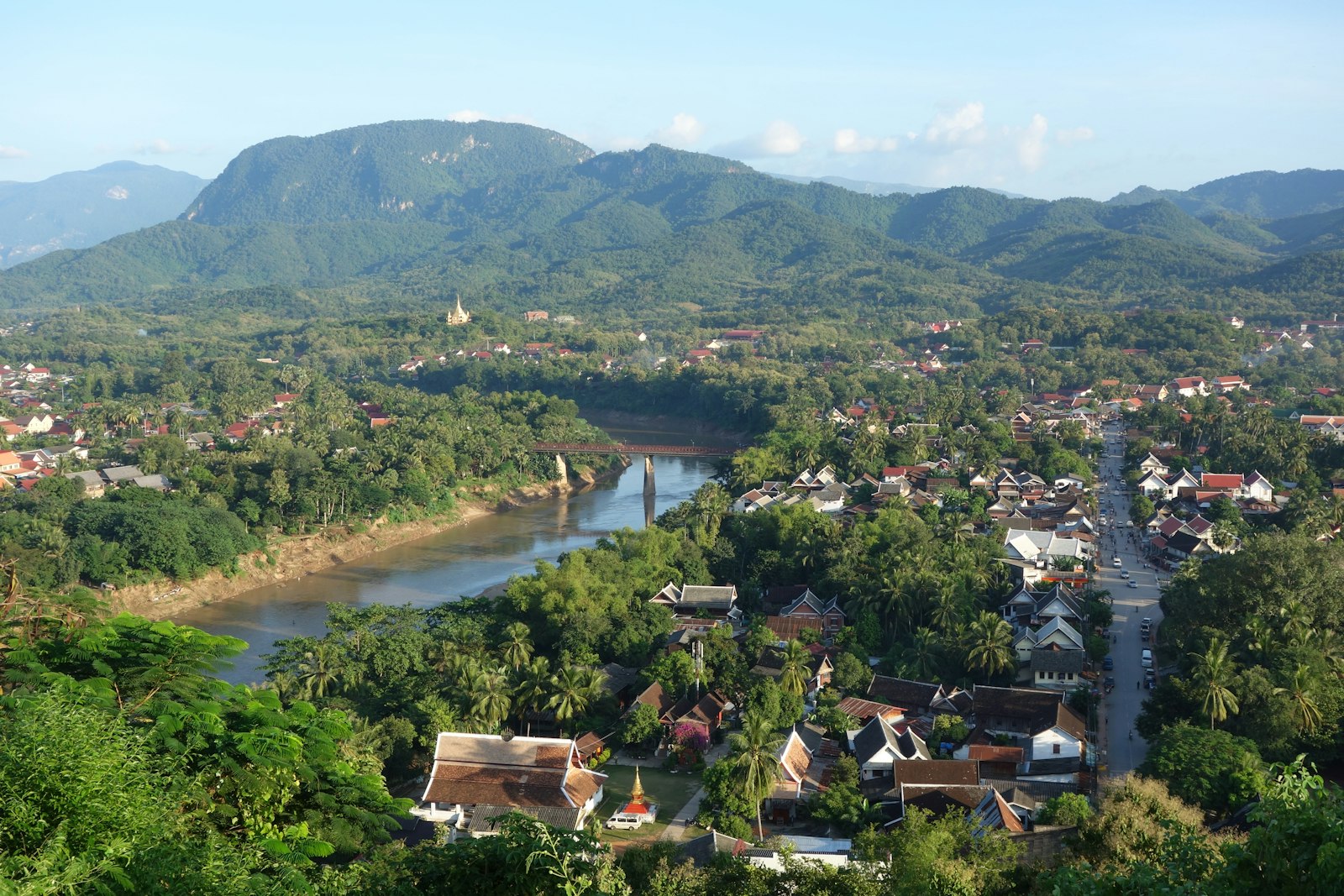
Mulberries Boutique Hotel area, Luang Prabang — small guesthouses around the heritage core are walkable, well-lit, and quiet by 10pm by law (UNESCO curfew). Try Villa Maly or one of the family-run places along Sakkaline Road.
Ban Nalan Homestay (Nam Ha NPA, Luang Namtha) — community-run village stays organized through the Luang Namtha Provincial Tourism Office. Money goes to the host families directly. Solo female travelers consistently report feeling welcome and safe.
Mulberries Organic Silk Farm guesthouse (Phonsavan) — a fair-trade social enterprise employing over 3,000 women across Xieng Khouang Province. Combining a Plain of Jars trip with a stay here is the responsible-tourism version of that itinerary.
For Vang Vieng specifically: in the wake of November 2024, I'd skip any property still offering free welcome shots, regardless of name. Read recent reviews carefully.
The Vang Vieng question
Source: Unsplash · License: Unsplash License · Credit: Photo by Teodor Kuduschiev on Unsplash
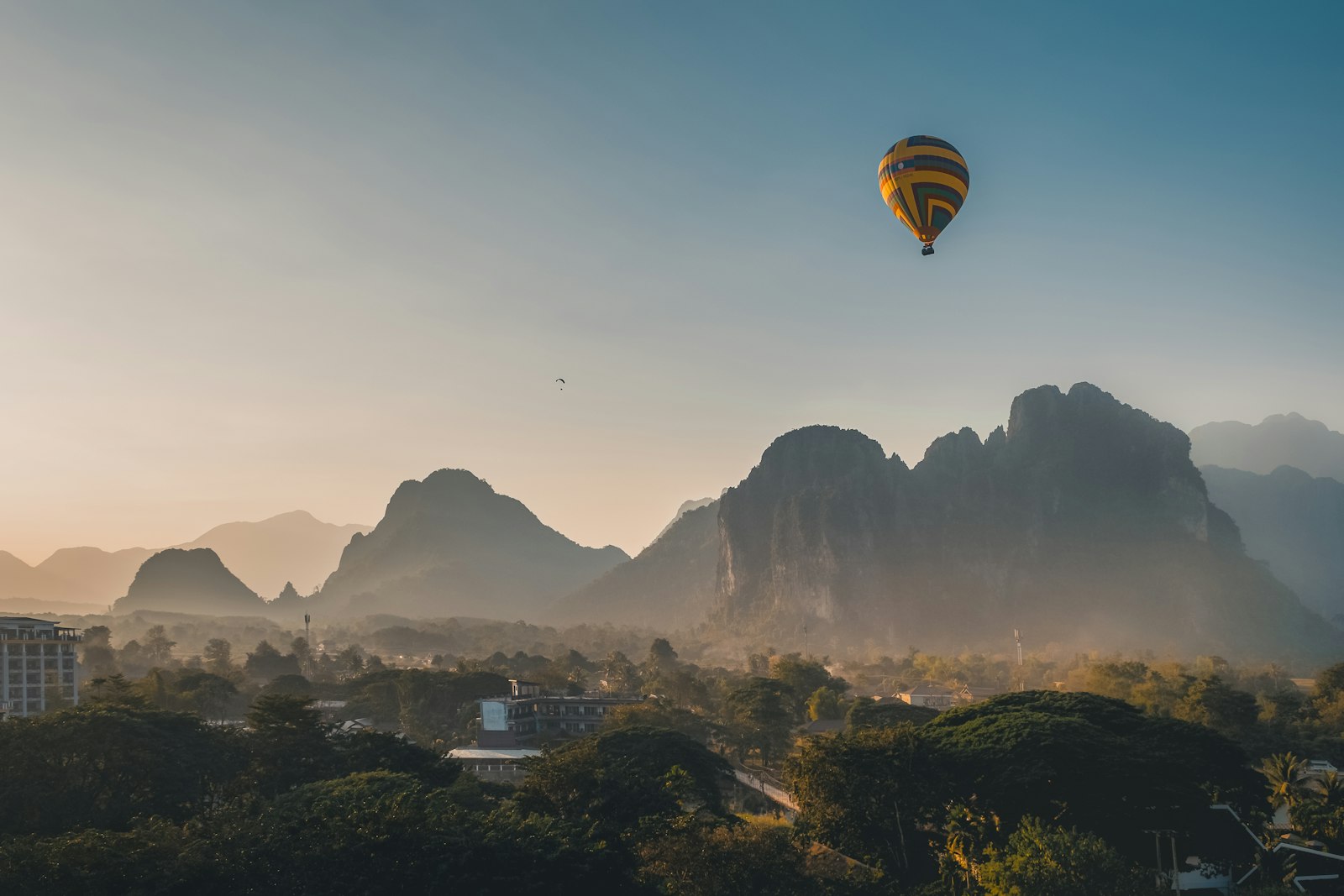
Tubing was reformed after a wave of deaths in 2010–2012, when the river was lined with bars selling alcohol buckets and drugs. The Laos government shut most of it down. Today only four bars are permitted to operate on the river at any time, ziplines and slides are banned, drug sales are gone, and tuber numbers are capped at around 150/day in peak season. Tubing deaths are now genuinely rare. The town has reinvented itself as a soft-adventure base — kayaking, hot-air ballooning, lagoon swimming, caves. It's worth two or three days. Just apply the methanol rules to whatever you drink at the river bars and back in town.
UXO — real risk, manageable behavior
Source: Wikimedia Commons · License: CC-BY-SA-3.0 · Credit: Photo by Adam Jones (Wikimedia user Adam63), CC BY-SA 3.0, via Wikimedia Commons
Laos is the most-bombed country per capita in history. Roughly 80 million unexploded sub-munitions remain across the country, concentrated in Xieng Khouang (Plain of Jars), Savannakhet, Salavan, Sekong, Khammouane, Attapeu, Houaphan, and parts of Luang Prabang province.
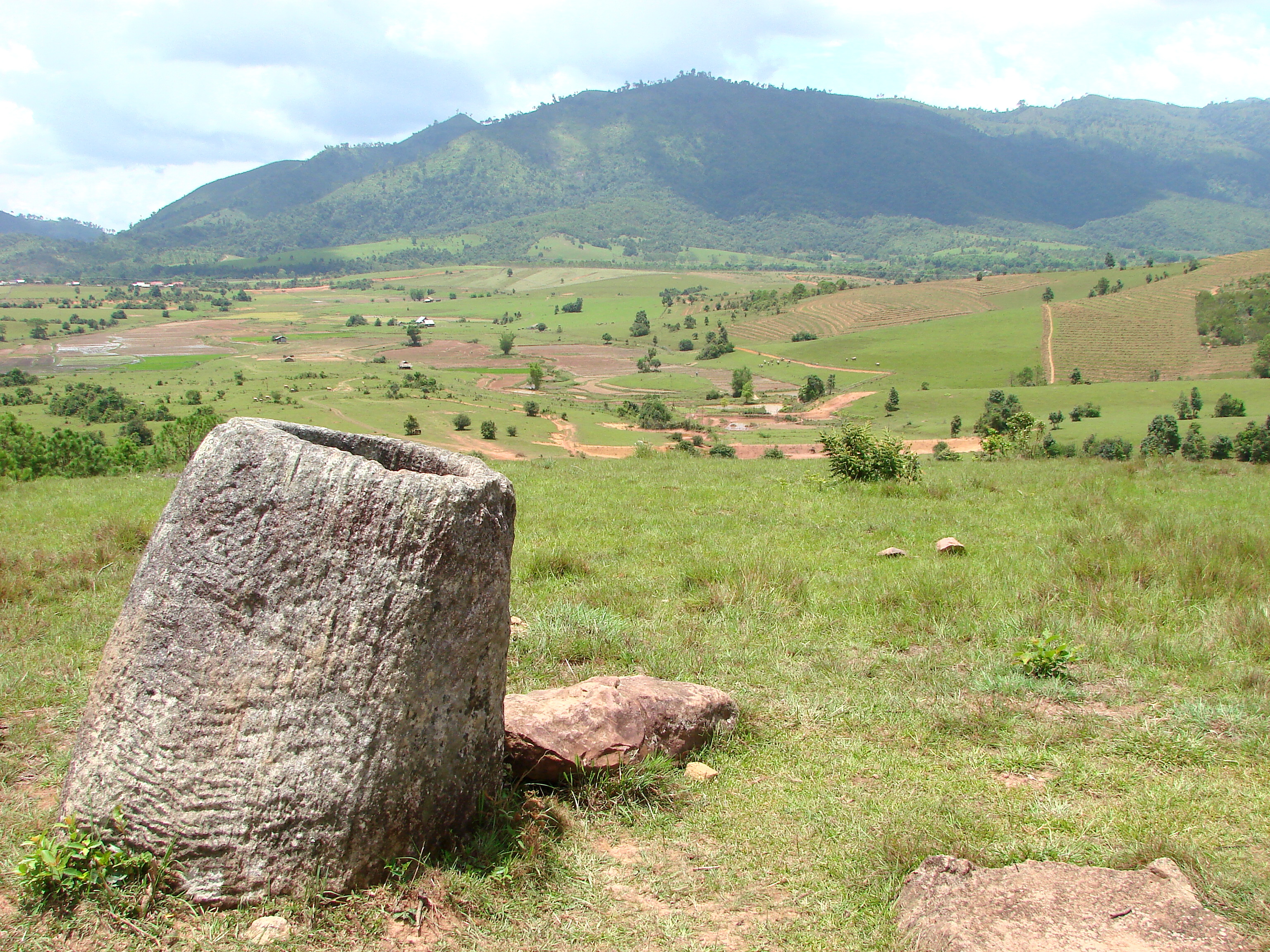
The behavior that keeps you safe: stay on marked paths. At the Plain of Jars, only three of the 90+ sites — Sites 1, 2, and 3 — are cleared and open to visitors, marked with white MAG (Mines Advisory Group) stones indicating cleared ground. Walk on the cleared side, always. Hike with a local guide in any rural/forest area, never alone, and don't pick up scrap metal from the ground (this is how children die — they bring "scrap" home and it detonates). The COPE Visitor Centre in Vientiane is a sobering, important hour and explains why this matters.
If something goes wrong
Emergency numbers: Police 191 · Ambulance 195 · Fire 190 · Tourist Police (Vientiane) +856 21 251 128. English-speaking dispatchers are not guaranteed; calling your embassy may be faster.
Embassies (Vientiane): US +856 21 487 000 · UK +856 21 410 689 · Australia +856 21 353 800 · Canada (covered via Australia in emergencies).
Best hospital in country: Alliance International Medical Centre (Vientiane). For anything serious, the standard advice from every embassy is medevac to Bangkok (Bumrungrad, Samitivej) or Udon Thani (AEK Udon) — about three hours from Vientiane by road.
Harassment / assault support: the Lao Women's Union (LWU) runs counseling centers in Vientiane (+856 21 214 306) and most provincial capitals. Realistically, your embassy will be your fastest route to coordinated help.
Travel insurance: non-optional for Laos. Confirm it covers motorbike riding (most don't, by default) and medevac to Thailand.
Where your money goes
Lao tourism is small, family-run by default, and your spending choices have visible effects. A few that punch above their weight:
Ban Ou Community Tourism near Nong Khiaw — women lead noodle-making, weaving, and cooking demonstrations; revenue stays with the host families.
Mulberries Organic Silk Farm, Phonsavan — fair-trade silk cooperative employing women across 200+ villages in Xieng Khouang.
Nam Ha National Protected Area treks out of Luang Namtha — booked through the Provincial Tourism Office (not third-party agents), with revenue shared directly with Akha and Khmu village hosts.
The Gibbon Experience, Bokeo — a conservation-funded canopy-stay run with the Lao government to protect forest from poaching. Pricey but the money does what it says.
What I'd avoid: elephant "sanctuaries" that offer riding (still exists; not a sanctuary), tiger encounters of any kind, and orphanage visits (whole-of-region issue — most aren't orphans, and traffic harms children).
The bottom line
I'd go. I'd go solo, I'd recommend it as a first or second SEA trip for a woman traveling alone, and I'd treat it as the gentler counterweight to Vietnam's intensity or Thailand's tourist machine. The country's risks are specific and behavior-addressable: don't drink free shots, don't take night buses on mountain roads, don't step off marked paths in UXO country. Do those three things and Laos will likely be the easiest, kindest country in your itinerary.
The one thing that genuinely would make me wait: if you're traveling in your first month of solo travel ever, and you're someone who tends to say yes to whatever the hostel offers, do Thailand first. Laos rewards a slightly more deliberate traveler. You sound like one.
Solo female traveler from Bangalore. Safety advocate, responsible tourism, women-run cooperatives — empowering, never alarmist.
✦ More from Priya Sharma


✦ Keep reading
More from this region


More in Destinations
✦ Discussion
Start the discussion
No replies yet — yours could be the first.