
Source: wikimedia · License: CC-BY-SA-4.0 · Credit: Everhard van Eimeren, CC BY-SA 4.0, via Wikimedia Commons
Where to Stay in Pakbeng: Fourteen Hours on the Mekong's Quiet Bend
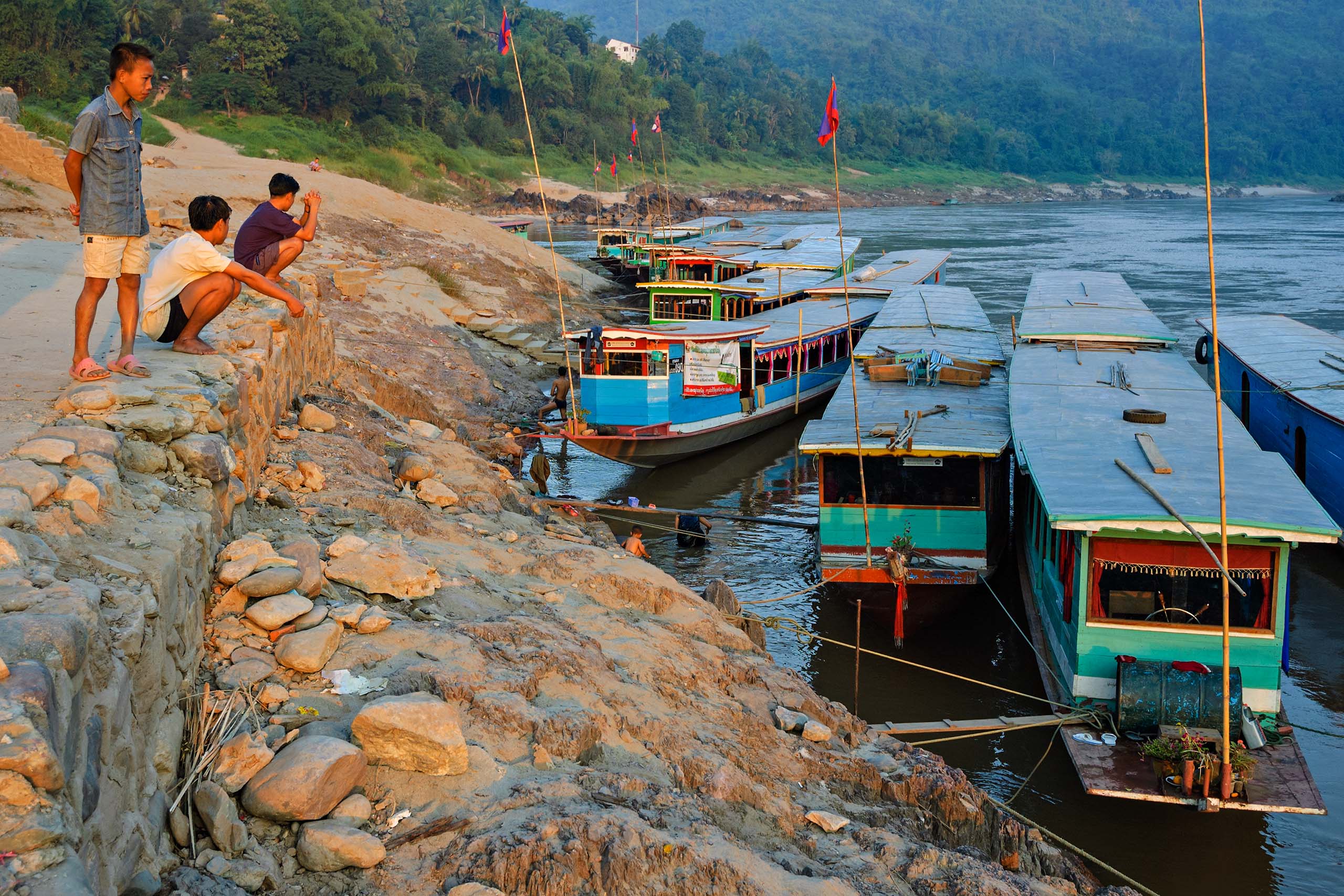
The engine cuts. Not all at once — the boatman eases the throttle in stages, so the long wooden hull slides forward on its own momentum, settles, finds the bank. It is somewhere between five and six in the afternoon. The river is the colour of new bamboo dropped in tea, silt-loaded and opaque, the green-brown of a season's worth of rain crossed with a season's worth of dust. The bank is a stair of stone climbing into a hillside of corrugated roofs. Behind us, the Mekong continues its slow southward bend; ahead, fourteen hours of stillness before the engines start again.
This is Pakbeng. You have arrived.
The shape of the stop
Source: wikimedia · License: CC-BY-SA · Credit: via Wikimedia Commons
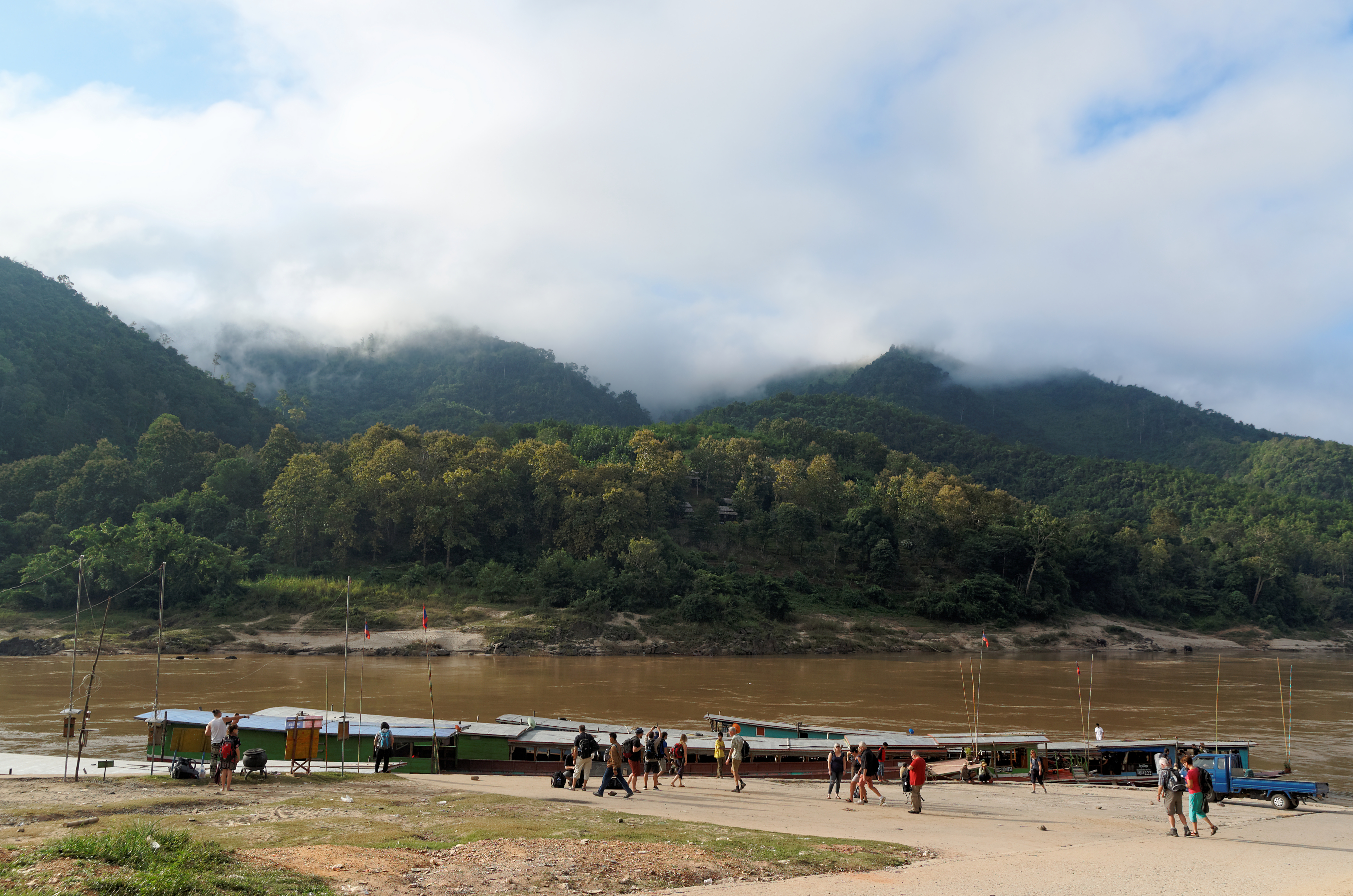
Pakbeng exists for the boat, and the boat — the public slow boat from Huayxay on the Thai border down to Luang Prabang — exists because the river is the road. The journey is two days. The first day runs roughly eight or nine hours from Huayxay; the second runs seven or eight from here. In between is this village, perched on its hillside between two stretches of water nobody wants to navigate after dark.
You will arrive in the late afternoon and leave between eight and nine the following morning. That is fourteen, perhaps fifteen, hours. Most travelers I have watched do exactly the same circuit in them: climb the stone stair with their pack, find a room, shower the river dust off, eat dinner on a terrace facing west, sleep, buy baguettes at dawn, descend the same stair. The piece I want to write you is about doing those hours well — and choosing, deliberately, the window you watch them through.
The boat exists because the river is the road. The village exists because the boat needs the dark.
What the light does here
Source: wikimedia · License: CC-BY-SA-4.0 · Credit: Jakub Hałun, CC BY-SA 4.0, via Wikimedia Commons
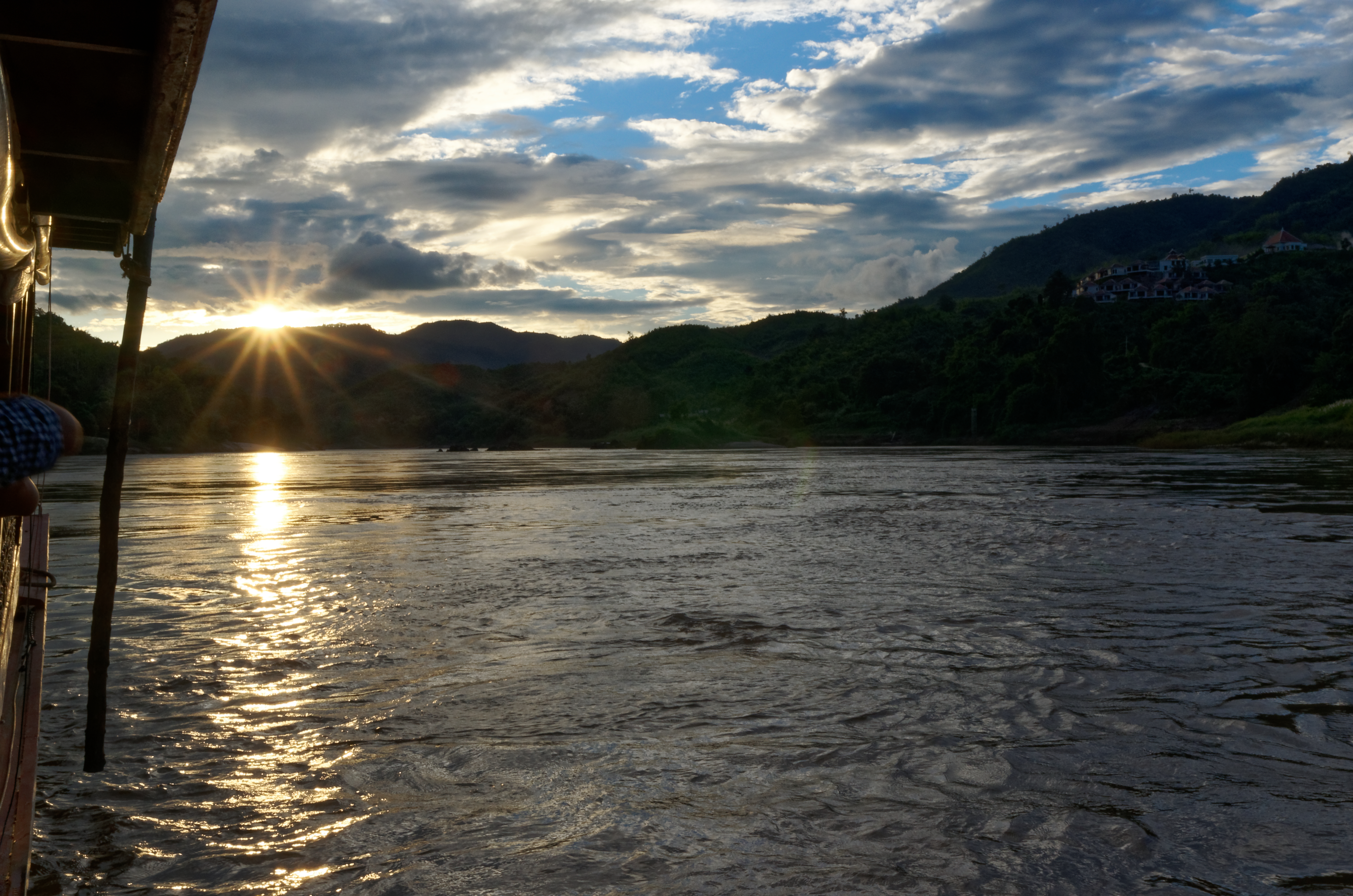
Pakbeng sits at roughly twenty degrees north, a latitude that does its best work at the edges of the day. In the dry, cool months — November through February, which is when most travelers make this crossing — the sun comes up around 6:30 to 6:50am and goes down between 5:30 and 6:00pm. That gives you, in practical terms, two specific gifts: a long, slow blue hour the evening you arrive, and a stretch of river-mist between roughly 6:00 and 6:45am the morning you leave.
The mist is the better photograph. The Mekong here runs in a narrow corridor between hills, and on cool dry-season mornings a band of vapour sits on the water at chest height, soft as wood smoke, until the first thermals lift it. The longtail boats are still moored. Nothing is moving. If your room has a balcony over the river, you do not need to leave it.
Three places to sleep
I am giving you three. Pakbeng has more — perhaps thirty places taking guests on any given night — but the slow-boat crowd lands in waves, the good rooms book out, and the choice resolves quite cleanly along a single axis: how high up the hill you want to be, and how much wood you want around you.
Sanctuary Pakbeng Lodge — the heritage property on the slope
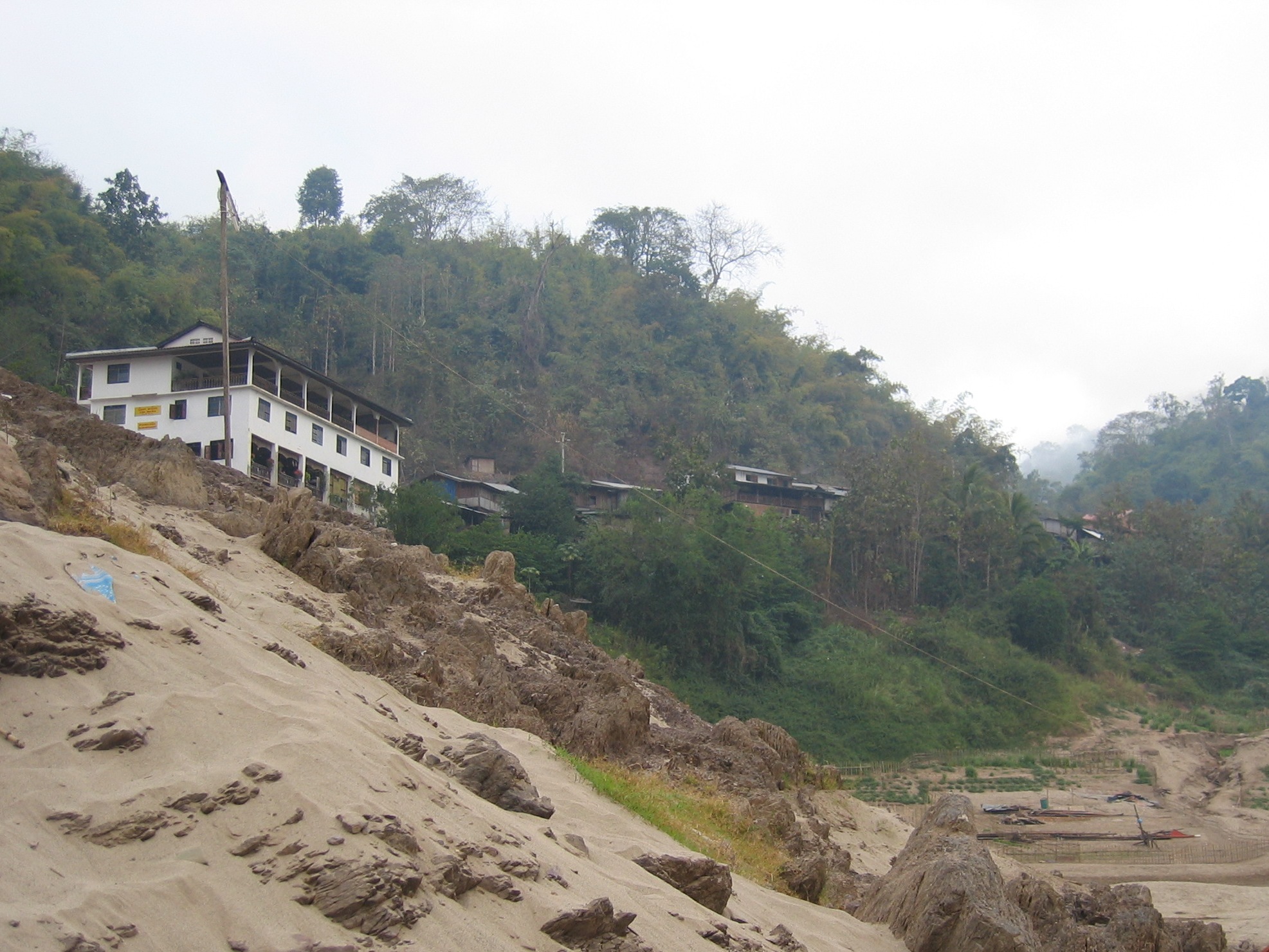
If you book one room in Pakbeng with intent, book this one. Sanctuary Pakbeng Lodge (formerly listed simply as The Pakbeng Lodge, and still labelled that way on Booking) is the village's heritage property — thirty rooms strung along the slope, walls and beams of dark timber, parquet floors of rosewood, sliding wooden screens in the deluxe units. The superior rooms face the river; the upper terrace faces the river; the restaurant faces the river. You did not come here for novelty. You came to sit on a balcony with a glass of Beerlao and watch the silt change colour for an hour.
Rates run roughly USD 90 a night and up, more in peak dry season. The hotel's restaurant is honest Lao-French — mok pa steamed fish in banana leaf, river-weed kaipen fried crisp, a baguette that is the real shape and crumb of a baguette and not the hotdog bun the village's lesser bakeries pass off as one. Book a fortnight ahead in December and January, longer if you can.
Mekong Riverside Lodge — the bamboo option, thirty metres above the water
A second hillside property, smaller in scale and lighter in materials. The bungalows are bamboo, perched on the slope perhaps thirty metres above the river, each with its own balcony and a private table and two chairs. Mosquito nets on high frames, electric fans, hot showers. The bedding is simple. The view, which is what you are paying for, is not.
Rooms here run more like USD 40 to 60 in season. This is the room I would book if I were travelling alone with a camera and wanted to be on the balcony at five in the morning without negotiating a hotel corridor. The wooden slats of the bungalow ceiling glow when you light a lamp at dusk; the river goes black beneath them while you are still pouring tea.
Monsavanh Guesthouse — the honest room near the pier
The slow-boat traveller's default. Monsavanh is the wooden building on the main street five minutes' walk from the boat ramp, with the bakery of the same name directly across the road. Rooms are private doubles and twins, fan or air-con, twenty to twenty-five US dollars in season. The walls are wood, which makes a difference no concrete budget room in Pakbeng can match. You will hear the corridor. You will hear the bakery starting up at five-forty in the morning. Both are part of the night you came here for.
There is a price gradient in Pakbeng worth knowing about. Rooms cost roughly what the slow-boat crowd will pay, which means they cost more between November and February than they should, and rather less in May or September when the boats run lighter and the few rooms in town have empty beds. The same room can quote forty dollars in January and twenty-two in May. Book ahead in season; arrive on spec in shoulder.
Dinner, on a terrace, facing west
Whichever room you take, walk back along the main street at dusk. The village is small enough that "the main street" and "the village" are the same sentence. Sodium-vapour lights come on at half-strength in the windows of the guesthouse-restaurants, throwing that particular orange the eye reads as warmth even when it knows better. The terrace restaurants face the river, and the river faces west. You will get the second half of the sunset and the whole of the blue hour off your plate.
What to order is unfussy: a Lao curry with river fish, sticky rice in its lidded basket, morning-glory stems with garlic, a Beerlao in a glass. Indian food at Kopchai Deu if you want a change, and a small free shot of lao-lao — the village's rice spirit — usually arrives unannounced. You should be in bed by ten. The boat leaves early and there is mist to wake for.
Sodium-vapour lights come on at half-strength, throwing that particular orange the eye reads as warmth even when it knows better.
The morning, and the bakery
Source: wikimedia · License: CC-BY-2.0 · Credit: via Wikimedia Commons (Flickr import), CC BY 2.0
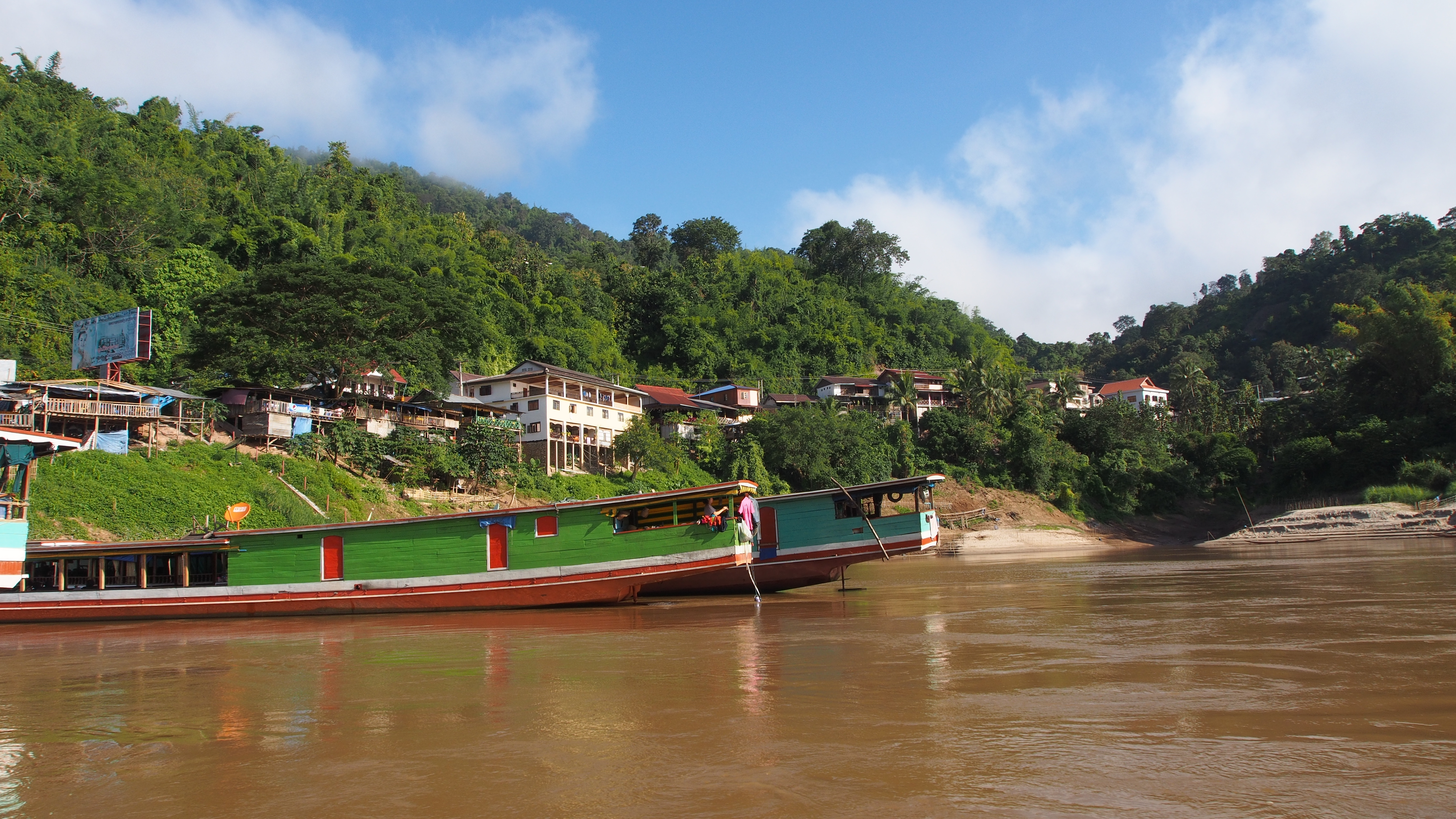
This is the photograph I want you to take. Set an alarm for six. Be on your balcony, or on the upper terrace of whichever lodge you have chosen, in the dark. Make coffee in the room if you can. Wait.
The light arrives slowly here — the hills to the east hold it back twenty minutes longer than the official sunrise time suggests. What you get first is a colour: a pewter sheen on the water, then a faint warm wash along the ridge line, then the mist itself, which until that moment was invisible. It will sit there in a flat band for perhaps half an hour. The boatmen below are starting fires for tea. Nothing has moved on the water.
When you finally come down the stair with your pack, stop at the bakery near the boat ramp — Monsavanh is the dependable one, with a proper espresso machine and baguettes that pass for baguettes. Order two: one for breakfast, one for the boat. The vendors selling sandwiches by the ramp will pre-make you something for the journey too. Take both. Day two is seven hours, and Luang Prabang is still a long stretch of bamboo-tea river away.
The boat itself
Source: wikimedia · License: CC-BY-SA-4.0 · Credit: Jakub Hałun, CC BY-SA 4.0, via Wikimedia Commons
Worth a frame before you board. The slow boats are perhaps thirty metres long, narrow, wooden-hulled, with an open side and a low roof. The seats, for years, were salvaged minivan rows; on most boats now they are simple red plastic chairs lined in rows of two and two, bolted to a wooden floor that has the patina of fifteen years of dust and damp. The engine sits exposed at the stern. The captain's seat is sometimes a kitchen stool.
Photograph it loaded and empty. Empty, mid-afternoon, you can frame the geometry: parallel rows of red against the dark grain of the wood, the river a slot of green at the open side. Loaded, the day before, you have the human picture — packs stacked, boots off, books open, the long quiet of a journey that nobody is in a hurry to end.
Why this stop matters in the larger journey
Pakbeng is small and easily dismissed. It is not the destination. It is barely a village by any measure other than the river's. But it does a thing few stops on a journey do, which is to insist on stillness. There is nowhere to go from your room. There is no museum to visit, no temple route to walk, no tour to book. The slow boat strips two days out of your itinerary for the sole purpose of moving at the speed of water, and Pakbeng strips a further fourteen hours out of that for the sole purpose of moving at no speed at all.
You came on the slow boat because you wanted to arrive in Luang Prabang the right way — overland, river-borne, on the line a thousand traders before you came down. Pakbeng is the half-step in that. Sleep high on the hill. Watch the mist. Take your baguette. Step back onto the wooden boat in the morning. The river will do the rest.
Italian travel photographer-writer. Architecture, landscape, the light. Slow, deliberate, image-led essays.
✦ More from Marco Rossi


✦ Keep reading
More from this region


More in Vietnam
✦ Discussion
Start the discussion
No replies yet — yours could be the first.