
Source: Unsplash · License: Unsplash License
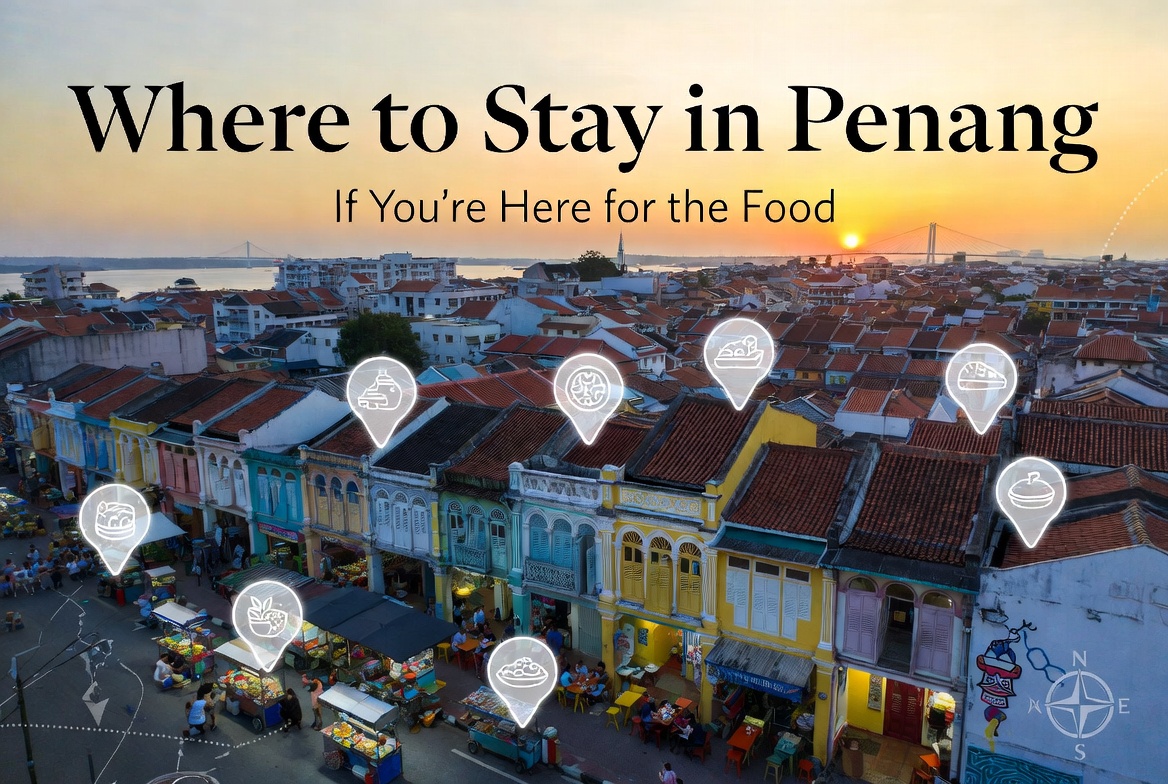
Where to Stay in Penang If You're Here for the Food
The first decision a food traveler makes in Penang is not which char kway teow to order. It is which bed to sleep in. Penang's hawker culture is the densest in Southeast Asia — denser than Bangkok, denser than Hanoi, denser even than Singapore's Maxwell or Tiong Bahru on their best nights — but it is also wildly concentrated. Get the geography wrong and you spend half your trip in a Grab car. Get it right and you walk out of a shower at 6:45 a.m. and into a bowl of curry mee at 6:53.
I have stayed in three of Penang's four main accommodation zones across five trips since 2021. What follows is a ranking, not a tour-guide list. I am going to tell you where to sleep, what you can walk to from that bed, and where the trade-offs hide.
The framing — why this is a food-access question, not a "best neighborhood" question
Source: Unsplash · License: Unsplash License
Most "where to stay in Penang" guides start with the question what kind of trip are you taking. That is a fine question for someone planning a honeymoon. For a food traveler, it is the wrong question. The right question is: how many of Penang's named hawker stalls can I reach on foot within twenty minutes of my hotel?
The answer scales steeply. Inside the heritage core, that walk radius covers something like forty serious stalls — meaning stalls with reputations, with queues, with a single dish they have made every day for thirty years. Pulau Tikus, a kilometre west, covers maybe twelve. Tanjung Bungah, ten minutes further out by car, covers three or four. Batu Ferringhi covers essentially zero hawker stalls of consequence; it has resort restaurants and a tourist night market, which is a different thing entirely.
So the ranking writes itself. The only honest debate is between the top two.
1. George Town heritage core — Chulia, Cintra, Kimberley, Chowrasta
Source: Wikimedia Commons · License: CC BY-SA · Credit: Wikimedia Commons contributor
This is the answer. If you take only one sentence from this piece, take that one.
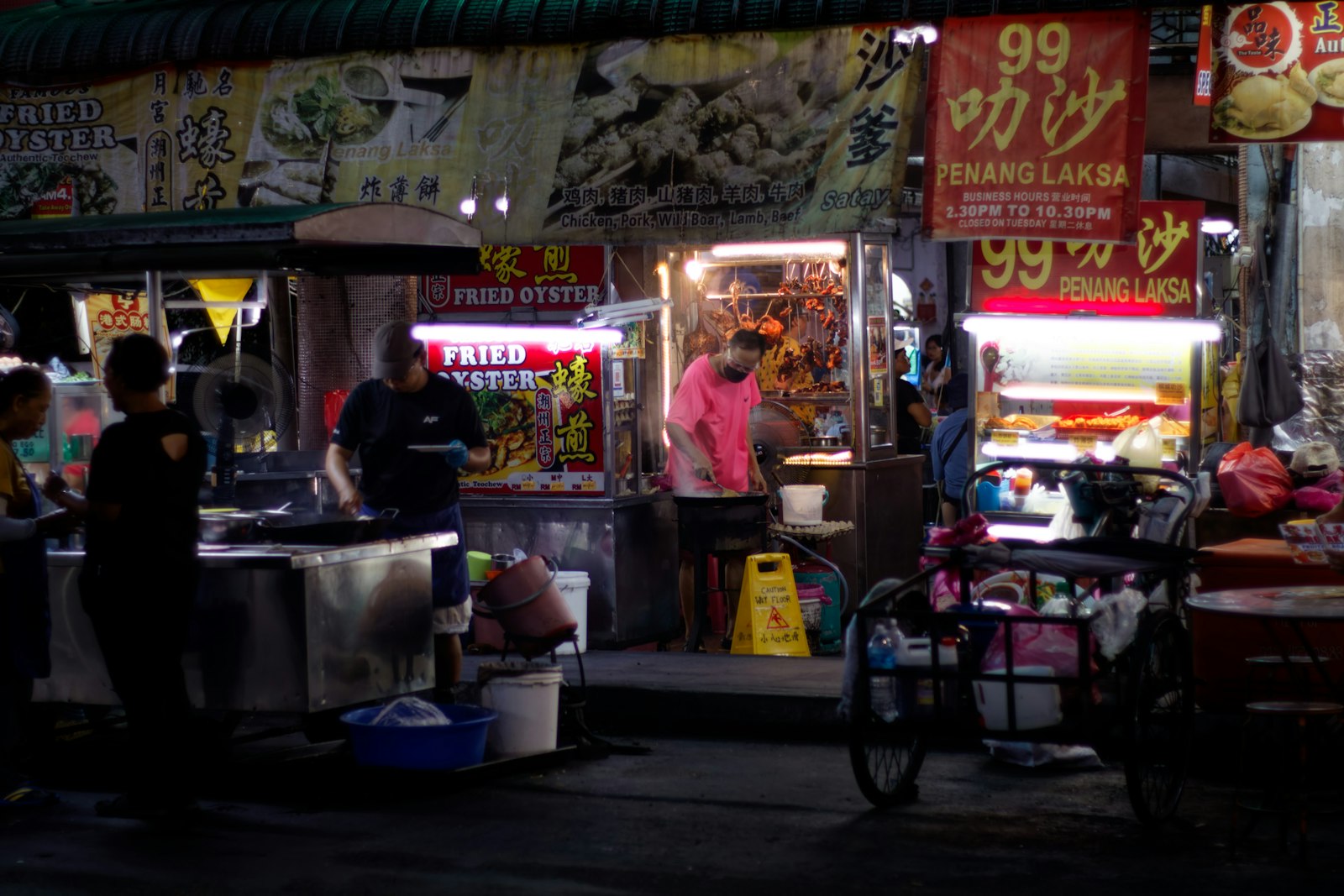
The core is bounded, roughly, by Lebuh Carnarvon to the west, Lebuh Chulia to the south, Jalan Penang to the east, and Lebuh Chowrasta and the wet market to the north. Inside that grid, the named hawker stalls land on top of each other. Lebuh Kimberley alone is one of the great food streets on the planet — by night it becomes the Kimberley Street Food Night Market, with the so-called Four Heavenly Kings (kway chap, kway teow th'ng, char kway teow, sotong kangkung) plus duck koay chap, oyster omelette, satay, and the cult Bridge Street prawn noodle a five-minute walk away on Lebuh Presgrave. The 888 Hokkien mee stall on Presgrave — opened by 72-year-old Mdm Goh Poh Kim, who learned the recipe from her sister-in-law — operates 5 to 8 p.m., closed Mondays and Thursdays, and is the closest thing to a Hokkien-mee rite of passage in Penang. Most hawker stalls in the core close by 8 p.m. Plan dinners early.
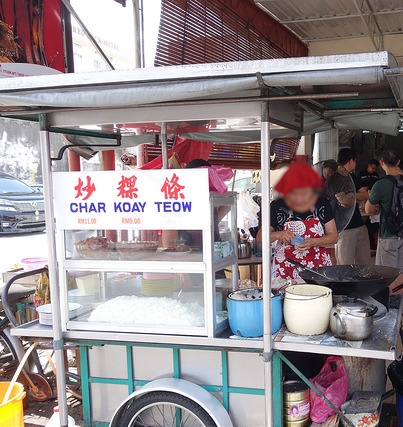
Daytime, you walk five minutes south to Tho Yuen at 92 Campbell Street, in business since 1935 and now Michelin-listed, for Cantonese dim sum made from 3:30 a.m. and gone by lunch. You walk two minutes east to Lorong Selamat — the famous red-beret aunty stall is open 9:30 a.m. to 5:30 p.m., closed Tuesdays — for char kway teow that costs RM 12 to 15 a plate with prawns the size of your thumb. (Yes, that's two to three times the going rate for char kway teow. Yes, you should pay it once.) You walk eight minutes northwest to Siam Road Char Koay Teow on Jalan Siam, Bib Gourmand-listed, charcoal-fried, half-day operation only, queues that can run forty minutes on weekends. The stall has moved about a hundred metres down the same road in recent years; Uncle Tan's son now runs the wok.
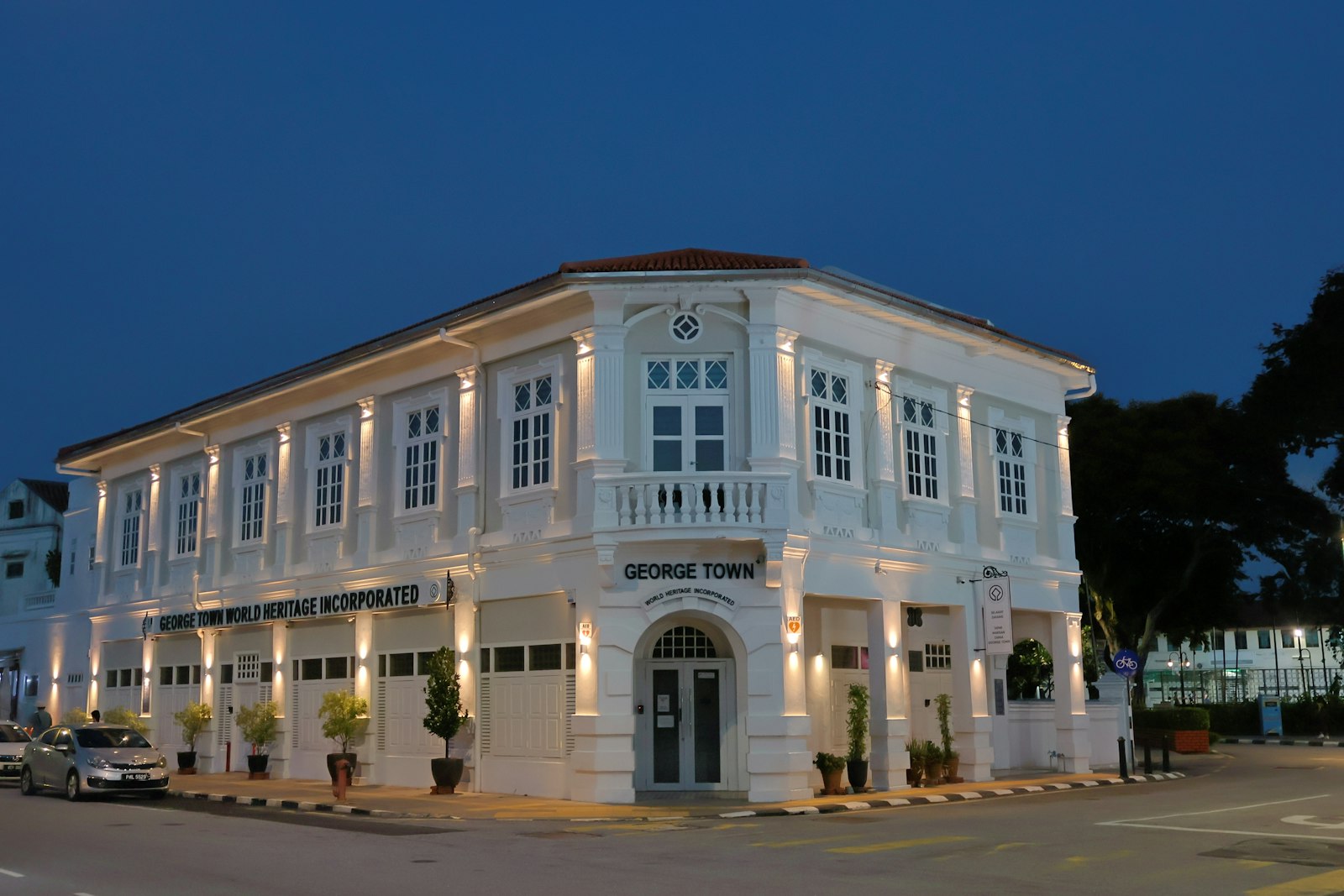
The hotel options inside this radius scale from RM 80 backpacker dorms on Lebuh Chulia up to the heritage boutique tier — Yeng Keng on Chulia (a restored Anglo-Indian bungalow, nineteen rooms), Chulia Mansion, Seven Terraces on Stewart Lane, the Edison on Leith Street, Macalister Mansion further out. The mid-range is where the value sits: clean en-suite shophouse rooms for USD 35 to 60, ten-minute walks to twenty serious meals.
The trade-off: the core is noisy. Lebuh Chulia in particular is the backpacker spine, and the bars stay open past midnight. If you sleep poorly with street noise, book one street back — Lebuh Cintra, Lebuh Muntri, or Love Lane all sit one block inside the buffer and stay quieter.
Verdict: this is where you sleep. Four nights minimum.
2. Lorong Burma and Pulau Tikus — the second base
Source: Unsplash · License: Unsplash License
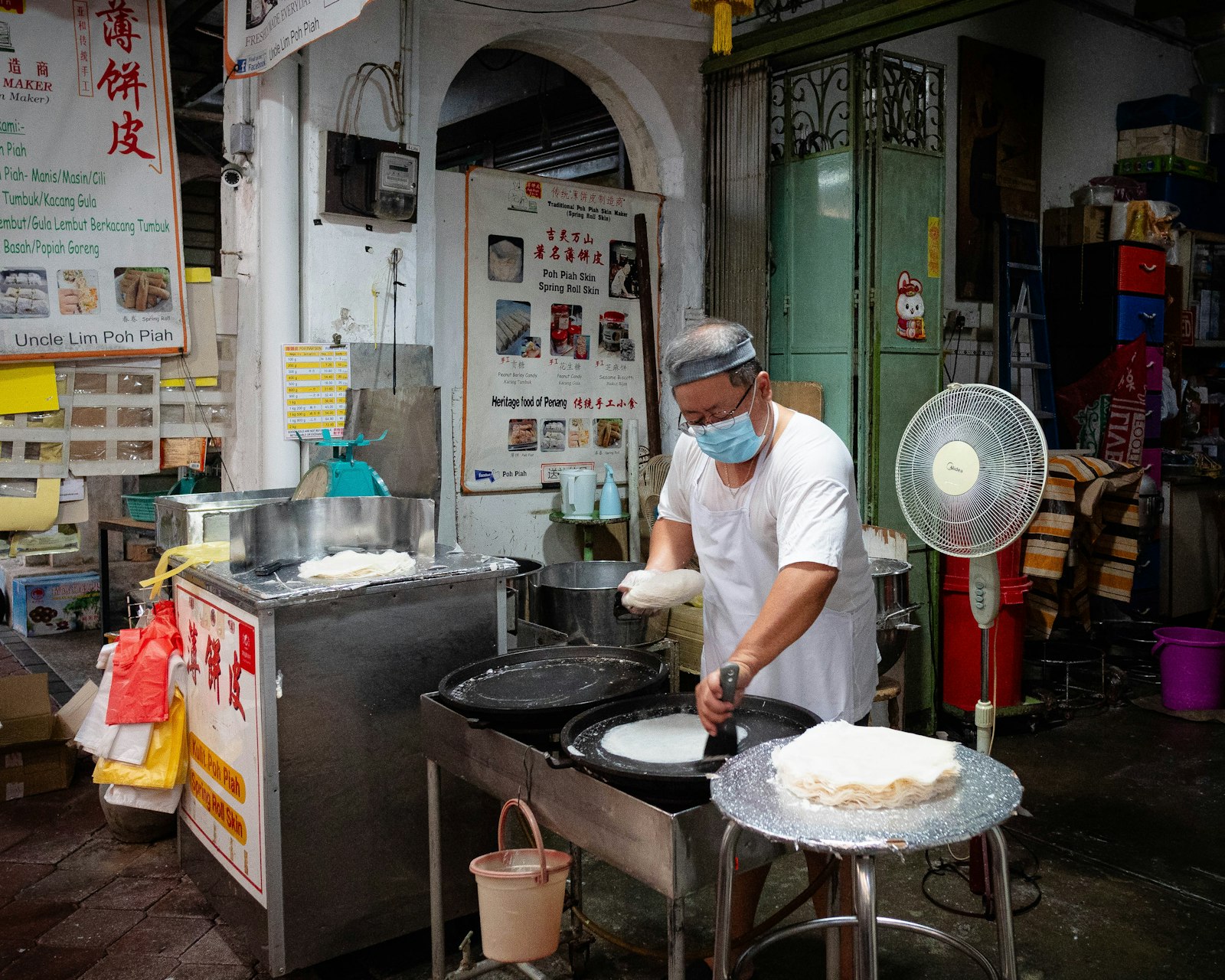
A kilometre and a half west of the heritage core, Jalan Burma cuts through the neighborhood of Pulau Tikus — once the Burmese and Eurasian quarter, now a denser-than-it-looks residential band of mid-century shophouses, modern condos, and traditional kopitiams that the tour buses have not found. The food here is less famous, more local, and in some cases better.
The marquee story in 2025 was Swee Kong Coffee Shop, a Pulau Tikus kopitiam where Winnie Ong — three years into running her stall — took first place at the Penang Char Koay Teow Competition. Winnie can move 200 plates over a weekend. Down the road, Kedai Kopi Sin Hwa on Burmah Road serves a respectable lunchtime char kway teow, and the Pulau Tikus Market hawker centre proper carries the full daytime kopitiam program — curry mee, apom, koay teow th'ng, the works. The standout breakfast option is Tian Hong on Jalan Pasar Pulau Tikus for old-school dim sum at lower decibels and prices than Tho Yuen.
Accommodation in Pulau Tikus is mostly serviced apartments and a few business hotels — G Hotel Kelawai, the Cititel Express on Penang Road, a handful of Airbnb conversions in the side streets off Jalan Burma. Rates undercut George Town heritage stays by 15 to 25 percent, the noise level is meaningfully lower, and a Grab into the heritage core runs about RM 10 and ten minutes. You can walk it in 20 to 25 minutes through Jalan Burma if you don't mind sidewalk-quality being inconsistent.
The trade-off: you have given up density. From Lorong Burma you reach maybe a third of the named stalls on foot. For evening sessions inside the heritage core you are now relying on Grab — fine in dry weather, less fine when the monsoon rain hits between 4 and 6 p.m. and surge pricing kicks in.
Verdict: the second base. A good choice for a two-week trip where you want a quieter week, or for a returning traveler who has already done the heritage-core program once.
3. Tanjung Bungah — the beach compromise that almost works
Source: Unsplash · License: Unsplash License
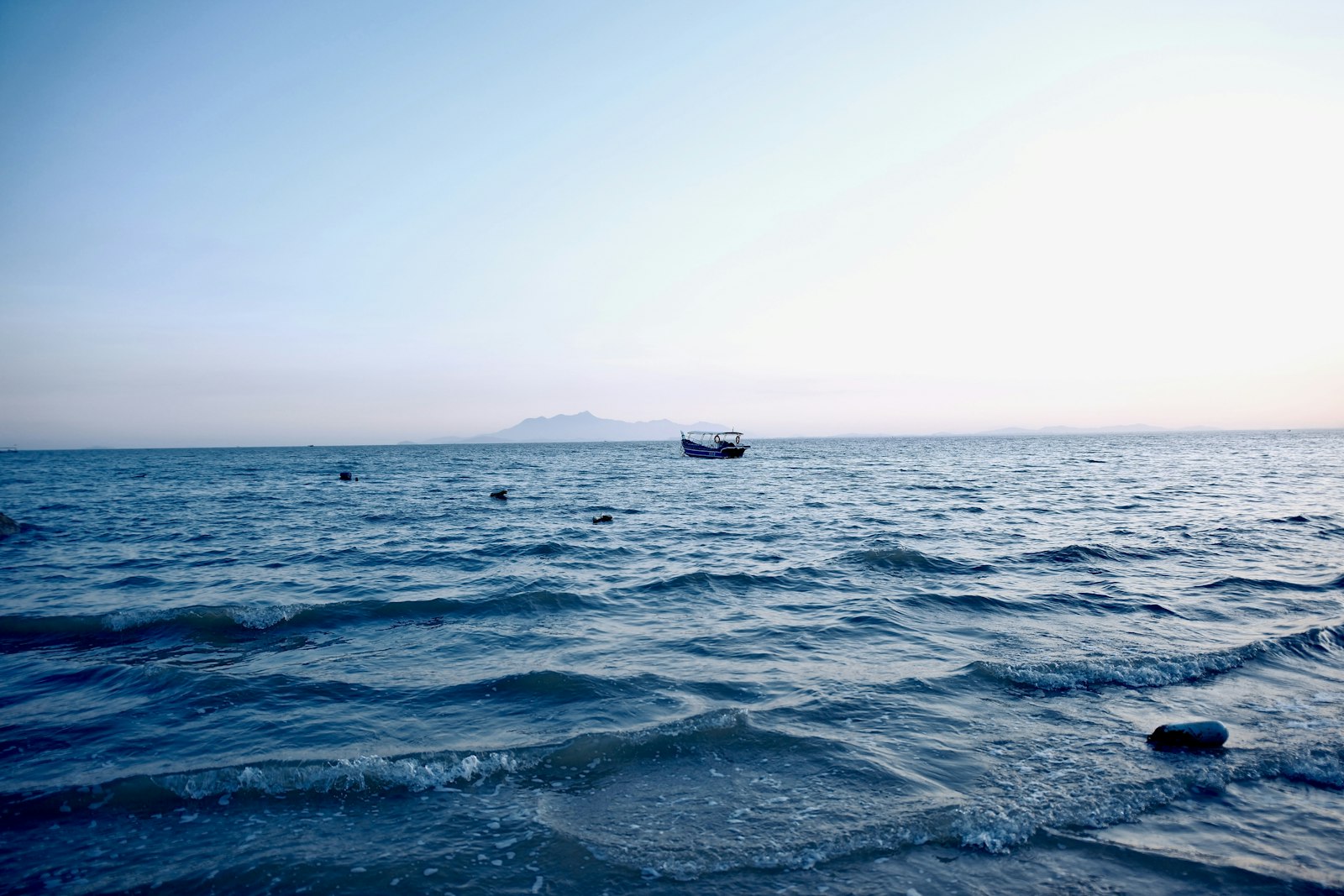
Tanjung Bungah sits about seven kilometres northwest of George Town along the north coast — a quieter, smaller beach than Batu Ferringhi, with hotels that are visibly aging but cheaper, and a Tuesday night pasar malam (night market) that the local Malay community runs for itself. It is the option for travelers who want a swim and a sea view but who also know that Penang's food is not at the beach.
There are food reasons to come here. Long Beach Food Court on Jalan Tanjung Bungah is a competent open-air hawker complex with above-average char kway teow and a strong satay grill. The Hai Boey seafood places on the western end do reasonable Chinese-style steamed fish and butter prawns. But you have left the heritage-core ecosystem. The named stalls — Siam Road, Lorong Selamat, 888 Hokkien Mee, Tho Yuen, Sister Char Koay Teow on Macalister — are all now a 20-minute, RM 18 to 25 Grab away. Multiply that by two meals a day for three days and you have eaten the savings on the cheaper hotel.
The trade-off: you are paying for beach access with food access. If you genuinely want beach mornings and don't mind committing one full evening session per day to George Town, this can work for a four-night trip. For a food-led trip, it does not.
Verdict: acceptable only if a beach is non-negotiable for half the party. Otherwise no.
4. Batu Ferringhi — the wrong call
Batu Ferringhi is Penang's resort strip — sixteen kilometres of beachfront hotels on the north coast, anchored by the Shangri-La Rasa Sayang and a cluster of Hard Rock, Hilton, and Park Royal-tier properties. It has the better beach, the better resort rooms, the longer breakfast buffet. It also has the worst food access on the island short of staying at the airport.
The Batu Ferringhi night market that travel guides flog as a food destination is, with limited exceptions, a souvenir market with food stalls attached. The hotel restaurants are fine in the way hotel restaurants are fine — competent execution, hotel pricing, no soul. To eat the food you came to Penang for, you are looking at a 40-minute, RM 35 to 50 each-way Grab into the heritage core. Two meals a day, four days, two adults: you have spent six hundred ringgit on transport.
The trade-off: there is no trade-off. You are sleeping at a resort, on the wrong end of the island, paying for resort prices, in a place where the food you came for is forty minutes away.
Verdict: wrong for this trip. Stay here on a different vacation.
A practical food map by walking time, from the heritage-core base
Source: Wikimedia Commons · License: CC BY-SA · Credit: Wikimedia Commons contributor
This is the actual deliverable of this piece — the reason to sleep where I told you to sleep.
Two minutes from Lebuh Chulia: dozens of kopitiams, the Sky Hotel-area roti canai stalls, Hameediah nasi kandar.
Five minutes: Tho Yuen for dim sum (Campbell Street), Lorong Selamat char kway teow, the Chowrasta wet market.
Eight to ten minutes: Siam Road Char Koay Teow on Jalan Siam, Kimberley Street Night Market, 888 Hokkien Mee on Lebuh Presgrave, the Carnarvon Street duck rice stalls.
Twelve to fifteen minutes: Sister Char Koay Teow on Macalister, Lebuh Cintra's old Hokkien-mee shops, the Lebuh Pantai (Beach Street) char hor fun lunch stall.
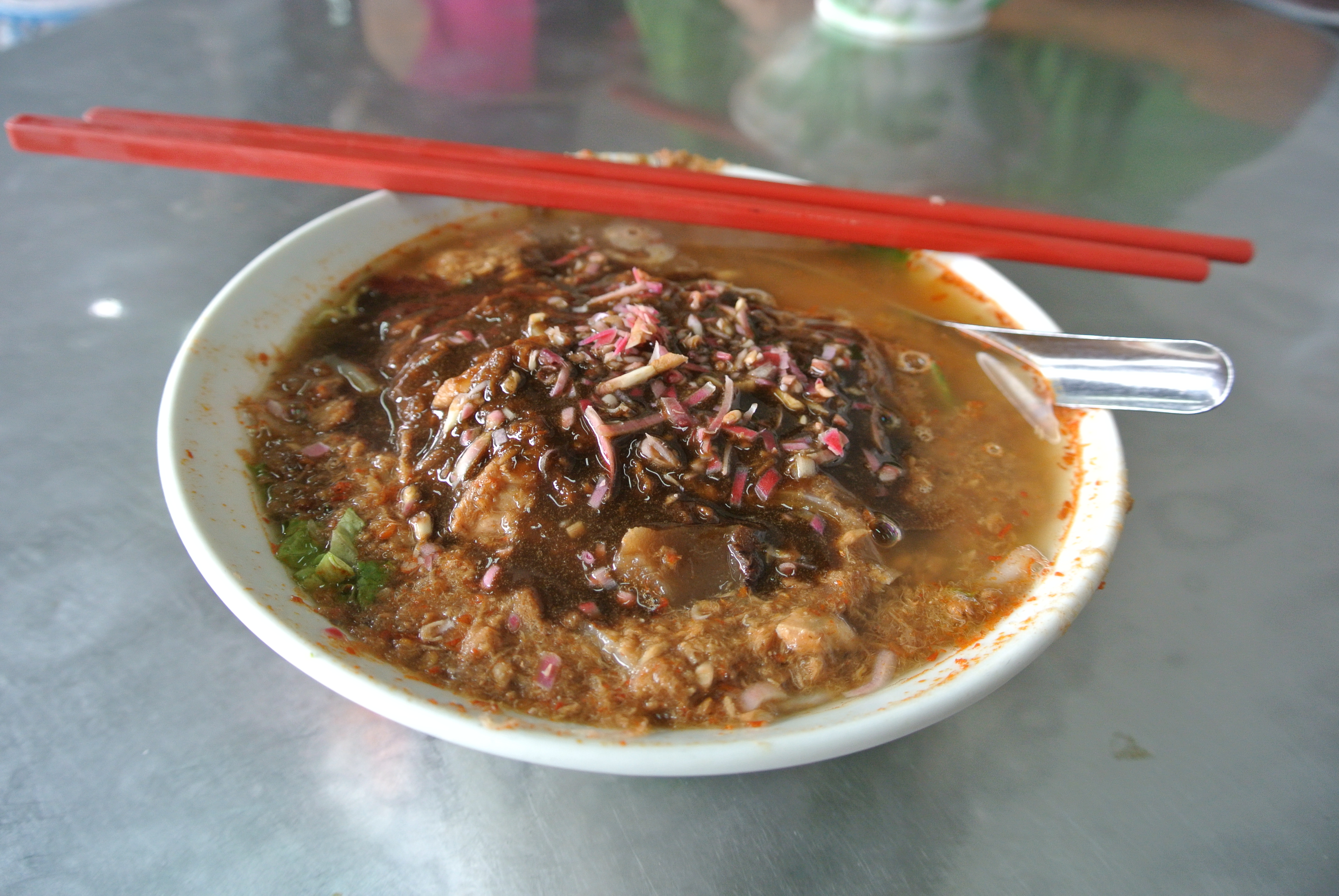
Grab only — non-negotiable: Penang Air Itam Laksa at Jalan Pasar, Air Itam, which operates weekends only, Saturday and Sunday 11 a.m. to 5 p.m., a 15-minute, RM 15 ride from the heritage core. Don't skip it. The 70-year-old stall sits outside the Air Itam wet market; the laksa — thick rice noodles, shredded mackerel, tamarind broth, mint, raw onion, a spoon of black shrimp paste — is the platonic Penang asam laksa, and CNN Travel's once-famous "World's 50 Best Foods" ranking put it at number seven for a reason.
The verdict
Sleep inside the George Town heritage core. Book a clean mid-range shophouse hotel one street back from Lebuh Chulia — Lebuh Cintra or Love Lane. Spend four nights minimum. Eat breakfast at Tho Yuen on day one to set the bar; eat dinner at Kimberley Street; pay the premium at Lorong Selamat for one plate of CKT; Grab to Air Itam on a Saturday for asam laksa. Do not sleep at the beach. Penang's beach is not what Penang is.
If you must have a beach option, book three nights in the heritage core, then one transitional night in Tanjung Bungah. Do not book Batu Ferringhi for a food-led trip; the math does not work.
If you can only do one thing
Book a mid-range boutique hotel on Lebuh Cintra, one block back from the noise of Chulia, three blocks from Kimberley Street Night Market, four from Tho Yuen, and ten from Siam Road CKT. That single decision unlocks the entire George Town hawker program on foot, and saves you the eighty ringgit a day in Grab fares that every other choice in Penang quietly costs you.
Food journalist based in Seoul. Restaurant criticism, regional cuisines, comparative analysis. Hawker stalls and tasting menus, same standards.
✦ More from David Park


✦ Keep reading
More from this region


More in Destinations
✦ Discussion
Start the discussion
No replies yet — yours could be the first.