
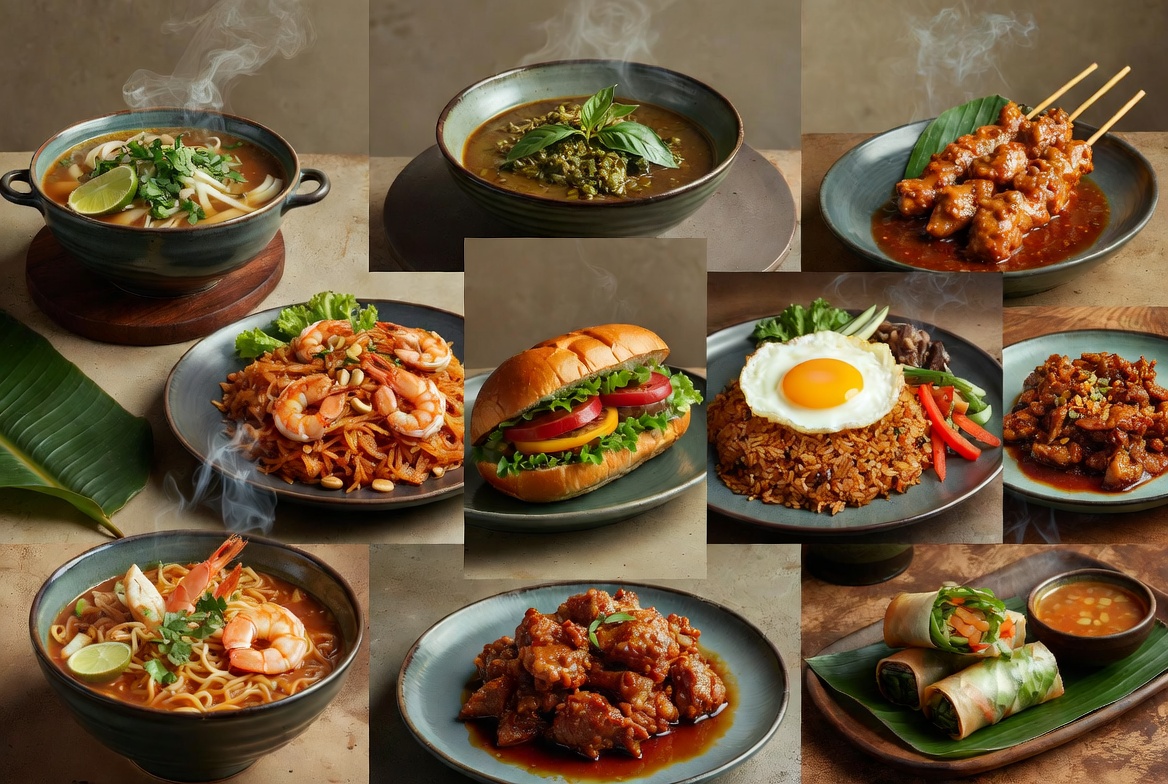
The Most Popular Food in Southeast Asia Is a Bad Question. Here's the Honest Answer.
The first time someone asked me this — a French tourist at a corner table in Saigon, hovering over a bowl of hủ tiếu Nam Vang — I told him the question was broken, then I answered it anyway. He looked annoyed, then he looked thoughtful, then he ordered another bowl. That's the right reaction, in that order.
The question is doing too much work
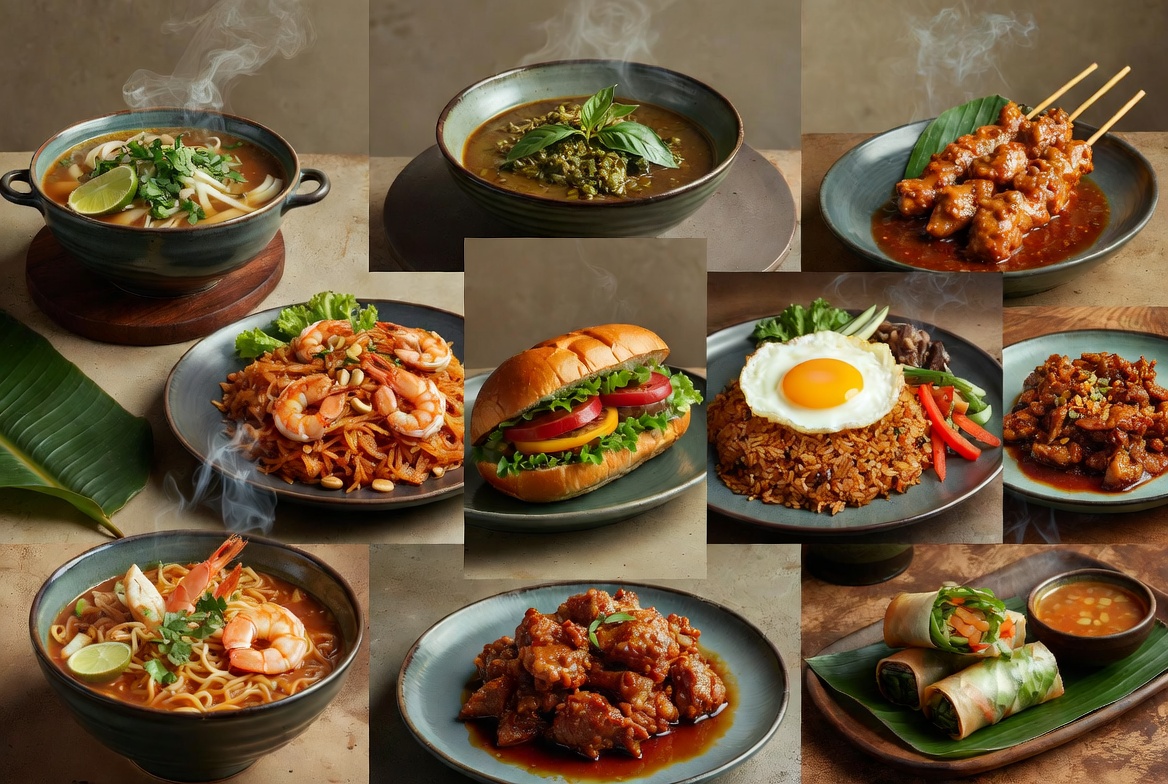
"Most popular" is a survey-shaped phrase. Popular how, exactly? Most-Instagrammed? Pad thai, probably, by an embarrassing margin — the dish goes viral every fourteen months. Most eaten daily by locals? Then you're looking at white rice with whatever, and the conversation ends before it begins. Most exported? Probably phở, which now has a permanent address in strip malls from Garden Grove to Helsinki. Most beloved by SEA's own diaspora, in the "this is what I'd eat on my deathbed" sense? You'd get ten different answers from ten different aunties, and all ten would be correct.
So let me commit. The question I'm willing to defend is: which single category of dish best represents what Southeast Asian cooking actually does — what it's good at, what makes it different from its neighbors to the north and west, what foreigners should travel to eat? That's a question with a thesis. And the answer is the noodle soup.
Why noodle soup, and not rice
The obvious counter-argument is rice. Rice is the substrate of every meal here — cơm tấm in Saigon, nasi lemak in KL, nasi padang across Sumatra, khao gaeng over a steam tray in any Bangkok side street. I love all of it. I'd eat cơm tấm for breakfast tomorrow if I could. But rice-plus-protein is a structure SEA shares with most of Asia, and the interest of the meal lives in the side dishes — which means the dish you're rating is really five or seven dishes, and "popular" stops being a useful word.
Noodle soup is different. Noodle soup is a contained argument. One bowl, one broth, one set of decisions about acidity and fat and aromatics and what protein to slice over the top. It's where SEA cooks show their work. And critically: every major SEA cuisine has at least one signature noodle soup that you cannot find executed properly anywhere else on earth. Phở is not ramen. Khao soi is not curry mee. Mohinga is not laksa. The dishes share an architecture — broth, noodle, garnish, acid — but the regional fingerprints are unmistakable. That's a category worth defending.
So: six contenders. I'll take them in the order I'd send a first-time visitor to eat them.
Phở (Vietnam) — the diplomat
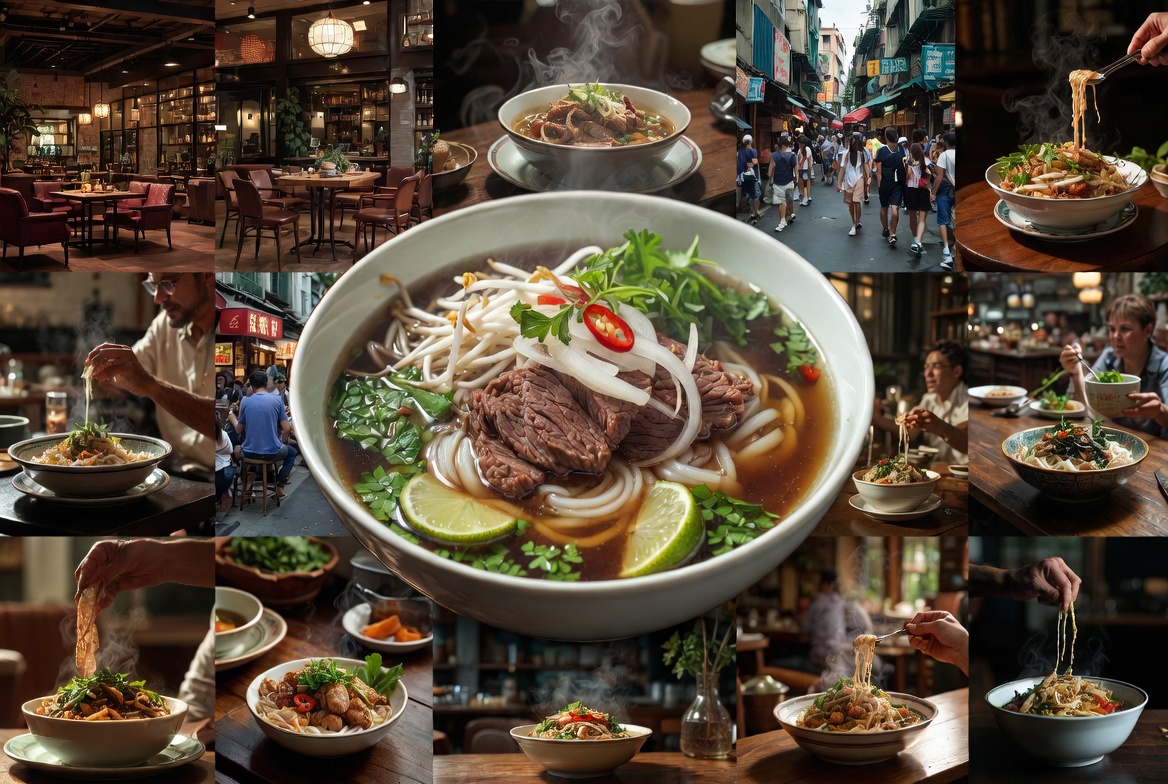
Hanoi's phở bò is the most-traveled SEA dish on earth and there's a reason. The broth is doing one of the hardest things in cooking: extracting a clear, deep, beef-and-bone savoriness without letting it go heavy or muddy. A good Hanoi broth smells faintly of charred shallot and ginger, with the star anise and cassia kept on a tight leash — you should taste cow first, spice second. Saigon-style phở tilts sweeter, heavier on the herbs at table, and gets dressed up with hoisin and sriracha (which Hanoi purists will tell you, correctly, is wrong for the northern version).
Where to go: Phở Gia Truyền at 49 Bát Đàn in Hanoi's Old Quarter, a Michelin Bib Gourmand since the guide arrived in Vietnam and a 6 a.m. queue institution. It's self-serve, no English menu to speak of, three cuts on offer — tái (rare), tái nạm (rare plus flank), chín (well-done brisket). I'd order tái nạm. The broth is the test, and Bát Đàn's broth passes: clean, beefy, just enough fat slick to coat the spoon. What foreigners get wrong: they over-customize. Don't dump lime in before tasting. Hanoi phở arrives correctly seasoned. The lime is for the back half of the bowl.
What makes it count: phở is the SEA dish where restraint matters most. The cook is removing things — skimming scum, clarifying — in a region whose other great noodle soups are about layering. It's the negative-space dish.
Khao soi (Northern Thailand) — the maximalist
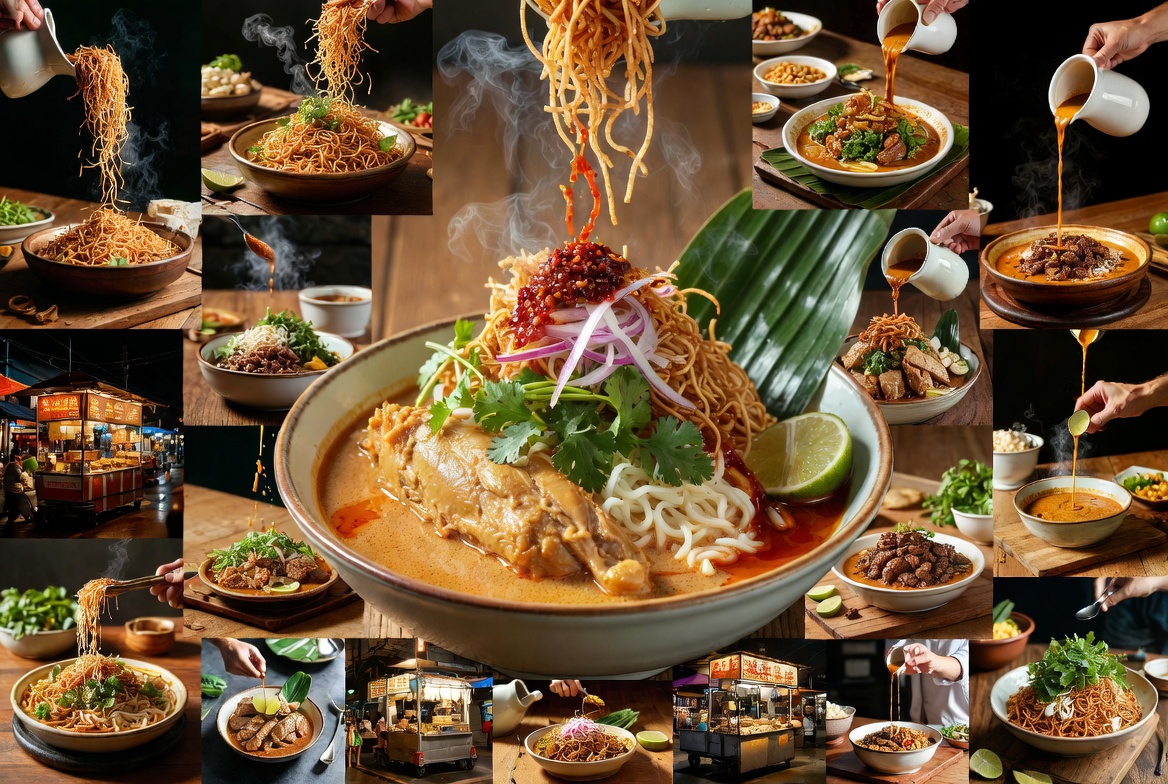
If phở is restraint, khao soi is the opposite. A bowl of Chiang Mai khao soi gives you a coconut-curry broth turmeric-yellow and slightly broken, soft egg noodles underneath, crisp fried egg noodles on top, a leg-quarter of chicken or a beef shank, and a side plate of pickled mustard greens, shallot, lime, and roasted chili paste that you stir in yourself. It is a dish you assemble at the table.
The dish is Yunnanese-Burmese-Thai in lineage — the through line is the Chin Haw Muslim traders who moved it south — and the best versions are still in Chiang Mai, not Bangkok. Khao Soi Khun Yai, in the Si Phum subdistrict near Wat Lok Molee, serves what I'd send anyone to for a benchmark: 70 baht a bowl, open roughly 10 a.m. to 2 p.m. (or whenever they sell out — usually sooner), closed Sundays. The broth there is unusually delicate for the style; you can taste the toasted spice paste rather than just the coconut.
What foreigners get wrong: they eat it like soup. Khao soi is meant to be aggressive — pile on the pickled greens, squeeze the lime in hard, add a teaspoon of the chili paste, then stir. The bowl is bland by design until you finish it.
Laksa (Malaysia, Singapore, Indonesia, Peranakan) — the contested one
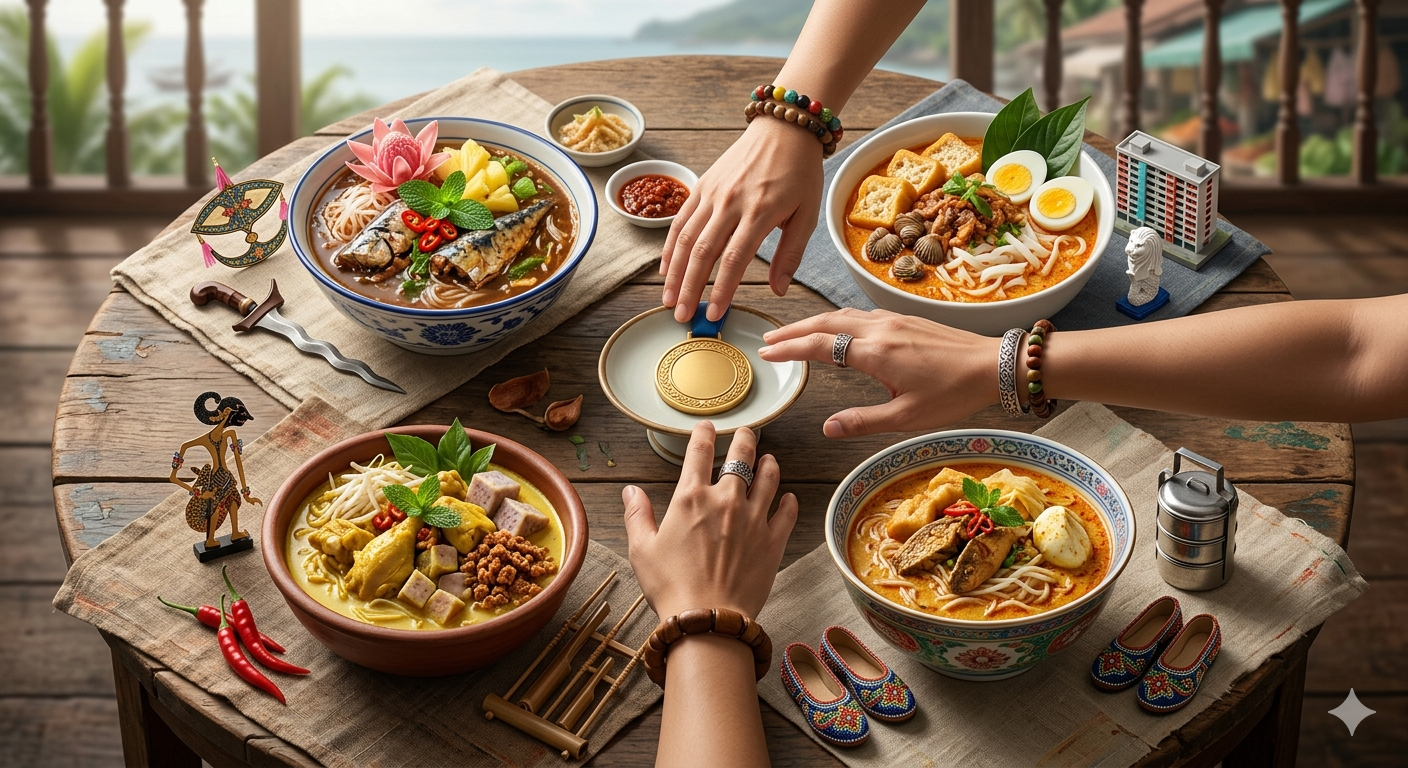
There is no single laksa. There are at least a dozen. Asam laksa in Penang is a sour-fish broth thick with mashed mackerel, perfumed by bunga kantan (torch ginger flower) and finished with a swirl of hae ko, the black prawn paste that smells like the floor of a tidal cave. Singapore katong laksa is a coconut curry version with the rice vermicelli cut short so you can eat it with only a spoon. Sarawak laksa is its own conversation entirely — a sambal-based broth, no coconut, with shredded chicken and prawn.
To eat the canonical asam laksa: Penang Air Itam Laksa, the stall by the market entrance in Air Itam at the base of Penang Hill. As of 2025 it operates only on weekends, roughly three weekends a month — call ahead or ask a local before you commute out there. The broth there is everything asam laksa is supposed to be: sour-fishy-funky, not sweet, with shredded mackerel that hasn't been pureed into oblivion. The neighboring stall, Air Itam Bisu Laksa (also at the market, family business since 1948), is the underground pick and arguably the better-balanced bowl.
For katong laksa: 328 Katong Laksa at 51 East Coast Road in Singapore, also a Bib Gourmand, also still going. Across the street at Roxy Square is Janggut Laksa, descended from the same 1940s lineage. They are different bowls — 328 is richer, Janggut is cleaner — and the right answer is to eat both in a single afternoon. Don't let anyone tell you one is the original. Origin claims on laksa are a swamp, and anyone with a clean answer is selling something.
What foreigners get wrong: confusing the styles. If you've had Singapore katong laksa and you order asam laksa in Penang expecting coconut richness, you'll think the bowl is broken. It isn't. You ordered a different dish.
Mohinga (Myanmar) — the breakfast nobody outside Myanmar takes seriously enough
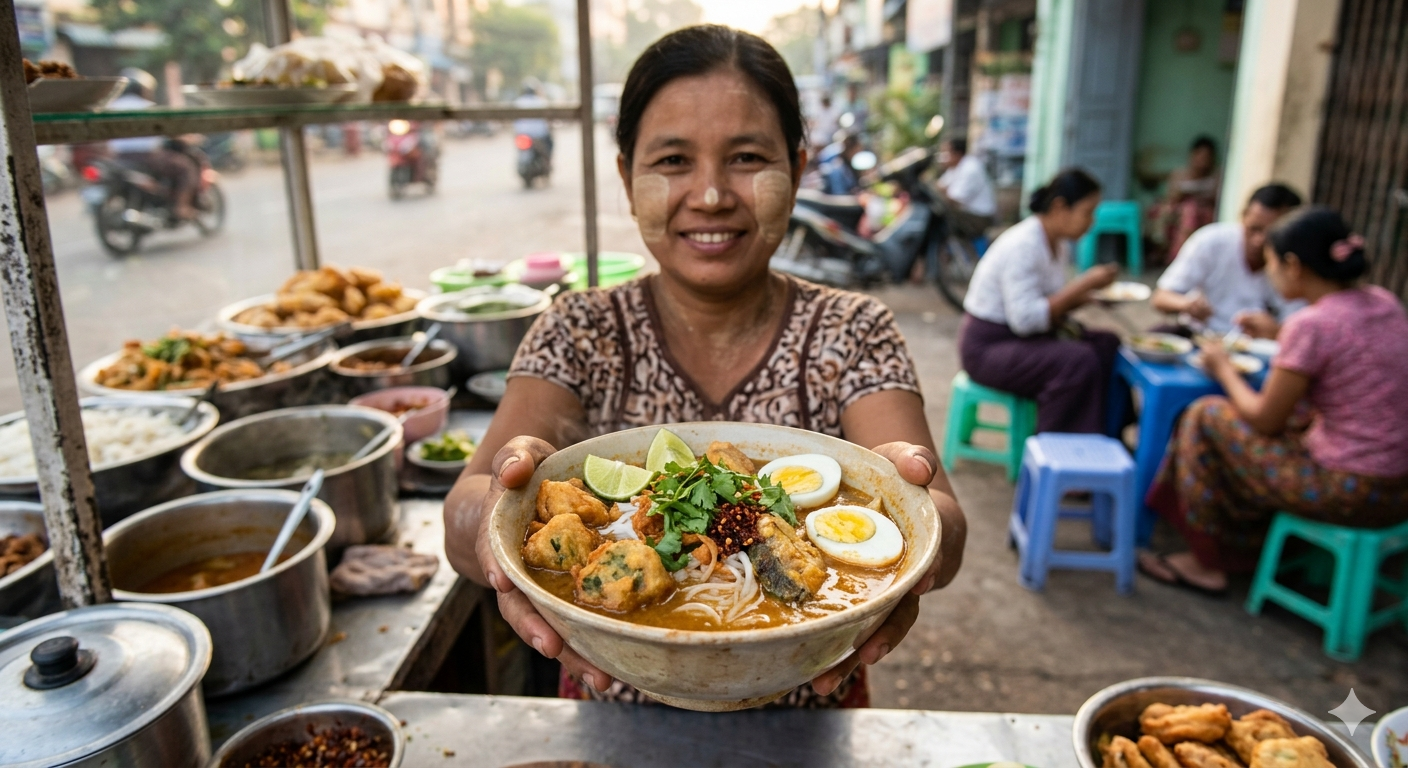
Mohinga is the dish that should be on this list and almost never is in the Western food press, which is part of why I'm putting it on. A fermented-rice-noodle soup with a catfish broth thickened by toasted chickpea flour and a small herd of aromatics — banana stem, lemongrass, garlic, turmeric, ginger — it is eaten for breakfast across Myanmar and almost nowhere else.
Myaung Mya Daw Cho in Yangon — multiple locations, including one in Pazundaung Township — is the reference. Opens around 6 a.m., sold out by 9. The bowl here has assertive turmeric, real flakes of freshwater fish (not a paste), and the broth is thickened to a near-gravy by the chickpea flour. You finish it with crisp fritters, fish sauce, lime, and a hard-boiled egg. It costs around 3,400 kyat — a couple of dollars.
I have to flag this one with a footnote that supersedes any food criticism. Myanmar is under junta rule and travel there in 2026 is a serious decision with serious ethical and safety dimensions. I'm not telling anyone to book a flight. I'm telling you that mohinga is doing something none of its neighbors are doing — building a sour-savory breakfast soup out of fermented and toasted starches — and that's why it belongs on a thinking person's SEA shortlist.
Hủ tiếu Nam Vang (Vietnam–Cambodia–Sino diaspora) — the cosmopolitan
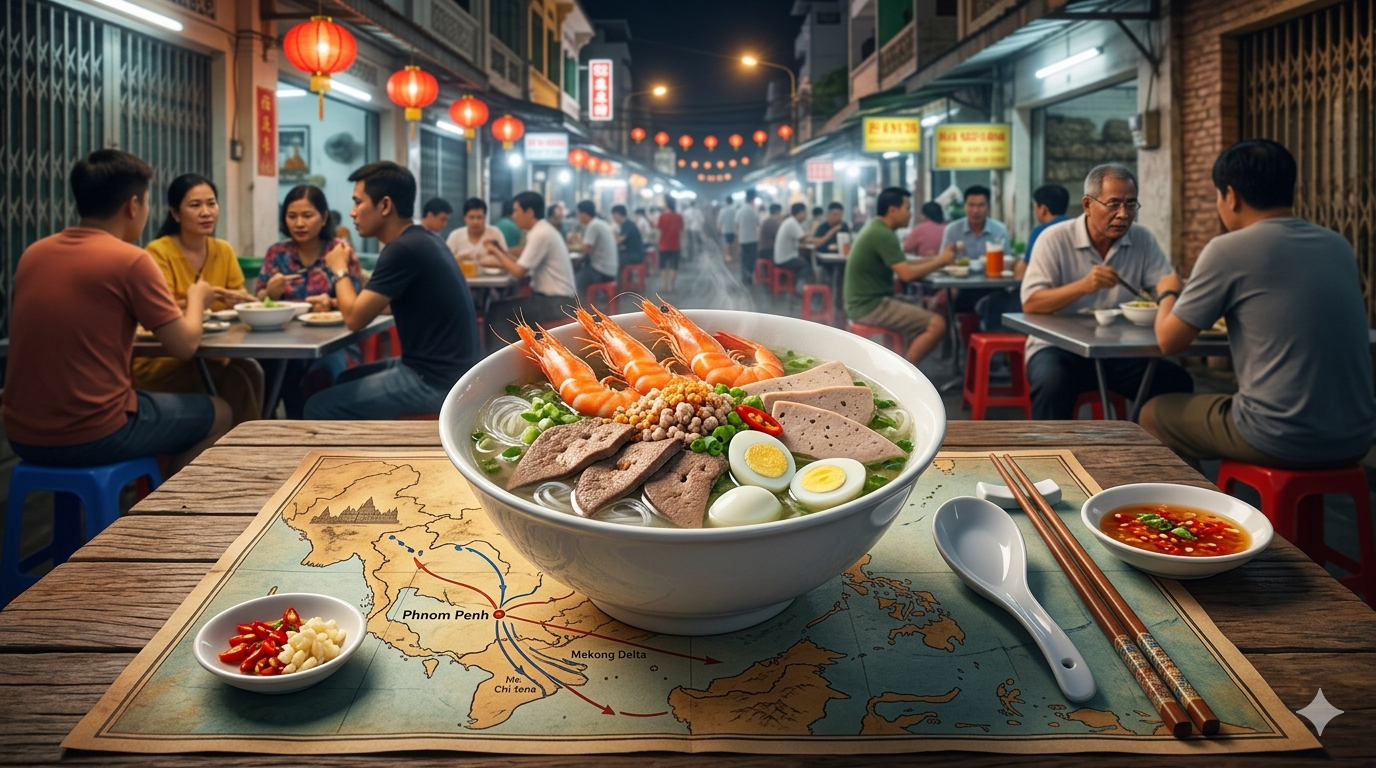
Hủ tiếu Nam Vang — "Phnom Penh-style noodle" — is a clear pork-and-shrimp broth over rice noodles with a small parade of toppings: minced pork, pork liver, shrimp, sometimes a quail egg, sometimes a slice of squid. The dish is a textbook example of why "national cuisine" is a fiction in SEA: it's Cambodian (kuy teav) in origin, refined by Teochew Chinese cooks, and naturalized by Vietnamese in Saigon to the point that most foreigners think it's a southern Vietnamese dish.
The reference in Saigon in 2025–2026 is Hủ Tiếu Hồng Phát, on Võ Văn Tần in District 3, more than fifty years old and now Michelin-recognized. The dry version — hủ tiếu khô — is the one to order: noodles tossed with a thick savory sauce, soup on the side, all the toppings arranged on top. It's the SEA noodle dish closest in spirit to a really good mazemen in Tokyo, which makes sense given the Teochew lineage.
What foreigners get wrong: ordering it like phở. It is not phở. The broth is lighter, the noodles are different (chewier, more like Hong Kong egg noodle in mouthfeel even though they're rice), and the dish lives or dies on the topping balance, not the broth depth.
Pad thai (Thailand) — the one I have to defend putting last
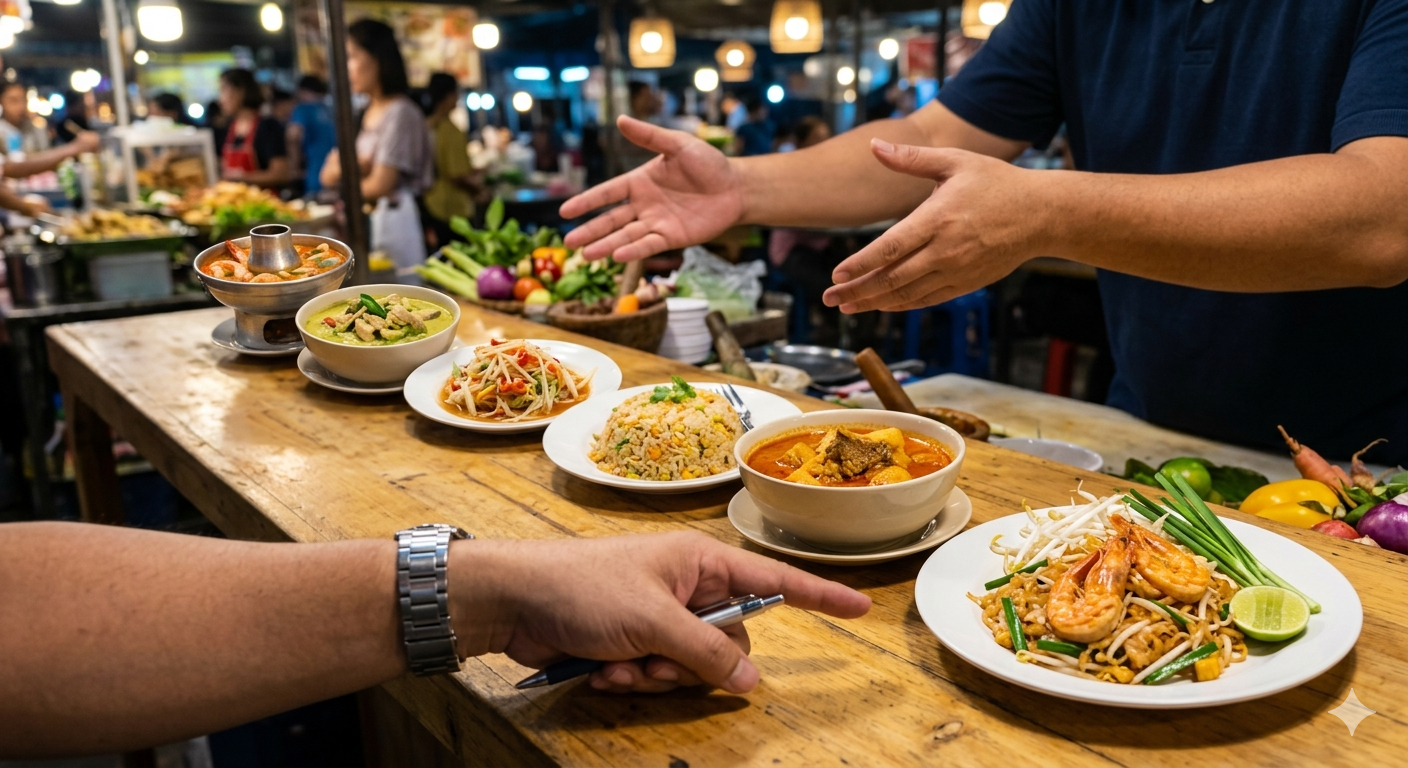
Here is where I lose readers. Pad thai is on this list because of popularity, which is what we're discussing, and because a properly made pad thai is a serious dish. Thip Samai at 313 Maha Chai Road in Bangkok — open 9 a.m. to midnight except Tuesdays, Bib Gourmand since 2018 — makes a pad thai that almost justifies the dish's global ubiquity: tamarind-forward, not too sweet, the noodle properly chewy, the egg-wrapped "superb" version with fresh deep-sea prawns showing what the dish is at its ceiling.
But here is my problem with pad thai as a representative of Thai cooking, and the reason it ranks where it ranks: it was invented top-down. Field Marshal Plaek Phibhunsongkhram's government promoted it in the 1930s and '40s as a nationalist project to define a Thai noodle dish. Most great SEA noodle soups bubbled up from migration, ports, and trade. Pad thai was assigned. That doesn't make it bad — Thip Samai is genuinely excellent — but it does make it the least interesting dish on this list for a critic. It's the dish that won because it was easiest to export.
If you only have one Bangkok meal, by the way, I'd send you to Jay Fai on Mahachai Road — still cooking in 2026, still one-star Michelin, still wearing the ski goggles at the wok — for the crab omelette, not the pad thai. But that's a different article.
The verdict
The "most popular SEA food" is not a dish. It is a category — the regional noodle soup — and the category's value is precisely that it forces a comparative argument rather than ending one. Anyone who tells you pad thai is the answer is telling you what their tourist demographic Googles, not what the region is actually doing.
If you have one week and a SEA itinerary, eat a noodle soup a day, in different cities, and pay attention to what each one is trying to do. By the end of the week you'll have a defensible opinion of your own, which is the only kind worth having.
Editor's-choice ranking
Phở bò (Hanoi style, Phở Gia Truyền 49 Bát Đàn) — the regional dish that has best translated abroad without going stupid, and the cleanest broth in SEA when done right.
Khao soi gai (Khao Soi Khun Yai, Chiang Mai) — the most assembled bowl on this list, and the one that rewards the eater's participation most.
Asam laksa (Penang Air Itam, or its under-the-radar neighbor Bisu) — the boldest broth in SEA; you either accept the fish funk or you don't belong here.
Hủ tiếu Nam Vang khô (Hồng Phát, Saigon, District 3) — the most cosmopolitan bowl in the region and the one that best illustrates SEA's diaspora cooking.
Mohinga (Myaung Mya Daw Cho, Yangon) — technically the most singular bowl on the list; nothing else in SEA tastes like it. Eat it before politics changes the math.
Katong laksa (328 Katong Laksa, Singapore) — coconut-curry laksa at its most disciplined; the spoon-only short-cut noodle is a quietly perfect idea.
Bún bò Huế (Huế central market or any decent Huế-style stall in Saigon's District 1) — the bowl I cut from the main argument for space; lemongrass-and-shrimp-paste beef broth, properly punishing, deserves its own piece.
Pad thai (Thip Samai, Bangkok) — the most popular noodle dish on earth by export volume, and a genuinely good bowl at the top end, even if it's the least interesting argument on this list.
If you can only do one thing
Fly to Hanoi. Be at 49 Bát Đàn by 6:30 a.m. Order tái nạm. Don't add lime until you've had three spoons of broth straight. That bowl will tell you more about what Southeast Asian cooking can do, in nine minutes, than any tasting menu in the region.
Sources:
Food journalist based in Seoul. Restaurant criticism, regional cuisines, comparative analysis. Hawker stalls and tasting menus, same standards.
✦ More from David Park


✦ Keep reading
More from this region



More in Destinations
✦ Discussion
Start the discussion
No replies yet — yours could be the first.