
THAIFEX 2026: What Thailand's Biggest Food Fair Tells You About Thai Food Now
The first time I walked the floor at THAIFEX, in 2024, a woman from Surat Thani handed me a thimble of budu — the dark, fermented anchovy sauce from Southern Thailand that most foreign palates flinch at — and explained, in the patient tone of a person who has been explaining this to Europeans all week, why hers was different. Three-year ferment. Open clay vessel. Her grandfather's recipe. Two booths down, a Bangkok start-up was pouring "plant-based shrimp paste" into 50ml sample cups for a German buyer. Same fair. Same hall. Two completely different bets on what Thai food is going to be.
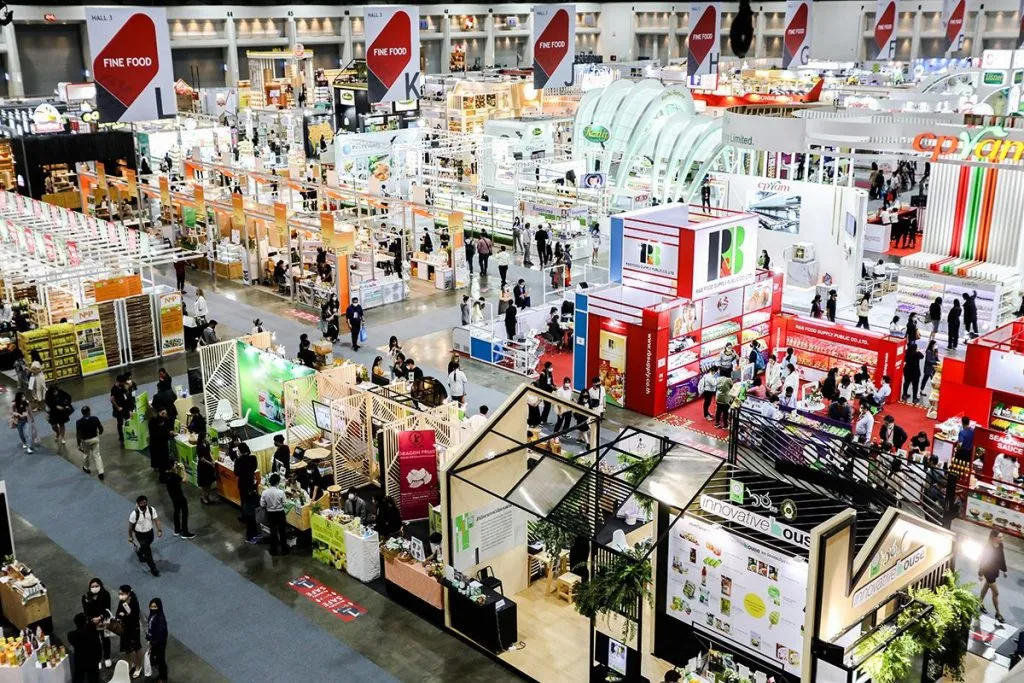
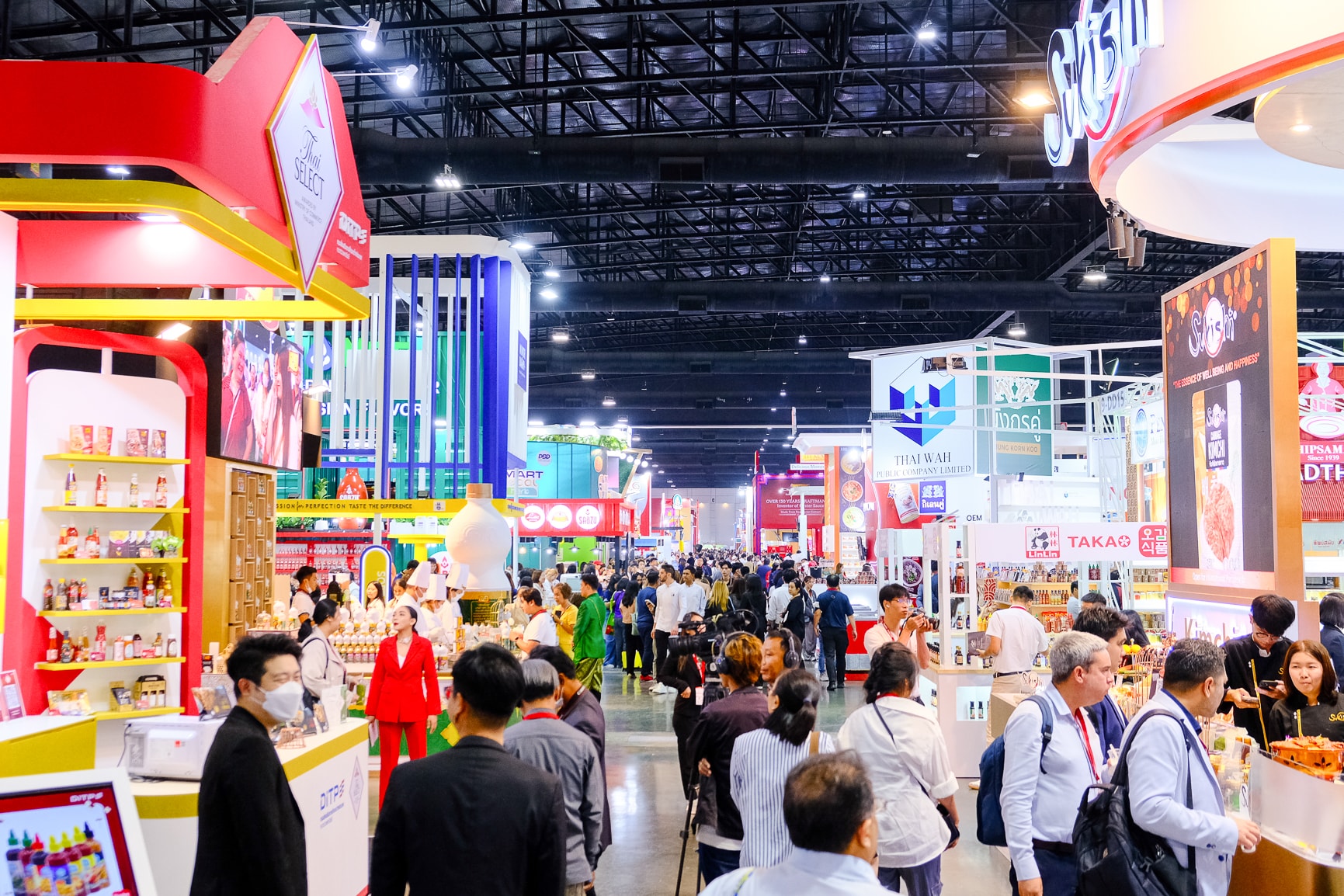
That, more than the trade-value headlines, is what THAIFEX – Anuga Asia is for. It's the biggest food and beverage exhibition in Thailand and one of the largest in Asia, and it runs every year at IMPACT Muang Thong Thani, the convention complex north of central Bangkok. The 2026 edition runs 26–30 May, with trade-only days through the 29th and a single trade-and-public day on the 30th. Nearly 3,600 exhibitors from 56 countries across more than 6,700 booths, in halls so vast you measure them with the step counter on your phone. The organisers — the Department of International Trade Promotion, the Thai Chamber of Commerce, and Koelnmesse, who run Anuga in Cologne — are projecting roughly 130 billion baht (about US$3.6 billion) in trade value. That's the answer to the trivia question.
The more interesting question — the one that matters if you're flying to Thailand to eat — is what that trade fair is about. And the answer is: Thai food in 2026 is doing more at once than any cuisine in Southeast Asia, and most of it is happening outside the fairground.
The scale, briefly, so you understand the frame
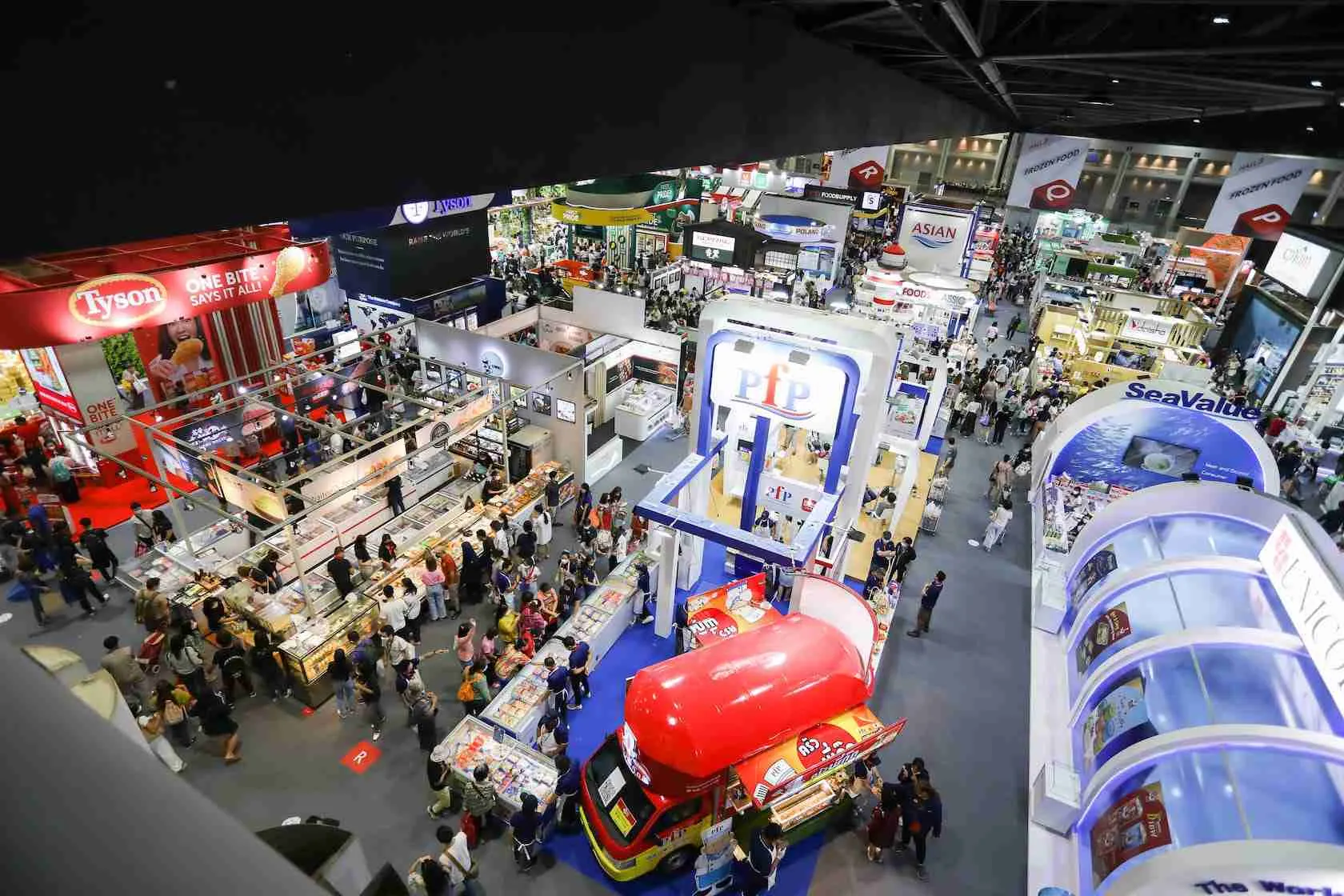
Thailand exported roughly 1.51 trillion baht of food in 2025 — down about 8% on the record 2024 number, hit by US tariff turbulence and a softer global appetite, but still placing the country among the world's top fifteen food exporters by value. The global "Thai cuisine" market — restaurants abroad, packaged products, ready meals — was valued by Fortune Business Insights at US$9.68 billion in 2025, projected to nearly double by 2034. Thailand has been pushing a "Kitchen of the World" policy since the early 2000s; THAIFEX is where that policy becomes visible as pallets and contracts.
What's new in the 2026 edition is the breadth of the non-Thai presence. Argentina, Belgium, Chile (specifically seafood), Italy, Saudi Arabia, Spain and Uzbekistan are all expanding national pavilions. Armenia, Finland, Georgia, Lebanon and Mongolia are exhibiting for the first time. That tells you something the export ledger doesn't: Bangkok is now the room where the rest of the world wants to be seen selling food to Asia. Singapore used to be that room. It isn't anymore.
For a traveller, none of this is reason to attend the fair. The trade days are closed to consumers, the public day (30 May 2026) is mostly packaged goods and bulk product sampling, and the venue is a 45-minute taxi from Sukhumvit if traffic cooperates, which it won't. Go to the fair only if you're sourcing for a restaurant or import business. Otherwise, the fair is your reading frame, and the eating happens elsewhere.
What Thai cuisine is actually doing in 2026
Here's the version of Thai food the world thinks it knows: pad thai, green curry, mango sticky rice, the laminated photo menu of a Chiang Mai cooking school. Useful, friendly, recognisable. Also, increasingly, a museum piece. The interesting work in Thailand right now is happening on three fronts, and a traveller with five days and an appetite can hit all three.
Front one: Bangkok's post-Gaggan modernism
Gaggan Anand is Indian, not Thai, and he's been quick to point that out his whole career. But the restaurant he runs in Bangkok — currently No. 6 on the World's 50 Best 2025 list, with its 20-plus course theatrical menu and emoji course names — has functioned as a kind of teaching hospital for a generation of Thai chefs who passed through his kitchens or watched what he was doing and decided that Thai fine dining didn't have to mean a hotel ballroom and a brass elephant.
The clearest case is Pichaya "Pam" Soontornyanakij at Potong, in a 120-year-old Sino-Portuguese building on Yaowarat (Chinatown) that used to house her family's herbal pharmacy. Pam was named World's Best Female Chef 2025 — the first Thai, the first Asian, to hold that title. Her menu is "progressive Thai-Chinese," which is an honest description: she's working from her own Teochew lineage, not generic chinoiserie, and the building is the menu's spine. One Michelin star, on Asia's 50 Best, reservations roughly a month out. The food is technical without being cold; the khao kha moo riff in the savoury arc — braised pork leg deconstructed into a tartlet and a clarified consommé — is the dish I'd send a sceptic to.
Thitid "Ton" Tassanakajohn runs Le Du and Nusara, both in the same Silom-adjacent radius. Le Du was No. 1 on Asia's 50 Best in 2023 and is the more polished, ingredient-driven room — Ton came back from Eleven Madison Park and The Modern in New York and decided to do seasonal Thai properly. Nusara, two floors up the same building, is named for his grandmother and reads as the more personal, recipe-archival project. Both have one Michelin star. If you can only book one, book Nusara — it tells you more about what a Bangkok chef in 2026 can do when he stops trying to translate Thai food for the West and just cooks it.
The 2026 Michelin Guide Thailand named ten new starred restaurants and added a second three-star (alongside Sorn, more on which below). Nine Thai restaurants made Asia's 50 Best 2026. The depth of the Bangkok scene is real, and it is broader than the World's 50 Best list reflects.
Front two: Chiang Mai's regional revival
Northern Thai food — Lanna cuisine — is having a quiet renaissance that's been on for about five years and is only now showing up in the guides. The northern repertoire is herb-driven, lower on sugar, heavier on bitter notes, and built around dishes most pad-thai tourists have never eaten: khao soi (the curry noodle, fine), but also naam phrik num (roasted green-chilli relish), sai ua (the lemongrass-and-kaffir-lime pork sausage), gaeng hung lay (Burmese-influenced pork belly curry), and the laap of the North, which is dry, toasted-spice-heavy, and bears almost no relation to the Lao-Isaan larb most foreign menus serve.
The best room in town for the high-end version is Huen Muan Jai in the Santitham neighbourhood — Charan Thipeung's kitchen, a decade in, still the benchmark for khao soi and naam phrik ong served the way a Chiang Mai household actually eats it. Kiti Panit in the old town has brought in Saawaan-trained chefs to do a Michelin-aware spin on Lanna cooking that, on a March 2026 visit, worked better than I expected — the gaeng hung lay there is slower-braised and less sweet than most.
But the heart of Chiang Mai Northern food is still at unmarked or barely-marked shops. Khao Soi Khun Yai off Soi Ratchaphuek serves chicken khao soi from 10am until they run out — usually by 1pm. SP Chicken does charcoal-grilled half-birds with the green nam jim that defines the genre. Neither will ever be in a guide because the proprietors don't want to deal with the volume. They're 90 baht a plate. They're better than most of what's plated in Bangkok hotels at 900.
Front three: Southern Thai, still under-served
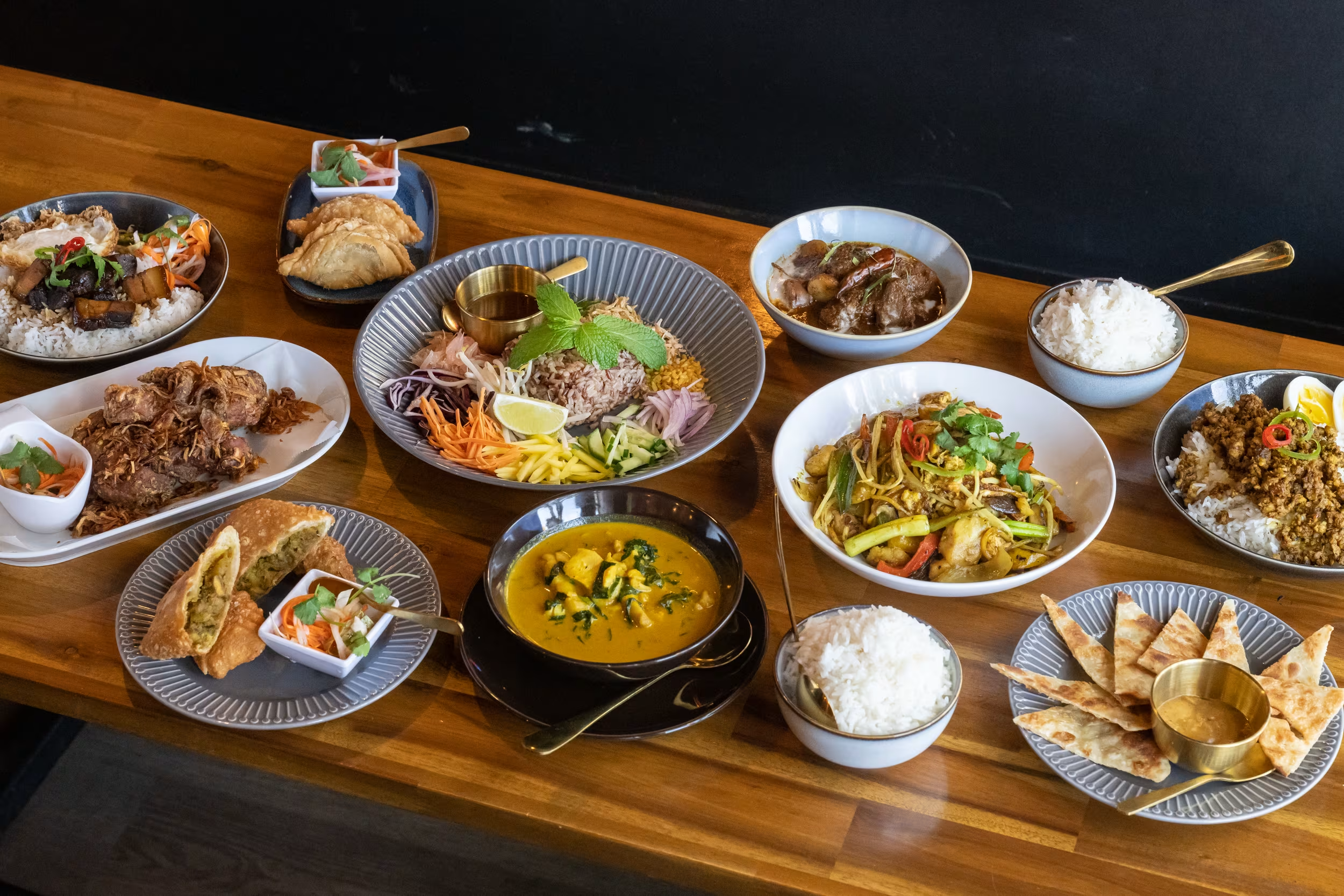
If THAIFEX represents anything about how Thai food is sold abroad, it's that the South is missing. Southern Thai cooking — built around budu, turmeric, fresh-pounded curry pastes, sataw beans, and a chilli heat that Westerners read as a different category of pain — barely shows up on international Thai menus. There are reasons for that (it doesn't sweeten well; the heat is non-negotiable), but the result is that the most aggressive, most coastal, most distinct branch of Thai cooking is the one travellers eat least.
Supaksorn "Ice" Jongsiri at Sorn is the corrective. In 2024 Sorn became the first Thai restaurant anywhere to earn three Michelin stars; the 2026 guide held it there, and the 2026 Asia's 50 Best put it at No. 12. The restaurant occupies a restored two-storey wooden mansion in Khlong Toei. Ice sources almost all of her ingredients — water and charcoal included, which is the line that tells you she means it — from the fourteen southern provinces. Chilli paste is pounded by hand. Rice is cooked in clay. The menu is roughly US$250 per person and the reservation list is, by my recent attempts, the hardest in Bangkok — book three months out and assume you'll be put on a waitlist.
What Sorn is doing is more than a restaurant. It's a one-room argument that Southern Thai food, which Bangkok itself has historically treated as country cooking, belongs in the global fine-dining conversation. The fact that it took a three-Michelin-star verdict from a French tyre company to settle that argument tells you exactly how much the South was under-rated for how long.
For a cheaper version of the same argument: Khua Kling Pak Sod, which has branches in Sukhumvit and at Central Embassy, serves a workmanlike khua kling (dry curry, usually pork or beef, southern technique) and a few sataw dishes that will calibrate your palate fast. Not fine dining, but honest cooking at about 300 baht a head.
How to read THAIFEX, even if you don't go
The fair runs 26–30 May 2026. Tickets and registration are at thaifex-anuga.com. If you have any commercial reason to attend — restaurant sourcing, F&B startup recon, regional distribution — go for one day, focus on the Tropical & Sustainable Foods hall and the Tea & Coffee hall, and ignore the bigger stages. Take an early morning taxi; the M2 expressway exit for Muang Thong Thani backs up by 9am.
If you're a traveller and not a buyer, here is the substitution. Spend a morning at Or Tor Kor Market (next to Chatuchak, MRT Kamphaeng Phet) — that's where most of the produce on THAIFEX's premium-Thai displays actually comes from, and you can taste it instead of looking at it through perspex. Then book the restaurants below, in priority order.
The verdict
THAIFEX – Anuga Asia is genuinely the biggest food exhibition in Thailand, and probably the most consequential in Southeast Asia in 2026. But the fair is a B2B trade event; for a traveller, it's not the destination, it's the context. The actual food is in three places: Bangkok's post-Gaggan modernist scene (Potong, Le Du, Nusara), Chiang Mai's Lanna revival (Huen Muan Jai, plus the unmarked khao soi shops), and the Southern outpost in Bangkok that finally got its three stars (Sorn). Skip the convention centre. Book the restaurants.
If you can only do one thing
Eat at Potong in Yaowarat. Sit at the kitchen counter if you can get it. Order the standard tasting menu — there's no point ordering off it — and pay attention to how Pam handles the Teochew elements; the way she layers Chinese-Thai heritage into a 15-course modernist menu without making it feel like fusion is the single clearest demonstration of where Thai cuisine is going in 2026. About 6,500 baht per person, plus pairings. Reserve at least four weeks ahead. If Potong is full, Sorn is the other answer — different cuisine, same level of ambition.
Sources:
THAIFEX-ANUGA ASIA 2026 official: 3,600 exhibitors from 56 countries
Thitid "Ton" Tassanakajohn: Le Du, Nusara, Baan (Tatler Asia)
Food journalist based in Seoul. Restaurant criticism, regional cuisines, comparative analysis. Hawker stalls and tasting menus, same standards.
✦ More from David Park


✦ Keep reading
More from this region


More in Destinations
✦ Discussion
Start the discussion
No replies yet — yours could be the first.