
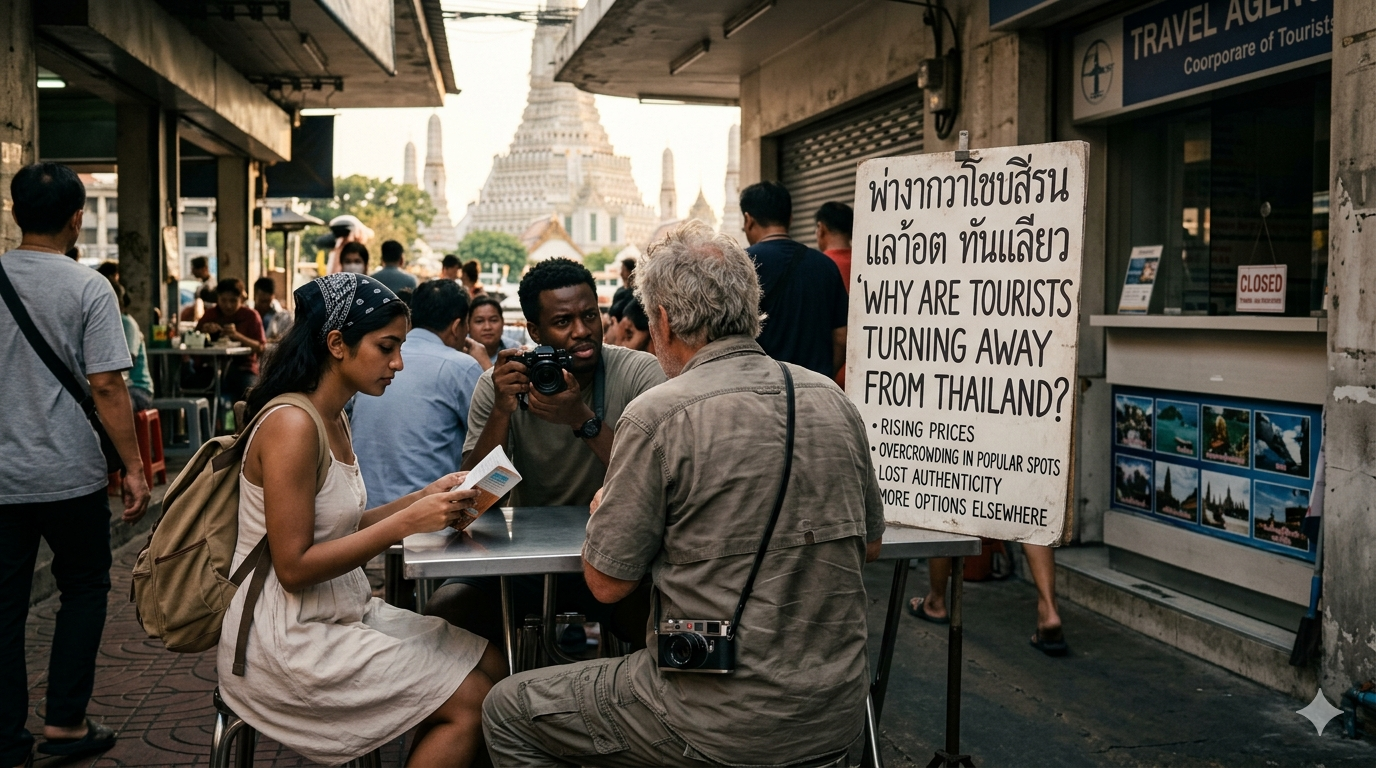
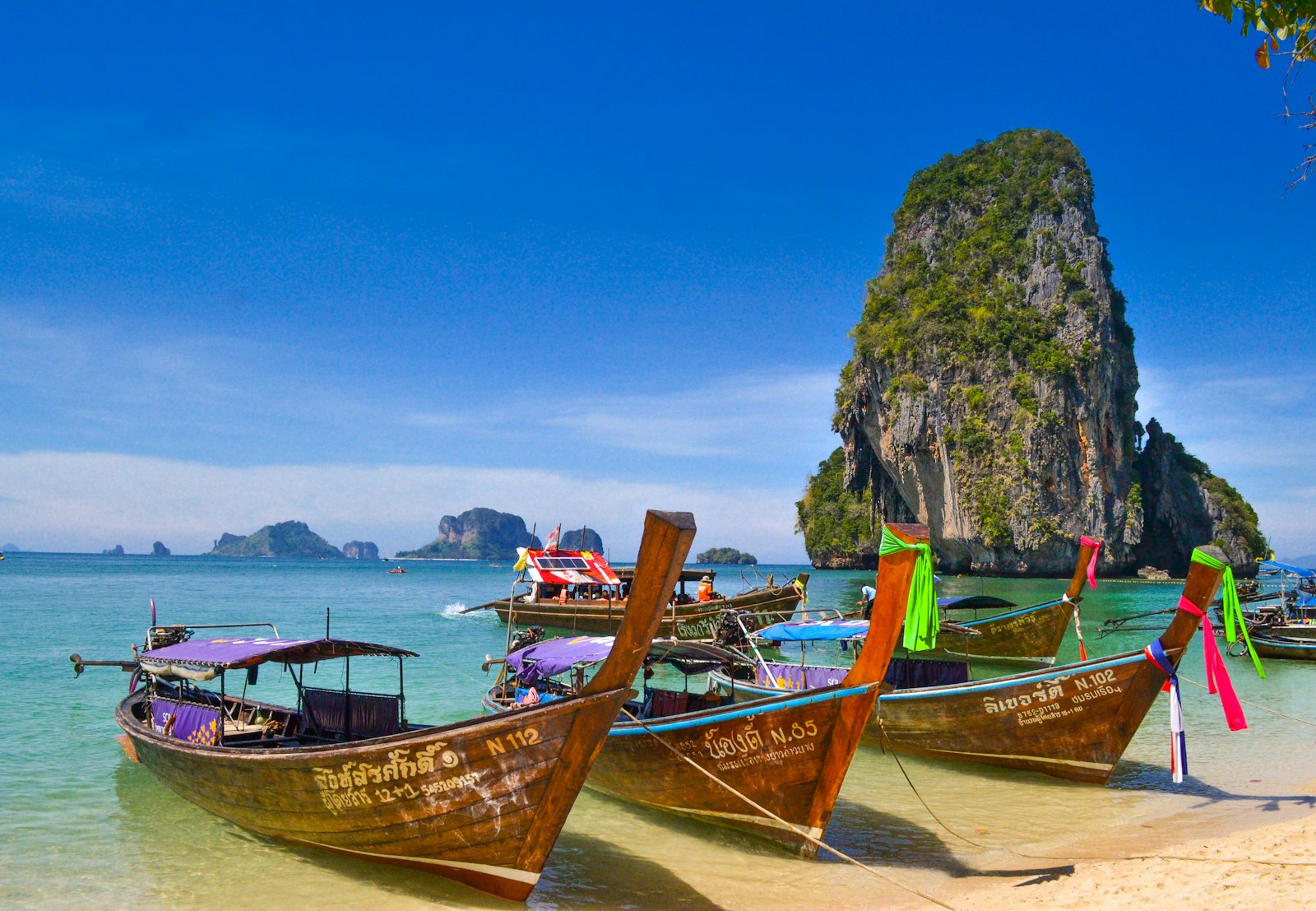
Why Are Tourists Turning Away From Thailand?
Last month I sat on a half-empty night ferry to Koh Tao and the Thai guy next to me — runs a dive shop, been doing it 14 years — said something that stuck: "2019 we were drowning in people. Now we're just... fine. It's quieter. Quieter isn't bad for you. It's bad for me." That's the whole Thailand story in 2026 in one sentence. The numbers really are down. But "down for the industry" and "down for you, the traveller" are two completely different things, and the internet keeps smushing them together into a doom headline.
So let's untangle it. What's actually happening, what's overblown, and — the part you actually clicked for — should any of this change your trip. (Spoiler: mostly no. But the why matters.)
The numbers really are down — here's the actual data
This isn't a vibe. Thailand pulled in 32.9 million international tourists in 2025, down about 7.2% from 2024. Tourism revenue fell too, roughly 4.7% to around THB 1.53 trillion (about $49 billion).
And 2026 hasn't bounced back. From January through late April 2026, Thailand logged 11.36 million arrivals — down about 3.4% year-on-year. The Tourism Authority of Thailand (TAT) quietly walked back its 2026 forecast: an early target near 36–37 million got cut to a 30–34 million range, with worst-case scenarios floated as low as 27–29 million.
For a country where tourism is something like a fifth of the whole economy, that's a real wobble. It's not a collapse — 30-something million visitors is still a massive number, more than most countries on earth see — but the growth story stalled, and that's news.
The interesting bit is who stopped coming. Because it's not evenly spread, and it tells you exactly what's going on.
The China problem — and the scam-centre headlines
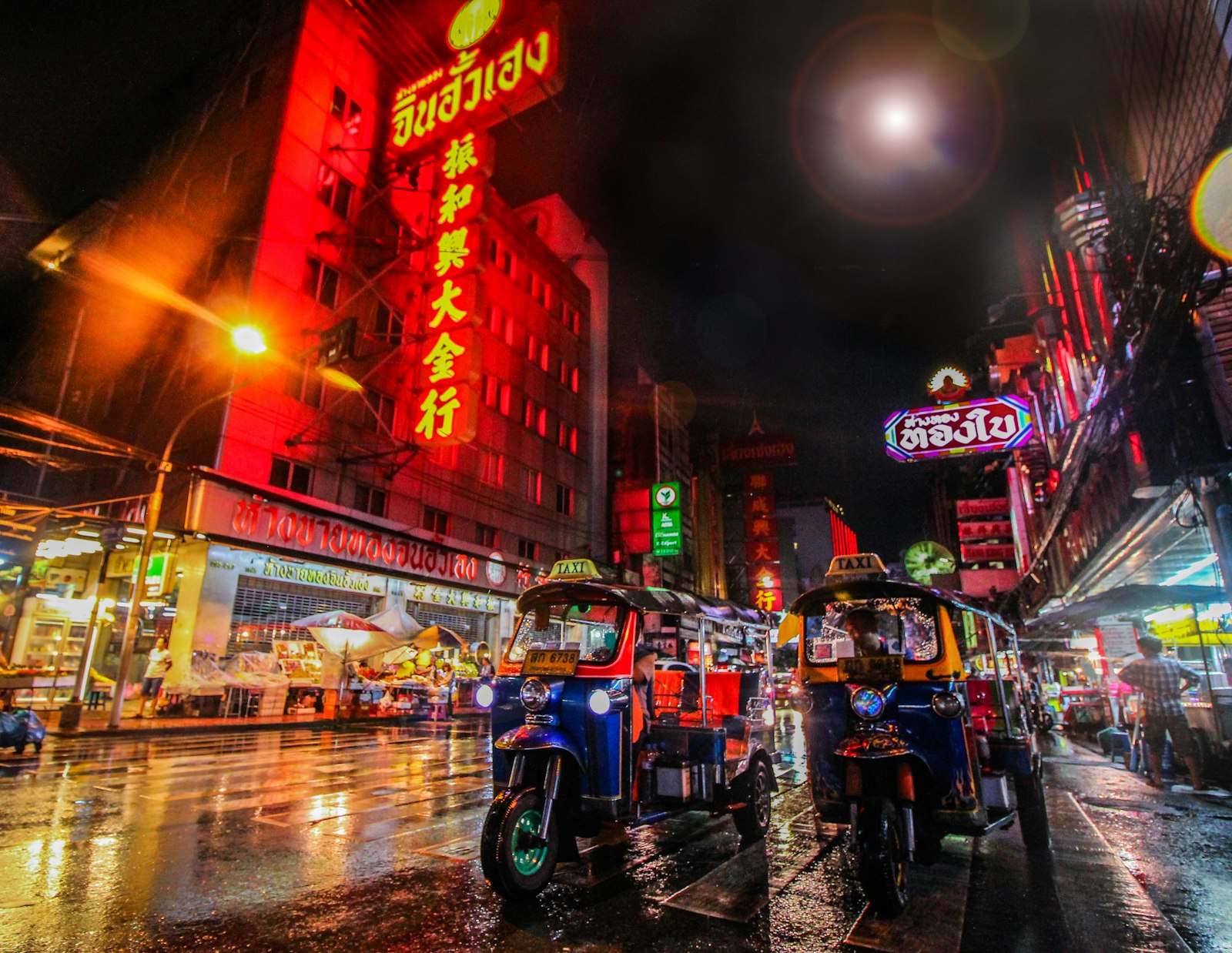
Here's the single biggest factor: China.
Chinese arrivals to Thailand cratered — down roughly 34% in 2025. That's enormous. For years China was Thailand's number-one source market by a mile. In 2025, Malaysia (4.50M) narrowly overtook China (4.47M) for the top spot for the first time in years. China slipping to number two is the headline event of this whole story.
Why did Chinese tourists bail? A big chunk of it is safety perception, and specifically the scam-centre story. In January 2025 a Chinese actor was lured to Thailand and trafficked across the border into a scam compound in Myanmar. It made enormous news in China. Suddenly "Thailand" and "kidnapping" were in the same sentence on Chinese social media, and bookings fell off a cliff. Chinese arrivals dropped around 30% in just the first nine months of 2025 as that fear spread.
Now — this is where you need to read carefully, because the scam-centre thing gets wildly misunderstood by Western travellers.
The scam compounds are real. They're a genuine, ugly regional crime problem. But they are not in Thailand's tourist areas. They operate in lawless border zones — mostly in Myanmar (the Myawaddy area opposite Mae Sot) and parts of Cambodia and Laos — in special economic zones where enforcement basically doesn't reach. The victims being trafficked into them are overwhelmingly people lured by fake job offers — IT and customer-service "jobs" — not backpackers pulled off Khao San Road. Nobody is getting kidnapped off a beach in Phuket.
The damage to Thailand is reputational, not a real on-the-ground danger to tourists. The Chinese market is hyper-sensitive to safety news in a way Western markets aren't, and once a destination's "safe" image cracks in China, it takes years to rebuild. That's the mechanism. It's a perception crisis playing out in one specific market — and it's dragging the headline number down hard.
Cost creep and the strong baht
The second real factor: Thailand got more expensive, and a chunk of it isn't even Thailand's fault.
The Thai baht strengthened about 9% against the US dollar through 2025. Your money just buys less. A strong baht is great for Thailand's exporters and miserable for tourists — it makes everything from your pad kra pao to your beach bungalow quietly pricier in dollar, euro, or pound terms, without a single price tag changing.
Stack that on genuine price rises. Hotel rates in Phuket, Koh Samui, and Pattaya have climbed sharply since the post-pandemic rebound. In peak season, mid-range Bangkok hotels can now nudge prices you'd see in some European capitals. Thailand already has the highest cost of living in ASEAN, and the strong currency rubbed it in.
There are also new fees. The international departure fee rises from 730 baht to 1,120 baht (roughly $20 to $31) at major airports starting 20 June 2026 — minor, but it's the kind of thing that adds up with everything else.
And then airfares. The conflict in the Middle East through 2026 forced airspace closures across major Europe–Asia corridors. Airlines rerouted or cancelled, and long-haul fares — especially Europe-bound — spiked, in some cases close to double. That's nothing to do with Thailand specifically; it's hammering the cost of getting to all of Southeast Asia from the West. But it absolutely shows up in Thailand's arrival numbers, because if the flight costs 80% more, some people just don't go.
So: stronger baht + real price rises + a small new fee + brutal airfares = Thailand quietly priced itself out of "the obvious cheap option" for a slice of travellers, who looked at Vietnam or the Philippines instead.
What's actually overblown
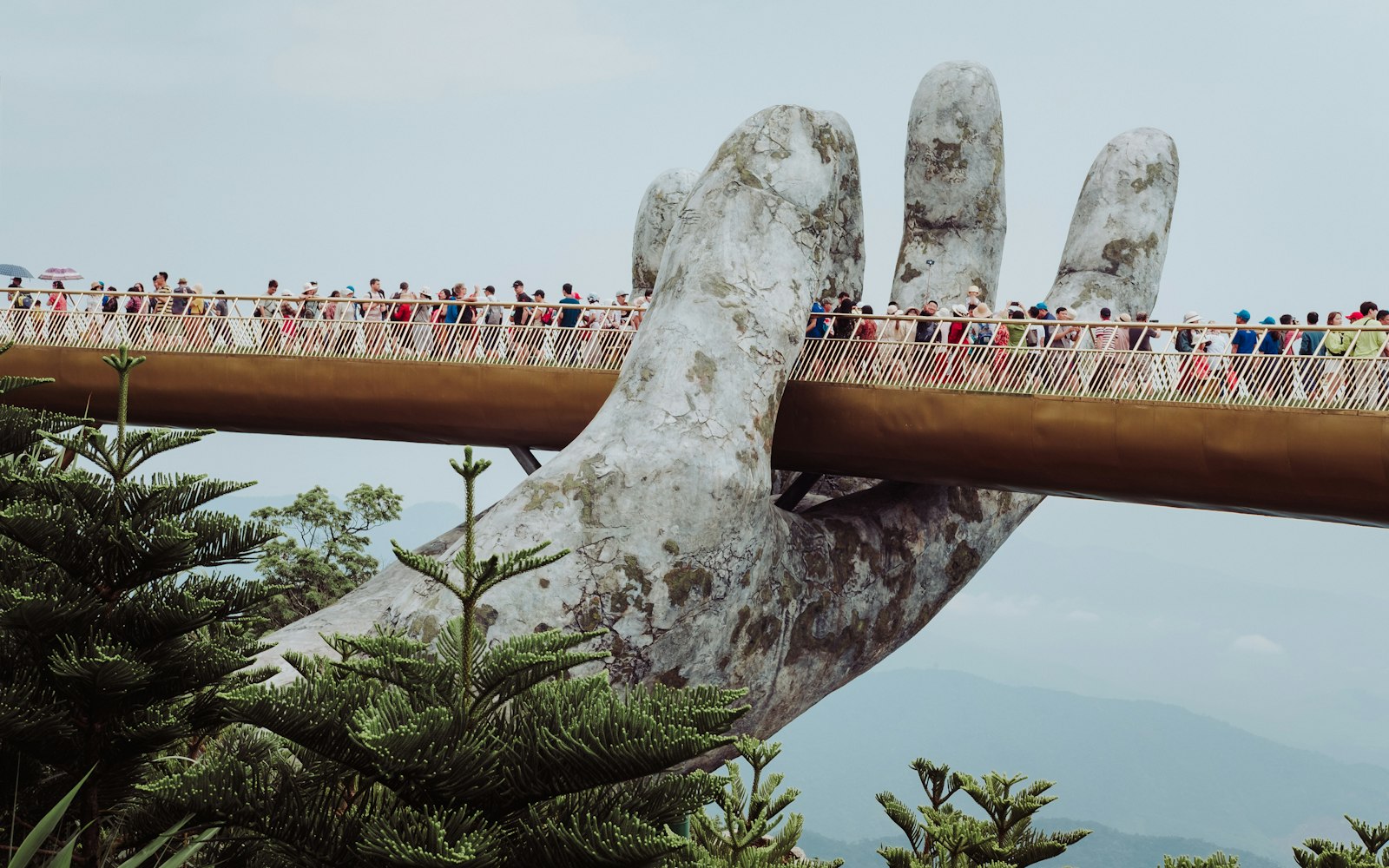
Now the corrective. Because if you only read the headlines, you'd think Thailand was on fire. It is not.
The "25% decline" number. You'll see this one a lot. It's real — but it's the worst-case scenario, not what's happening. TAT modelled it as the outcome if the Middle East conflict dragged on past three months. The base case was around 18%, and the mild case as low as 2%. The actual figure for early 2026 is a 3.4% dip. Quoting the worst case as the headline is exactly the kind of doom-math that makes a manageable wobble sound like an apocalypse.
The safety panic. Thailand remains, genuinely, one of the safest mainstream destinations on earth for travellers. Bangkok recorded just 12 serious incidents involving international tourists in Q1 2026 — down from 18 the year before. Violent crime against tourists is rare. The real risks are the boring ones: traffic accidents (ride that scooter carefully, wear the helmet) and petty scams — overpriced tuk-tuks, the gem-shop hustle, jet-ski "damage" shakedowns. Pickpocketing did tick up about 23% in tourist zones, so zip your bag. None of that is new and none of it is a reason to skip the country.
The Cambodia border. There was real tension and conflict along the Thailand–Cambodia border in 2025–26, and Australia's Smartraveller still flags a "do not travel" zone within 50 km of it. Worth knowing if you were planning an overland crossing near there. But that's a thin strip of frontier — it has nothing to do with Bangkok, Chiang Mai, Phuket, Krabi, or the islands. Phuket, Krabi, and Samui report completely normal tourism operations.
The "Thailand is over" narrative. Nope. India is now Thailand's fastest-growing source market and number three overall, partly offsetting the China drop. Roughly 500,000 Chinese travellers who'd booked Japan trips rerouted to Thailand when the Iran situation messed with Japan-bound routes. The country is adapting, not dying. TAT even pivoted strategy on purpose — chasing higher-spending "quality" tourists over raw volume. Fewer visitors is, in part, a choice.
Should any of this change your trip? (Mostly no)
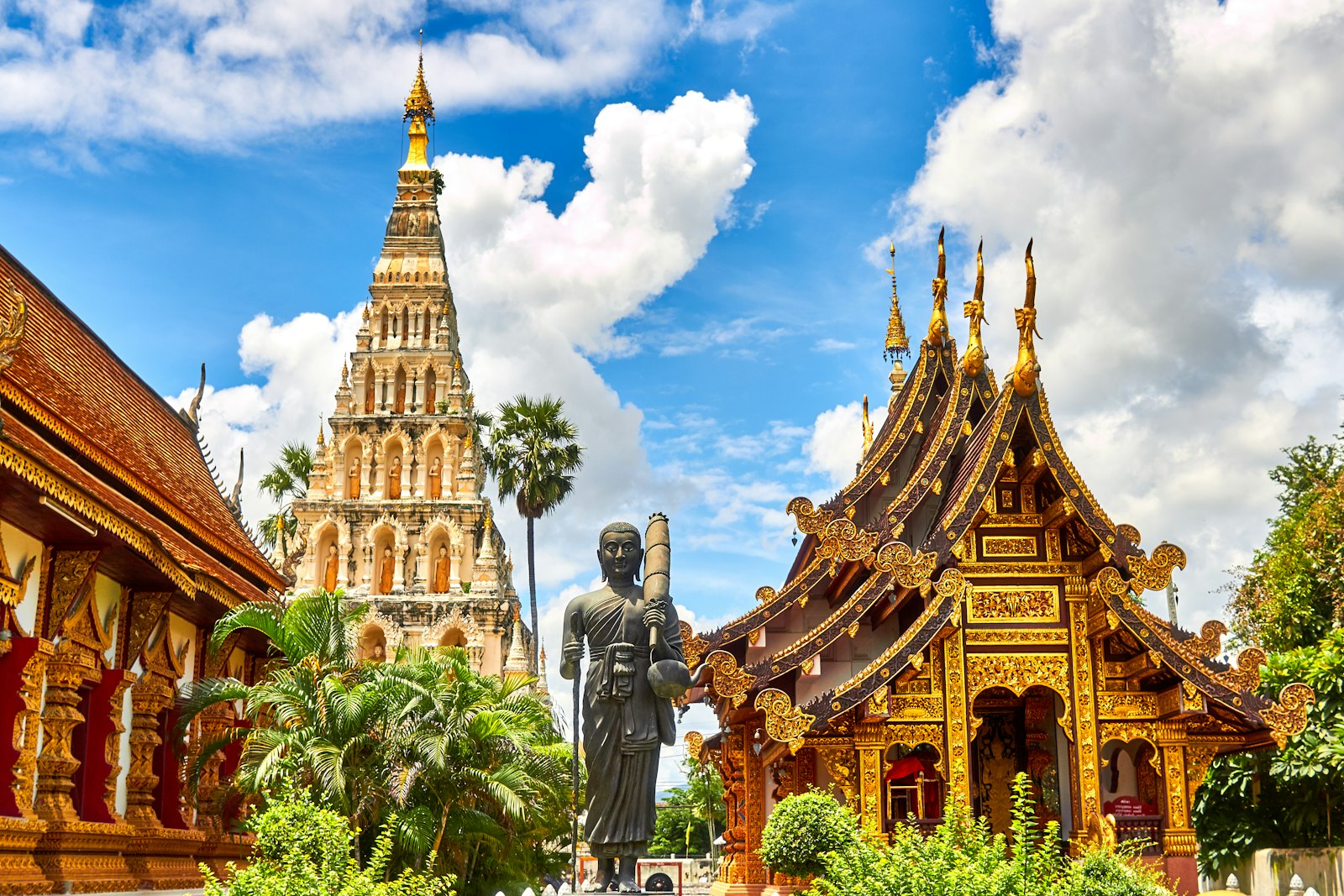
Here's the honest peer-to-peer take. For you — a traveller heading over from the US, UK, Europe, Australia, Canada — almost none of the above is a reason to cancel or even seriously rethink Thailand. In fact some of it works in your favour.
The good news for you. Fewer crowds. Sunrise at Wat Arun without elbowing forty people. Railay Beach in the shoulder months feeling like a beach again, not a queue. Better deals — with the industry hungrier, you'll find guesthouses and tour operators willing to negotiate, especially outside the December–February peak. That dive-shop guy on the Koh Tao ferry? Quieter is bad for him and quietly excellent for you.
What to actually do about the cost creep. Skip the over-priced beach resort towns at their priciest. Pattaya, peak-season Phuket, and Samui are where the cost story bites hardest. The value is inland and northern — Chiang Mai and Chiang Rai are still genuinely cheap, with $6–10 dorm beds, ₿50–60 plates of food, and a slower pace. The northeast — Isaan — is barely touched by tourists and the cheapest region in the country. The Andaman islands beyond the famous three (think Koh Lanta, Koh Mook) give you the beach without the Samui price tag.
When to go. The cool dry season — November to February — is the best weather and the highest prices. If you want the deals, come in the shoulder months: late May, June, September. It rains, but Thai rain is mostly short afternoon bursts, not all-day misery, and the discounts are real. The strong baht means budgeting a bit more than the Thailand of three years ago — but it's still cheaper, day to day, than Vietnam's pricier spots and a fraction of home.
Time it around the new fee if you're a stickler — the departure-fee bump lands 20 June 2026, but at ~$11 difference, honestly, don't reorganise a trip over it.
The one group who should genuinely pay attention: if you were planning an overland route along the Thailand–Cambodia border, check current advisories and reroute. Everyone else — book it.
Bottom line: what I'd actually do
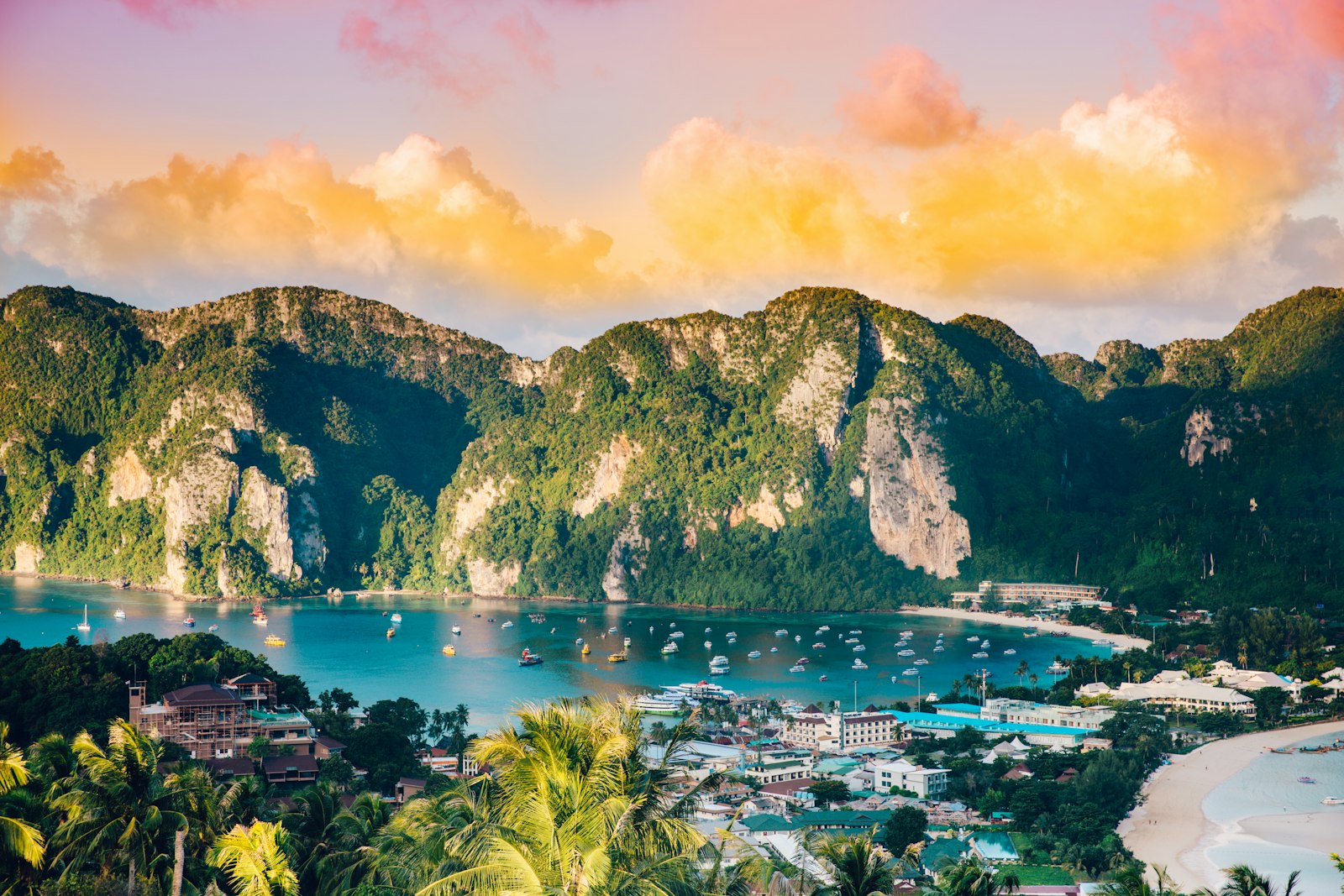
Thailand's tourism numbers are down, and the reasons are real: a collapsed China market spooked by scam-centre headlines, a strong baht, genuine cost creep, and Middle East airspace chaos jacking up the airfare to get there. That's a real story for Thailand's economy.
It is not a real story for your holiday. The scam compounds aren't in tourist areas. The "25% crash" is a worst-case model, not reality — the actual dip is around 3%. Thailand is as safe as it's ever been, and right now it's less crowded and more negotiable than it's been in years.
So go. Go in the shoulder season, lean north and inland to dodge the cost creep, watch the Cambodia border if you're crossing it, and enjoy a Thailand with a bit more breathing room. The crowds turning away are doing you a quiet favour.
Sources: Skift — why Thailand's tourist numbers slipped in 2025, Travel And Tour World — Thailand tourism slips Q1 2026, VisitThailandToday — Thailand tourism statistics 2026, Lowy Institute — Asia's scam centre problem, Nation Thailand — overstrong baht threatens price competitiveness, Bangkok Post — 25% tourism decline 'worst-case scenario', BHTP — is it safe to travel to Thailand in 2026, Nation Thailand — Iran war rattles tourism
Vietnamese backpacker, 5 years zigzagging across SE Asia on a shoestring. Budget travel, street food, hidden gems — the honest version.
✦ More from Alex Nguyen


✦ Keep reading
More from this region


More in Destinations
✦ Discussion
Start the discussion
No replies yet — yours could be the first.