
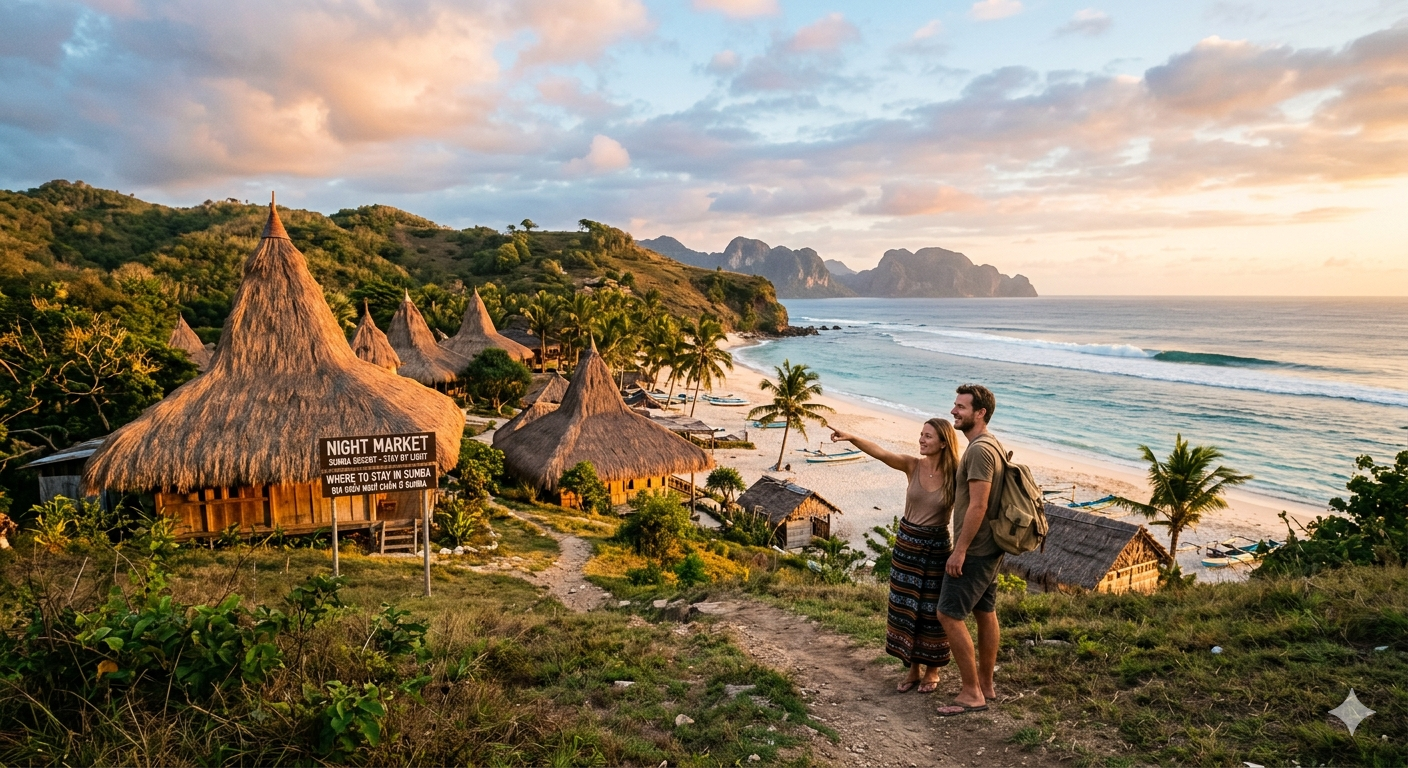
Source: Unsplash · License: Unsplash License
Where to Stay in Sumba: An Island Mapped by Light, Not Roads
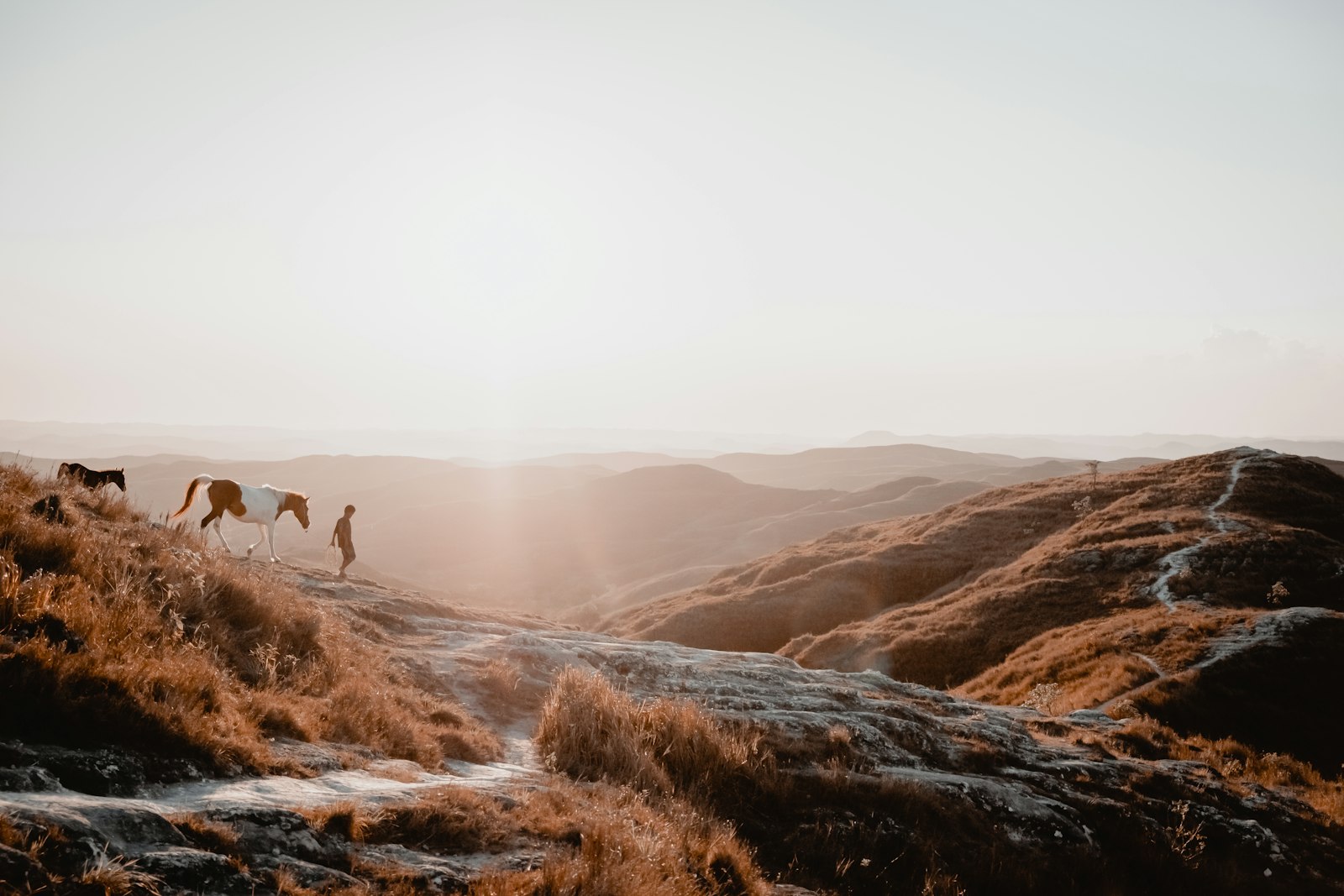
The first thing Sumba teaches you is that the map lies. On paper the island is small — three hundred kilometres tip to tip, a single province within Nusa Tenggara Timur, two airports, two main towns. In the truck it is a country. The road from Waingapu in the east to Waikabubak in the west takes the better part of a day if you stop for the horses, and you will stop for the horses. You will also stop for the Lontar palms standing on the hill crests like exclamation points, and for the small children who wave at the truck with absolute calm, as if waving were something one did at the temperature of the air.
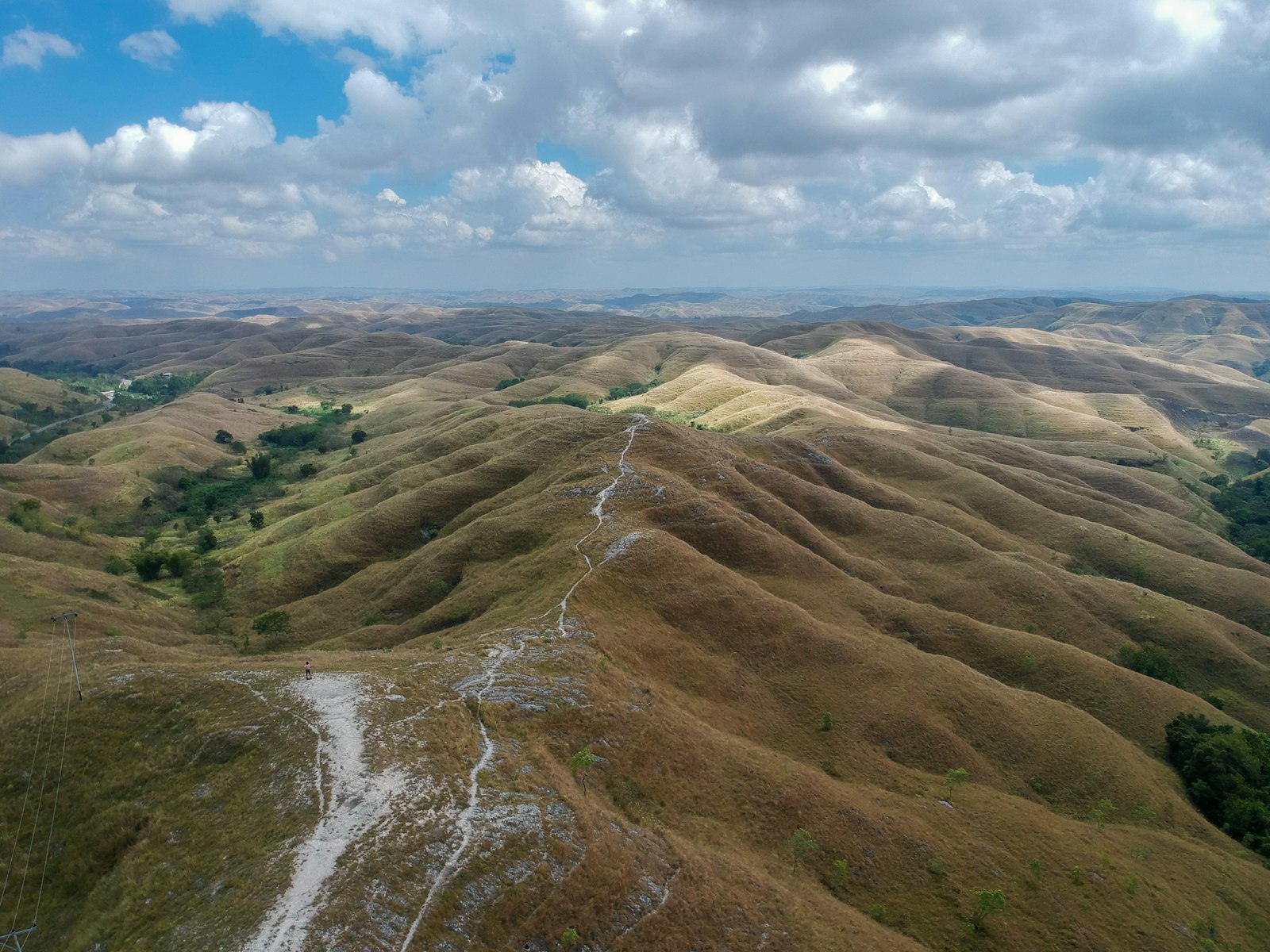
I came in the last week of August, deep into the dry season, when the savanna had bleached to the colour of straw and old gold and the hills caught the morning sun like a sleeping animal's flank. This is the season most photographers will want. The wet months — November through March — soak the same hills emerald, which is its own kind of beautiful, but the roads turn to red mud and the famous Pasola spear-festival is the only thing that will get most travellers out into the western districts at that time of year.
Sumba is the next-Bali that Indonesia hasn't ruined yet, and the reason is logistical, not aesthetic.
The reason it isn't Bali is mostly logistical. There is no direct international flight. You connect through Denpasar or Kupang into either Waingapu (WGP) on the east coast or Tambolaka (TMC) on the west, and from the moment you land you have made a choice about what kind of trip this will be. The island has, in effect, four bases. Pick the wrong one and you will spend your week in a car.
East Sumba: Waingapu and the savanna country
Source: Unsplash · License: Unsplash License
Waingapu is the practical capital of the east — a low, hot, working town of warung kitchens, motor-oil shops, and the regional government's pale ochre offices. You do not come to Waingapu for Waingapu. You come because it is the trailhead for the savanna landscape that defines this half of the island: Bukit Wairinding, where the wind shapes the grasses into long combed waves, and the wider Puru Kambera grasslands further north, sometimes called Sumba's "little Africa," not without reason.
This is also ikat country. The eastern villages around Prailiu, Rende, and Kaliuda still weave the indigo-and-rust hinggi kombu cloth on body-tension looms exactly as they did before the Dutch arrived, the indigo grown in the village garden, the rust from morinda root, the patterns — horses, skull trees, ancestors with raised arms — older than the dyes themselves. A good piece takes months. A great one takes a year.
Stay in or just outside Waingapu if you want to do East Sumba properly. There are clean guesthouses in town (Morinda Villa is the local favourite, with hill-view rooms and a serviceable restaurant) and a small number of boutique stays climbing the slopes south of the airport. Don't expect international polish; do expect breakfast served on a terrace as the light goes from blue to gold over a ridge with no buildings on it. Two nights here is the minimum. Three is better.
West Sumba: Waikabubak and the village circuit
Source: Wikimedia Commons · License: CC BY-SA 4.0 · Credit: Fakhri Anindita
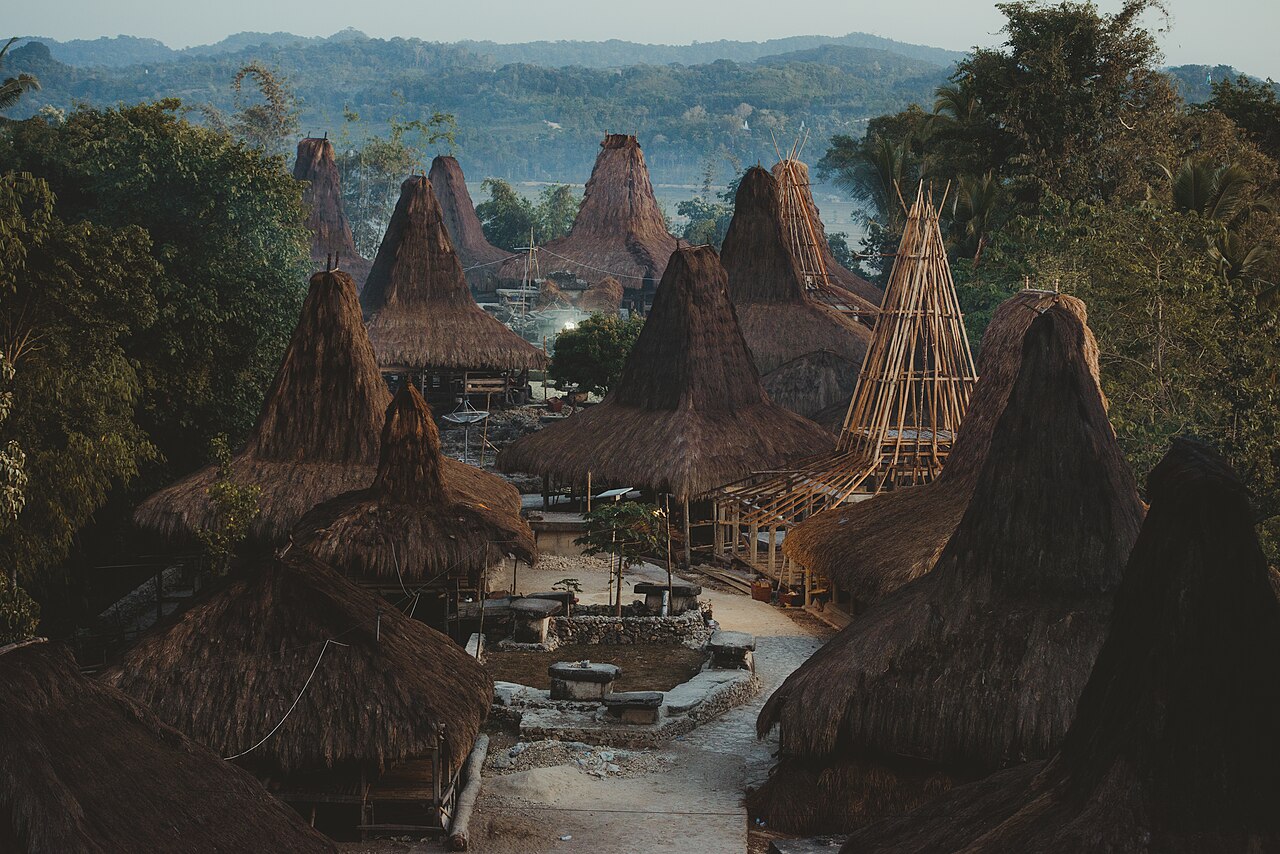
Drive west and the country changes. The savanna gives way to a more folded landscape, greener even in the dry months, sliced by rivers that disappear into limestone karst, and the human geography sharpens. This is the heartland of Marapu, the ancestral religion that pre-dates and persists alongside the Catholic and Protestant churches the missionaries left behind, and it is where you will find the great traditional villages — Praijing, Tarung, Waitabar, Ratenggaro, Wainyapu — with their soaring conical roofs, the uma mbatangu, rising sometimes fifteen metres into the sky.
These roofs are not decoration. The upper attic is reserved for the Marapu, for offerings and heirlooms; the middle level is for the living; the underbelly is for the animals. The whole house is a vertical cosmology with a thatch hat on top.
Waikabubak — locals will say Wai-kabu-BAH — is the regional capital and a sensible base for the village circuit. Morika Inn and a handful of family-run losmen will get you a clean room with a fan and hot water if you are lucky. The town itself contains Tarung village within walking distance of its centre, which is the easiest introduction to uma mbatangu architecture for a traveller short on time, and it is the unofficial finish line for the western Pasola festivals each February and March.
The roofs of Sumba's traditional villages are not architecture; they are vertical theology with a thatch hat on top.
A note on Pasola, since you may be timing a trip around it. The dates are not announced months in advance. The Rato priests of Lamboya, Kodi, Wanokaka, and Gaura set them in response to the moon and the appearance of the nyale sea-worms on the coast — typically mid-February in Lamboya, early March in Wanokaka. If Pasola is your reason for coming, book a guide on the ground rather than a fixed-date package. The festival is a real, sometimes bloody ritual of mounted spear-combat between clans, not a performance. Treat it as such.
Nihi Sumba: the resort that built the brand
Source: Unsplash · License: Unsplash License
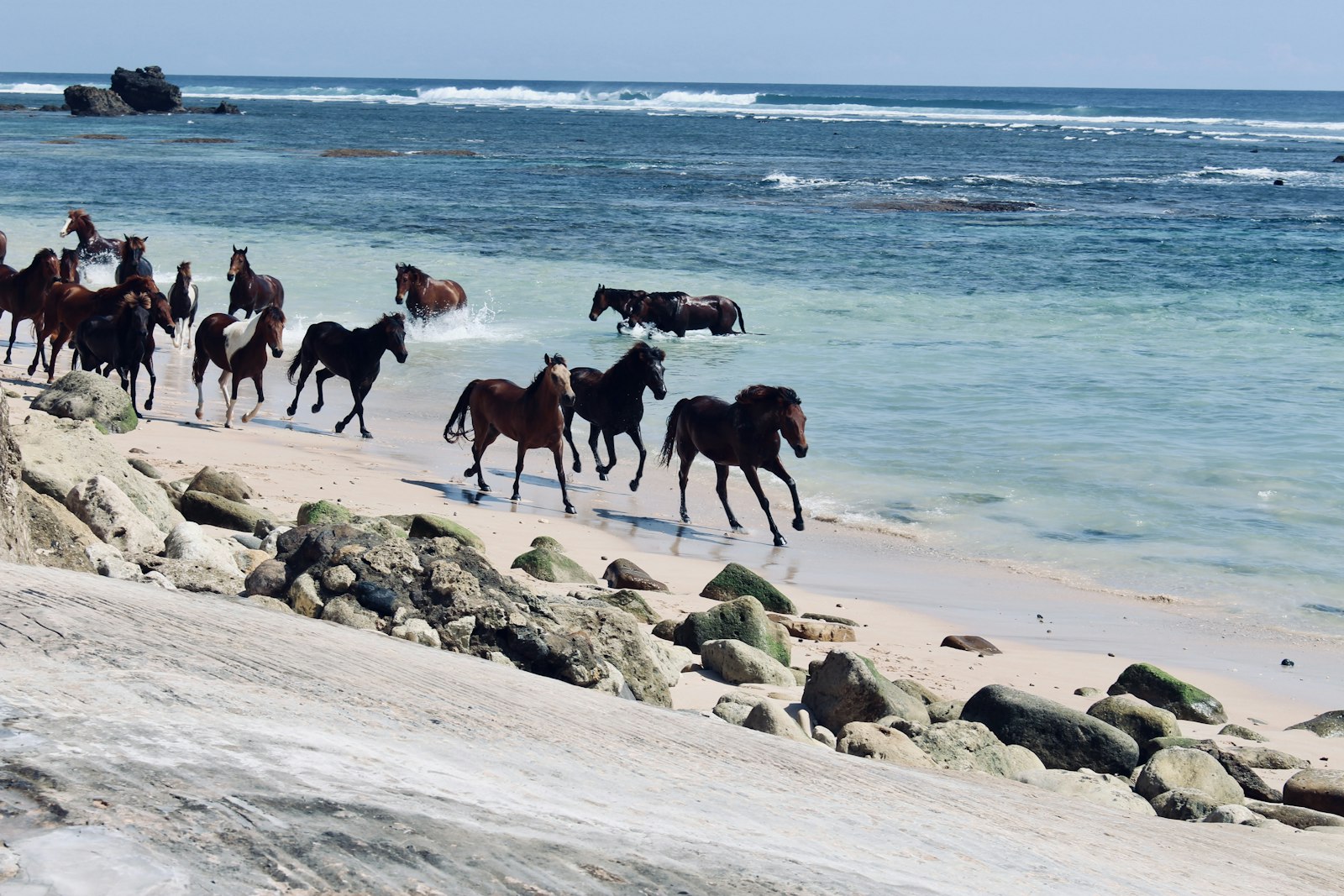
The third base needs its own paragraph because it is responsible for almost everything you have heard about Sumba in the last decade. Nihi Sumba — formerly Nihiwatu, founded by an American surfer in the nineties and bought by Chris Burch in 2012 — sits on a two-and-a-half-kilometre crescent of white sand on the southwest coast above the Occy's Left surf break, twenty-eight villas of bleached teak and Sumbanese ikat tucked into the cliff-line. Travel + Leisure named it the world's number-one hotel two years running. The architectural vocabulary is the same uma mbatangu you see in the villages, scaled and softened: peaked alang-alang thatch, dark hardwoods, open bathrooms, infinity pools cut into the headland. The sandalwood horses they keep on the estate swim in the surf at dawn.
It is also four thousand US dollars a night in high season, before you have ordered a drink. I think it is worth saying that out loud. Nihi is genuinely beautiful and genuinely well-run; it is also genuinely the most expensive single-property stay in Indonesia, and a great deal of the prose written about Sumba has been written by people who came as guests of the hotel. If you can afford it, stay three nights. If you cannot, you can drive to the public end of Nihiwatu beach in the late afternoon and watch the same light land on the same sand for the cost of a hire car.
The raw coast: Lamboya, Wanokaka, and the surf villages
Source: Unsplash · License: Unsplash License
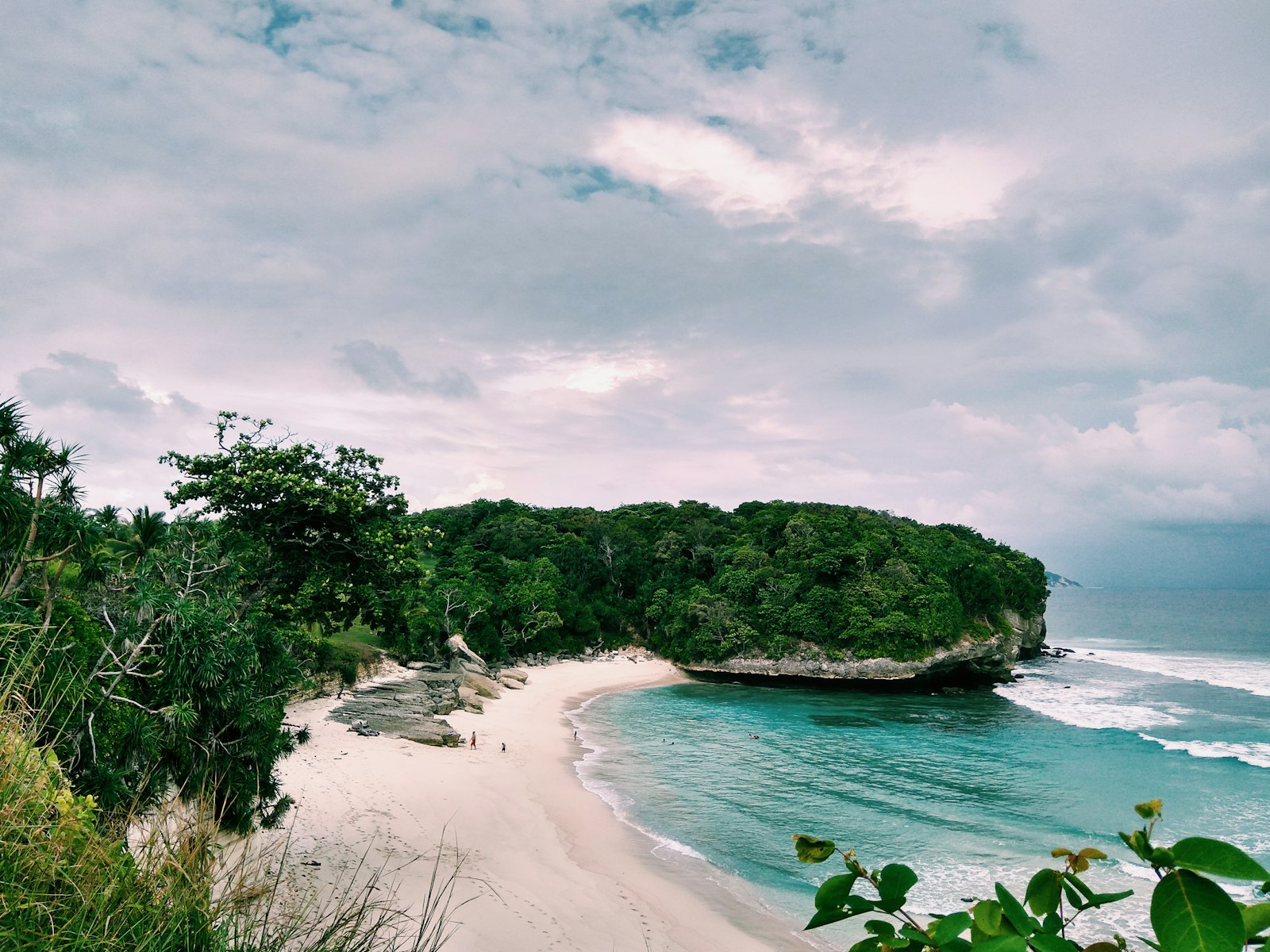
The fourth option is the one I am most drawn to, and the one that will date the fastest. South of Waikabubak, the road descends to a coastline of empty white-sand bays — Marosi, Watu Maladong, Pantai Mananga Aba — separated from each other by laterite-red headlands and ringed offshore by a reef line that runs nearly continuous from Lamboya all the way to Kodi.
A small ecosystem of surf camps, eco-lodges, and Indonesian-Australian-French expat-run guesthouses is colonising this stretch. Maringi Eco Resort, run by Sumba Hospitality Foundation, trains local young people in hospitality and pays the rent on its own community development; Sumba Nautil Resort sits on a long empty bay near Lamboya; smaller stays — Newa Sumba, Mario Beach Bungalows, Lelewatu's far end of the coastline — open and close as the dirt roads permit. Power is shaky. Wi-Fi is a rumour. The water in front of you is the colour of oxidised copper at midday and warm green-blue at dawn, and you will sometimes go a full day on the beach without seeing another foreigner.
This is the Sumba I would tell a photographer or a slow traveller to come for. It is also the Sumba that will be the hardest in five years to find unchanged.
Stitching it together: a sensible week
If this is your first time, give the island seven nights minimum. Two in or near Waingapu for the savanna and the eastern ikat villages. Two in Waikabubak for the uma mbatangu circuit and a side-trip to the Weekuri lagoon or the Lapopu waterfall. Three on the south coast — at Nihi if your budget agrees, at Maringi or one of the smaller eco-stays if not. Fly into Waingapu, out of Tambolaka, or the reverse. Hire a driver, not a self-drive car; the roads do not forgive the unfamiliar.
Bring cash. The ATMs work most of the time, but most is not all of the time. Bring a long lens — the horses and the village roofs both reward it. Bring a sarong, properly tied, for any village visit; the Marapu sites are working religious ground, not photo sets, and adat — customary law — is something you observe whether or not you understand it.
A word on what you came for
You came to Sumba, probably, because someone showed you a photograph. A horse in the surf, or a roof against a sky, or a hillside the colour of old gold. Those photographs are honest. The island is exactly as beautiful as it looks. What no photograph carries is the quiet — the sound of a place that does not yet exist for the camera, that has not yet learned to perform for it.
The island is exactly as beautiful as it looks. What no photograph carries is the quiet.
Stay somewhere that lets you hear it.
Italian travel photographer-writer. Architecture, landscape, the light. Slow, deliberate, image-led essays.
✦ More from Marco Rossi


✦ Keep reading
More from this region


More in Destinations
✦ Discussion
Start the discussion
No replies yet — yours could be the first.