
The Long-Haul Kit for Southeast Asia: What's Actually Worth Packing
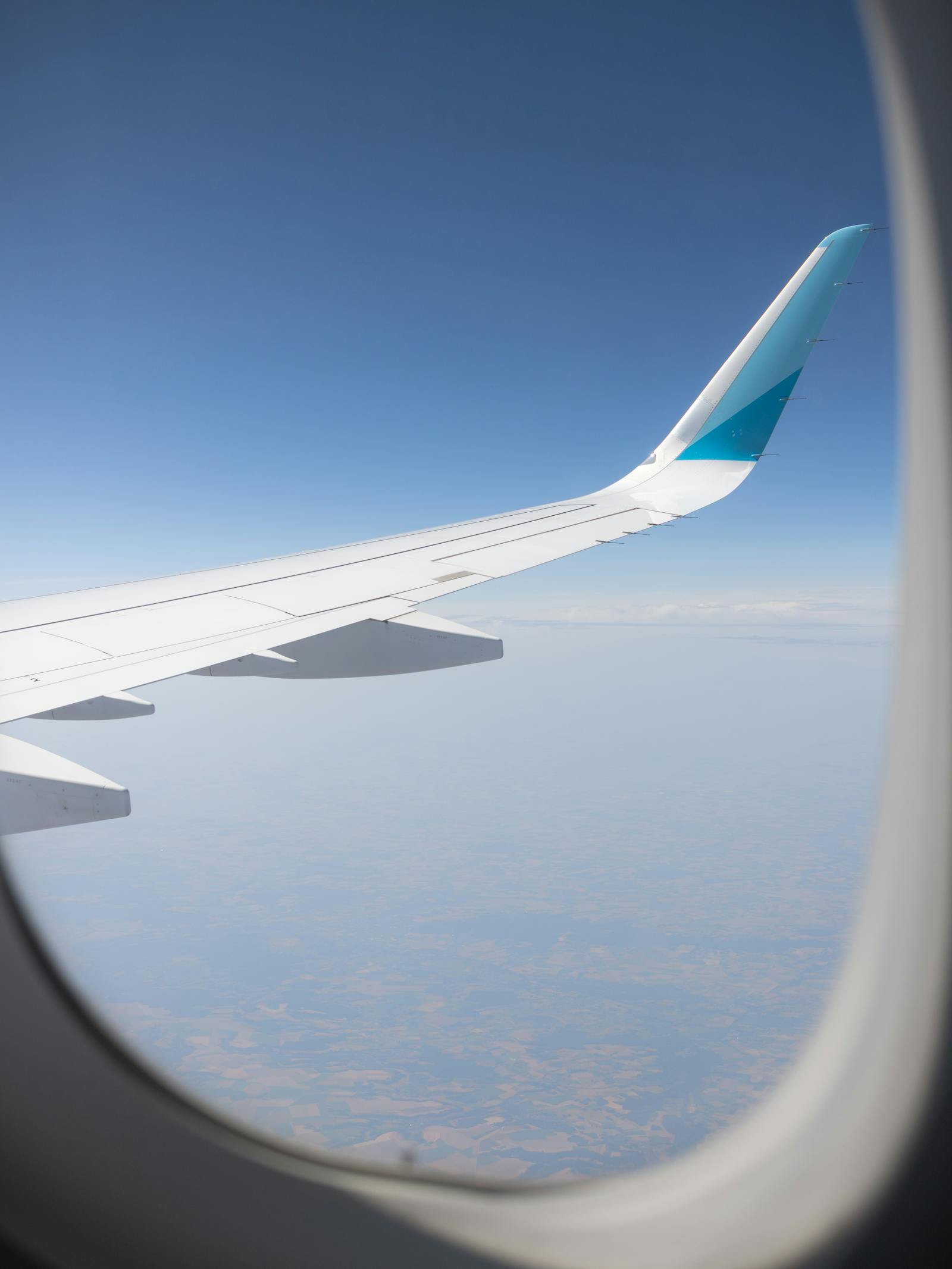
There is a particular hour on the flight to Southeast Asia — usually the ninth or tenth, somewhere over the Bering Sea or the Bay of Bengal depending on which way you came — when the cabin goes quiet and cold and you understand, in your spine and your sinuses, that you have made a mistake about something. Maybe it was the pillow. Maybe it was the third coffee in the lounge. Maybe it was wearing jeans. The flight to Bangkok or Singapore or Ho Chi Minh City from either American coast is twelve to eighteen hours of sitting still inside a pressurized tube whose air is drier than most deserts, and the gap between arriving wrecked and arriving merely tired is decided almost entirely before you board — by a small number of objects, most of which cost less than the airport sandwich you'll regret.
I have flown this route more times than I can usefully count, in seats ranging from a middle-of-five over the wing to the kind of flat-bed suite I was sent to photograph and could never afford. The seat matters less than you'd think. What matters is whether you packed for the plane or for the person who steps off it.
The Pillow Question, Answered Honestly
Start here, because it's the search that brought half of you: yes, you need one, and no, the U-shaped one in the airport vending machine is not it.
The problem with the classic horseshoe pillow is mechanical, not aesthetic. It supports the sides of your head and does nothing for the front, so the moment you drift off your chin drops toward your chest, your neck folds, and you snap awake — the wobble-nod-snap-repeat cycle that anyone who has tried to sleep upright knows in their bones. You wake every twenty minutes and arrive feeling as though you've been in a minor traffic accident.
The seat matters less than you'd think. What matters is whether you packed for the plane or for the person who steps off it.
Two designs actually solve the forward head-drop. The first is the wrap-style support — the Trtl and its imitators — which is essentially a hidden plastic brace wrapped in fleece that holds your head at a slight angle against your own shoulder, like a built-in headrest. It looks like a scarf, packs like one, and weighs almost nothing. The second is a properly engineered memory-foam piece with a flattened back, like the Cabeau Evolution, so the pillow sits flush to the seat and stops pushing your head forward — the single most common failure of cheap foam. Reviewers testing the wrap style reported sleeping seven straight hours on a thirteen-hour flight, which on this route is the difference between a holiday and a recovery.
What I actually carry: the wrap, because it weighs nothing and disappears into a daypack, plus an inflatable lumbar cushion for the small of my back, which is where the real ache lives on hour fourteen. Skip the inflatable neck pillows. They feel like sleeping on a beach ball and deflate in the night with a slow theatrical sigh.
The Cabin Is a Desert — Pack For It
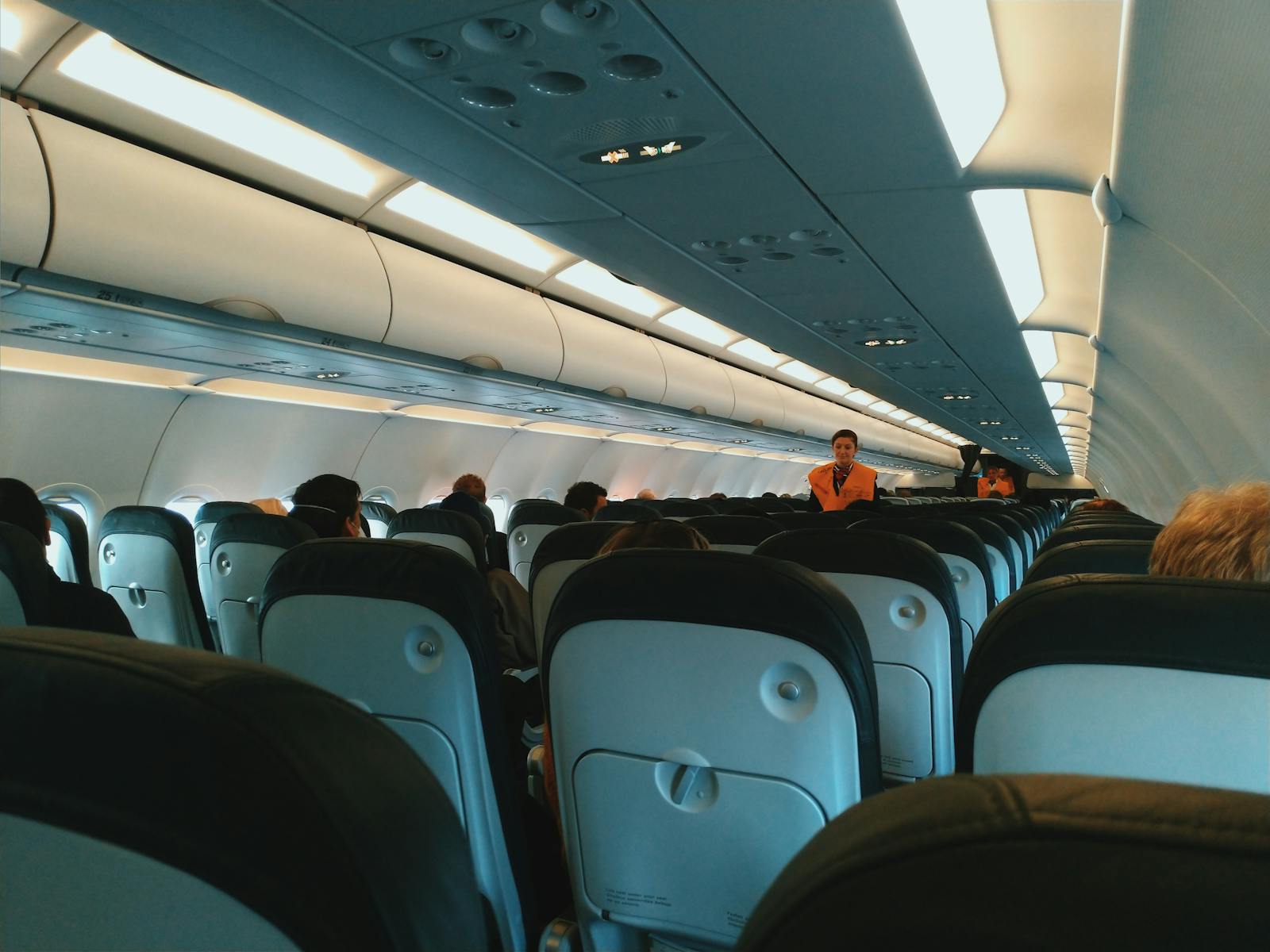
Here is the fact that reorganizes everything else in your kit: the relative humidity in an aircraft cabin drops below ten percent within two hours of takeoff and stays there. Your skin wants forty to seventy. The Sahara, for comparison, averages around twenty-five. You are flying to the tropics through the driest place you'll be all year, and your body knows it: you lose roughly a liter and a half to two liters of water across a long flight through breathing alone, before you've factored in the wine or the salt.
So the hydration kit isn't vanity, it's maintenance. A large empty bottle — collapsible, filled at the fountain past security — so you're not rationing the eighty-millilitre cups the cart brings every few hours. A heavy occlusive balm for lips and the rims of the nostrils, where the dryness does its quiet damage and where, in the season ahead, you do not want cracked skin meeting tropical bacteria. A small tube of a thick, fragrance-free moisturizer; reapply when you wake. If you wear contacts, take them out before you sleep and wear glasses — the cabin will turn your lenses to sandpaper, and an eye infection is a grim way to begin a trip.
You are flying to the tropics through the driest place you'll be all year. The hydration kit isn't vanity. It's maintenance.
What I leave at home: the ten-step skincare ritual, the sheet masks, the things travel influencers photograph against the window. A glycerin-heavy moisturizer and a balm do ninety percent of the work. The rest is theater, and the lavatory mirror is not the place for it.
The Layering Problem: 30 Degrees in 20 Minutes
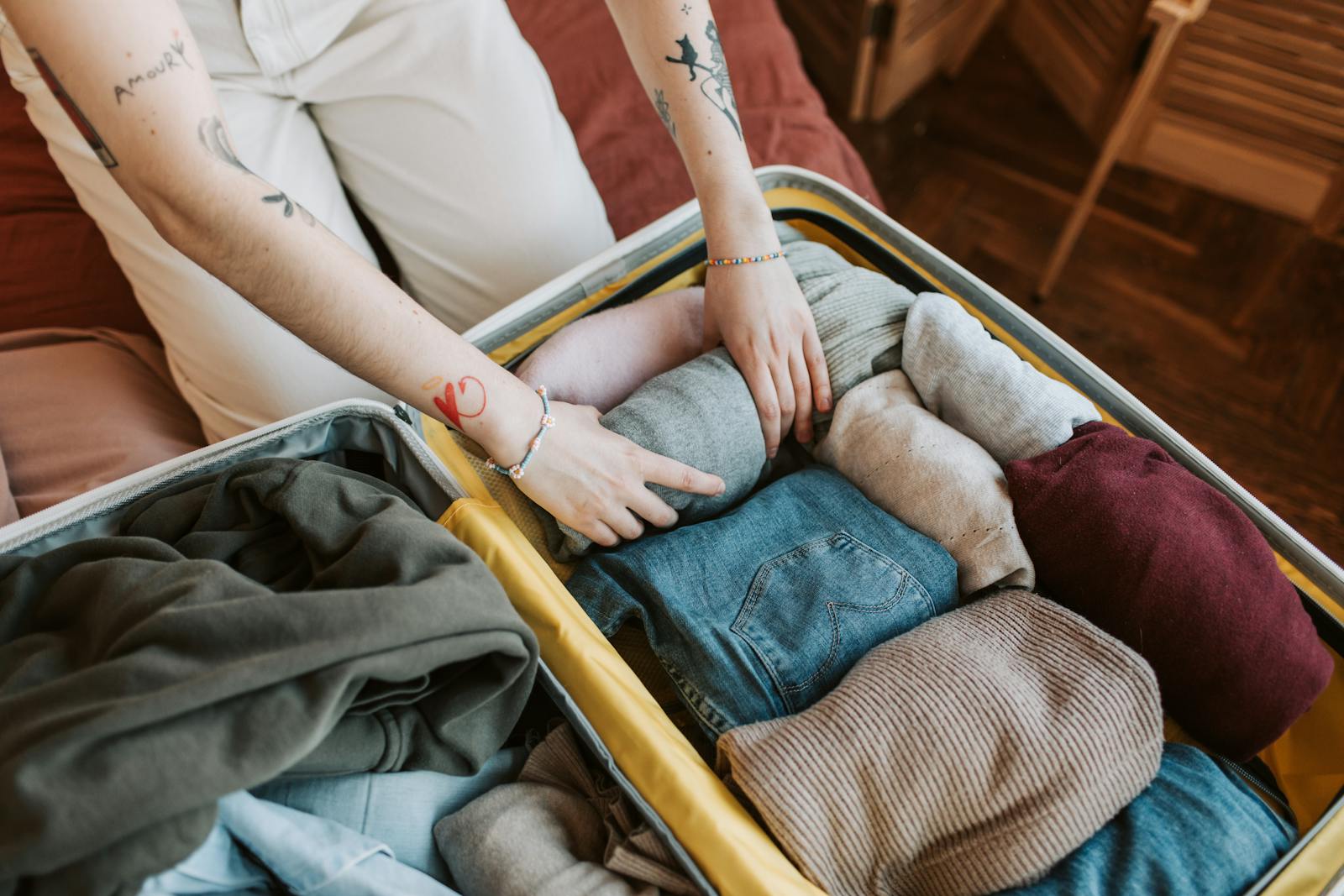
This is the one nobody warns you about, and it's specific to this route. You board in a cabin held somewhere around eighteen Celsius and frequently colder, you spend eighteen hours fighting that chill with a single thin airline blanket — and then the door opens in Bangkok or Jakarta or Phnom Penh and you walk into wet, thirty-three-degree heat that fogs your glasses before you reach immigration. A swing of thirty degrees in the length of a jet bridge.
You cannot dress for both ends. So you dress for the cabin and shed for the tarmac, in layers you can take off without a fitting room. My uniform, unchanged in a decade: loose linen or merino trousers, never jeans, which trap heat and cut off circulation in exactly the wrong places. A breathable base layer. A merino long-sleeve — merino because it regulates in both directions and refuses to smell after a day in transit. And on top, the most useful object in the entire kit: a large, light scarf or pashmina that is a wrap on the plane, a blanket when theirs is thin, a pillow against the window, and modest shoulder-cover for the temple you'll visit on day two without having planned to. Compression socks go on at the gate and come off in the airport bathroom on arrival, when your feet have remembered they're feet.
On compression: the evidence is real but narrower than the marketing suggests. A Cochrane review found strong evidence that graduated compression stockings reduce the risk of symptomless clots on flights over four hours — the swelling and the deep-vein kind both. What it could not show was a benefit against the dangerous, symptomatic clots, partly because those are rare enough that the trials caught none at all. The honest read: if you're young and healthy, they mostly just keep your ankles from ballooning, which on an eighteen-hour flight is reason enough. If you're pregnant, older, on the pill, or have any clotting history, they cross from nice-to-have into talk-to-your-doctor-first. Either way they're light, cheap, and worth the space.
Sound: The Real Decision
People agonize over noise-cancelling headphones as though it's a question of money. It's actually a question of what you want them to do.
Active noise-cancelling is brilliant at exactly one thing: the low, droning roar of the engines, the frequency band below a thousand hertz that defines the long-haul soundscape. Good headphones knock that down by fifteen to twenty-five decibels and the relief is immediate and profound — the flight gets quieter, the fatigue lifts a notch. What they're poor at is the human register: the toddler four rows back, the cart, the man explaining his cryptocurrency portfolio to a stranger. For those, dense foam earplugs rated around thirty decibels actually outperform the expensive headphones in the mid and high frequencies where voices live.
The answer most seasoned flyers arrive at is both. Foam plugs in, headphones over the top — the combination adds another ten to fifteen decibels in precisely the range where each alone is weakest, and it's as close to silence as economy gets. For sleep specifically, plugs alone often win; a headband is hard to wear against a window. Carry both. They weigh nothing and they are the single largest lever on whether you sleep.
The Plug Map Splits the Region in Two
This is where a multi-country trip ambushes the unprepared, and it's worth thirty seconds of attention because it will save you a frantic hunt through a Bangkok 7-Eleven.
Mainland Southeast Asia — Thailand, Vietnam, Cambodia, Laos, Indonesia — runs largely on the flat-pinned Type A and the round-pinned Type C, often in the same forgiving socket that accepts either, all at 220 to 230 volts. Then you cross an invisible line. Singapore, Malaysia, Myanmar, and Hong Kong use the chunky three-rectangular-pin Type G, the British plug, and your American or two-pin European adapter is suddenly useless. A traveler doing the classic loop — Singapore in, overland or a short hop up to Thailand — genuinely needs both worlds covered.
The clean solution is a single universal adapter with built-in USB ports, which collapses the whole problem into one object and charges your phone and headphones at the same time. On voltage: the entire region runs at roughly double North American voltage, but every modern phone, laptop, and camera charger is rated 100–240 volts and handles it without thinking — check the small print on the brick, it's printed there. You need an adapter, which changes the shape of the plug. You almost certainly do not need a converter, which changes the voltage and is heavy, expensive, and for travelers in this century mostly a relic. The one real exception is a corded hair tool or anything with a heating element; leave it home and buy a dual-voltage version if you must.
What to Leave at Home
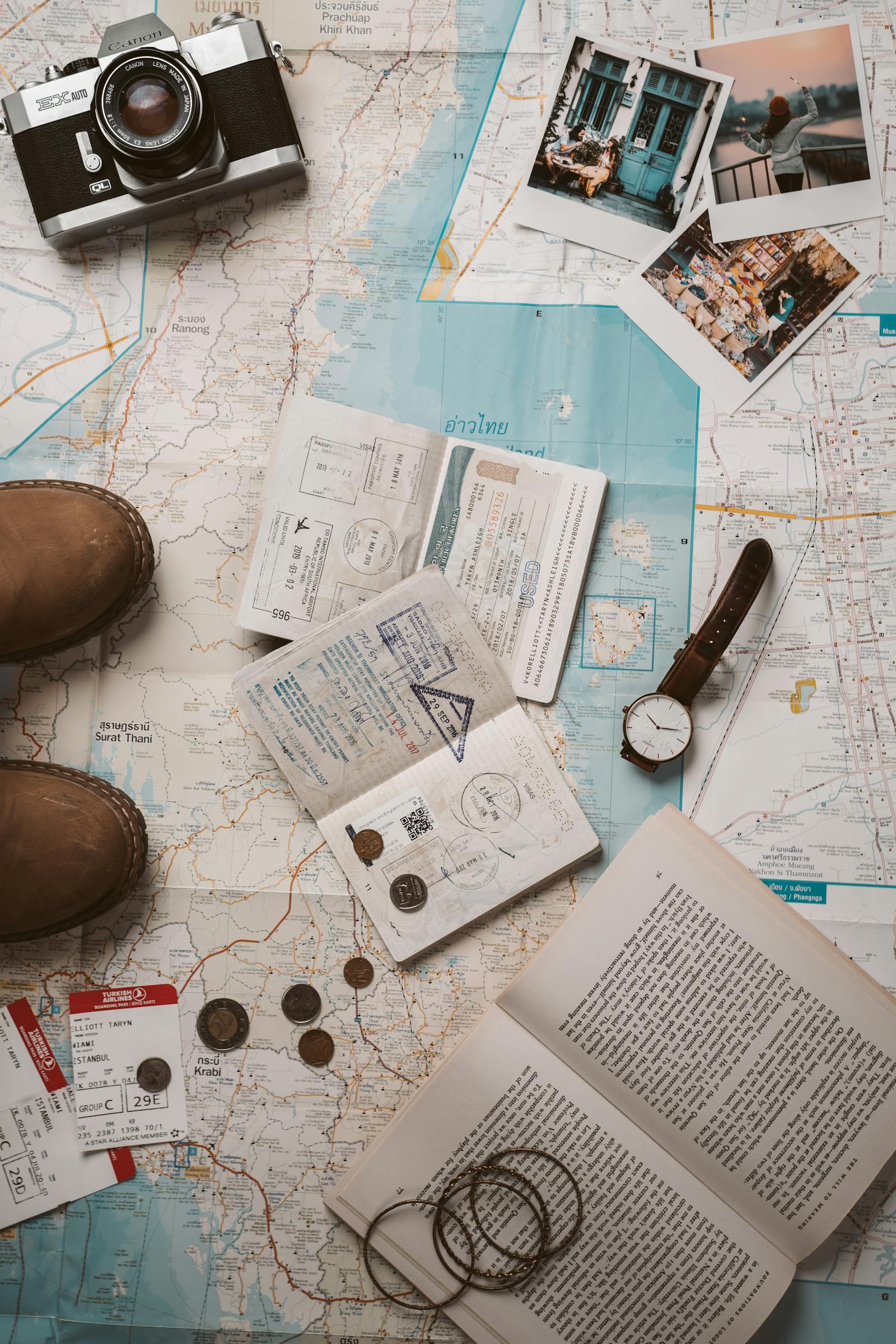
The kit that works is small. That's the whole point of it.
Leave the travel-sized everything-set you bought in a panic — you'll buy toothpaste in Asia for a dollar, and the night markets sell better toiletries than the airport. Leave the neck pillow that doesn't solve head-drop; it's just bulk. Leave the voltage converter, the second pair of shoes you won't wear, the books you won't open because you'll be asleep or watching films. Leave the jeans.
What earns its place: the head support that actually holds your head, a balm and a moisturizer against the desert you're crossing, layers you can shed on the jet bridge, the scarf that is four objects, a single universal adapter, and both kinds of silence. Everything on that list is light, and most of it is cheap, and together it decides which version of you walks out into that wall of tropical heat — the one squinting and broken, or the one who slept, and is already looking for the right noodles.
The flight is never the trip. It's only the cost of admission. Pack so you pay it once.
Asian-American travel writer + photographer based in SF. Luxury and culture, design-forward destinations, slow travel.
✦ More from Sarah Chen


✦ Keep reading
More from this region


More in Trip Planning
✦ Discussion
Start the discussion
No replies yet — yours could be the first.