
The Question Behind the Question
Thailand will rent you almost anything. A 250-baht bunk in a Chiang Mai dorm with a fan that ticks like a metronome. A teak suite over the Chao Phraya where the river traffic slides past your bath at dawn. The country's hospitality runs the full vertical, and the gap between the bottom and the top is wider here than almost anywhere I've worked. That width is the opportunity and the trap. Spend wrong and you'll pay resort money for a room you only sleep in; spend right and a single well-chosen night can recalibrate how you understand the whole trip.
So the real question isn't "hostel or hotel." It's where, when, and against what. Thailand's accommodation market sorts itself by tier, by neighborhood, and by season, and once you can read those three dials, the booking almost makes itself. Here is how the map actually works, in baht and in trade-offs.
The Five Tiers, in Baht and in Honesty
At the floor sit hostels: dorm beds run 250 to 600 THB (roughly $7 to $17), with the design-led places in Bangkok and Chiang Mai pushing the top of that band. You are paying for cleanliness, air-conditioning, and other travelers; manage your expectations on the first and you'll be fine. Guesthouses, the workhorse of independent travel here, fill the next rung at 700 to 1,500 THB ($20 to $43) for a private room, often family-run, frequently the most quietly Thai experience on this list.
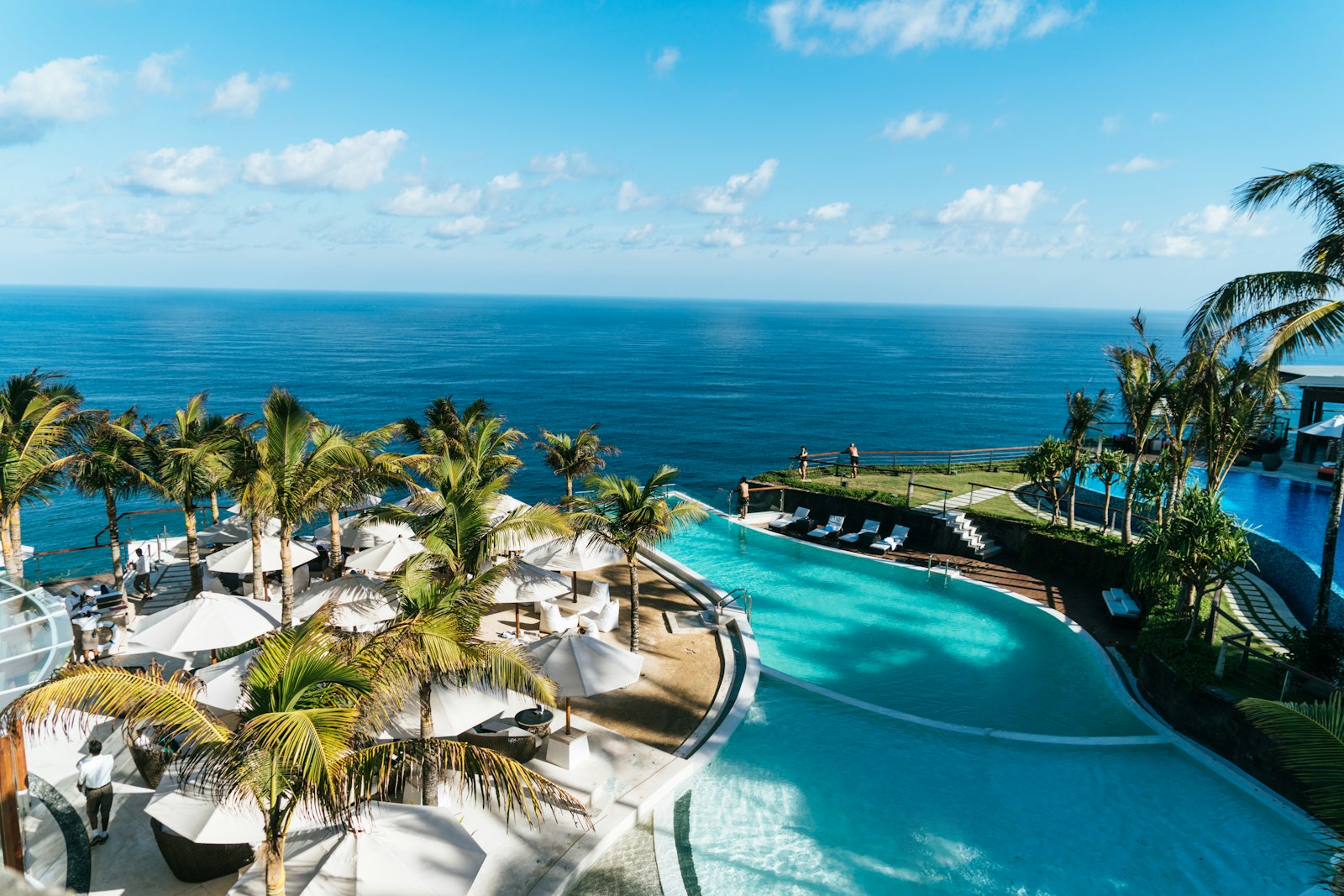
The middle is where it gets interesting. Boutique and good mid-range hotels land between 1,800 and 4,500 THB ($50 to $130), and in Thailand that band buys disproportionate beauty: restored shophouses, courtyard pools, breakfast that means something. Beach resorts open around 3,000 THB and climb to 15,000-plus ($85 to $430), the spread driven almost entirely by water — proximity to it, view of it, privacy from everyone else enjoying it. Then the ceiling: international and homegrown luxury, 9,000 to 40,000 THB and beyond ($260 to $1,150+), where the price is no longer for a room but for a piece of land, a chef, a silence.
Note the through-line. The lower tiers price a bed; the upper tiers price an experience you couldn't assemble yourself. That distinction is the whole game when you decide where to splurge.
Bangkok: The Neighborhood Is the Hotel
In Bangkok, where you stay shapes the city you get more than your star rating does. Sukhumvit is the path of least resistance — Skytrain on the surface, rooftop bars above, malls and a thousand restaurants threaded along the BTS line. It's efficient and a little anonymous; mid-range rooms run 2,000 to 4,000 THB. The Riverside, around the old farang quarter and the new Charoenkrung galleries, is where Bangkok turns cinematic: heritage hotels, ferry commutes, golden light off the water, and a premium of roughly 30 to 50 percent for the privilege.
Rattanakosin, the old royal island around the Grand Palace and Wat Pho, has quietly grown a clutch of boutique stays in restored buildings — wake to temple bells, not traffic, at 2,500 to 5,000 THB. Silom and Sathorn run business-formal by day and loosen after dark. My rule for first-timers: stay walking-distance to a BTS or MRT station or on the river, full stop. Bangkok traffic will eat a beautiful room alive.
Chiang Mai: Walls, Then Beyond Them
Chiang Mai organizes itself around a moated square — the Old City — and the decision is whether to stay inside the walls or just outside them. Inside, you are steps from the temples and the Sunday Walking Street, in guesthouses and small boutiques running 800 to 3,000 THB; the trade-off is night-market noise and a certain backpacker density. Nimmanhaemin, west of the moat, is the design district: specialty coffee, concept hotels, a younger creative pulse, 1,500 to 4,000 THB.
Go further — into the Mae Rim or Hang Dong foothills — and the math inverts. For boutique-hotel money you get a lanna-style retreat with rice fields out the window, the kind of place that justifies a car or a daily Grab. This is the city where I'd push a traveler to spend one tier up on character; Chiang Mai's mid-range punches absurdly above its price.
The Islands: Sorted by Water and by Calendar
The archipelago sorts you by appetite. Phuket and Koh Samui are the developed coasts — full luxury infrastructure, beach resorts from 3,500 THB to five figures, and the only places where the very top tier exists in volume. Koh Lanta, Koh Tao, and the smaller Andaman and Gulf islands trade polish for room rate and quiet; comfortable bungalows still go for 1,200 to 2,500 THB.
The calendar matters more than the island. High season (roughly December through March) brings dry skies and surcharges of 50 to 100 percent. A Samui bungalow at 1,000 THB in low-season June can ask 2,500 THB at New Year, and the best rooms vanish months ahead. Green season — May to October — is the value window: lower prices, lusher land, real rain that usually comes in afternoon bursts rather than all-day washouts. But mind the monsoon split. The Andaman coast (Phuket, Krabi, Lanta) and the Gulf (Samui, Phangan, Tao) run opposite weather schedules, so the wet month for one is often workable for the other.
When to Splurge, When to Save
Splurge where the property is the destination. On an island, the beachfront resort earns its premium because the water is the entire point — you'll spend daylight hours on the property, so its grounds, its pool, its stretch of sand are the trip, not the backdrop. Splurge, too, on a single anchoring night of heritage: a restored riverside hotel in Bangkok or a foothill retreat outside Chiang Mai will give you more of Thailand in one stay than a week of beige business rooms.
Save in transit cities and on sleep-only nights. A clean, central guesthouse near the train station is the right call when you're arriving late and leaving early — paying resort rates for a bed you'll see in the dark is the most common, most avoidable mistake I watch travelers make. And save in Chiang Mai's mid-range, where 2,500 THB already buys genuine beauty and 6,000 buys mostly diminishing returns.
The cleanest strategy is the barbell: spend almost nothing on the functional nights, then concentrate the budget on two or three stays where the room is itself a reason to be there. It beats the flat mid-tier spread every time.
Booking Timing, Plainly
For high-season islands and any stay over Christmas, New Year, or Songkran (mid-April), book two to four months out — the best beachfront rooms genuinely sell through, and prices only rise as the date nears. For Bangkok and Chiang Mai outside festival weeks, two to four weeks ahead is comfortable, and the cities reward a little price-watching. Hostels and guesthouses you can often leave to the last week or even walk in during green season, which is part of their freedom.
Two habits worth keeping. Cross-check the aggregator price against the hotel's own site and a quick message to the property — small Thai boutiques and guesthouses frequently beat the platforms on direct rates and will hold a room. And read for location like a local, not a logo: in Thailand, a 2,000-baht room in the right neighborhood will out-travel a 6,000-baht one in the wrong one, every single time.
Asian-American travel writer + photographer based in SF. Luxury and culture, design-forward destinations, slow travel.
✦ More from Sarah Chen


✦ Keep reading
More from this region


More in Destinations
✦ Discussion
Start the discussion
No replies yet — yours could be the first.