
Source: Unsplash · License: Unsplash License
Is Thailand Expensive in 2026? An Honest Cost Breakdown
Short version. Thailand in 2026 is not the $15-a-day country your older cousin backpacked in 2014, and it's also not the budget tragedy Reddit will tell you it is. It's a country with two faces — and which one you meet depends almost entirely on which postcode you book.
I just spent six weeks zigzagging from Bangkok up to Chiang Mai, across Isan to the Lao border, then down through Krabi and over to Phi Phi to confirm the rumours. Here's what a day actually costs in 2026, what's changed since 2024, and which mistakes will quietly double your trip budget.
The three tiers, in plain numbers
USD figures use the May 2026 rate of roughly 36 baht to the dollar. Round generously — the baht moves.
Backpacker — $30 to $45 a day. Dorm bed (฿300–500), street food three meals (฿120–200 total), public transport or walking, one cheap activity. Doable in Bangkok, Chiang Mai, Isan and most second-tier towns. Painful on Phi Phi and Phuket — more on that.
Mid — $60 to $100 a day. Private room in a small guesthouse or 3-star (฿1,200–2,500), mix of street food and sit-down meals, Grab rides instead of buses, one paid activity. This is most travellers' actual budget once they stop pretending they'll stay in a 14-bed dorm in 33°C heat.
Comfort — $130 to $220 a day. Boutique hotel or solid 4-star (฿2,500–5,500), restaurant meals, private transfers, daily activity. Still vastly cheaper than equivalent comfort in Vietnam or Bali, frankly.
For a one-week trip that's roughly $210–315 backpacker, $420–700 mid, $910–1,540 comfort — flights and visa-on-arrival not included.
Bangkok is still the best deal in Southeast Asia
Source: Unsplash · License: Unsplash License
I'll die on this hill. Bangkok in 2026 is the cheapest major capital in the region, full stop.
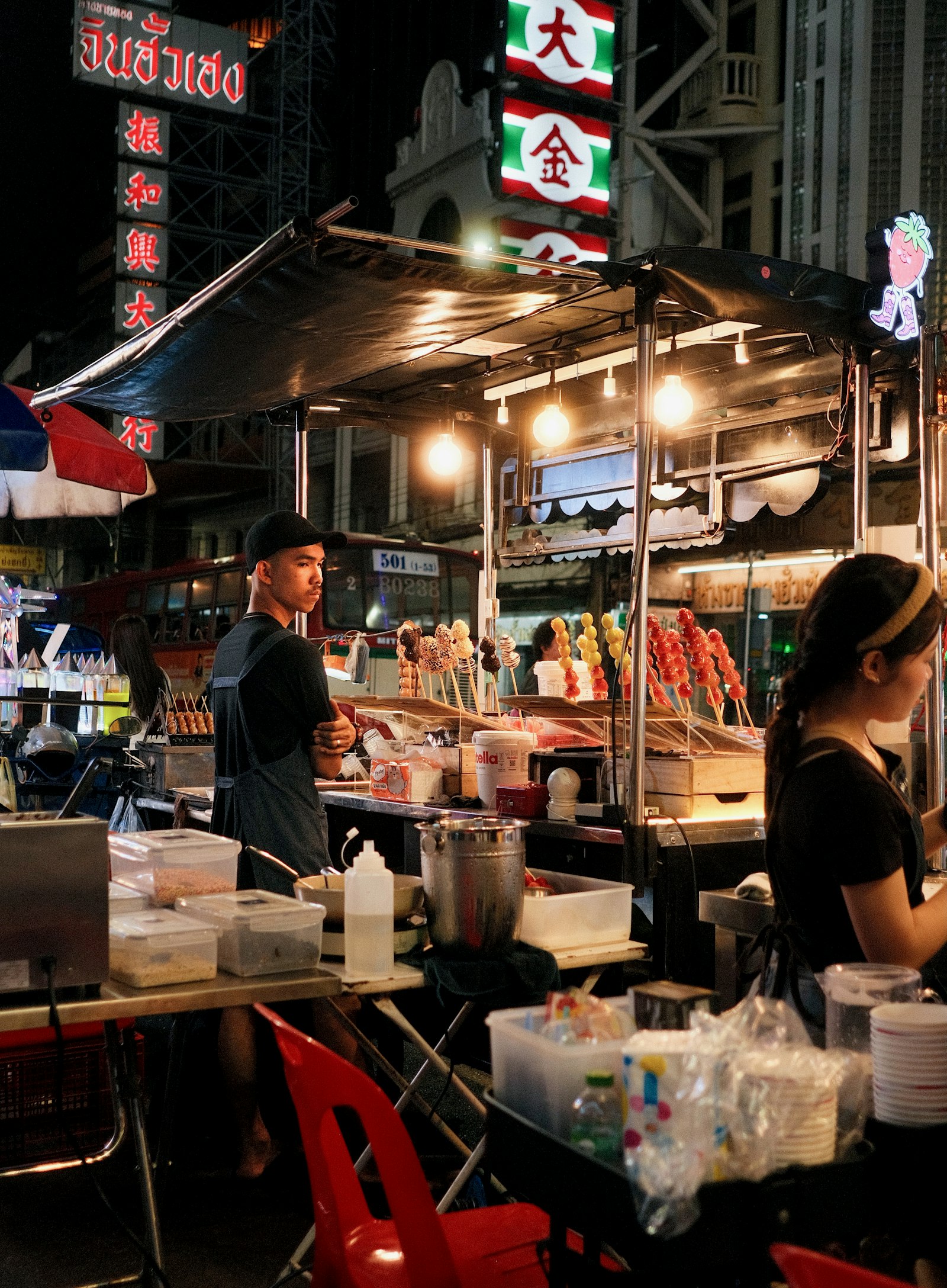
A bowl of boat noodles at Victory Monument still runs ฿50–60 ($1.40–1.70). Pad krapow moo with rice and a fried egg from a street cart, ฿60–80 ($1.70–2.20). A solid hostel dorm in Phra Nakhon or Bang Rak, ฿350–500 ($10–14). I stayed at a family-run guesthouse in Banglamphu for ฿650 a night with a private fan room and a balcony you could fit two motorbikes on.
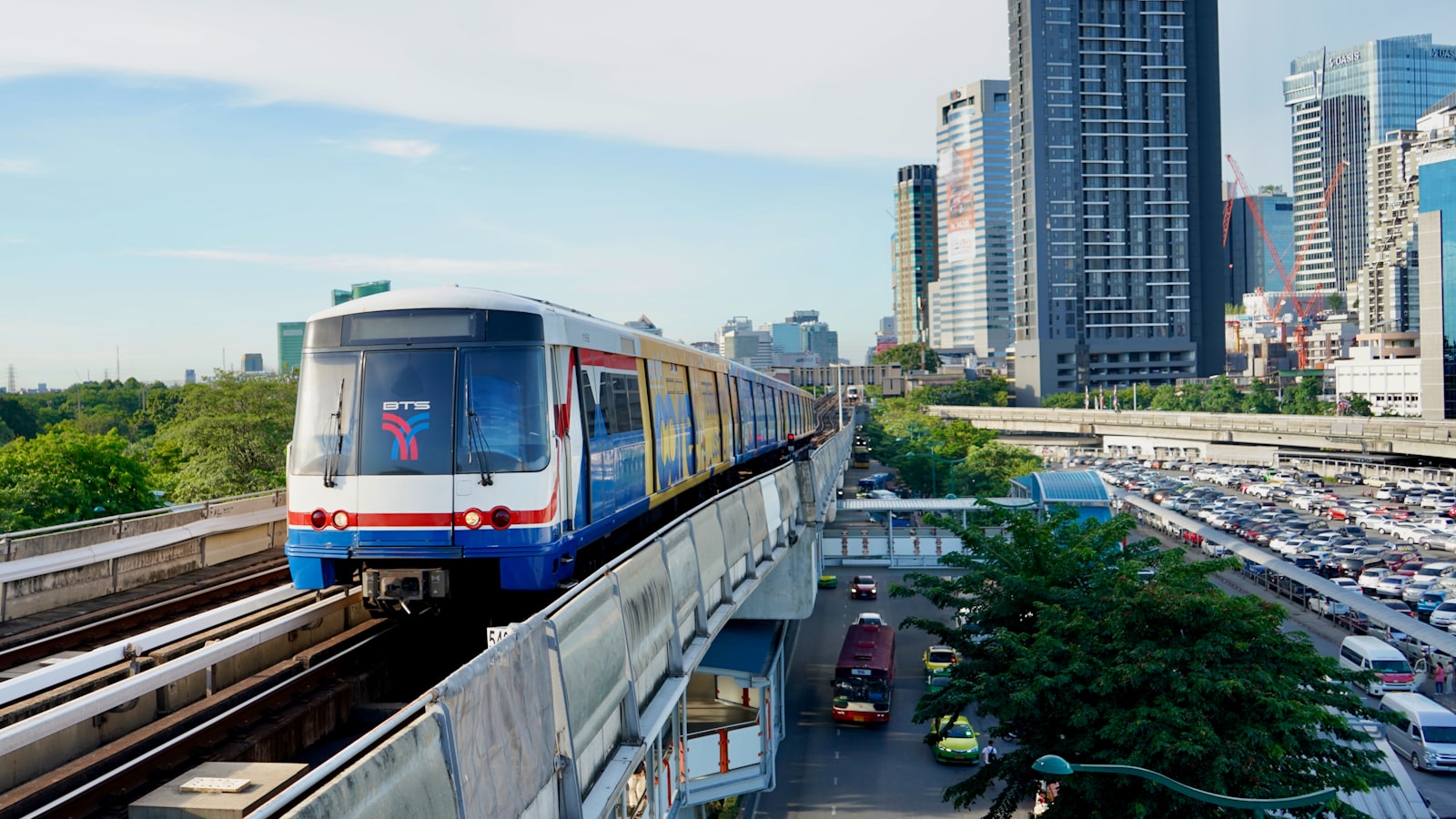
Heads-up on transit. You may have read about Bangkok's 20-baht flat fare across the metro and Skytrain. As of late 2025, that policy applies only to Thai nationals who register through the Tang Rat app. Tourists still pay distance-based fares — BTS rides run ฿17–47 ($0.50–1.30), MRT similar. Annoying but not a budget-killer. Just don't show up expecting the 20-baht miracle.
Grab from Sukhumvit to Khao San at off-peak: ฿120–160 ($3.30–4.40). Pin the route and watch the driver follow it.
Phuket and Phi Phi have crossed into actually-expensive
Source: Pexels · License: Pexels License
This is the part most "Thailand is so cheap!" guides won't tell you.
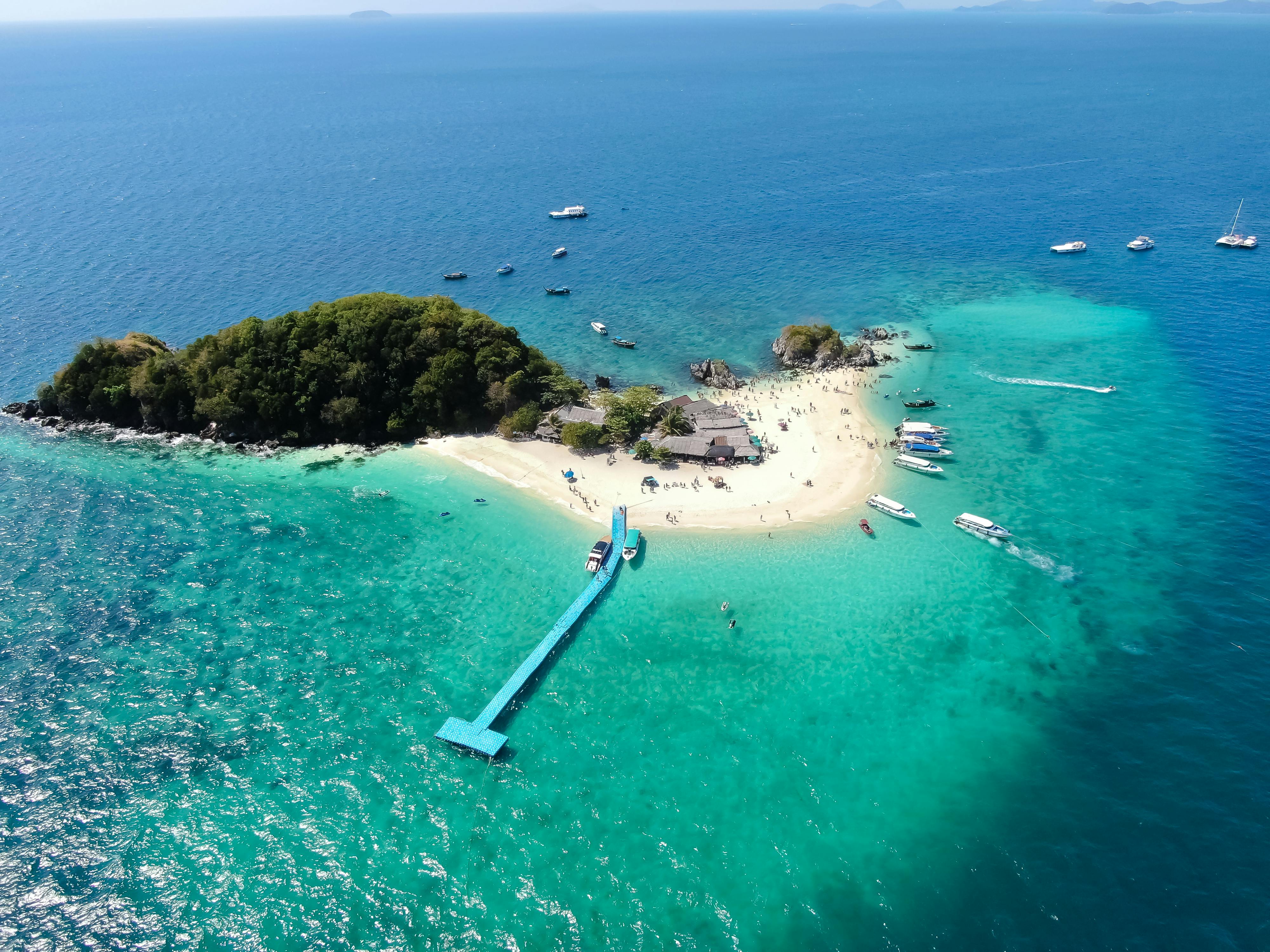
In peak season (Nov–March), beachfront rooms on Phi Phi Don routinely break $80–120/night for nothing special, and the decent ones now hover near $150. Hostel dorms — hostel dorms — go for ฿600–900 ($17–25) on the island. A plate of pad thai at a tourist-strip restaurant in Ton Sai: ฿180–250 ($5–7). Three years ago that was a sit-down dinner with a beer.
Phuket is the same story with extra steps. Patong and Kata in high season: budget rooms from ฿1,400 ($39), a beer on the beach ฿120 ($3.30), a longtail charter to a "private" island that has 40 other tourists on it, ฿2,500–4,000 ($70–110) per boat. The 2025 Phi Phi Islands National Park fee is now ฿400 ($11) per foreign adult on top of your ferry — most day tours include it, but always confirm.
And the jet-ski scam is, regrettably, alive and well. You return the ski, the guy points at a "new" scratch, suddenly you owe ฿20,000. Skip jet skis. Snorkel instead.
The Phuket–Phi Phi corridor is a perfectly nice holiday — it's just no longer a cheap holiday. If your budget is the backpacker tier, give it 3 days max and get out.
Chiang Mai is the digital-nomad bargain that's still real
Source: Unsplash · License: Unsplash License
Of every "is X city still cheap" claim I tested in 2026, Chiang Mai held up best.
A modern studio in Nimman with aircon, fast wifi, a pool and a gym? ฿15,000–22,000/month ($420–610). Push to the suburbs or skip the pool and you'll find one-bedrooms for ฿10,000–14,000 ($280–390). Coworking memberships at places like CAMP or Yellow run ฿2,500–3,500/month ($70–100).
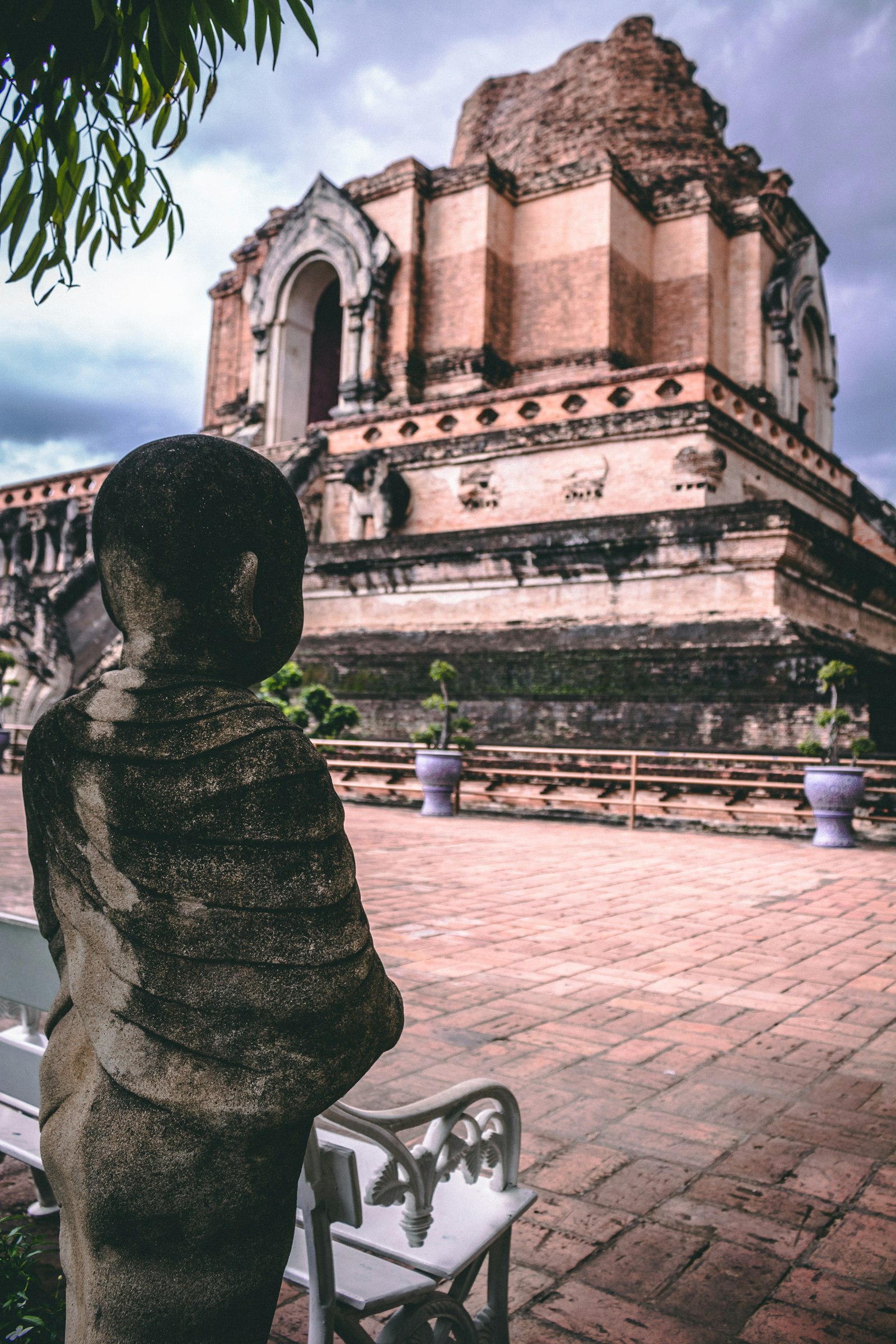
Daily life: khao soi in the Old City, ฿60–80 ($1.70–2.20). A flat white at a third-wave roastery, ฿70–95 ($1.95–2.65). A scooter rental, ฿2,500/month ($70) and you ride everywhere.
The catch is burn season — roughly Feb to mid-April the air quality goes from "fine" to genuinely hazardous. If you can structure your trip around it, do.
Isan is the cheapest Thailand most backpackers skip
The northeast — Isan — is the part of Thailand that still costs what Thailand used to cost. Khon Kaen, Udon Thani, Nong Khai, Ubon Ratchathani. Border towns, rice fields, Khmer ruins, river markets. Almost zero Western tourists.
I spent ฿800 ($22) per day in Nong Khai, including a ฿350 guesthouse with a Mekong-view balcony, three meals of som tam and grilled chicken at the night market, scooter petrol, and a few beers at a riverside raan lao watching the sunset hit the Lao mountains across the water. That price isn't a deal — that's just what things cost there.
A 20-day swing across the region tallied around ฿22,000 ($610) for one traveller, all in.
Getting there is easy. Overnight train Bangkok to Udon Thani in second-class sleeper: ฿750–950 ($21–26), arrives before breakfast. Buses between Isan capitals: ฿80–150 ($2.20–4.20). The trade-off is less English signage, fewer hostels, and your Instagram won't pop. If that's a dealbreaker, fine. If it's the appeal, you're going to love it.
The hidden costs nobody warns you about
Source: Unsplash · License: Unsplash License
A few line items that quietly shred a budget:
Visa overstay fines. Still ฿500/day ($14), capped at ฿20,000 ($555). If you overstay by 90+ days you eat the cap and a one-year ban. Confirmed for 2026 — pay at the airport on departure, don't try to be clever. The new tourist e-visa is also stricter about onward-flight proof; book a refundable through-flight if you're playing it loose.
The proposed 300-baht entry fee. Still not in effect as of May 2026 but threatened repeatedly. When it lands it'll be bundled into your airline ticket, so check your fare breakdown.
Island national park fees. ฿400 ($11) per adult at Phi Phi, similar at Similan, Surin, and several Trang archipelago islands. Day-tour operators usually include it but a few quietly don't. Ask before you board.
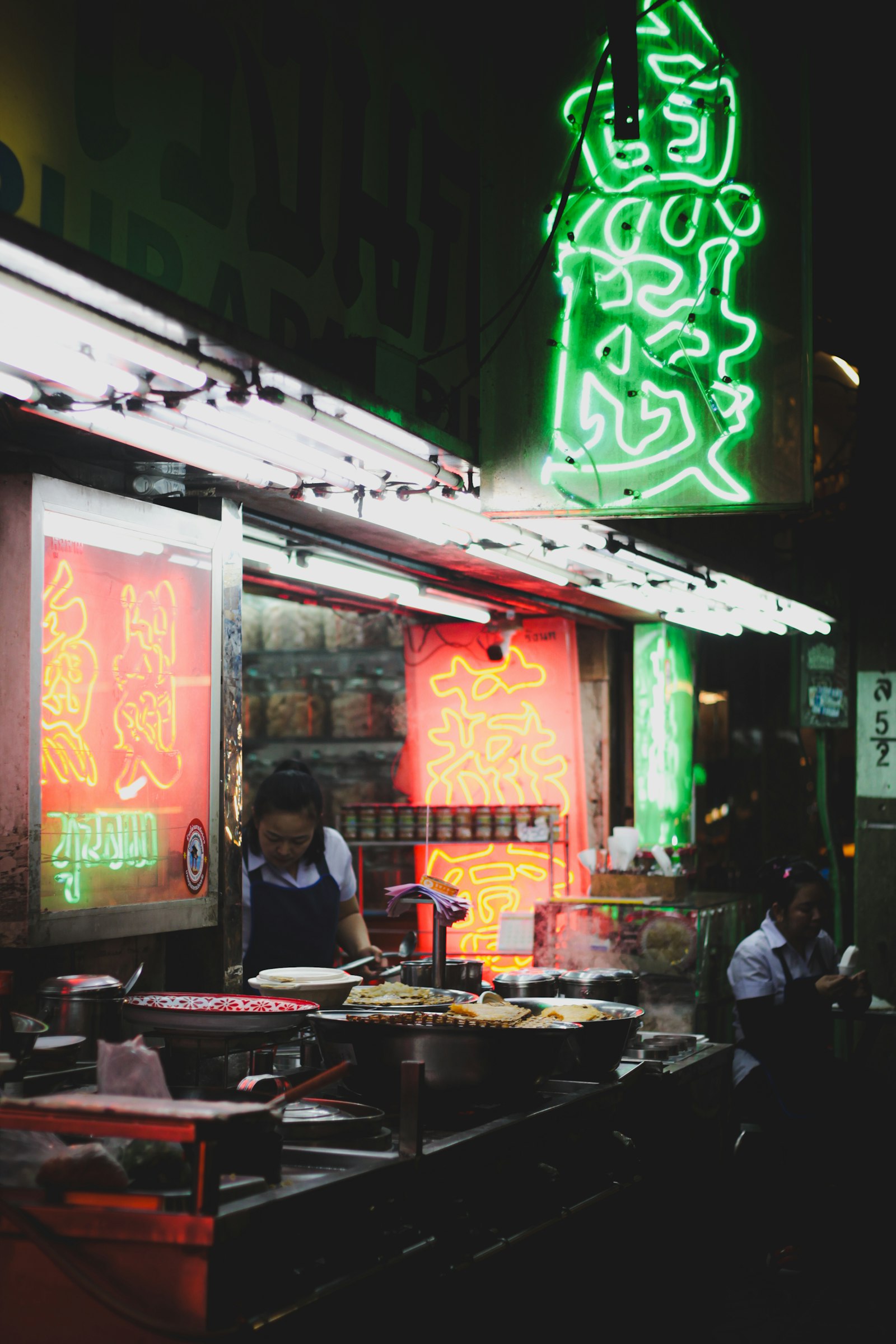
Bangkok tuk-tuks. The fundamental problem hasn't changed: tuk-tuks don't run meters and the going rate they'll quote a foreigner is 2–3× a metered taxi. A "฿40 to anywhere" offer is a gem-shop detour in disguise. The move is Grab for transparency or MuvMi for fixed-price electric tuk-tuks in the central districts. If you really want the open-air tuk-tuk experience for the photos, agree the price before you sit down, and expect to pay more than a taxi.
The cocktail trap. A craft cocktail on a Sukhumvit rooftop is ฿380–500 ($10–14) — Bangkok beer is cheap, Bangkok cocktails are not. Two drinks a night times two weeks is your entire street-food budget.
What I'd actually do
Source: Unsplash · License: Unsplash License
If you're testing whether Thailand is "still cheap", here's the honest playbook.
Land in Bangkok. Give it four nights — eat everything, take the BTS, walk yourself sore in Chinatown. Train or fly to Chiang Mai for a week, settle into a guesthouse, slow down, do a cooking class and one ethical elephant sanctuary day. Then take the night bus or train into Isan for at least five nights — Nong Khai is the easiest landing pad — and watch your daily spend drop in half.
Skip Phuket. Or if you must, do it as a two-night stopover en route somewhere else. Phi Phi is worth one daytrip from Krabi (ferry over, hike the viewpoint, ferry back) — sleeping there is paying tourist-tax for the privilege of being woken up by someone else's bar crawl.
Budget-wise: ฿1,400/day for backpacker, ฿2,800 for mid, ฿5,500 for comfort. Pad it 15% for transport between cities and one "treat yourself" night.
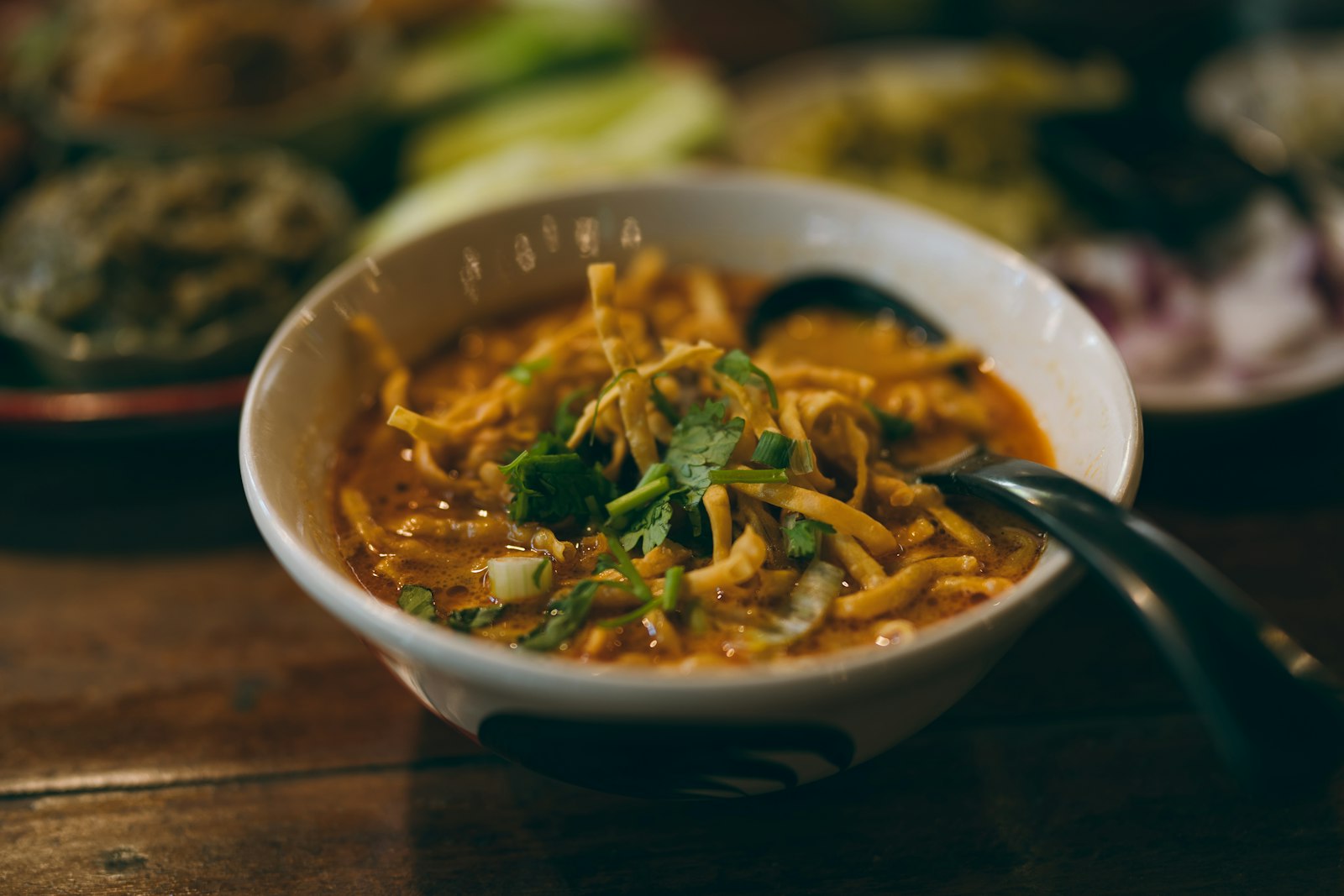
Is Thailand expensive in 2026? Depends where you stand. From Phi Phi pier looking at a ฿4,000 longtail charter — yeah, it's expensive. From a plastic stool in Khon Kaen with a ฿60 bowl of kuay tiao in front of you — it's the same Thailand we've always loved.
Pick your postcodes wisely.
Sources:
Vietnamese backpacker, 5 years zigzagging across SE Asia on a shoestring. Budget travel, street food, hidden gems — the honest version.
✦ More from Alex Nguyen


✦ Keep reading
More from this region


More in Destinations
Where this happens

✦ Discussion
Start the discussion
No replies yet — yours could be the first.