

Source: Unsplash · License: Unsplash License
Is Laos Safe to Visit in 2026? A Calibrated Answer
Short version: yes. Laos is broadly one of the safer countries in Southeast Asia for a general traveler — petty crime rates sit well below the regional average, violent crime against foreigners is rare, and the cultural baseline is unusually low-key. But "safe" is not the same as "no risk," and the risks Laos actually carries are not the ones the advisories headline. The two things that should genuinely shape your trip — unexploded ordnance left over from the US bombing campaign of 1964–1973, and road safety on long-haul buses — are the ones casual guides skim past. Here is the honest version.
The honest answer
Source: Unsplash · License: Unsplash License
The US State Department currently rates Laos Level 2: Exercise Increased Caution (last reissued November 2024), the same tier as France, Italy, and Germany. The advisory flags three things: civil unrest (rare and small-scale in practice), UXO contamination across multiple provinces, and banditry in remote border areas with Myanmar. One province — Xaisomboun — carries a stricter Level 3 ("Reconsider Travel") because of an ongoing low-grade insurgency. Xaisomboun is not on any tourist's itinerary unless they have gone deeply out of their way to put it there.
For the trip most readers are actually planning — Vientiane, Luang Prabang, Vang Vieng, the 4,000 Islands, maybe Nong Khiaw or the Bolaven Plateau — Laos is a low-risk destination. If you are a first-time SEA traveler nervous about going solo, Laos is one of the gentler entry points in the region. If you are an experienced traveler, the things that will trip you up are logistical, not criminal.
Who should think twice: travelers planning extensive off-road hiking in Xieng Khouang, Savannakhet, Saravane, Sekong, or Attapeu provinces without a vetted local guide; anyone considering an overnight sleeper bus on a mountain route when a train alternative now exists; and anyone who treats "Laos is chill" as a license to skip basic prep.
What to know before you go
Visas. Most Western passport holders (US, UK, EU, Canada, Australia, NZ) can get a 30-day eVisa through the official portal at laoevisa.gov.la for around USD 50–60 — apply at least 7 days before travel, but processing is often 3 working days. Visa-on-arrival is also available at the three international airports (Vientiane, Luang Prabang, Pakse), the three Thai-Lao Friendship Bridges, and at Boten on the China border. VOA is reliable but slower and the queue can be punishing after a long flight. Bring USD cash in clean, unmarked bills and a passport photo regardless of route — both portals occasionally throw curveballs. Your passport needs 6 months' validity and two blank pages.
Vaccinations. The usual SEA bundle: Hep A, typhoid, tetanus current. Japanese encephalitis is worth discussing with your travel clinic if you are going rural in monsoon season (May–October). Rabies pre-exposure if you are doing rural treks or extended motorbike travel — Laos is rural, dogs are everywhere, and post-exposure rabies serum is not reliably available outside Vientiane. Malaria is a real but localized risk in border areas (especially Bokeo, Attapeu, Sekong); your doctor will tell you whether prophylaxis makes sense for your itinerary.
Money. ATMs are widespread in Vientiane, Luang Prabang, Vang Vieng, Pakse, and Savannakhet, less so elsewhere. The Lao kip has been volatile — carry some USD or Thai baht as backup. Card acceptance is improving but still patchy outside high-end hotels.
SIM / data. Unitel and Lao Telecom both sell tourist SIMs at the airports for around USD 5–10. Coverage is solid on main roads and in towns, intermittent in karst valleys and northern mountains. Download offline maps before you leave a major town.
The UXO question — what actually matters
Source: Wikimedia Commons · License: CC BY-SA 3.0 · Credit: Adam63
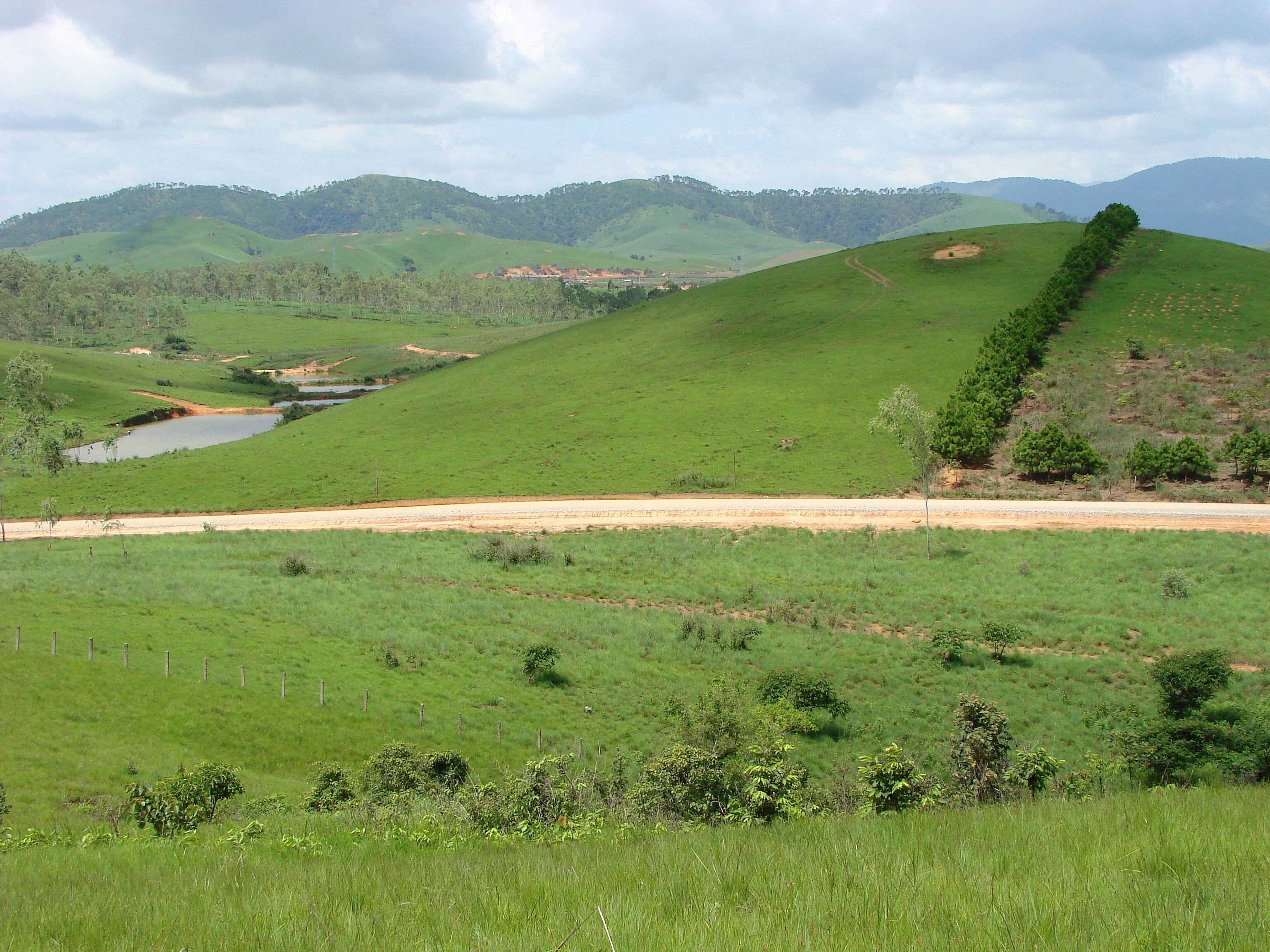
This is the safety topic Laos guides bury and that the State Department, for once, correctly headlines. Between 1964 and 1973, the US dropped over two million tons of ordnance on Laos in what became known as the Secret War — making it, per capita, the most heavily bombed country in human history. Roughly 80 million submunitions ("bombies") failed to detonate. As of 2026, someone in Laos is killed or injured by UXO almost every day, more than five decades after the last bomb fell. Clearance teams (MAG, HALO Trust, UXO Lao, and US-funded contractors — the program tripled from 70 to 210 teams between 2020 and 2024) are doing serious work, but full clearance is still generations away.
What this means for you, practically:
Stay on marked paths. Always. At the Plain of Jars (the main archaeological draw in Xieng Khouang), white-painted MAG markers indicate cleared ground. The three main jar sites — 1, 2, and 3 — have been thoroughly swept and are completely safe to walk. Do not wander past the markers for a better photo. People still die doing exactly that.
Do not pick up metal objects. Any of them. Especially anything roughly the size and shape of a tennis ball — that's a cluster bomblet, and they are still actively lethal.
For off-road trekking in heavily bombed provinces (Xieng Khouang, Houaphan, Savannakhet, Saravane, Sekong, Attapeu — the old Ho Chi Minh Trail corridor), book through an operator that explicitly uses UXO-cleared routes or works with MAG-trained local guides. Green Discovery Laos and Tiger Trail in Luang Prabang are the two most established for this; both vet their trail networks.
Visit COPE in Vientiane. The Cooperative Orthotic and Prosthetic Enterprise runs a free visitor centre on Khouvieng Road (open daily 8:30–16:00) that lays out the history and the ongoing reality in an unsentimental way. It is the single most useful hour you can spend in the capital — and the on-site Karma Café puts proceeds back into prosthetics for UXO survivors. Go before you head north or south, not after.
This is not a region where you can rely on your own judgment about what looks safe. The contamination is invisible. Local expertise is the only workaround.
Getting around: the train changed everything
For more than a decade, the dominant warning to first-time Laos travelers was "do not take the overnight bus." Mountain roads, fatigued drivers, brake failures, head-on collisions on blind curves — the casualty list was long. In January 2025 a Vientiane–Pakse bus crashed near Salavan, killing one and injuring 43, most of them foreigners. The Lao government has since announced a major transport safety overhaul, including stricter inspections and licensing, but enforcement will take years to bed in.
The single biggest change to traveler safety in Laos in the last decade is the Boten–Vientiane high-speed railway, which opened in December 2021 and now runs four daily fast trains plus a slow train along the spine of the country. Vientiane → Vang Vieng is roughly an hour. Vientiane → Luang Prabang is under two hours. Vientiane → Boten (China border) is about three and a half. Compare that to 10–14 hours by bus on the same routes, on roads that genuinely kill people.
Take the train wherever a train exists. Specifically:
Vientiane ↔ Vang Vieng ↔ Luang Prabang ↔ Oudomxay ↔ Luang Namtha ↔ Boten — all stops on the line.
Book through
laostraintickets.com(the most reliable English-language broker), via your guesthouse, or at the station 1–3 days ahead. Trains book out, especially in November–February.Stations have airport-style security; arrive 45 minutes ahead.
Stations are well outside town centres (a deliberate Chinese design choice) — factor in a 20–30 minute tuk-tuk on either end.
Where the train does not go — Pakse, the 4,000 Islands, Phonsavan, Nong Khiaw, the Bolaven Plateau — your options are bus, minivan, or domestic flight. For routes over six hours on mountain roads, fly if you can afford it. Lao Airlines is not glamorous but its domestic safety record is reasonable and the price difference is often less than USD 30 over a long sleeper bus. If you must take a long-distance bus, take a day bus, not overnight — the fatality rate on the 5am Vientiane–Pakse run was not a coincidence.
For day-to-day in-town travel, tuk-tuks and the Loca ride-hailing app (Lao's local equivalent of Grab) are fine. Agree on the price before you get in if you are not using the app.
Vang Vieng: the reputation vs. the reality
Source: Unsplash · License: Unsplash License
If you read a Laos guidebook from 2010, Vang Vieng is the cautionary tale — a tubing-and-buckets backpacker town where 27 foreigners died in 2011 alone from drownings, drug overdoses, and zip-line injuries. The Lao government shut it down hard the following year, demolished the riverside bars, banned the rope swings and high slides, and pushed the survivors of the cleanup toward family tourism.
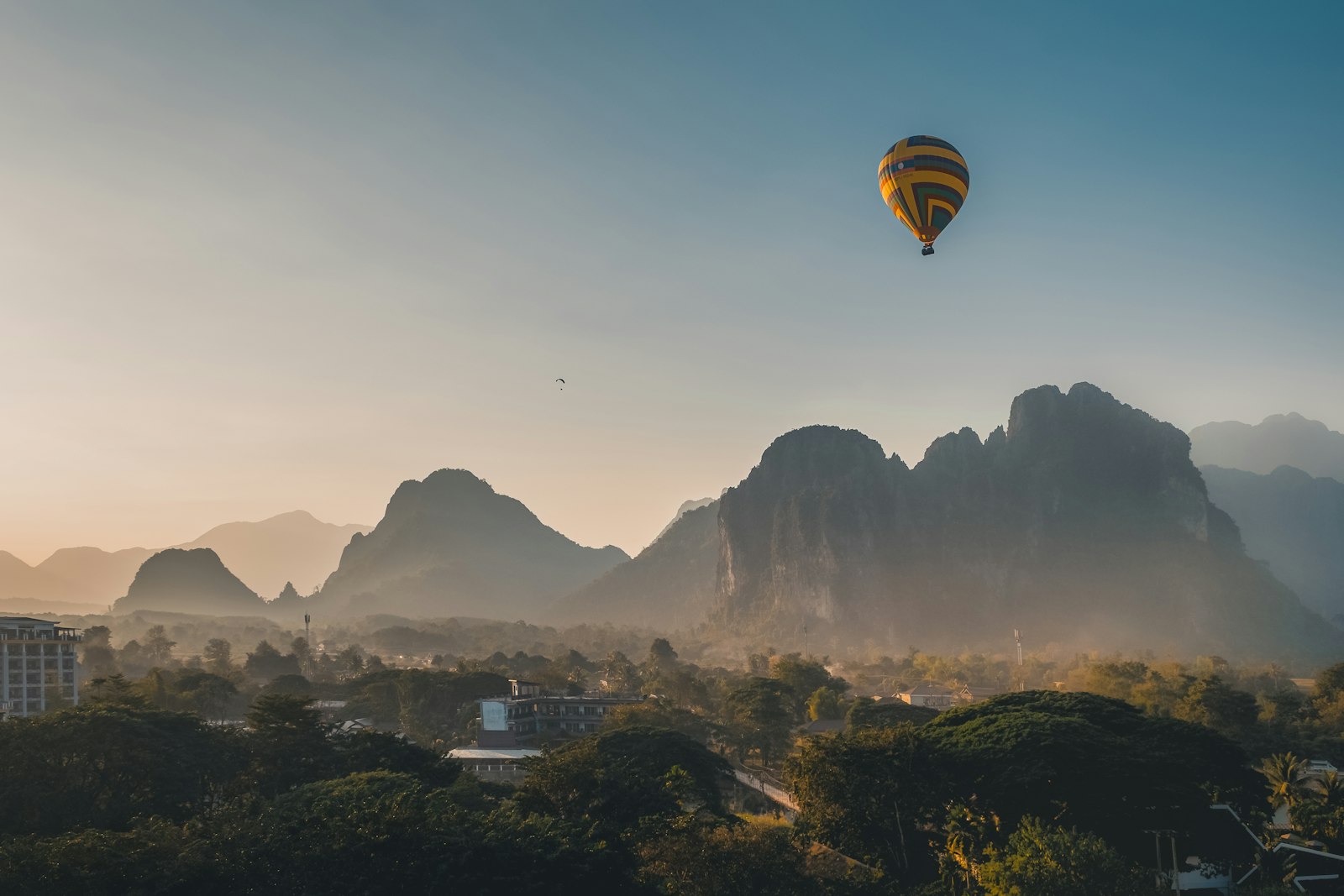
The Vang Vieng of 2026 is unrecognizable from that version. Tubing still happens but is regulated, lifejacketed, and limited to a handful of licensed bars. The town's centre of gravity has shifted firmly to adventure tourism: rock climbing on the karsts, kayaking the Nam Song, cave exploration (Tham Nam, Tham Phu Kham), hot-air ballooning at dawn. Operators like Green Discovery and Adam's Climbing School run actual safety briefings. The drowning rate has collapsed. The town is, frankly, better.
What to still take seriously: river currents in monsoon season are no joke regardless of how many tubes are bobbing past you; cave tours during peak rain can flood without warning (Tham Nam Xay had a tragic incident in 2022); and the same backpacker scene that fueled the old chaos still has a quieter version centred on edibles and mushroom shakes — Lao drug laws are draconian and enforcement against foreigners has tightened.
Where to stay
Source: Unsplash · License: Unsplash License
Laos lodging skews small, family-run, and good value. A few categories worth knowing:
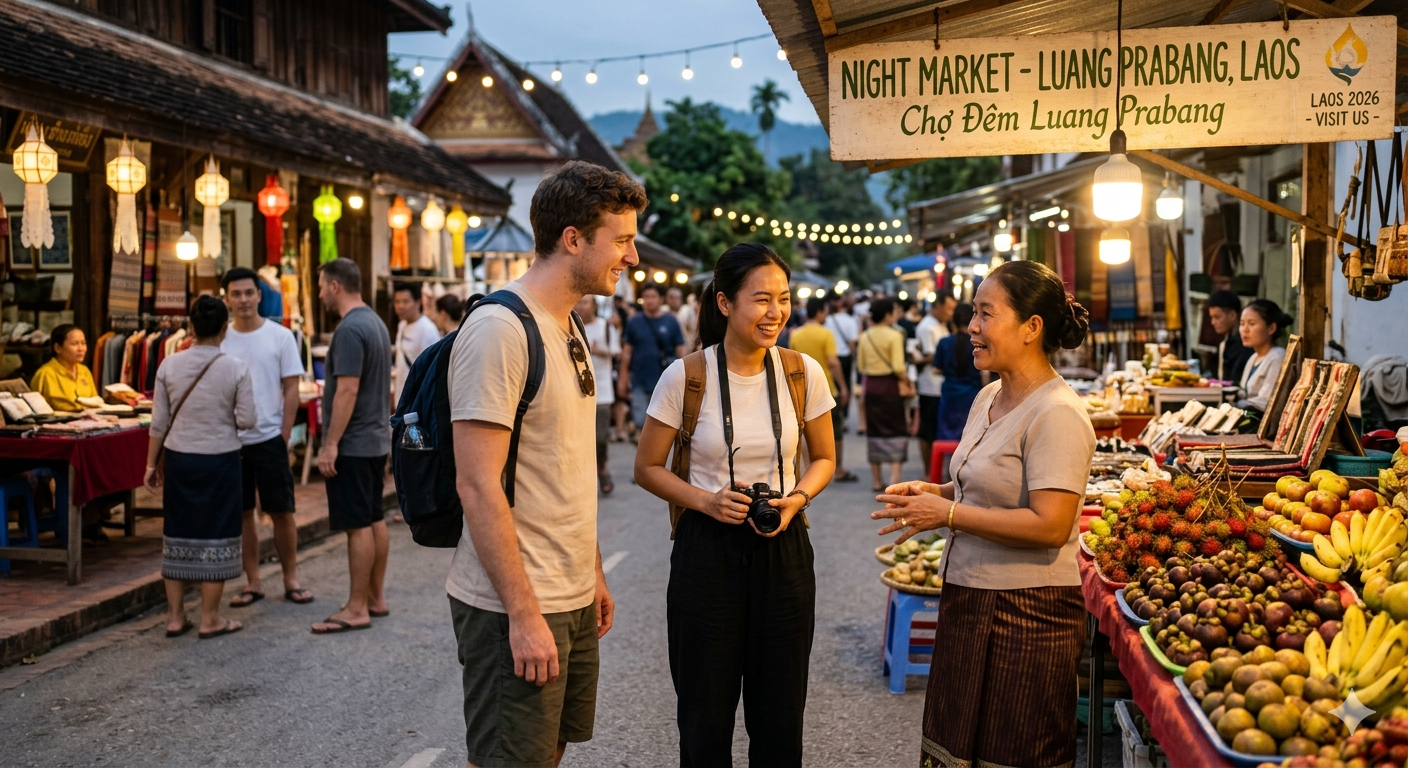
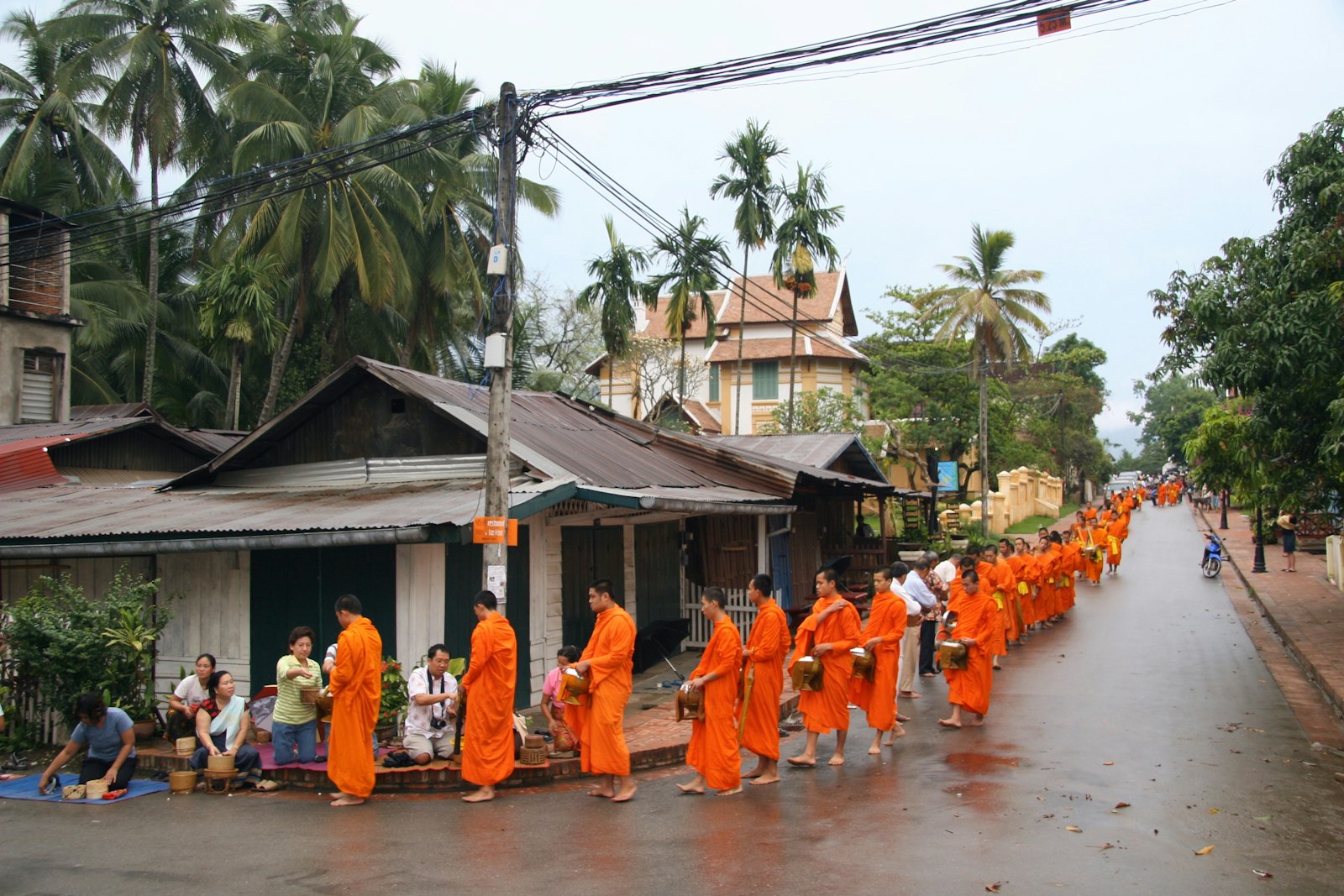
Luang Prabang heritage guesthouses. The UNESCO-protected peninsula is full of converted French colonial homes. Villa Maly, Le Sen Boutique, and Apsara Rive Droite are solid mid-range picks with English-speaking staff who can arrange vetted guides. Avoid the strip immediately around the night market if you sleep light — temple drums start at 4am, alms procession at 5:30am.
Vientiane. The riverfront area around Setthathirath Road has the densest concentration of safe walk-home-at-night accommodation. Vayakorn House and Mali Namphu are reliable.
Vang Vieng. Anywhere on the east bank of the Nam Song for views; anywhere away from the main backpacker drag for sleep. Riverside Boutique Resort is the long-standing splurge.
Community-based stays. The Akha Experience in Phongsaly and Nam Ha Ecoguide Service in Luang Namtha both run village homestays with revenue-sharing models that have been independently audited. These are also where the money lands closest to people who actually live there.
Note that Laos hotels are still required to register foreign guests with the immigration department — your passport will be photocopied at check-in. This is normal, not a scam.
If something goes wrong
Tourist police (Vientiane): 1191
General emergency: 1623 (ambulance), 1190 (fire), 1191 (police)
US Embassy Vientiane: +856 21 487 000, 24-hour consular emergencies via the duty officer
UK Embassy Vientiane: +856 21 263 555
Australian Embassy Vientiane: +856 21 353 800
Medical: For anything serious, medevac to Bangkok. Laos's two best private hospitals are Alliance International Medical Centre and Kasemrad International (both Vientiane), and both are competent for stabilization, but complex care happens across the border. Travel insurance with medevac coverage is not optional here — confirm your policy includes Bangkok evacuation before you fly.
UXO incident: Do not move. Call your embassy and UXO Lao (021 415 766). If someone with you is injured, get them out the way you came in, stepping in your own footprints.
Where your money goes
Source: Unsplash · License: Unsplash License
Tourism in Laos is small compared to Thailand or Vietnam, and that means each dollar carries more weight — for better and worse. A few principles worth applying:
Book treks through MAG-linked or community-vetted operators, not random touts at your guesthouse. Tiger Trail (Luang Prabang) and Green Discovery (national) both have transparent guide-payment policies and contribute to local UXO and education projects.
Skip orphanage visits. Full stop. The "voluntourism orphanage" model in Laos and neighbouring Cambodia has been documented as actively harmful — children are kept in institutions to generate donor traffic, and short-term volunteers cause measurable attachment damage. If you want to give, donate cash to COPE, MAG, or Big Brother Mouse (children's literacy in Luang Prabang).
Ethical wildlife: the MandaLao Elephant Conservation sanctuary outside Luang Prabang is the only operator I can recommend without caveat — no riding, observation only, ex-logging elephants. Anything offering elephant rides is, regardless of marketing language, not a sanctuary.
Women-run cooperatives: Ock Pop Tok (Luang Prabang) employs Lao women weavers at fair rates and runs textile classes if you want a half-day off the temple circuit.
The bottom line
I'd go. I'd go this year. Laos is one of the easier countries in Southeast Asia to travel through honestly and well — the people are warm without being on-the-make, the landscape from a train window is the kind of view you remember a decade later, and the basic crime risk for a sensible traveler is low.
Here's how I'd go: train wherever a train exists; day bus or flight where it doesn't; never overnight bus on mountain routes; COPE on day one in Vientiane; vetted guide for anything off the marked path in the bombed provinces; respect the markers at the Plain of Jars; book through operators whose payment chains you understand; donate cash, not orphanage hours. Do those things and Laos is a country that rewards you out of proportion to what it asks.
Solo female traveler from Bangalore. Safety advocate, responsible tourism, women-run cooperatives — empowering, never alarmist.
✦ More from Priya Sharma


✦ Keep reading
More from this region

More in Destinations
✦ Discussion
Start the discussion
No replies yet — yours could be the first.