
Source: Unsplash · License: Unsplash License
Is Thailand Safe for Women? An Honest 2026 Guide
Short answer: yes — and the thing most likely to hurt you is not a stranger, it's a rented scooter. I've travelled solo in Thailand on and off for almost a decade, the last visit three months ago, and I want to give you the version that neither romanticises the country nor pretends the genuinely difficult bits don't exist.
The honest answer
Thailand sits comfortably in the "low risk, with specifics" tier for women travellers. Violent crime against foreigners is rare, the transport infrastructure in tourist regions is genuinely good, and Thai social norms around women in public space are more relaxed than what you'd encounter in much of South Asia or the Middle East. The Global Peace Index ranks Thailand mid-table globally — not a Scandinavia-tier scorecard, but well ahead of plenty of destinations Westerners visit without thinking twice.
What you should worry about, ranked roughly by how often it actually ruins someone's trip:
Road accidents on rented scooters and motorbikes. This is the dominant risk. Over 14,000 people died in motorcycle crashes in Thailand in 2024, and tourists are over-represented in foreigner fatality stats in places like Chiang Mai and the islands. (Nation Thailand)
Drink-related incidents — buckets, free shots, lost phones, lost wallets, occasional drink spiking. The risk concentrates around full-moon-party-adjacent islands and Bangkok's Khao San / Soi Cowboy zones.
Scams and petty theft — taxi meter games, "the temple is closed" rerouting, bag snatches from passing motorbikes in Bangkok and Phuket.
Harassment — present but lower-intensity than many travellers expect. More verbal than physical, more in nightlife districts than daytime city.
Political demonstrations — flared up in mid-2025 around the leaked Hun Sen call and the dismissal of PM Paetongtarn. Worth tracking but very avoidable for tourists. (Wikipedia: 2025 Thai political crisis)
Who Thailand suits: first-time solo-Asia travellers who want infrastructure that mostly works, English signage in tourist regions, and a low harassment baseline. Who should think harder: women planning to deep-rent a scooter in their first week with no prior riding experience. Don't.
What to know before you go
Visas. As of 2026, citizens of around 90 countries — including the UK, US, Canada, Australia, the EU, and India — can enter Thailand visa-free for stays of 60 days, extendable by 30 days at an immigration office. The rules have shifted twice in eighteen months; check the current list on the Royal Thai Embassy site for your nationality before you book.
Vaccinations. Routine plus Hep A and Typhoid. Japanese encephalitis if you're rural for extended periods. Rabies pre-exposure is worth it if you'll be near temple cats or street dogs — and if you get bitten or scratched anywhere in Thailand, take it seriously: post-exposure rabies treatment is available but supply at small-island clinics is patchy.
The southern border provinces. Yala, Pattani, Narathiwat, and parts of Songkhla remain under a State of Emergency due to long-running separatist insurgent activity. Most foreign governments advise against non-essential travel there. (US State Department Thailand Advisory) This does not include the tourist south — Phuket, Krabi, Koh Lanta, Koh Lipe are all well outside it.
Period products. Pads are everywhere. Tampons are findable in 7-Eleven, Boots, Watsons, and Big C in Bangkok, Chiang Mai, Phuket, Pattaya, and Koh Samui — usually OB or Sofy brand. Outside those, assume you can't buy them. Bring a menstrual cup or a stash from home if you're going rural. (Tasty Thailand: buying tampons in Bangkok)
Dress code. Thailand is more relaxed than Indonesia or Malaysia on day-to-day dress — shorts and tank tops are fine in most of Bangkok, all of the islands, and tourist Chiang Mai. Two non-negotiables: covered shoulders and knees inside temples (most lend or rent sarongs at the entrance), and the Grand Palace specifically enforces this strictly. For long bus or train journeys, modest clothing reads as respectful and reduces stares.
Getting around safely — by region
Source: Unsplash · License: Unsplash License
Thailand is not one risk profile. Treat these as four different trips.
Bangkok
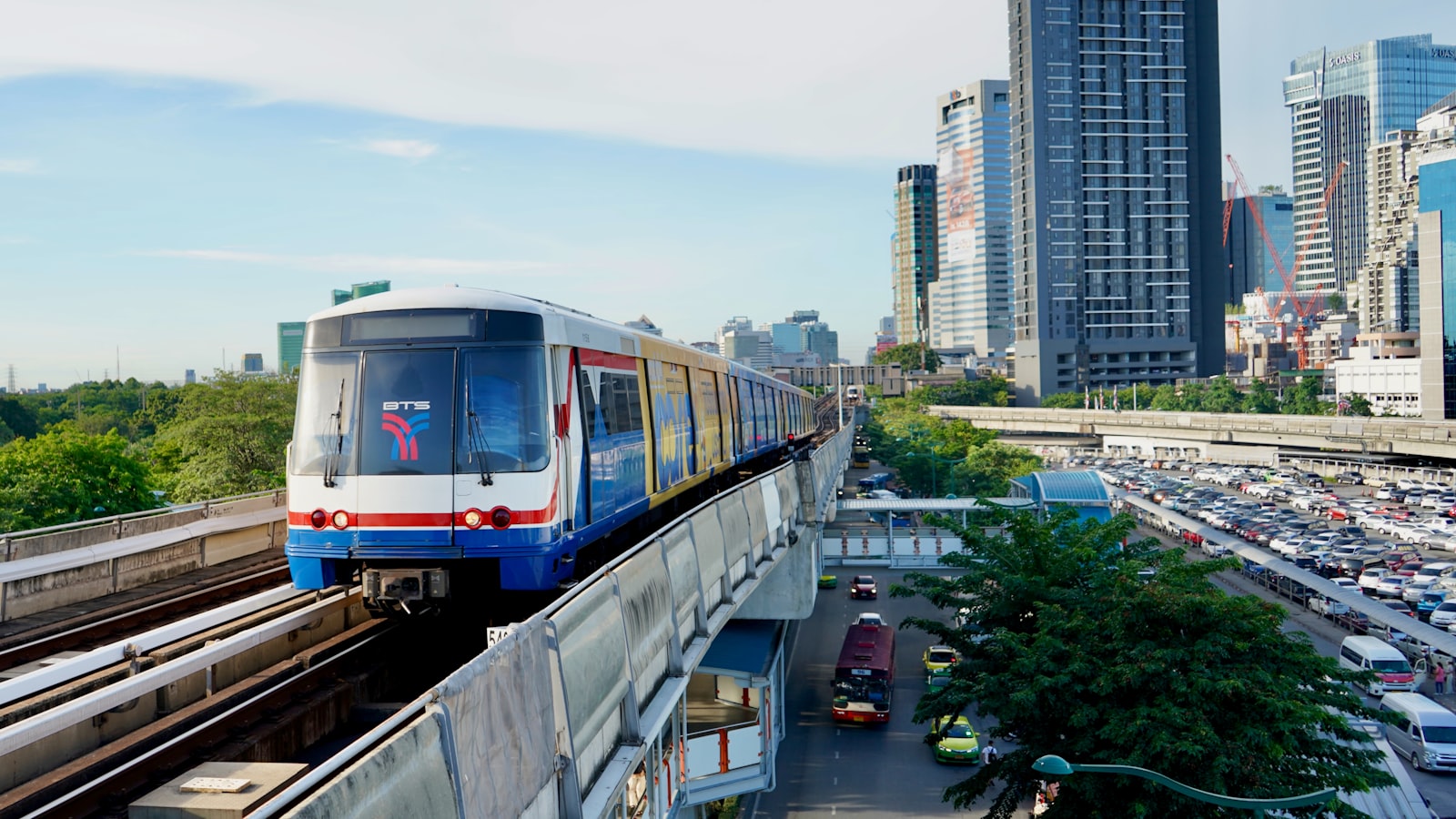
The BTS Skytrain and MRT are genuinely excellent — clean, air-conditioned, well-lit, used by women at all hours up to closing (~midnight). I've ridden the BTS at 11pm on a Friday and never felt sketched. There is no women-only carriage on the BTS, but I've never needed one.
For ground transport: use Grab, Bolt, or LINE MAN, not flagged taxis. Metered taxis often refuse the meter for foreigners or take detours; ride-hailing apps fix this. Tuk-tuks in Bangkok are a tourist experience, not a transport option — agree the fare before you sit down and accept you'll overpay.
Areas worth knowing:
Sukhumvit (around BTS Nana to Asok) — fine in daytime, very mixed at night. Soi Cowboy and Nana Plaza are the red-light core; you can walk past them and be utterly ignored, but it's a particular vibe.
Khao San / Banglamphu — backpacker spine, lively, occasional bag-snatch and pickpocket. Watch your phone.
Silom / Sathorn — business by day, gay nightlife (Soi 4) and rooftop bars by night. Safe.
Ari, Thonglor, Ekkamai — residential-cool, where Bangkok women actually live and work. My recommendation for a first-trip base.
Chiang Mai and the north
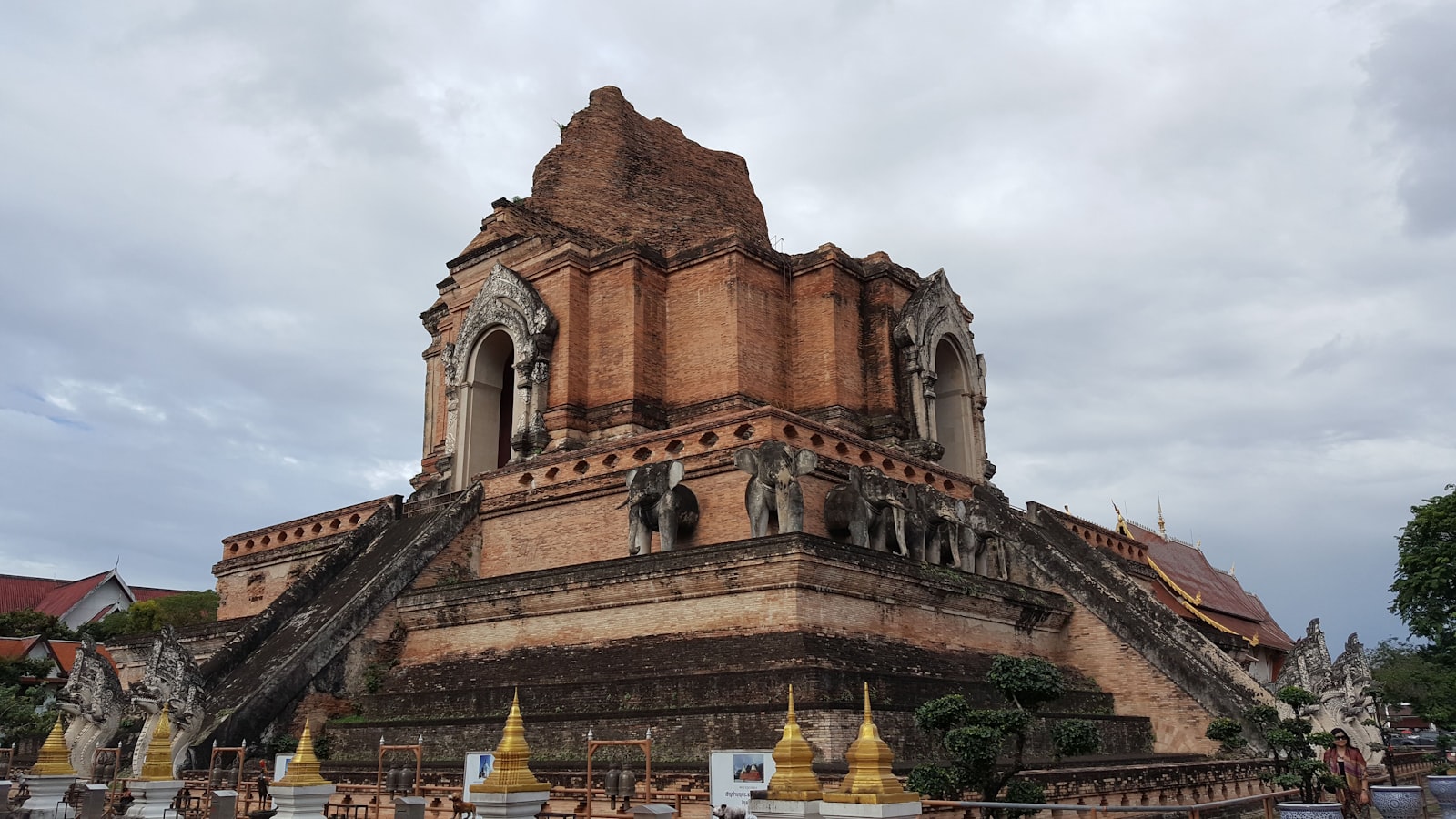
The safest part of Thailand for women solo travellers, full stop. The Old City is walkable, the cafe-and-temple rhythm is gentle, and the long-stay digital-nomad scene means there's a baseline of solo women everywhere. Nimmanhaemin (Nimman) is the nomad / café district; Old City is the temple core; Santitham is the local-leaning neighbourhood that's cheaper.
Pai — three hours north on a famously winding road. Hippie-mountain-village energy, hot springs, waterfalls, a permanent population of travellers who never quite left. Genuinely lovely, and this is where the scooter accident rate among foreigners is highest in Thailand. The road from Chiang Mai to Pai is 762 curves. If you can't ride confidently, take the minivan (about 150 baht) or the slower but less vomit-inducing bus. Once in Pai, you can bicycle or walk the town centre; you don't need a scooter to enjoy it.
The scooter question, generally. If you have no prior riding experience, this is not the country to learn in. Mixed traffic, no enforced lane discipline, monsoon rain, and 84% of motorcyclists hospitalised between 2020-2024 were not wearing helmets. (Nation Thailand) If you do rent: wear a real helmet (bring your own if you're picky), never hand over your passport as deposit (a cash deposit or a passport copy is standard at reputable shops), photograph every existing scratch before you ride off, and have your own travel insurance that explicitly covers motorbikes — most basic policies exclude it unless you hold a valid motorcycle licence from home.
The islands
The vibe and risk profile shifts island to island.
Phuket — the most developed, the most touristed, the most scam-dense. Patong is a party strip; Kata, Karon, and Rawai are calmer. Solo women fine everywhere; just expect more aggressive bar touts.
Koh Samui — family-resort skew, low harassment, taxi mafia is the headline annoyance (fixed-fee, no metered taxis exist). Use Bolt if you can.
Koh Phangan — split personality. The wellness side (Sri Thanu, Haad Yuan) is full of yoga retreats and quiet beaches. The Haad Rin side, around the full moon, is the party. If you're doing a full moon party: stay near Haad Rin so you can walk back, don't leave drinks unattended, write your accommodation address on your arm in marker, go in a buddy pair if you can, and lock valuables in your hostel safe — room break-ins during the party are reported. (UK FCDO Thailand safety)
Koh Tao — the tabloid "Death Island" framing is dated. The 2014 Witheridge / Miller murders were horrific and the police investigation that followed was genuinely flawed, and eleven years on, hundreds of thousands of women have dived and travelled Koh Tao without incident. There are still occasional foreigner deaths there each year, mostly health-related or diving-related, which the UK tabloids package as a continuing pattern. (Wikipedia: Koh Tao murders) My read: Koh Tao is fine, especially if you base yourself with one of the established dive schools (Big Blue, Crystal, Ban's all have women instructors and women-heavy backpacker cohorts), avoid wandering alone late at night on unlit beach paths, and don't engage with the small handful of locals running unlicensed boat / scooter operations.
Where to stay
Source: Unsplash · License: Unsplash License
Picking accommodation does more for your safety than any single piece of gear. What I look for: 24-hour reception, a women-friendly review pattern on Hostelworld or Agoda, and a neighbourhood I can walk to and from at night.
A few that I or women I trust have used recently:
Bangkok — Once Again Hostel (Phra Nakhon, near Khao San but quieter): female dorms, good lockers, owner-run.
Bangkok — Lub d Siam (Silom): female-only dorms, BTS-adjacent, mid-range.
Chiang Mai — Hostel by Bed (Old City) and Stamps Backpackers: solo-friendly, mixed crowds, both have women-only rooms.
Pai — Common Grounds Pai or Circus Hostel: community-driven, easy to find a hiking buddy.
Koh Tao — Goodtime Adventures or any of the major dive school dorms: built-in social structure, very solo-friendly.
For longer stays, Agoda's "solo female safety" filter is decent for Thailand specifically. For homestays, Local Alike (below) is the most credible operator.
If something goes wrong
Save these in your phone before you land.
Tourist Police: 1155 — 24/7, English-speaking, can call other emergency services for you. This is your first call for almost anything.
General emergency: 191
Ambulance: 1669
Pavena Foundation Women's Helpline: 1134 — 24-hour line for women and children dealing with abuse, sexual violence, or trafficking. Thai-language primary; ask for English.
Mental health crisis line: 1323
For sexual assault: Thai police response to women's complaints is uneven and language-barriered. Go through Tourist Police (1155) first, request a female officer, and contact your embassy in parallel — they cannot intervene legally but can recommend lawyers and English-speaking medical care. In Bangkok, Bumrungrad and Bangkok Hospital both have sexual-assault-trained staff. PEP for HIV exposure must be started within 72 hours; ask explicitly.
Theft / lost passport: Tourist Police first (you'll need a report number for insurance and embassy), then your embassy. Most embassies in Bangkok can issue an emergency travel document within 1–3 working days.
Political demonstrations flare unpredictably in Bangkok — usually around Democracy Monument, Victory Monument, and Government House. If your hotel is in one of those zones during a flare-up, the BTS often continues running but ground traffic snarls. Avoid joining a protest as a foreigner; Thailand has tightened lèse-majesté and public-assembly enforcement.
Where your money goes
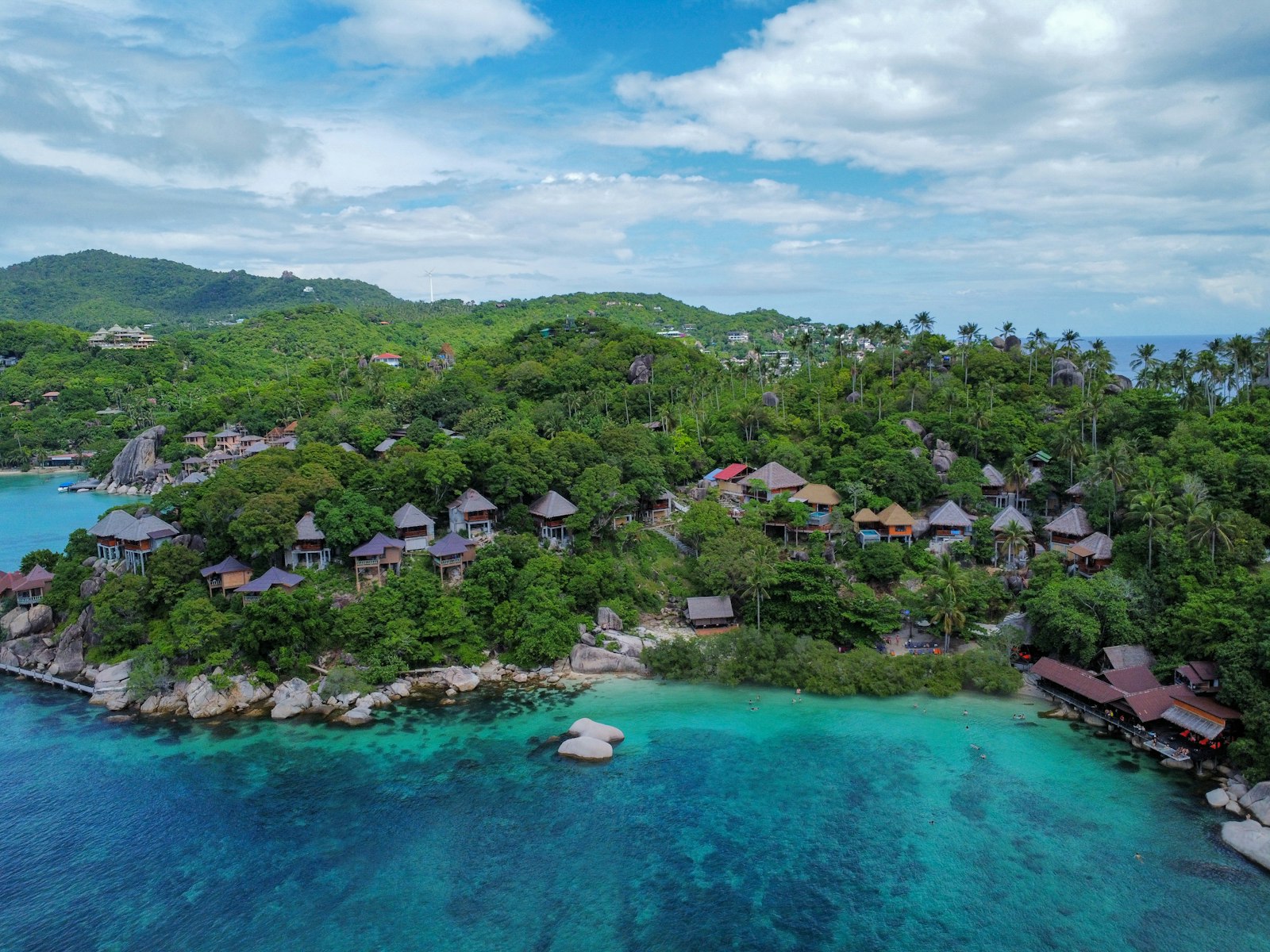
Source: Unsplash · License: Unsplash License
Thailand has a real, functioning community-based tourism (CBT) sector — and it has a lot of greenwashed adjacent stuff. Two operators I'd send a friend to:
Local Alike — Thai social enterprise partnering with 200+ villages. Around 70% of trip revenue stays in-community, supporting homestay hosts, women artisans, and youth guides. Half-day workshops up to multi-night stays in places like Mae Kampong (Chiang Mai), Koh Yao Noi (south), and several Isaan villages.
Araksa Tea Garden (Chiang Mai province) — employs women from Akha, Hmong, and Lisu hill-tribe communities. Day trips for tea picking and processing; not a "hill tribe tour" of the exploitative kind.
What to avoid: the "long-neck Karen village" day trips out of Chiang Mai (most operate without community consent and the women receive a fraction of the entry fee), elephant "sanctuaries" that allow riding or bathing in crowds (Elephant Nature Park, Boon Lott's, and BEES are the names with credible welfare track records), and orphanage visits of any kind — the "orphanage tourism" critique has been documented for over a decade and Thailand's are no exception.
For female guides specifically: Bangkok-based platforms like ToursByLocals and Withlocals let you filter by guide gender. In Chiang Mai, ask hostels to recommend a freelance woman guide — the network is informal but real.
The bottom line
I'd go. I have gone, repeatedly, alone, and I'll go again next monsoon. Thailand is one of the most forgiving countries in Asia for a woman travelling solo — the infrastructure works, the harassment baseline is low, and you can choose your intensity from temple-and-cafe Chiang Mai to full-moon Koh Phangan without ever feeling forced into anything.
The things that will genuinely affect your trip are mundane: don't rent a scooter you can't ride, watch your buckets on the islands, keep Tourist Police saved in your phone, and route your money to operators who pay their guides properly. If you do those four things, your biggest "incident" in Thailand is likely to be a sunburn and a Songthaew driver who overcharged you by 40 baht.
Go.
Solo female traveler from Bangalore. Safety advocate, responsible tourism, women-run cooperatives — empowering, never alarmist.
✦ More from Priya Sharma


✦ Discussion
Start the discussion
No replies yet — yours could be the first.