
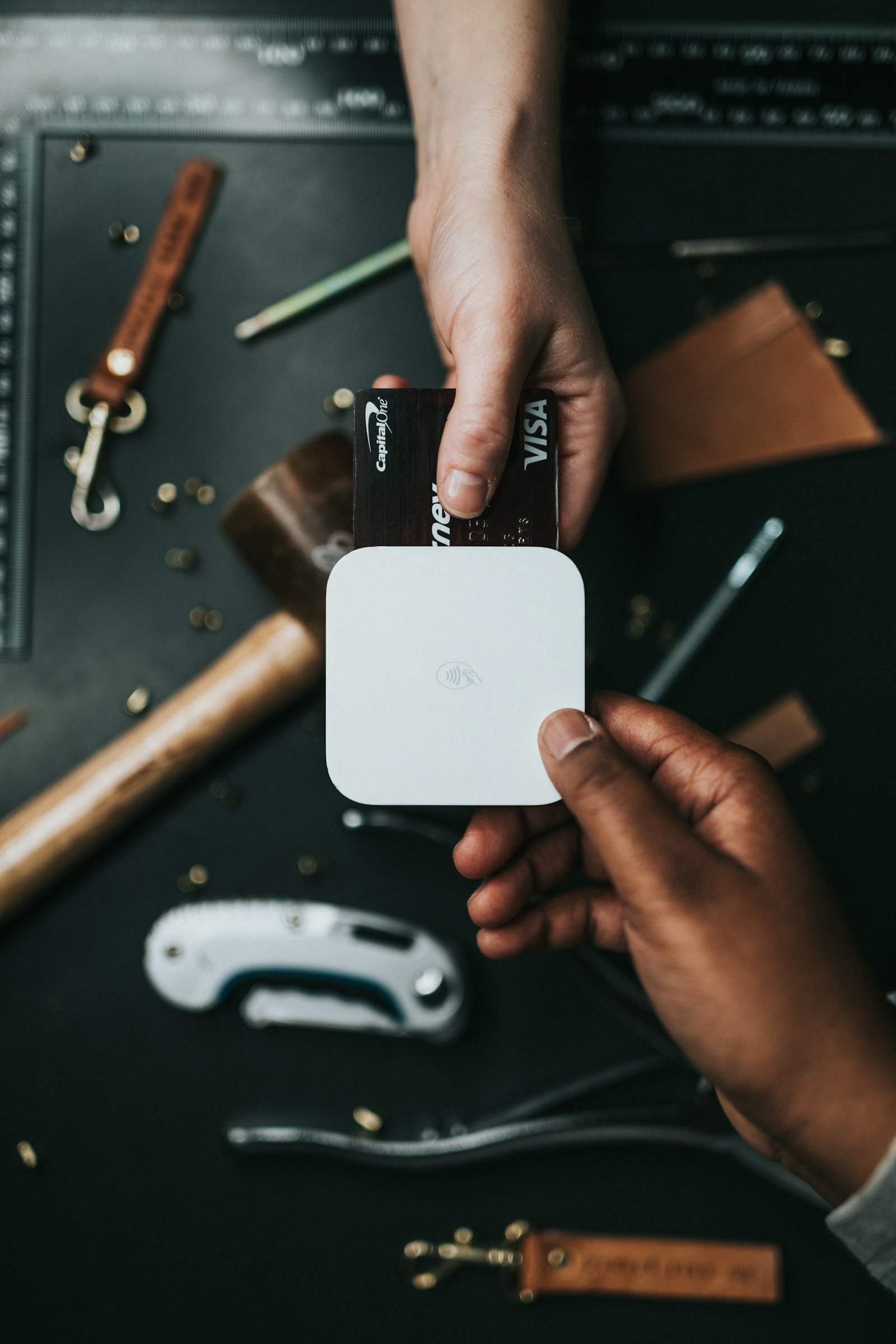
The Right Cards for Southeast Asia — and When to Put Them Away
The most useful thing I can tell you about credit cards in Southeast Asia is that the question contains a quiet trap. You come looking for the best card — singular, definitive, the one that wins — and the region answers with a shrug. Because the truth, somewhere between the Sapphire Lounge at Changi and a woman ladling boat noodles into a bowl in Bangkok's Chinatown while a QR code curls at the edge of her cart, is that no single piece of plastic is right for all of it. The skill isn't choosing a card. It's knowing which layer of money applies where — and having the humility to switch.
I've made the mistakes. I've stood at an ATM in Siem Reap holding a fan of crisp hundred-dollar bills the machine insisted on giving me, useless for the tuk-tuk I needed to pay for. I've watched a terminal in a Hanoi boutique offer to bill me in dollars "for my convenience" and felt the small theft of it before I understood what I was looking at. What follows is the system I wish someone had handed me — organized not by card name, which dates the moment it's printed, but by the job each tool actually does.
No single piece of plastic is right for all of it. The skill isn't choosing a card. It's knowing which layer of money applies where.
The card you spend on: zero foreign-transaction fee, and nothing else matters as much
Start with the one rule that does the heavy lifting. Whatever card you put in your wallet for daily spending abroad, it must charge no foreign-transaction fee. This is the 1-to-3-percent surcharge most US cards quietly add to every purchase made in another currency — a tax on the simple act of being elsewhere. Three percent doesn't sound like much until you run a month of hotels, dinners, and dive trips through it, at which point it's the cost of a very good meal you didn't get to eat.
The good news is that this feature has migrated downmarket. It is no longer the preserve of premium cards. Capital One, for instance, charges no foreign-transaction fee on any of its US credit cards — including the no-annual-fee ones — which makes a card like the Quicksilver a genuinely sensible no-cost choice for someone who doesn't want to think about points at all. Up a tier, the Chase Sapphire Preferred and the Citi Strata Premier both drop the fee and add rewards that actually fire overseas: Citi's card earns elevated points on dining, supermarkets, air travel, and hotels globally, not just at home, which is exactly the spending pattern of a trip.
Two things to verify before you fly, both of which take five minutes and save real grief. First, confirm the card runs on Visa or Mastercard — American Express and Discover acceptance thins out fast once you leave the malls and international hotels, and in much of Laos, Cambodia, and Myanmar it approaches zero. Second, call the issuer or set a travel notice in the app so a Bangkok charge doesn't trip a fraud freeze on day one. The card that gets declined is worse than no card.
The card that earns the flight: lounges and the long way over

The flight to Southeast Asia is long — twelve hours from the West Coast to Tokyo before you've even turned south, longer from the East — and it is the one stretch where a premium travel card stops being an indulgence and starts being infrastructure. This is the layer where annual fees buy something concrete: a quiet chair, a real meal, and a shower before a connection through a megahub like Singapore, Bangkok, or Hong Kong, where layovers stretch and terminals sprawl.
The two cards that anchor this tier are the American Express Platinum and the Chase Sapphire Reserve, and the honest framing is that both are expensive and both are defensible — the Platinum runs $895 a year, the Reserve $795, as of this writing. What you're buying is lounge access at scale: Amex layers its own Centurion Lounges and Delta Sky Club visits on top of the sprawling Priority Pass network, while the Reserve pairs Priority Pass with its growing Sapphire Lounge by The Club locations. If you're traveling as a couple or a family, read the guest policy closely before you choose — the Reserve's allowance of two guests into Priority Pass and Sapphire lounges is one of the more generous in the category, and at the end of a red-eye that detail is worth more than another half-point on dining.
At the end of a red-eye, the difference between a card that brings your partner into the lounge and one that charges thirty-five dollars at the door is not a rounding error. It's whether the trip starts well.
If $800 a year reads as too much for a benefit you'll use a handful of times, the Capital One Venture X sits in the middle with intent: a $395 annual fee softened by a $300 annual travel credit and an anniversary bonus that, taken together, claw most of the fee back if you book any travel through the issuer's portal. It carries Priority Pass and the same no-foreign-transaction-fee rule as the rest of the line. For a once-a-year long-haul traveler, it's often the most rational card in this section — the lounge access without the full premium tariff.
A note I'd be careless to skip: a lounge is a genuine pleasure, but it is not a reason to route yourself through a worse itinerary. The destination is the point. The lounge is a kindness you grant yourself on the way to it.
The trap with a polite name: dynamic currency conversion
Here is the single most expensive mistake a careful traveler still makes, because it's dressed as a courtesy. You hand over your card in Hanoi or Bali, and the terminal — or the ATM screen — asks whether you'd like to be charged in your home currency instead of the local one. Pay in USD? It feels thoughtful. You know what a dollar is worth; you're tired; you tap yes.
Don't. This is dynamic currency conversion, and it lets the merchant's payment processor — not your bank — set the exchange rate, marking it up by a margin that typically runs 3 to 5 percent and, in documented cases, far higher. It stacks on top of any foreign-transaction fee, so on the wrong card you can pay twice. The fix is one word, every time, with no exceptions: choose the local currency. Baht in Thailand, dong in Vietnam, rupiah in Indonesia, riel or dollars in Cambodia depending on what you're handed. When you pay in the local currency, your own bank does the conversion at the network's wholesale rate, which is almost always the better deal.
The phrasing is deliberately slippery, so learn to hear it. At an ATM the screen may offer to "lock in" or "guarantee" a rate, or frame it as press YES for dollars, NO for local — and the answer you want is the no. At a restaurant the server may simply hand you a slip already converted, hoping you'll sign. You're allowed to ask for it in the local currency. Do.
Why you still carry cash — and a different kind everywhere you go
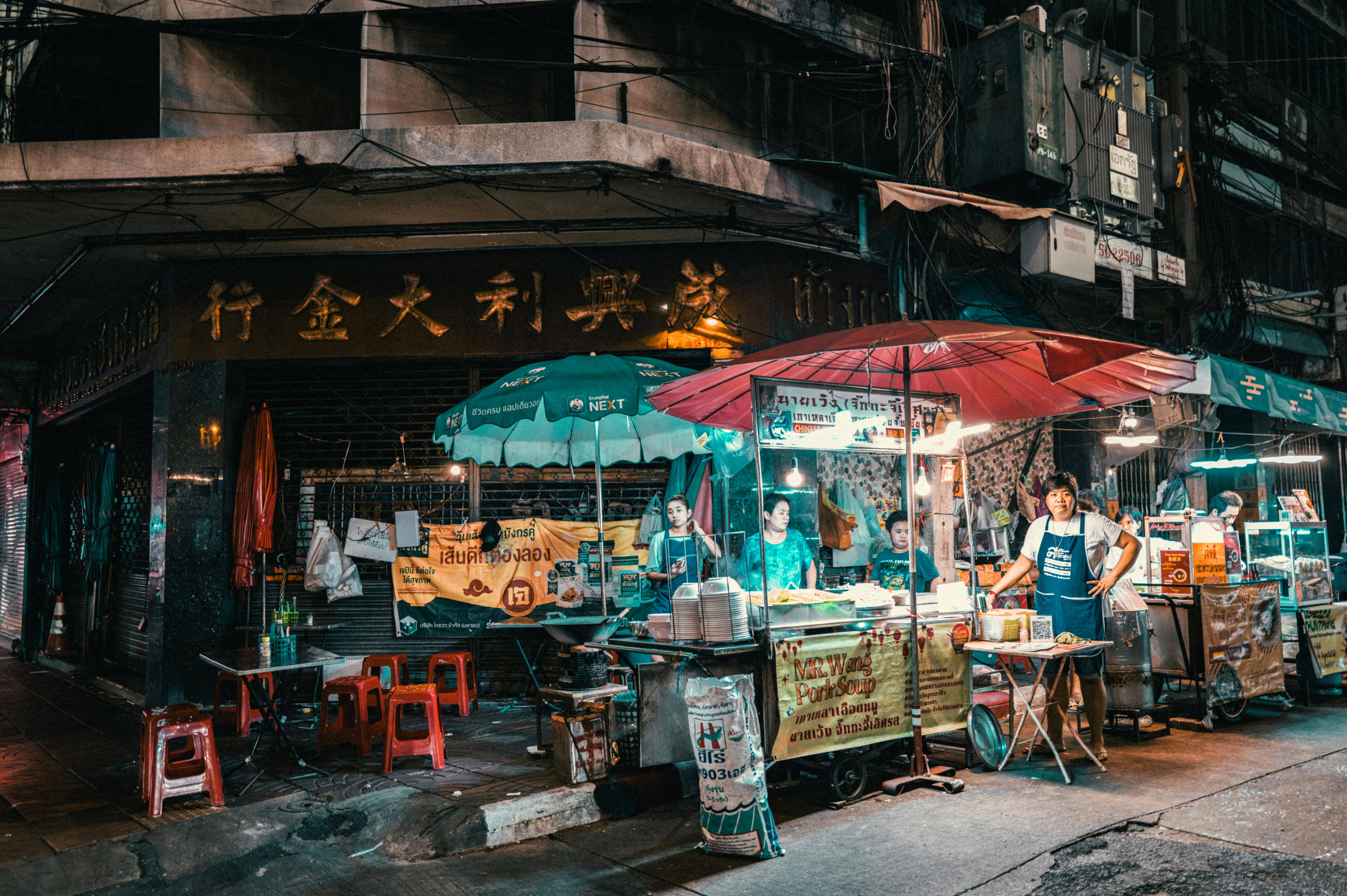
For all the talk of cards, the most important thing in your money belt across much of Southeast Asia is still paper. Cards work cleanly in the places built for foreigners — the boutique hotel, the tasting menu, the dive shop, the mall. Step one lane over, to the woman grilling satay over coconut husk or the motorbike-taxi rider who'll take you the last kilometer home, and you are in a cash economy, full stop. This is not backwardness. It's a different settlement layer, and pretending otherwise just leaves you hungry in front of the best food on the trip.
What "cash" means changes as you cross borders, and the particulars matter more than guidebooks let on. Cambodia is the instructive case: it runs on US dollars and Cambodian riel at once, but the National Bank is quietly engineering the dollar out of small transactions. Banks no longer issue one- and five-dollar bills, and in Phnom Penh those small notes are increasingly waved away; ATMs now tend to dispense only hundreds. The practical consequence is specific and easy to get wrong — arrive with a mix of tens, twenties, and fifties, because the machine can't give you that flexibility, and expect your change from a dollar transaction to come back in riel. Treat the riel as your small money and you'll move through a market without friction.
Elsewhere the rule of thumb holds: keep enough local cash for two or three days of street-level spending, and in genuinely rural stretches of Laos or upcountry Myanmar carry more, because the next working ATM may be a province away. Cash is also your insurance against the thing that will eventually happen — a card frozen by an over-zealous fraud algorithm, a terminal that's down, a town where the network simply hasn't arrived.
The ATM math, country by country
Withdrawing cash is where fees breed, and the structure is worth understanding because the charges are often layered: your home bank may bill a withdrawal fee, and the local machine bills its own on top, before currency conversion is even in the picture.
Thailand is the country that surprises people. Most Thai ATMs levy a flat fee of around 220 baht on a foreign card — roughly six US dollars — per withdrawal, regardless of amount, which punishes anyone who takes out a little at a time. The defense is simple: withdraw larger sums less often, stay under your card's daily limit, and know that some networks (AEON machines are the usual tip) charge a touch less. Vietnam runs cheaper, with many banks charging little or nothing beyond your home bank's fee, though per-withdrawal caps mean you may pull a few times. Cambodia's machines tend to run $4 to $6 a transaction, and dispense those stubborn hundreds.
This is also where a multi-currency travel card — Wise and Revolut are the names you'll hear — earns its place in the wallet, not as a rewards play but as a cash-access tool. Wise converts at the genuine mid-market rate and gives you a couple of fee-free withdrawals up to a monthly ceiling before a small percentage kicks in; Revolut works similarly within its tiers. Neither escapes the local machine's own fee — that 220 baht is charged by the bank that owns the ATM, and no card on earth waives it — but they keep the conversion honest, which over a long trip is the larger leak. My own setup is unglamorous and has never let me down: a no-foreign-fee rewards card for everything that takes plastic, a Wise card for ATMs, and a quiet reserve of local cash plus a couple of clean US fifties folded somewhere separate.
Cash is your insurance against the thing that will eventually happen — a frozen card, a dead terminal, a town the network hasn't reached yet.
The thing nobody tells Western travelers: the region leapfrogged your wallet
Here is the part that reframes everything above. While Western travelers debate which premium card to bring, Southeast Asia has quietly built a payment system that often makes the card irrelevant — and it did so by skipping the plastic era almost entirely.
The instrument is the QR code, and the scale is staggering. Thailand's PromptPay system carries more than 90 million registrations and tens of millions of transactions a day; surveys suggest the large majority of Thai consumers now prefer a merchant who takes instant QR payment over one who runs cards. Vietnam's QR volumes are growing at a pace that makes the chart look broken. Indonesia has QRIS, the Philippines QR Ph, Malaysia DuitNow, Singapore SGQR — and as of 2026 these national systems are being stitched together for cross-border use, so that a single scan is beginning to work across the region the way the euro works across a border in Europe. The street-food vendor with no card machine, the one your home bank's terminal could never reach, settles a sale in seconds with a laminated square taped to her cart.
The catch, for now, is that these rails are built for locals and increasingly for each other, not yet seamlessly for the visiting Westerner — most require a domestic bank account or a regional wallet to fund the scan, though that wall is coming down faster than anyone expected. The takeaway isn't that you should chase a QR workaround on a two-week trip. It's a posture. Don't arrive assuming your relationship to money is the advanced one and the night market is the quaint exception. In the places you've come to see, you are often the one holding the older technology. Carry your good card for the hotel, your cash for the cart, and the awareness that the future of how this region pays for things is already humming all around you — and it doesn't especially need your Sapphire Reserve to function.
That, in the end, is the whole guide compressed to a sentence. Bring the right card. Bring the right cash. And hold both loosely enough to notice when the country has moved on without you.
Sources:
Does Capital One Have Foreign Transaction Fees? — Capital One
Amex Platinum vs. Sapphire Reserve: Best Lounge Access — Upgraded Points
Is the Capital One Venture X worth the annual fee? — CNBC Select
This is why you should always avoid dynamic currency conversions — The Points Guy
Thailand ATM Withdrawal Guide: Fees, Locations, Exchange Rates 2026 — YouTrip
ATMs in Vietnam and Cambodia: The complete money guide 2026 — Asia Tour Advisor
Cambodia Currency Guide 2026: Riel but why Dollars & QR — Adventures Cambodia
Asian-American travel writer + photographer based in SF. Luxury and culture, design-forward destinations, slow travel.
✦ More from Sarah Chen



✦ Keep reading
More from this region


More in Travel Tips
✦ Discussion
Start the discussion
No replies yet — yours could be the first.