
Source: wikimedia · License: CC BY-SA 4.0 · Credit: Giovari max / Wikimedia Commons
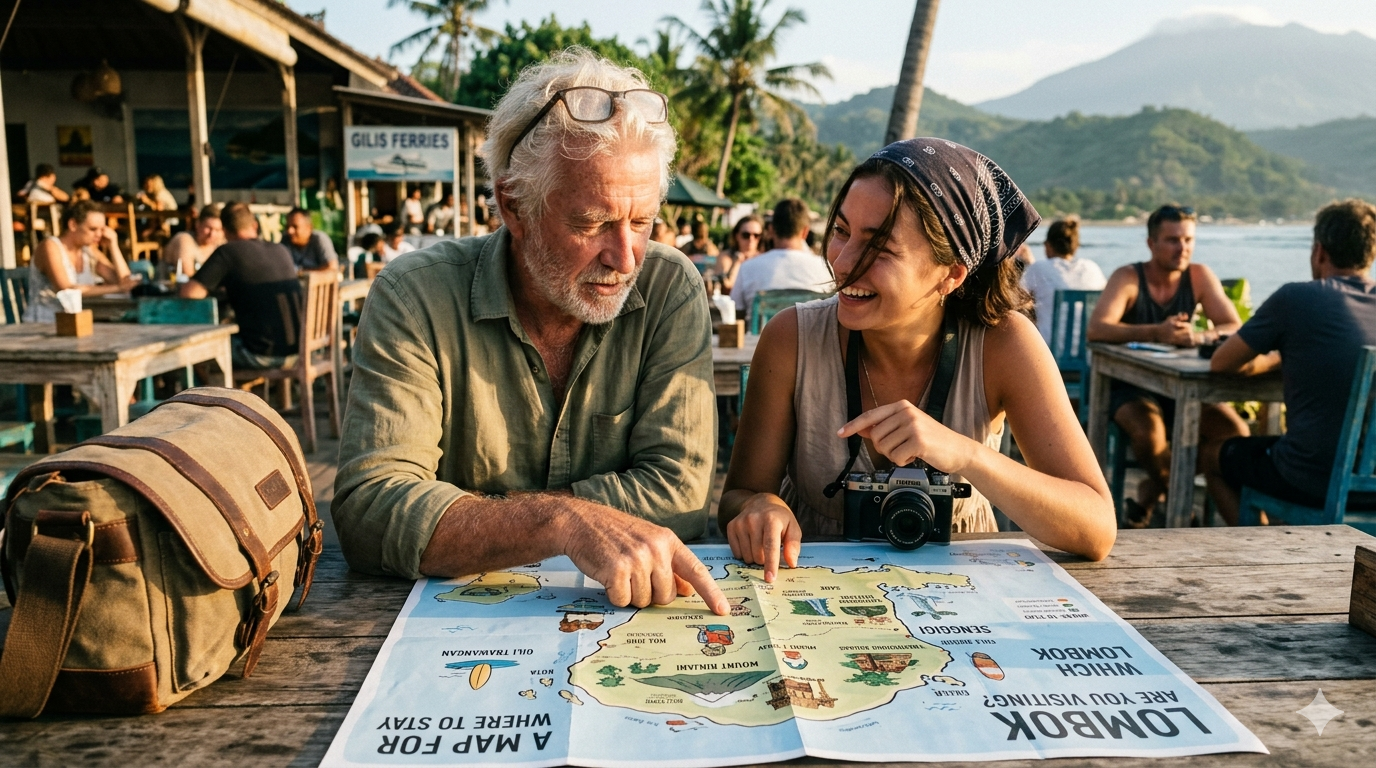
Which Lombok Are You Visiting? A Map for Where to Stay
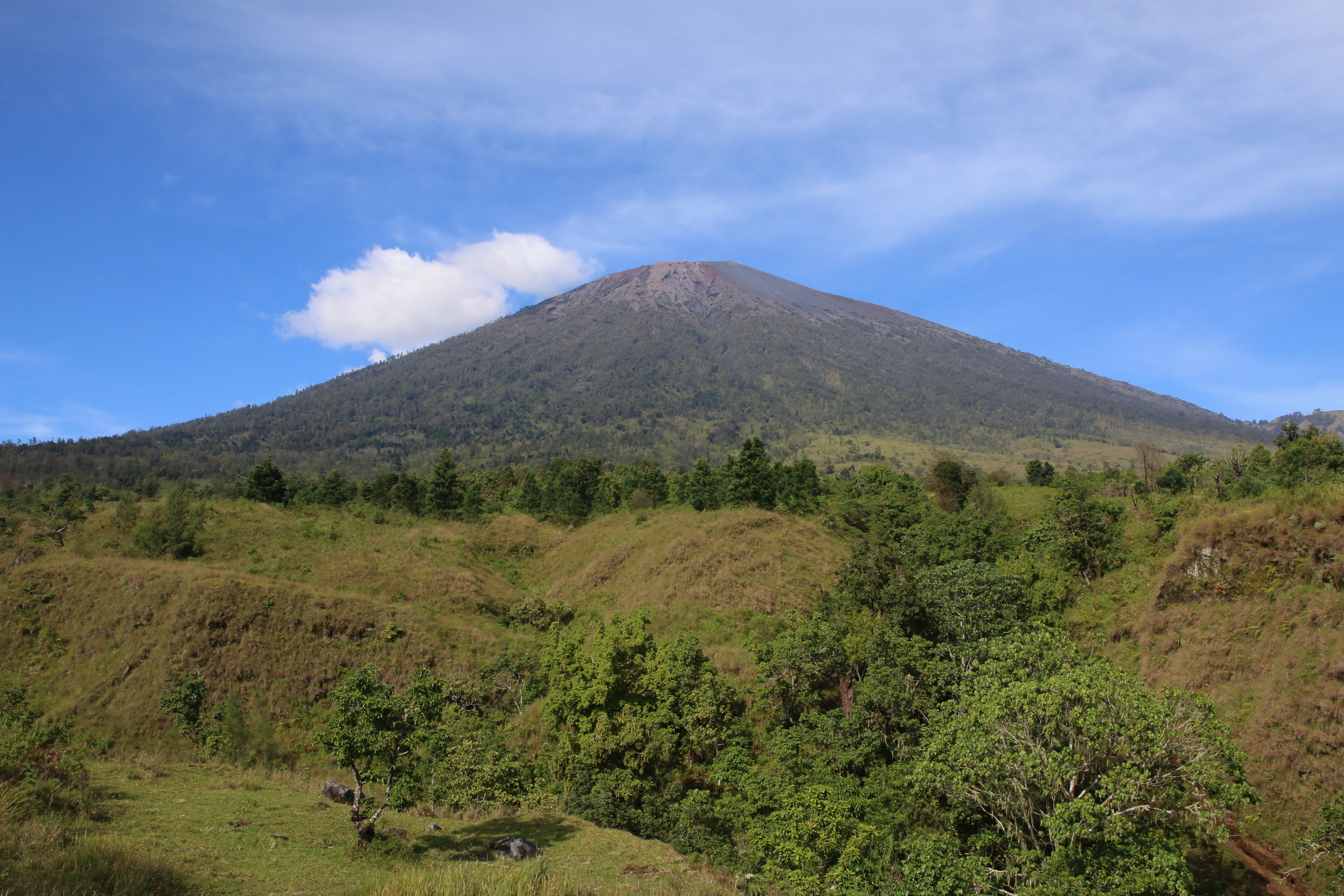
The first time I crossed the Lombok Strait, on a small plane out of Denpasar with the sun setting somewhere behind the propellers, the woman next to me — a Sasak grandmother flying home from her daughter's hospital appointment — pointed out the window and said, in unhurried English, "That is Rinjani. She is angry sometimes, but she is ours." I looked where she was pointing and saw a volcano that simply refused to be smaller than the rest of the island. Mount Rinjani is 3,726 metres tall and visible from almost everywhere on Lombok, which means almost everywhere on Lombok is, in some quiet geographic sense, under it. The mountain is the first thing you should understand about this island. The second is that the people below it are mostly Sasak Muslims, not Hindu Balinese, and the rhythm of the call to prayer drifting across rice paddies at dusk is not Bali in a different costume. The third is that the where-to-stay question — the one a traveller types into a search bar at midnight, two months out — is really a question about which Lombok you want to wake up in.
There are, in practice, four. Each has its own light, its own coastline, its own relationship to the 2018 earthquakes that flattened the north, and its own answer to the slightly tedious framing of Lombok as "Bali, but quieter." Lombok is not quieter Bali. Lombok is Lombok. The hotels worth flying for are the ones that know this.
Senggigi: the old west coast, still beautiful, no longer the centre
Source: wikimedia · License: CC BY-SA 4.0 · Credit: Yohanes Nindito Adisuryo / Wikimedia Commons
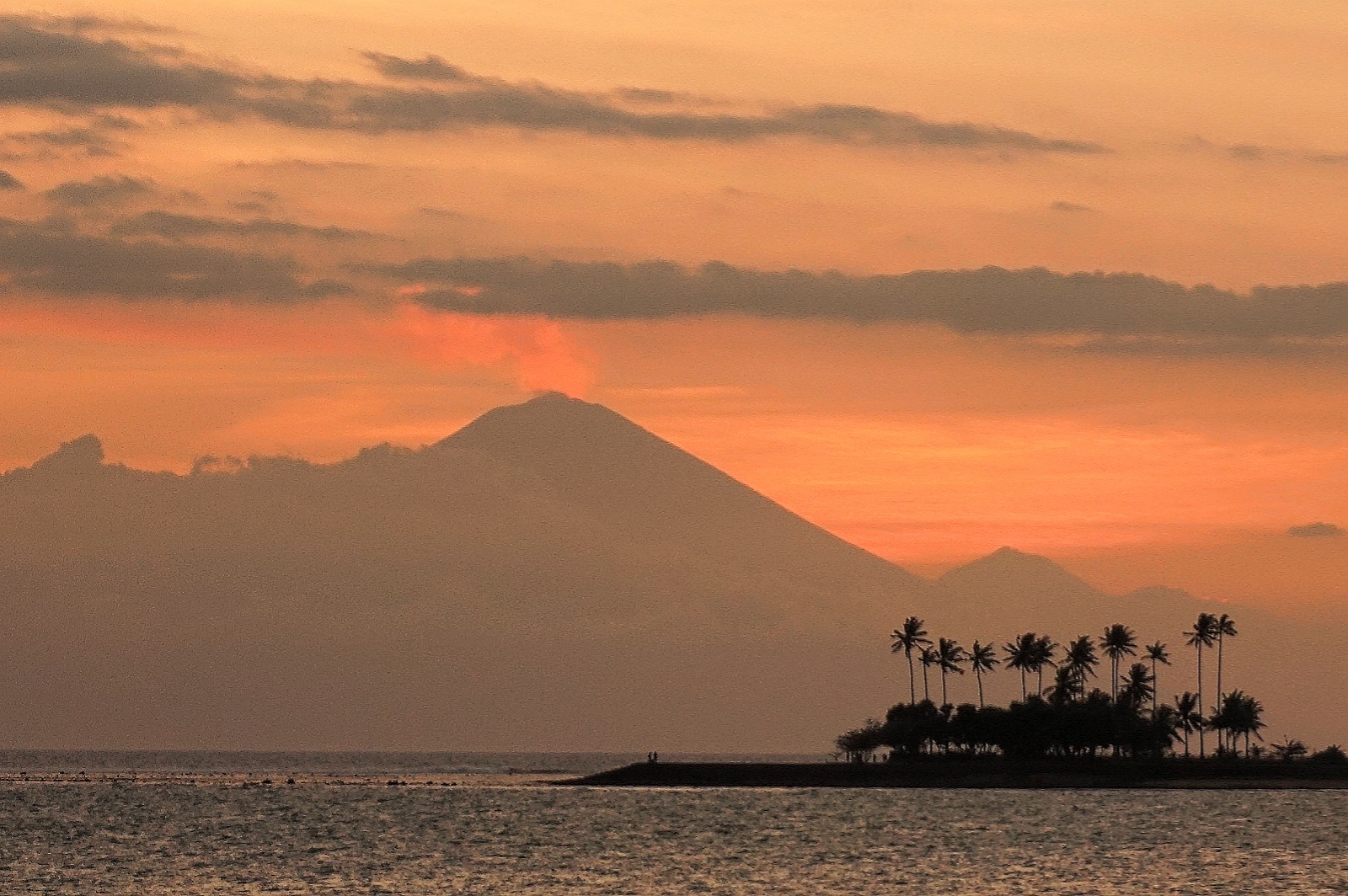
For two decades, Senggigi was Lombok's tourism address. A long curve of west-coast road with a string of resorts looking out at Bali's Mount Agung across the strait, it was where honeymooners landed, where the first dive shops opened, where the only decent espresso on the island used to be poured. Then two things happened, in quick succession. In 2018, two earthquakes — the worst on August 5, magnitude 6.9 — killed more than 560 people and damaged or destroyed roughly 80 percent of structures in North Lombok. And in the years after, Indonesia poured its tourism investment south, into Mandalika, where the MotoGP circuit opened and the airport's centre of gravity migrated with it. Senggigi did not collapse. Senggigi was eclipsed.
This is, for the right traveller, the reason to stay there now. The strip has fewer cruise-ship day-trippers, the sunset bars have thinned out, and what remains is the original argument for the coast: a quieter, lower-key version of Indonesian beach hospitality, with the long view across to Bali still doing its slow theatre every evening.
The property I send people to is Jeeva Klui Resort, on a small bay just north of Senggigi proper. Thirty-five rooms in Sasak-influenced architecture — thatched alang-alang roofs, dark teak, open courtyards — set into a tropical garden that runs to a black-sand beach. There are two pools, including an adults-only one above the water, and a spa that does not pretend to be a wellness conglomerate. Rates run from around USD 110 in low season, which for what you get is unserious in the best way. The Warung restaurant serves an afternoon tea that is the kind of small ritual the island used to offer everywhere and now offers only in a few places. Klui sits on the same coastline that took the earthquake's worst damage, and the resort's continued operation — alongside its visible investment in local hiring — is part of why the corridor is recovering at all.
Senggigi did not collapse. Senggigi was eclipsed. For the right traveller, that is the reason to stay there now.
If you want Lombok-as-it-was — slower, sea-facing, the version your friend who came in 2014 keeps describing — Senggigi is still the answer. Just don't come expecting a scene.
Kuta Lombok: the south coast surf town, mid-boom
Source: wikimedia · License: Public domain · Credit: Whatsinaname / Wikimedia Commons (originally Wikivoyage)
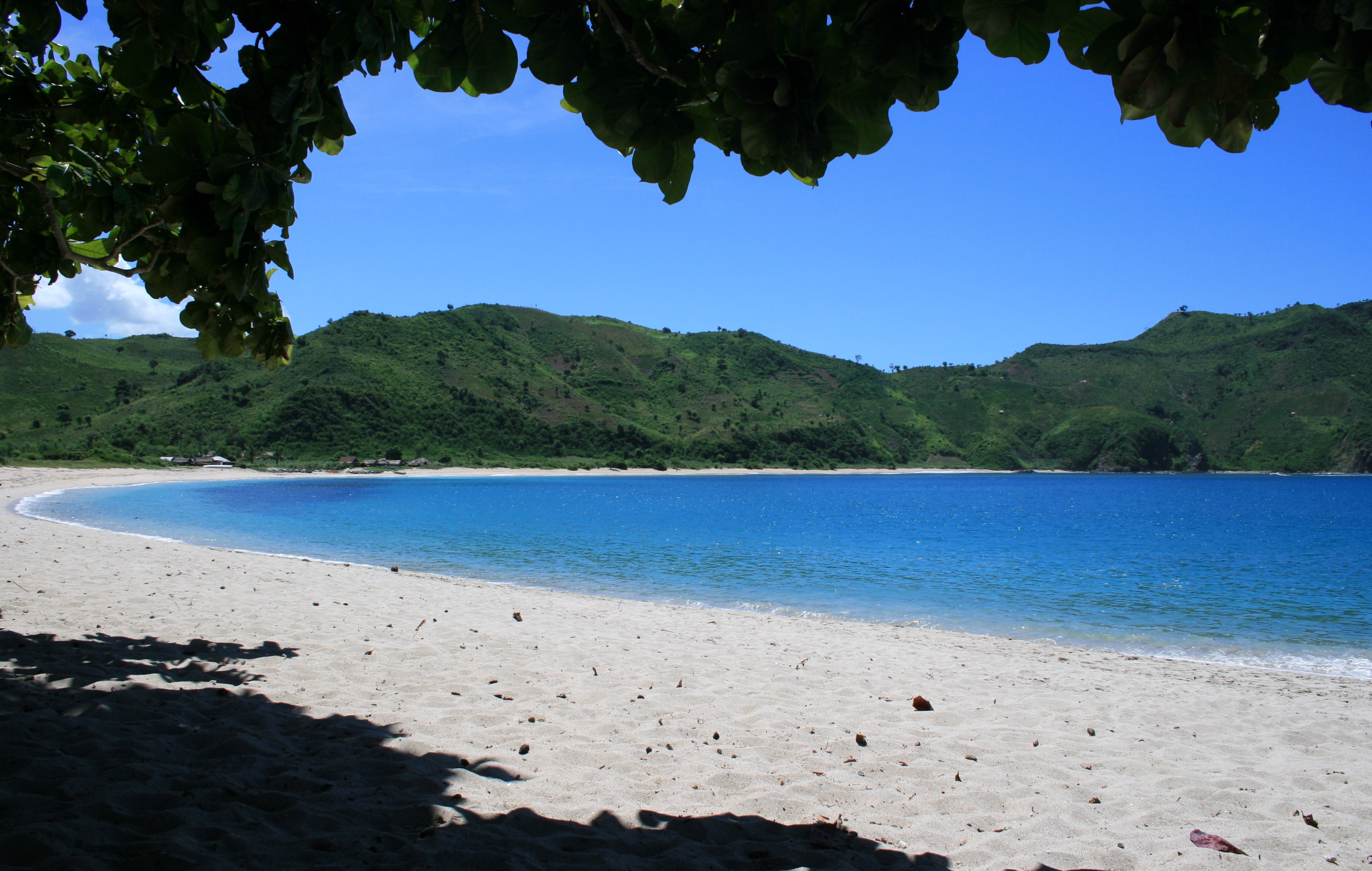
Drive ninety minutes south, through rice fields and stretches of road that the World Bank's Integrated Tourism programme rebuilt after the quake, and you arrive somewhere with completely different physics. Kuta Lombok — not to be confused with Bali's Kuta, which it bears no resemblance to whatsoever — is a sun-bleached crossroads of surf shops, vegan cafés, scooter-rental kiosks, and an unmistakable boom-town energy. The Mandalika Special Economic Zone, the MotoGP street circuit, the new direct flights from Darwin: all of it converges here. The beaches around Kuta — Tanjung Aan with its powder-pepper sand, Selong Belanak's long pale crescent, the surf points at Gerupuk and Are Guling — are the reason the boom is happening, and they remain, mercifully, mostly themselves.
Where to stay depends on how you feel about being inside a town with a building site at one end and a yoga studio at the other. If you want in the middle of it, the small wave of design-forward boutiques above the main strip — properties like Origins Lombok, which threads contemporary architecture through Sasak material vocabulary — is where younger travellers are landing.
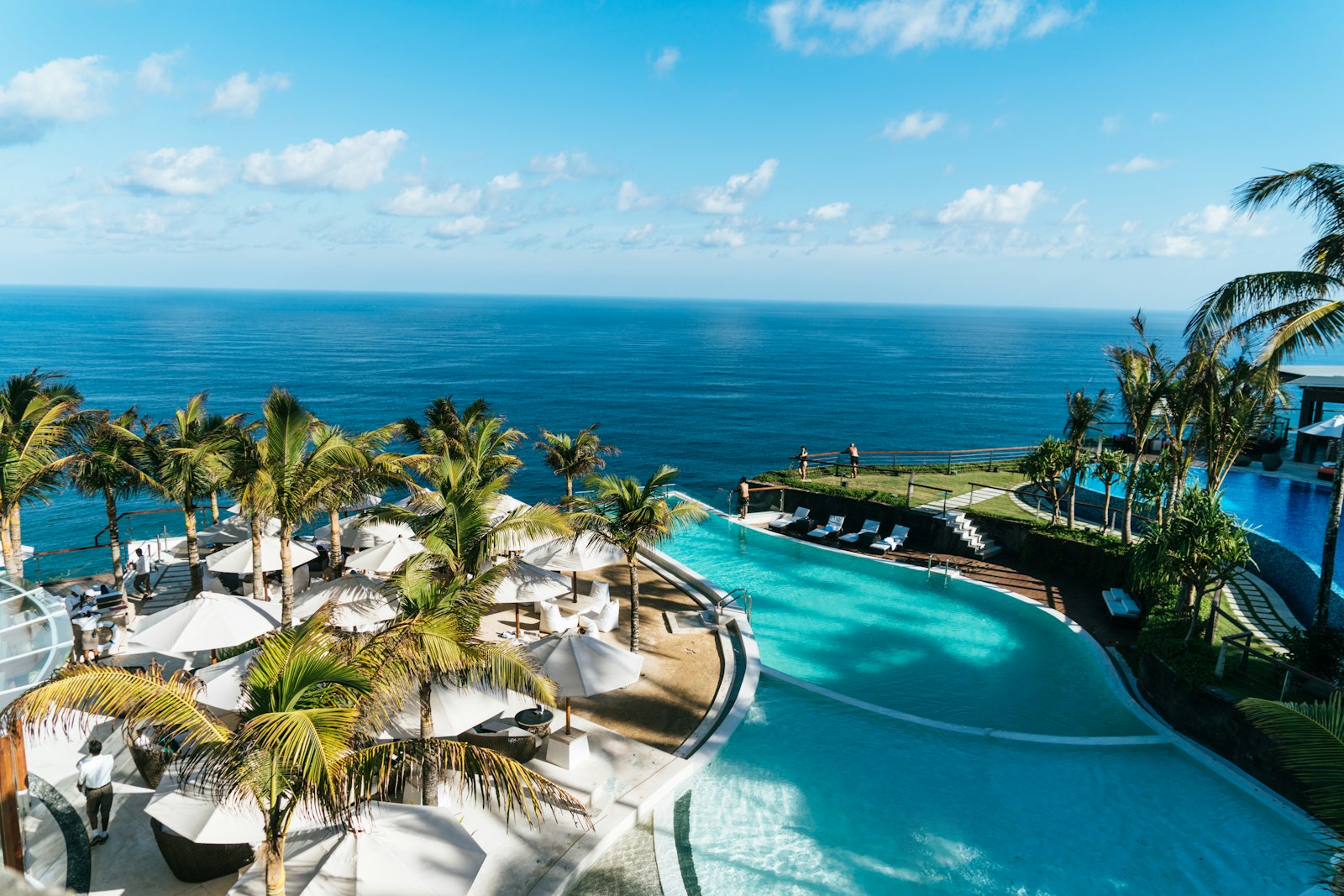
But the property that has rewritten what Kuta-area luxury means is fifteen minutes west, above Selong Belanak Bay. Selong Selo Resort and Villas is a hillside compound of thirty-eight architect-designed villas — studios up to a seven-bedroom — each with a private infinity pool angled at the bay below. It is the kind of place where the geography is doing seventy percent of the work and the architects, sensibly, have got out of the way: the villas are mostly glass and dark timber, the pools are pitched at the horizon, and the bay does the rest. The food at Aura Lounge leans Indonesian without performing it, and SENJA — the resort's wellness arm — is the rare hotel spa that reads as a discipline rather than a menu. Villa rates start around USD 220 in the low season and climb sharply for the larger houses, which is exactly the math you'd expect from a property that has, in effect, claimed the best view on the south coast.
If you are coming to surf, to honeymoon, to do nothing for a week with a view that earns the nothing — this is the address. If you are coming for the MotoGP weekend in October, book a year ahead or stay elsewhere; Kuta absorbs fifty-thousand-plus visitors for those races and the boutique market simply disappears.
Sembalun: the highland village, the Rinjani basecamp
Source: wikimedia · License: CC BY-SA 4.0 · Credit: Focusfeel / Wikimedia Commons
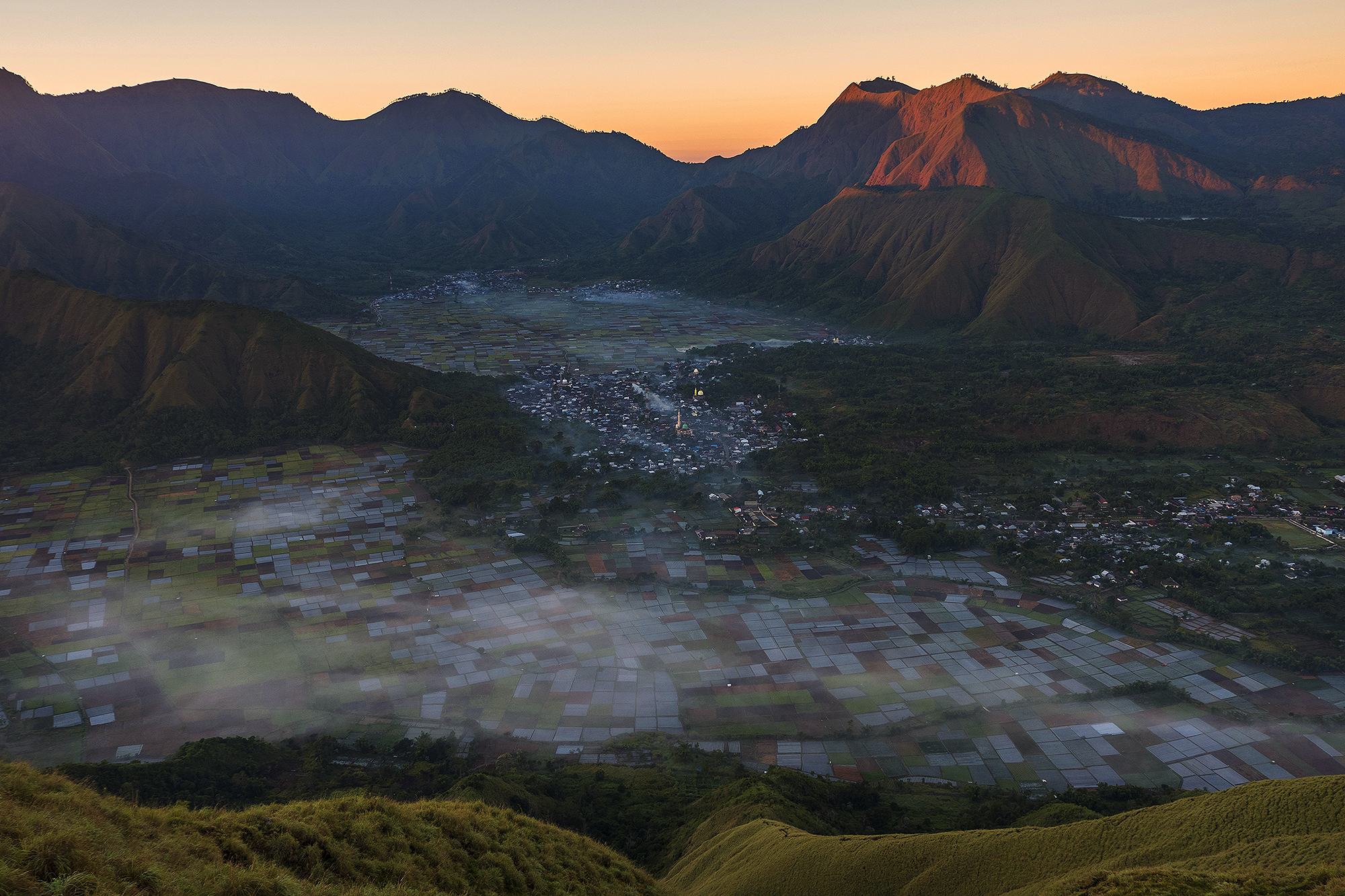
Three to four hours by car from the airport, climbing through hairpin switchbacks into a high plateau where the temperature drops and the air smells of woodsmoke and cold grass, you reach Sembalun. This is the village at the foot of Rinjani — the staging ground for the two-to-three-day climb to the crater rim — but more than that, it is one of the only places on Lombok where the agricultural economy still outweighs the tourist one. Strawberries grow here. Garlic, shallots, coffee. The plateau opens out like a green amphitheatre, and Rinjani, when she is not wearing cloud, dominates every sightline.
I keep going back. Not to climb — I have climbed her once and that was enough — but to stay. The accommodation here is, by design, modest: family-run pondok (small lodges) and homestays that cater first to trekkers and second to the smaller stream of travellers like me who came for the cold mornings and the view. Rinjani Family Homestay and Pondok Rinjani Bu Sita are both reliable and inexpensive, the kind of places where breakfast is included because of course it is, and the host can arrange a guide for the sunrise hike up Bukit Pergasingan — a shorter foothill climb that gives you a Rinjani panorama without the two-day commitment. Rates here run USD 25 to 60 a night, and the calculation is entirely different from the coast: you are not paying for design, you are paying for proximity to a mountain that no design could improve on.
Rinjani is the first thing you should understand about this island. Almost everywhere on Lombok is, in some quiet geographic sense, under it.
A practical note. The north and east of Lombok, including the road up to Sembalun, took the worst of the 2018 earthquakes, and some villages along the way still carry visible damage — half-built houses, cracked mosques, the steady patience of incremental rebuilding. This is not a reason to avoid the route. It is a reason to spend your tourist rupiah here rather than just passing through.
Tugu Lombok and the north coast: the cultural property
There is one hotel on Lombok that does not really fit in any of these geographies, because it has been built, deliberately, as its own world. Hotel Tugu Lombok, on Sire Beach in the village of Sigar Penjalin on the north coast, is the project of Anhar Setjadibrata — a Jakarta art collector who began rescuing Indonesian antiquities in 1972 when, as a young pharmaceutical rep travelling village clinics across Java, Bali, and Nusa Tenggara, he kept finding priceless objects being discarded. He opened his first hotel-museum in Malang in 1989. Tugu Lombok, which followed, is essentially a continuation of that argument: a beachfront resort designed to be inseparable from the artefacts, textiles, and architectural fragments it houses.
The result is more felt than described. Pavilions assembled from old Javanese joglo timber. A dining temple — they call it that without irony, and they have earned the word — built around a forty-tonne wooden Buddha. Sasak weavings on the walls that came from the villages whose grandmothers wove them. The kitchen serves Sasak specialities alongside Javanese and Balinese ones, and the staff, who are mostly local, treat the property's cultural project as their own. The rooms are not the largest on Lombok, the pool is not the most photogenic, and none of that matters because what you are buying here is a way of being inside the culture rather than next to it.
The hotel is in the part of North Lombok that the 2018 earthquakes hit hardest. It rebuilt, it kept its staff, and it remains — alongside Jeeva Klui further south — one of the anchor properties that signal to international travellers that the north coast is open and worth the trip. Rates start around USD 280.
The Gilis: technically not Lombok, but you'll ask anyway
Source: wikimedia · License: CC BY 3.0 · Credit: Midori / Wikimedia Commons
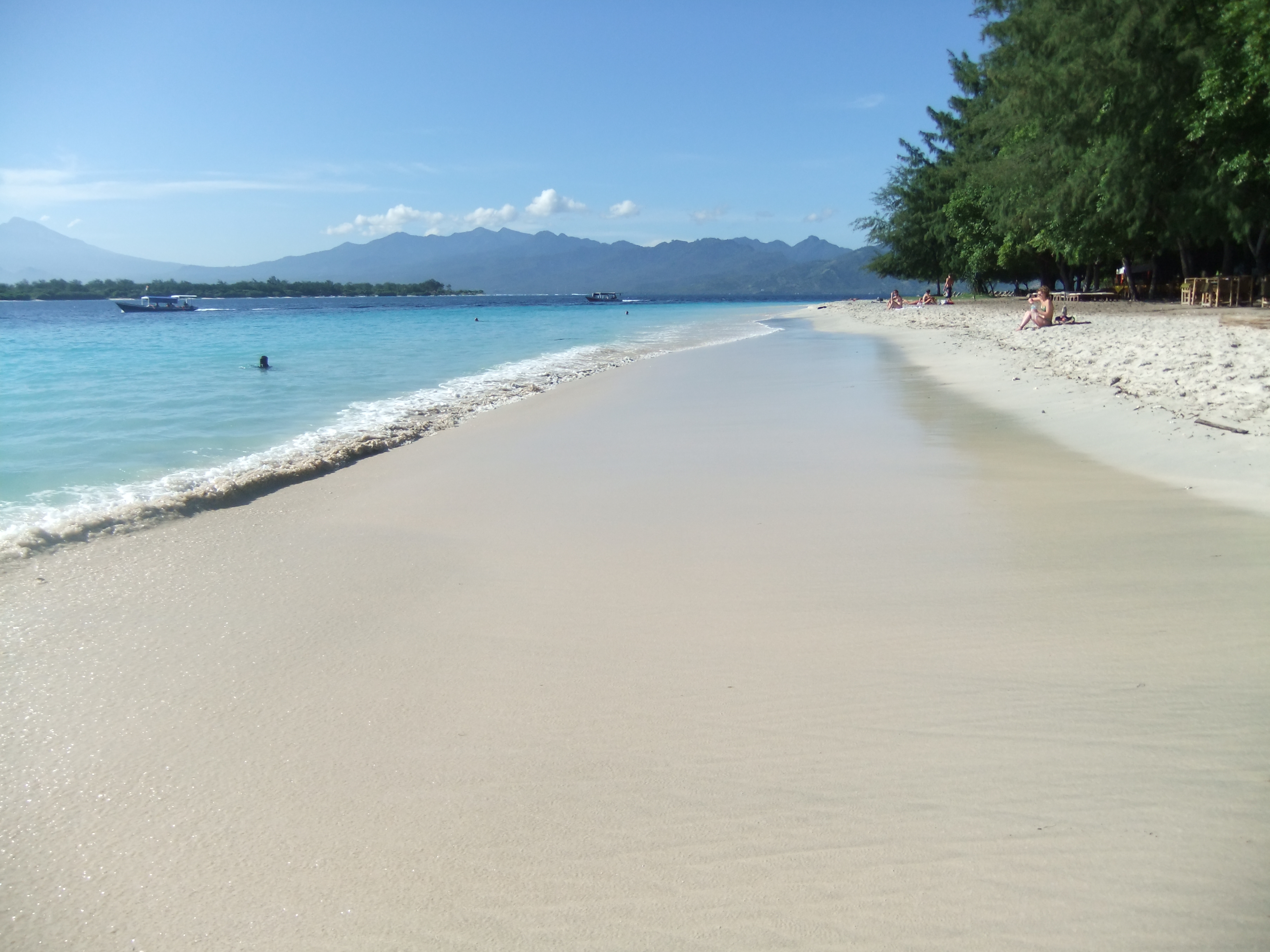
Anyone asking where to stay in Lombok eventually asks about the Gilis. The three small islands — Trawangan, Meno, and Air — sit a half-hour fast boat off Lombok's northwest tip, and although administratively they are part of West Nusa Tenggara, culturally and atmospherically they are their own country. Gili T is the party. Gili Meno is the honeymoon. Gili Air is the middle path: car-free, bicycle-and-cidomo (horse cart) only, two kilometres long, a slow circuit of warungs, dive shops, and a small handful of properties that take design seriously.
The one to know is Slow Gili Air. Ten villas, each with a plunge pool, set in a jungle compound that opens through an antique Javanese reception. The aesthetic is artisanal rather than minimal — original artworks, kitchenettes built into salvaged cabinetry — and the operating philosophy genuinely commits to its name: slow food, slow movement, a working push toward becoming the first zero-waste hotel on the island. Rates run from about USD 350 in low season. The fast boat from Lombok's Bangsal Harbour is thirty minutes; from Bali's Padang Bai, about ninety. Coming from Bali is the more common routing and the reason the Gilis sometimes get folded into Bali itineraries; coming from Lombok is the better one, because you'll already understand what kind of island chain you've arrived in.
A short coda on the weaving villages
Source: wikimedia · License: CC BY 3.0 · Credit: Midori / Wikimedia Commons
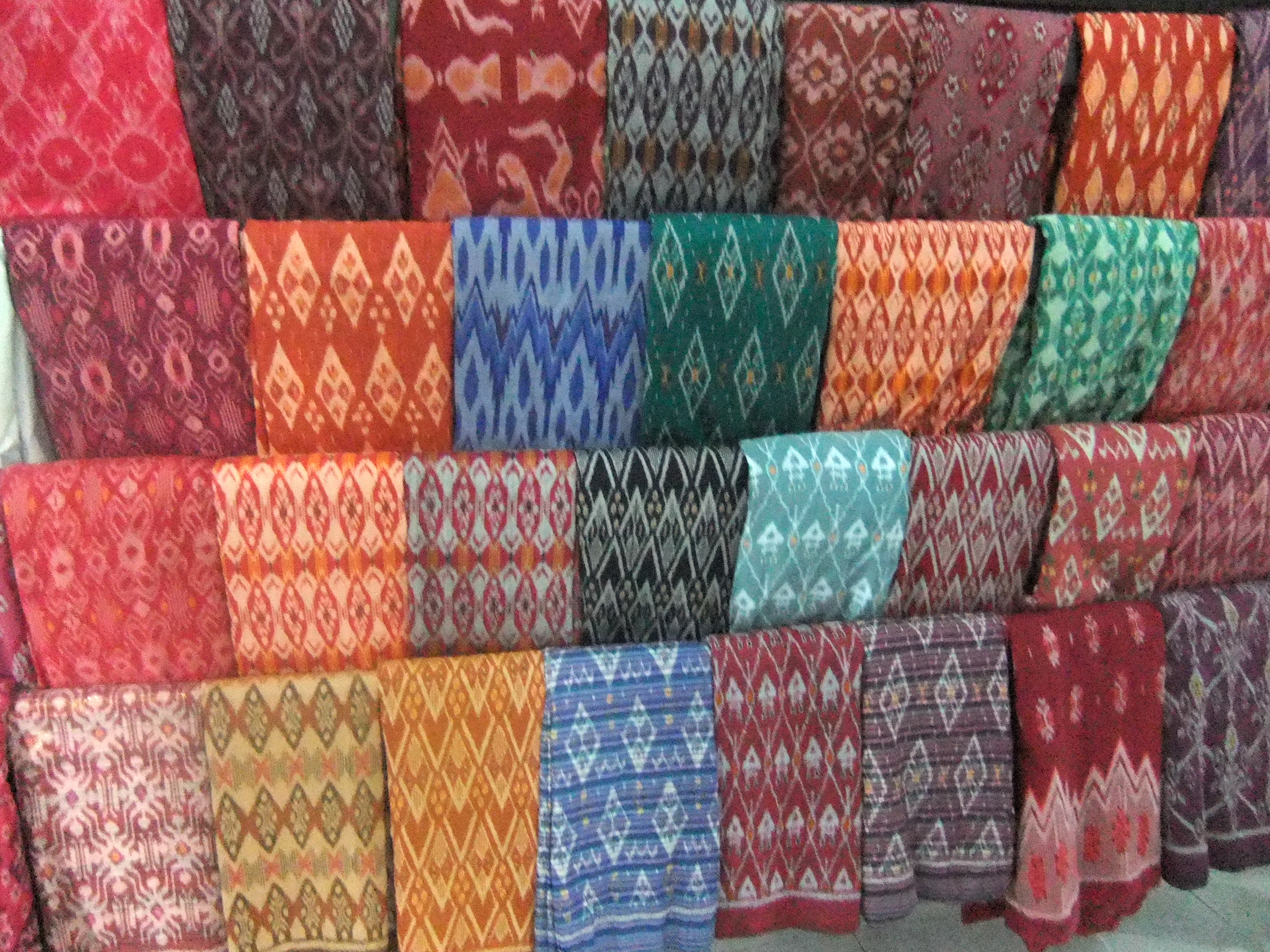
If you are staying anywhere south or central — Kuta, Selong Belanak, en route to Sembalun — make the time for Sukarara, in Kecamatan Jonggat, or Sade, near Kuta Mandalika. These are the heartlands of Sasak tenun weaving, where women still spin and dye on backstrap looms and a single sixty-by-two-hundred-centimetre cloth can take two to four weeks to finish. In Sasak tradition, a young woman weaves three pieces before she marries: one for herself, one for her husband, one for her mother-in-law. The motifs were once mountains, birds, and the rice goddess Dewi Sri; after Islam, they shifted to floral, leaf, and star patterns.
Both villages run organised visits, and both have a tourist-facing layer that can feel performative if you go on a packaged tour. Go independently, in the morning, and buy directly from the woman whose loom you watched. The cloth is not a souvenir. It is the labour of a month, and it should be paid for as such.
Picking your Lombok
The honest summary of a Lombok trip is this: the island is too varied to do well in three nights, and the four geographies above do not blur into each other the way Bali's regions sometimes do. Senggigi for the slow west coast and the long view to Bali. Kuta and the south for the beaches and the boom. Sembalun for the mountain and the cold mornings. Tugu and the north for the cultural argument. The Gilis if you need the boat ride.
What I would not do, if you are coming for a week, is split between all four. Pick two — one coast, one elsewhere — and let the island be the protagonist instead of the itinerary. Rinjani has been here a long time. She is patient.
Asian-American travel writer + photographer based in SF. Luxury and culture, design-forward destinations, slow travel.
✦ More from Sarah Chen

✦ Keep reading
More from this region


More in Indonesia
✦ Discussion
Start the discussion
No replies yet — yours could be the first.