
Source: Unsplash · License: Unsplash License
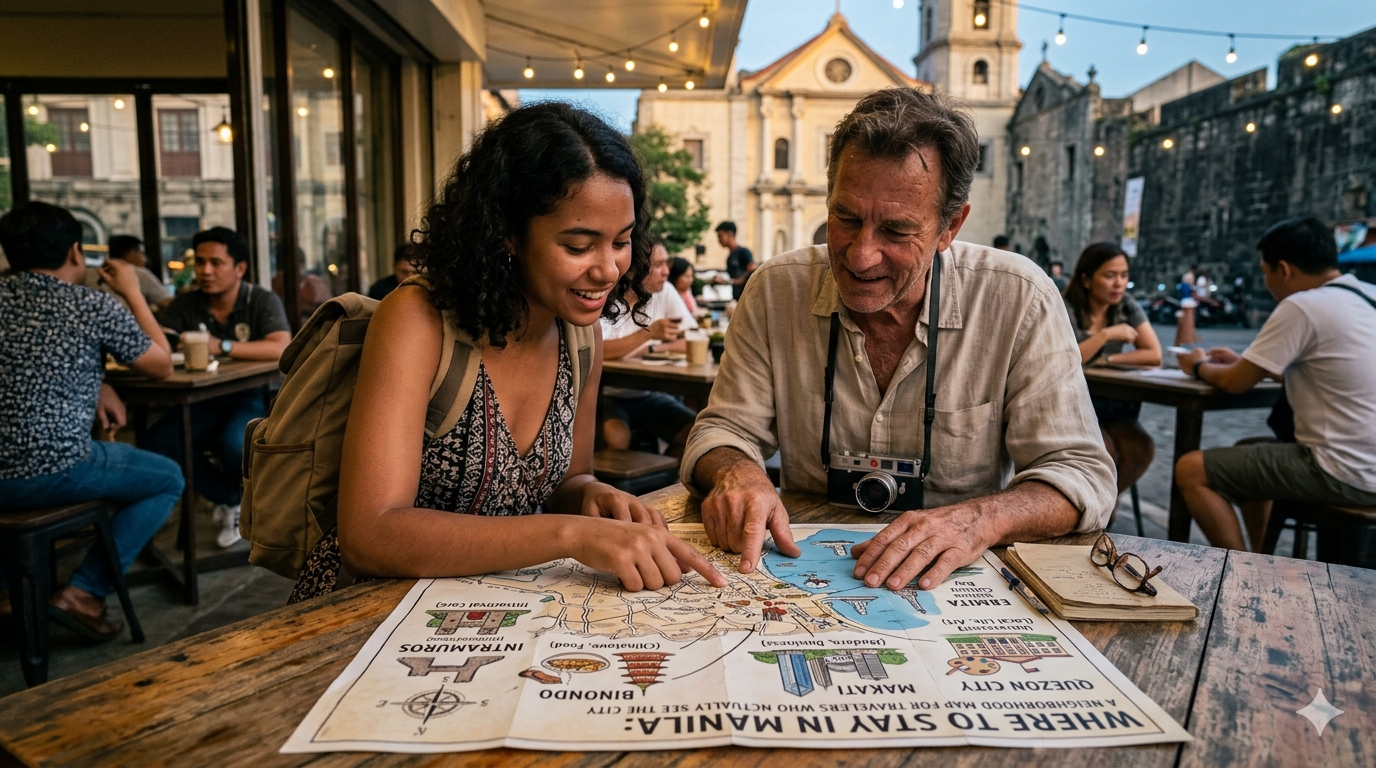
Where to Stay in Manila: A Neighborhood Map for Travelers Who Want to Actually See the City
The first time I treated Manila as a destination rather than a layover, I made the standard expat-recommended mistake. I booked four nights in Bonifacio Global City because a friend's friend said it was "the safe part," then spent two of those nights stuck on Kalayaan Avenue in a Grab trying to reach a restaurant in Binondo — a restaurant that, by any measure that did not involve EDSA at 7 p.m., was 9.4 kilometres away. I arrived after closing. I ate at the hotel. I learned the lesson Manila teaches every visitor eventually: in this city, where you sleep is what you see.
Metro Manila is sixteen cities pretending to be one, knit together by a road network that was never designed for the eight million people now using it. Choosing a neighborhood here is not a question of which hotel has the prettier lobby; it is a question of which Manila you are agreeing to spend your trip inside. The Spanish walled city. The American-planned grid of Makati's old CBD. The newer, glass-and-grid BGC built on a former military base. The Chinatown that predates Singapore. The post-war Pasay houses that became a boutique hotel by accident of survival.
What follows is the conversation I wish someone had had with me before I booked: five districts, five trip shapes, and the honest trade-offs of each. I have stayed in all of them. I have also failed to leave most of them in time for dinner.
In Manila, where you sleep is what you see — choose the district before you choose the hotel.
BGC: The Planned City Most Visitors Default To
Source: Unsplash · License: Unsplash License
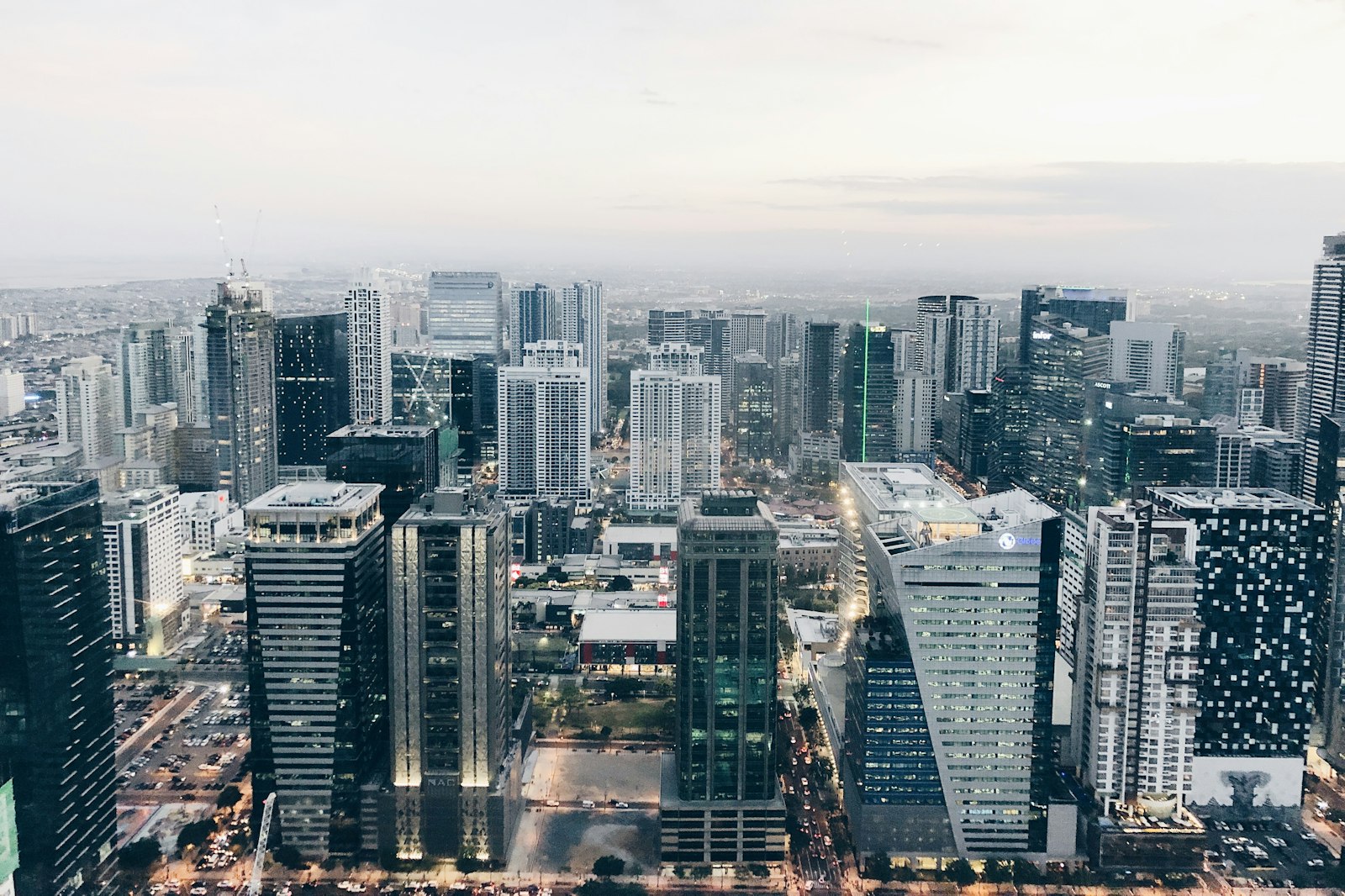
Bonifacio Global City sits on what used to be Fort Bonifacio, a Philippine Army base the government carved up and sold off in the 1990s. That origin story is why BGC feels the way it does: the streets are numbered, the blocks are uniform, the pavements are wide enough for two strollers abreast — which in Manila is the kind of luxury you only register after a week elsewhere. There is a public art trail. There is a Mind Museum. There is a Saturday market behind the Mind Museum where the cold-brew vendors take Apple Pay. If your mental image of "Manila" was formed by Instagram, this is what produced it.
For first-time visitors, especially couples, BGC makes a defensible case. The hotels are excellent. Shangri-La The Fort — a 61-storey tower designed by Handel Architects with interiors by Manny Samson and Associates, all marble accents and light Italian wood — opened in 2016 and remains the most coherent luxury statement in the district. The drop-off is elevated to an upper level, accessed by a theatrical ramp organised around a central fountain, a deliberate echo of the staircase at the older Makati Shangri-La. It is not subtle. It is also not trying to be.
Grand Hyatt Manila, on 8th Avenue, is the tallest building in the Philippines and houses The Peak — the country's highest dining room — on its 60th and 61st floors. The view at dusk, looking west across Makati toward Manila Bay, is the kind of thing that makes you forgive the elevator wait. Seda Bonifacio Global City, the Ayala group's flagship urban-lifestyle hotel, is the smarter mid-luxury choice: rooms designed around Filipino furniture by Kenneth Cobonpue and Ann Pamintuan, prices that come in well below the international flags, and a rooftop pool that earns its keep.
What BGC will not give you is texture. The district is six years old in places, sixteen in others, and the master plan shows. The food is good but corporate-coded; the bars close earlier than you would think; the heritage sits one Grab ride away, behind a wall of traffic. Book BGC if your trip is short, your priorities are comfort and reliability, and you are willing to commit to taxi time for anything older than the building you're sleeping in.
Makati: The Older CBD Where the Design Hotels Actually Live
Source: Unsplash · License: Unsplash License
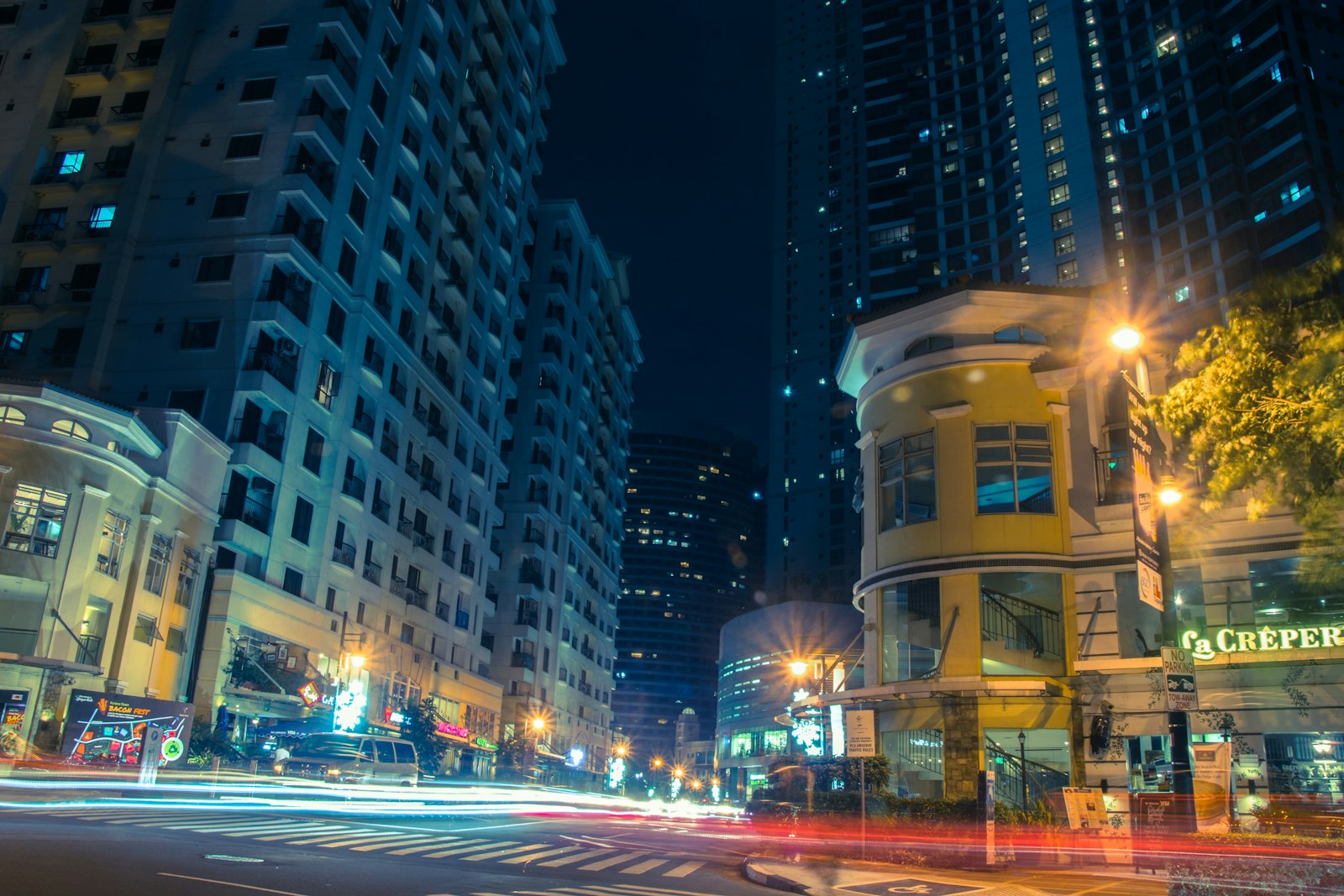
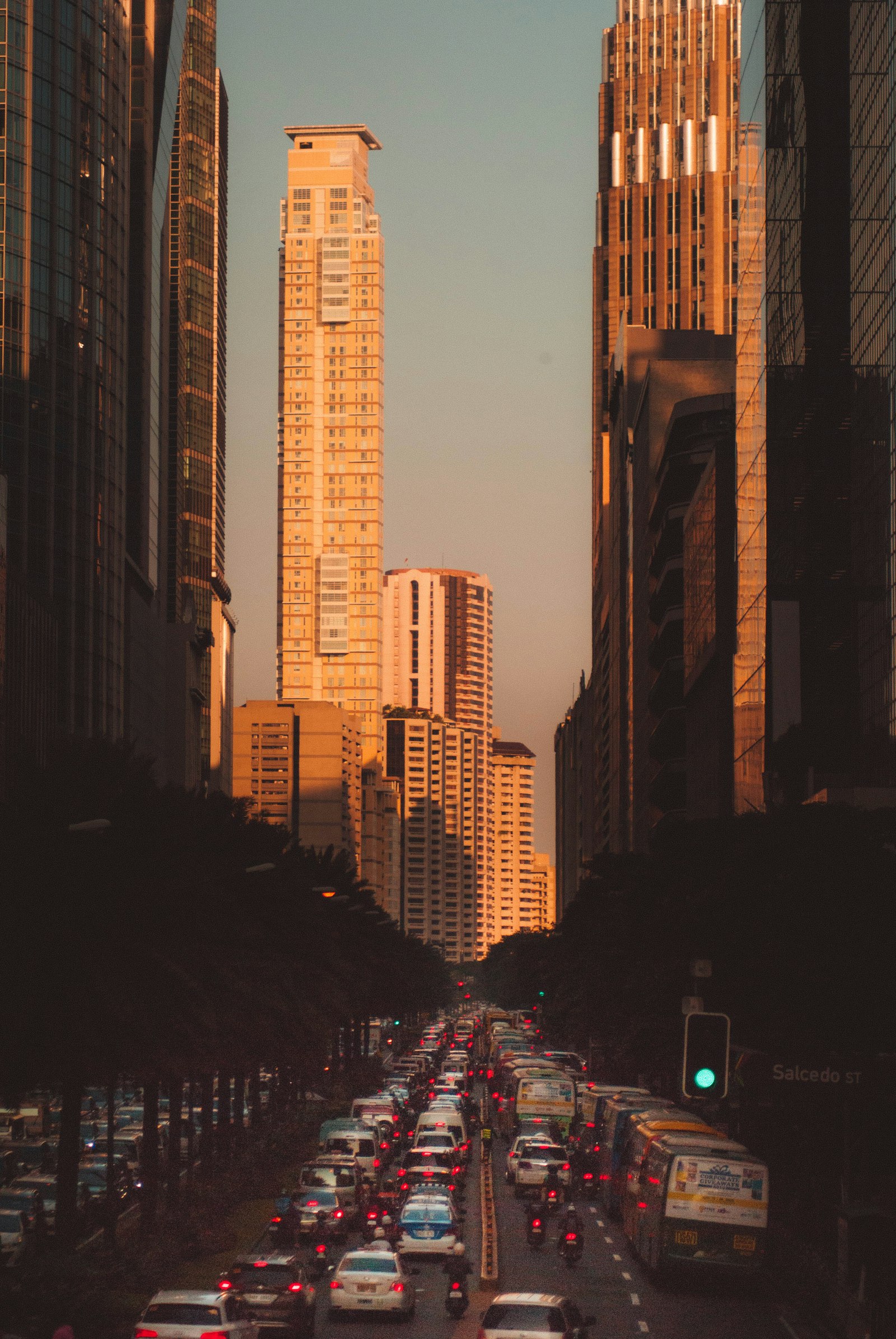
If BGC is the planned city, Makati is the city that planned itself first and is now living with the results. This is where the Ayala family laid out the country's original Central Business District in the late 1940s, hiring American consultants and building the broad Ayala Avenue spine that is still — sixty-odd years later — the most legible street in Metro Manila. The luxury hotel scene here is older, denser, and more interesting than BGC's, because it has had longer to develop a personality.
The Peninsula Manila is the anchor. Opened in September 1976 for the IMF conference, designed by the Filipino architect Gabriel Formoso with the Honolulu firm Wimberly, Whisenand, Allison, Tong & Goo as consultants, the Pen is a Brutalist building softened by tropical instinct: exposed concrete aggregate on the façade, tall plants throughout, and the famous two-tier cascading fountain in the lobby that has, almost single-handedly, taught two generations of Manileños what the word lobby could mean. Sunday afternoon tea here, accompanied by a string quartet on the mezzanine, is the city's most reliable luxury ritual. Filipino families show up in their best clothes. The cake stand arrives. Nobody is performing — this is just what the Pen is.
Raffles Makati, which opened in December 2012 inside a thirty-storey glass tower designed by Arquitectonica and Bent Severin Design Group, takes the opposite approach: 32 suites only, no standard rooms, contemporary fittings, local art on every wall, and an all-butler service model that suits the small inventory. It is the hotel for the trip where you want the city to feel manageable — which, in Manila, is itself a kind of luxury.
The Peninsula's lobby has, almost single-handedly, taught two generations of Manileños what the word lobby could mean.
What Makati offers that BGC does not is walkability between actual destinations. Greenbelt — five interconnected malls anchored by a chapel-in-a-park that is somehow not kitsch — sits across the street from the Pen. Ayala Museum, with its diorama hall and its Gold of Ancestors collection, is a six-minute walk. The Philippine Stock Exchange building. The original Glorietta. The Salcedo Saturday Market. You can string a respectable day together without ever opening Grab. Book Makati if you want the design hotels with the most history, if you want to walk, and if you are the kind of traveller who reads a building's date of construction before booking the room.
Poblacion: The Food-and-Bar Village Hidden Inside Makati
Source: Unsplash · License: Unsplash License
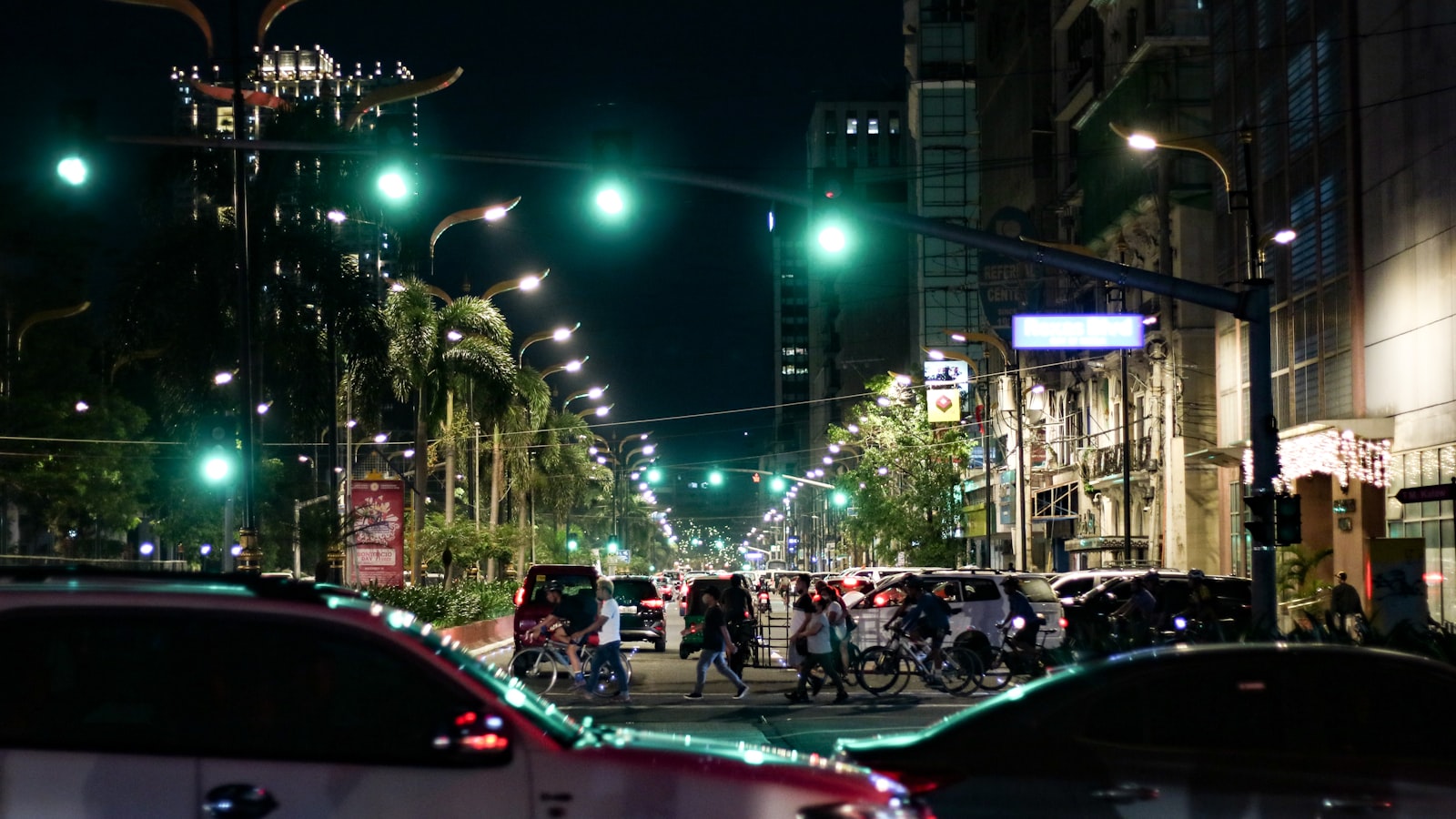
Poblacion is technically a barangay of Makati. Practically, it is a different city. Walk fifteen minutes north from the Peninsula, past the embassies on Ayala Avenue, and you cross into a few square blocks of low-rise post-war buildings, narrow streets, and the densest concentration of good food and serious drinking in the country. Time Out put Poblacion on its Coolest Neighbourhoods in the World list for 2025; the neighborhood has been on every Manileño's list for closer to a decade.
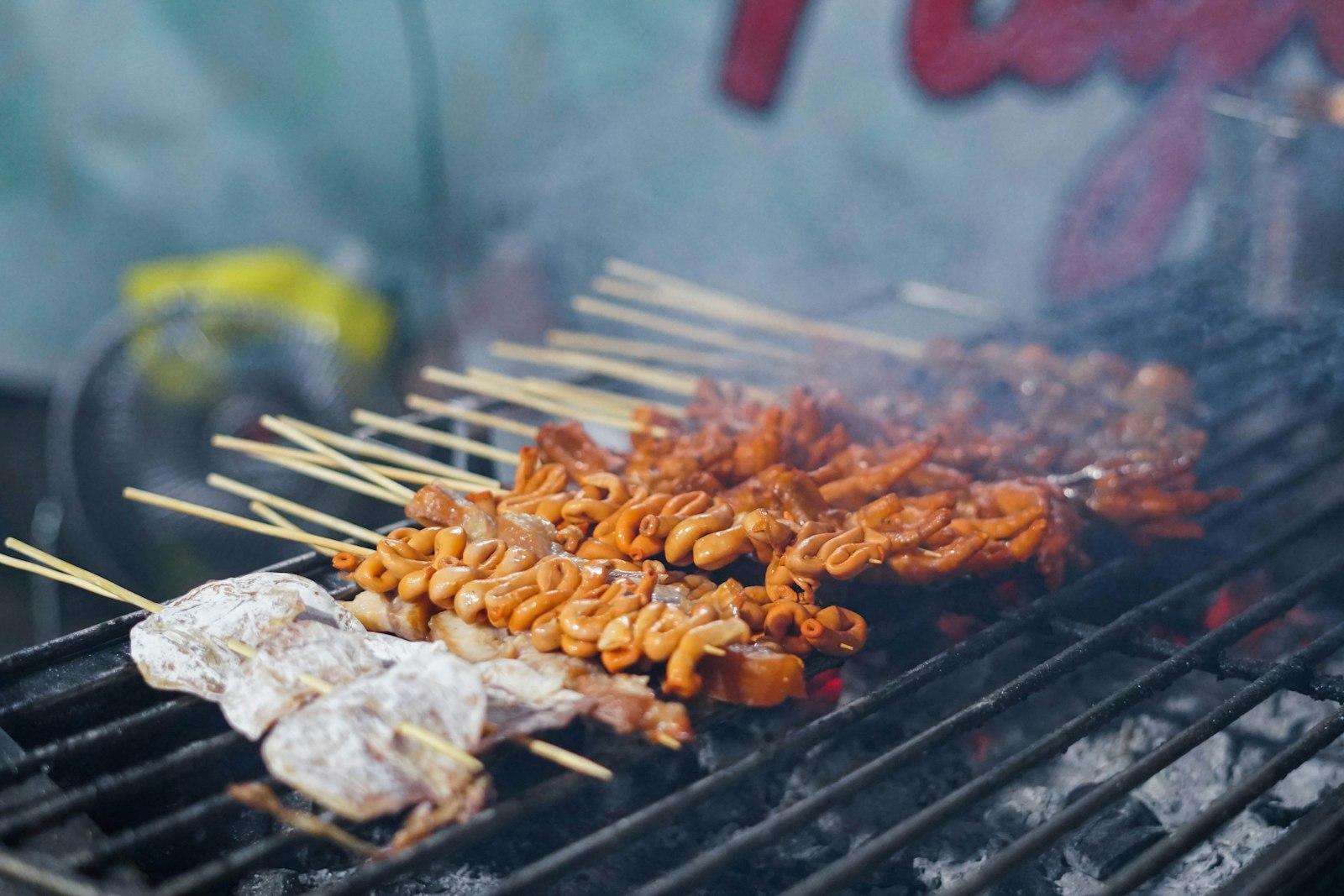
The history matters. Poblacion was the original Spanish-era población of Makati — the parish settlement that the rest of the city grew up around. By the 2000s it had become a red-light strip on P. Burgos catering to expat workers. The rebirth, when it happened, happened fast: chefs and bartenders priced out of Greenbelt opened on Don Pedro and Felipe streets because the rents were absurdly low for what was a fifteen-minute walk from the CBD. The red-light bars are still there. So are Run Rabbit Run (named best bar in the Philippines in 2020), The Spirits Library, A'Toda Madre's hundred-plus tequilas, Dirty Hands' Turkish-German shawarma — all within five blocks of each other. The street outside hums with grilled-meat smoke from the isaw and kwek-kwek carts until 2 a.m.
The hotel question in Poblacion is harder. The neighborhood has very few proper hotels and a great many serviced apartments; most travellers stay in nearby Makati CBD and walk in for the evening. This is the correct move. You want the Peninsula or Raffles for the bed and the bathroom, and you want Poblacion for the eight hours between sunset and closing. Book Poblacion-adjacent (which is to say, anywhere within fifteen minutes' walk of Don Pedro Street) if your trip is structured around food and drink, if you would rather queue for a bar seat than reserve a Michelin table, and if you accept that mornings will be slow.
Intramuros & Binondo: For the Trip That Goes Back Before Manila Was Manila
Source: Unsplash · License: Unsplash License
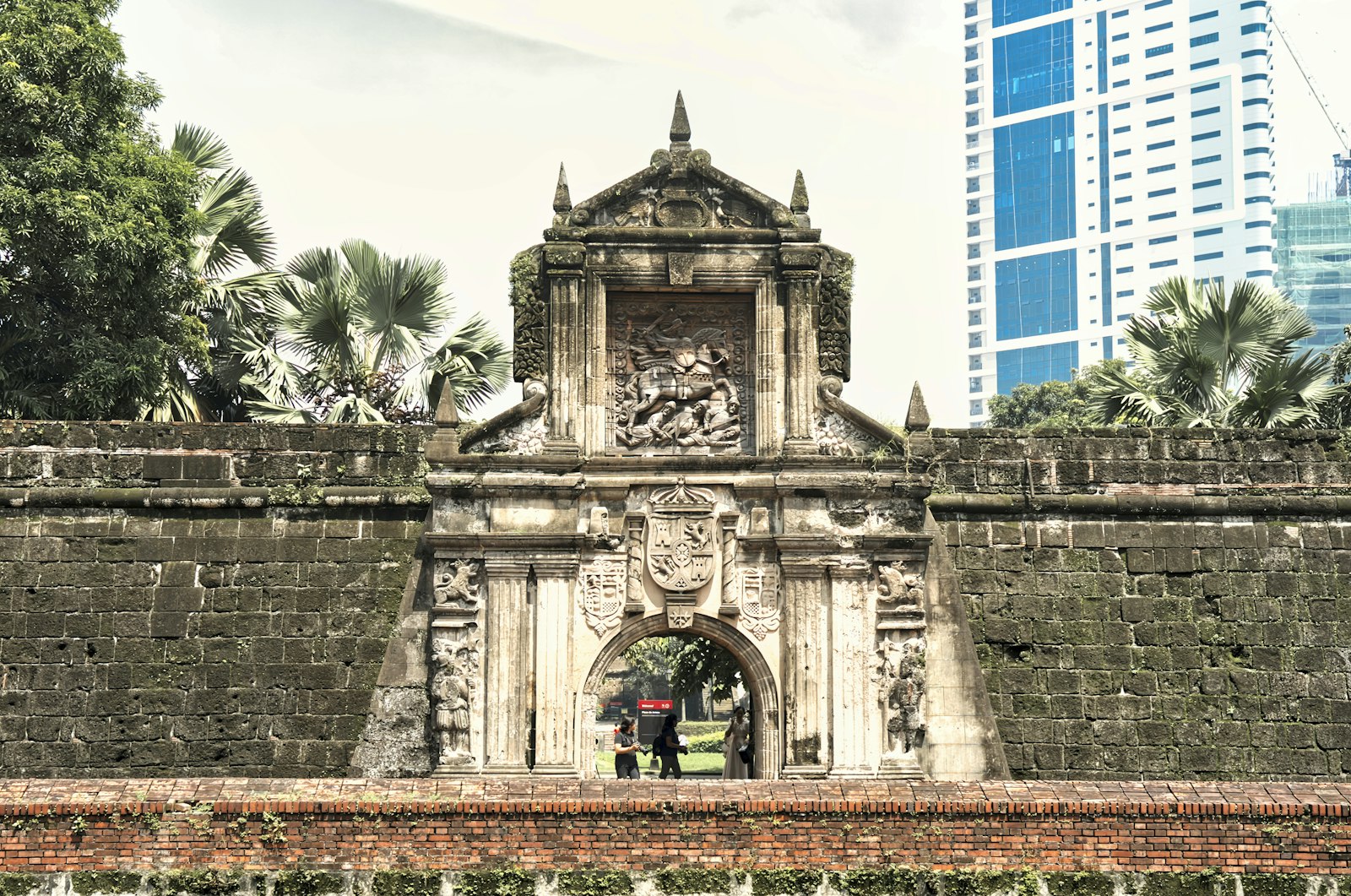
Intramuros — Spanish for "within the walls" — was the original Manila, established in 1571 by the conquistador Miguel López de Legazpi and enclosed inside six-metre stone walls that ran three kilometres around the colonial heart of Spain's Pacific empire. The bombing of February 1945, when American forces shelled the district to dislodge a Japanese garrison, destroyed almost all of it. San Agustin Church — completed in 1607, the oldest stone church in the country — was the only major building to survive intact. Walking Intramuros today is an exercise in reading absences: the cobbled streets, the reconstructed walls, the Plaza San Luis Complex built in the 1980s to imitate the 18th-century houses that the bombs erased.
A few hundred metres north, across the Pasig River, sits Binondo. Founded by Spanish authorities in 1594 as a settlement for Catholic-converted Chinese merchants, Binondo is the world's oldest continuously operating Chinatown — older than San Francisco's by 250 years, older than Singapore's by two and a half centuries. Ongpin Street is its spine: jewelers in glass-fronted shophouses, fruit stalls overflowing onto the pavement, tea-pourers and hopia bakeries and the steam from siopao baskets curling into the morning. Toho Antigua Panciteria has been serving since 1888. The newer Toho Food Center has been serving since 1886. The eldest restaurants in the country are here, and they are still busy at lunch.
The eldest restaurants in the country are in Binondo, and they are still busy at lunch.
The boutique hotel scene in both districts is thin but improving. The Bayleaf Intramuros is the most credible option inside the walls — contemporary rooms, a rooftop bar called Sky Deck that frames the Manila Cathedral at sunset, and a location that lets you walk to Fort Santiago before breakfast clears out the day-trippers. In Binondo, the pickings are smaller and more functional. The grander option is the historic Manila Hotel in nearby Ermita, opened in 1912, where General MacArthur lived for years; the rooms are not avant-garde but the place is a museum of itself, and the location splits the difference between the walled city and Manila Bay.
Book this corridor — Intramuros, Binondo, or somewhere between them — if your Manila trip is fundamentally a history trip, if you would rather hire a guide named Ivan Man Dy for a Binondo food walk than book a tasting menu in BGC, and if you understand that you are trading hotel polish for proximity to the things the hotels in the polished districts will drive you here to see.
Pasay & NAIA-Adjacent: The Smart Stopover
Source: Unsplash · License: Unsplash License
The Ninoy Aquino International Airport sits in Pasay, on Manila's south-west edge. Anyone with an early flight or a late arrival knows the calculation: an Uber from BGC to NAIA at the wrong hour can take two hours; the same trip at 4 a.m. is twenty minutes. If your itinerary is structured around an onward flight to Palawan, Cebu, or Siargao — and most travellers' Manila stops are — staying near the airport for the bookend nights is not a compromise. It's the sensible play.
The standout here is The Henry Hotel Manila, a 34-room boutique property on F.B. Harrison Street that the designer Eric Paras carved out of five post-war "Liberation style" houses left standing on a single compound after the 1945 destruction. The gardens, designed by the late National Artist Ildefonso P. Santos, run between the buildings like a private park; the rooms mix mid-century furniture with locally sourced art; the on-site Apartment 1B restaurant pulls a steady Manila design-set crowd. It is the only hotel in the airport corridor where you would happily spend an extra night even without a flight to catch. The catch: it is on the wrong side of Roxas Boulevard from the actual airport, which still means a 20–35 minute drive depending on traffic. For pure proximity, the more conventional choices — the Marriott at Resorts World, or one of the cluster of new business hotels along NAIA Avenue — will get you to the terminal in under ten minutes.
Book Pasay or NAIA-adjacent if your Manila stop is twenty-four hours or less, if you have a 5 a.m. flight, or if you are travelling with children and the math of two airport transfers in one day is the math you are losing sleep over.
Which Manila Is Yours
The honest answer for most first-time visitors who plan to stay four nights and actually leave the hotel is a two-district split: two nights in Makati CBD for the design-hotel experience and the museums; two nights in or near Intramuros for the history walks, the Binondo food day, and the proper sense of how old this city actually is. Throw in a Poblacion dinner each evening regardless of where you sleep. Skip BGC unless you are here for business or have a child who needs a pool and a mall in the same building.
The traveller who comes for the architecture and stays only at the Peninsula will see one Manila. The one who books the Bayleaf Intramuros and walks Binondo at six in the morning will see another. Both are real. Neither is the whole. The mistake is to imagine, as I did on that first trip, that a single hotel address can show you the city — Manila is too big, too long-lived, and too unevenly assembled for any one neighborhood to stand in for the rest. Pick the district that matches the trip you actually want. The traffic will do the rest.
Asian-American travel writer + photographer based in SF. Luxury and culture, design-forward destinations, slow travel.
✦ More from Sarah Chen

✦ Keep reading
More from this region


More in Destinations
✦ Discussion
Start the discussion
No replies yet — yours could be the first.