
Source: Unsplash · License: Unsplash License
Where to Stay in Flores: A Slow Drive East from Komodo
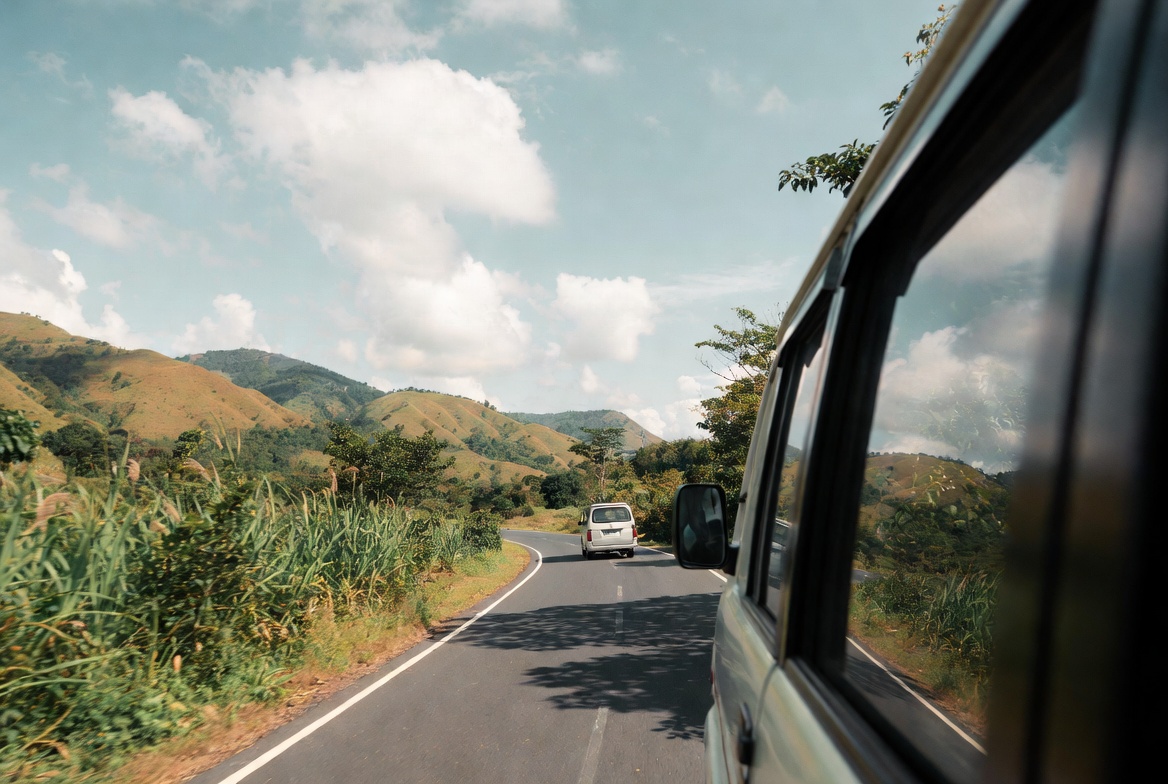
There is a moment, on the Trans-Flores Highway somewhere between Ruteng and Bajawa, when the road climbs out of a wet-rice valley and the cloud line drops to meet the windshield, and you understand why no one finishes this island in a week. Flores is roughly 360 kilometres as the gull flies and more than 700 by tarmac, and the tarmac does not go in a straight line — it switchbacks through coffee country, threads coastlines that empty into the Savu Sea, climbs past Catholic shrines tucked into volcanic ridges, and deposits you at the foot of a different language every two hundred kilometres. You don't do Flores. You concede to it.
The question of where to stay, then, isn't really a question about hotels. It's a question about how slowly you're willing to move, and which versions of the island you'd like to wake up inside.
You don't do Flores. You concede to it.
For a long time the answer was: a serviceable losmen with cold-water mandi in Bajawa, a beach hut on Pulau Bidadari, and a long-suffering driver named Anton. That answer still exists, and it is still good. But the past five years have brought a quiet new wave — architect-led bungalows on volcanic ridges, a Phinisi-shaped flagship on the Komodo coast, a hilltop coffee retreat that didn't exist when I last drove this road in 2019. Below: six stays that locate you in six different Floreses, threaded into an itinerary that runs west to east across roughly nine days.
A word on logistics before we begin. Most travellers fly into Labuan Bajo (LBJ) via Denpasar — Garuda, Citilink, Batik Air, and Super Air Jet all run the route, with the early-morning departures cheapest and least subject to the wind delays that pick up after noon. Wings Air still flies the smaller Maumere leg from Denpasar a few times a week; book it with realism about cancellations. Drive west-to-east and you save Komodo for last, which is the right way around — anything after those islands risks feeling like an epilogue. Hire a car with driver in Labuan Bajo (expect IDR 800,000–1,000,000 per day in 2026 for a decent Avanza with English; more for a Fortuner) and don't pretend you'll do this on a scooter unless you have done it before. The road is paved, mostly, but it is also a goat track in places, and the dogs sleep in the lane that has shade.
One more update worth knowing. Komodo National Park's pricing and quota system has been in flux since the 2023 hike-then-rollback episode, and as of early 2026 the park is implementing a hard daily cap of 1,000 visitors across Komodo and Rinca, bookable only through the SiOra app. Your hotel or tour operator will handle this for you. Do not try to walk on a boat without confirmed permits; the rangers are not in a negotiating mood, and they're right not to be.
Labuan Bajo: AYANA Komodo Waecicu Beach
Source: Wikimedia Commons · License: CC BY 2.0 · Credit: prilfish
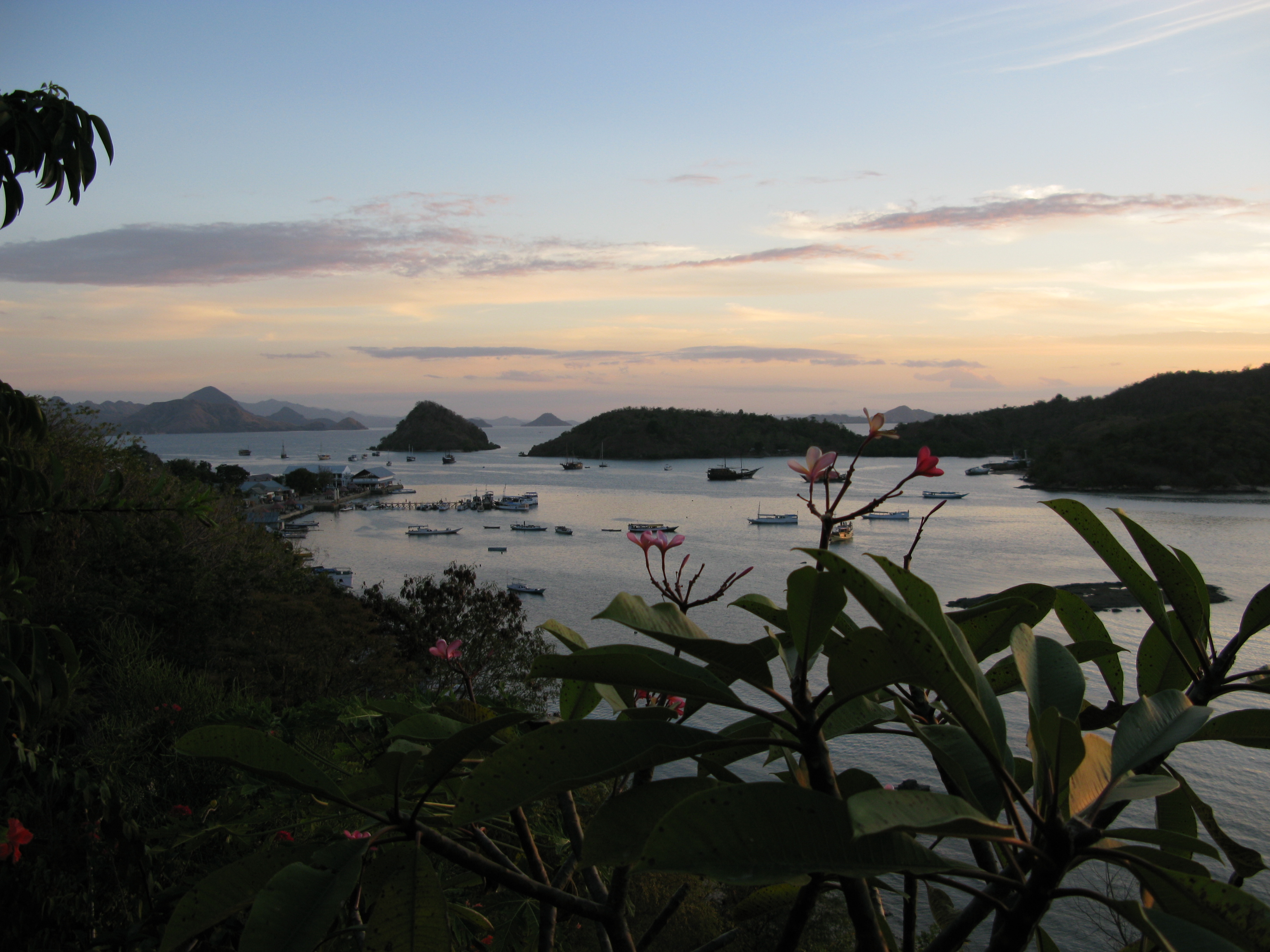
Start at the loudest stay on the island and get it out of the way, because AYANA has earned the noise. Opened in 2018 and still the only true five-star in Labuan Bajo, the resort sits on Waecicu Beach about twenty minutes by car from the airport, its architecture a deliberate riff on the Phinisi — the twin-masted Bugis trading ship whose silhouette has defined this coastline for four hundred years. The lobby's open-air pavilion uses sweeping timber curves and rope detailing that read, on first arrival, as Aman-adjacent restraint; on second look you see the references — the curved decks, the layered timber that mimics a yacht's stern, the way the whole structure leans toward the water. WATG designed it. They did not over-design it, which on this coast is the harder choice.
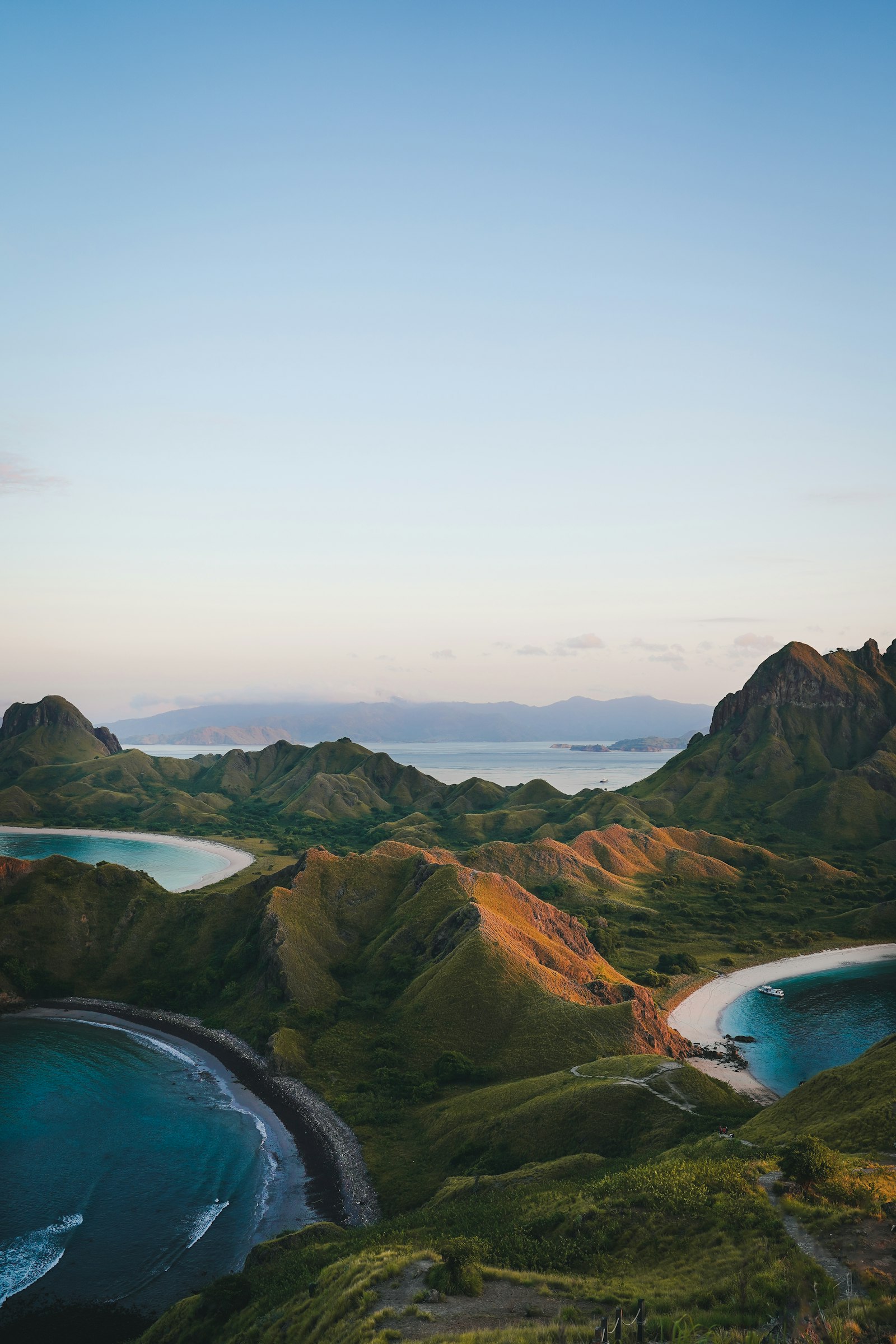
What AYANA understands that some of its competitors don't is that the view does the work. Rooms face directly onto the Komodo islands — Tatawa, Sebayur, the pale humps of Padar in the distance — and the resort runs its own Phinisi day-charter, the Lako di'a, on which you'll watch sunrise from a teak deck rather than a crowded fast boat. That alone justifies the room rate (currently around USD 400–550 in shoulder season, climbing past 700 in July–August).
The food is better than five-star Indonesian resort food usually is — Honzen, the Japanese restaurant, runs a proper omakase, and Naga, the all-day venue, treats Manggarai cuisine with actual respect rather than as a buffet curiosity. Two nights here, used as a base for one full day in Komodo National Park and one half-day in town, is enough. Stay longer and the resort starts to feel like the destination, which is exactly the trap Flores asks you to avoid.
Seraya Island: Sudamala Resort, Seraya
Source: Unsplash · License: Unsplash License
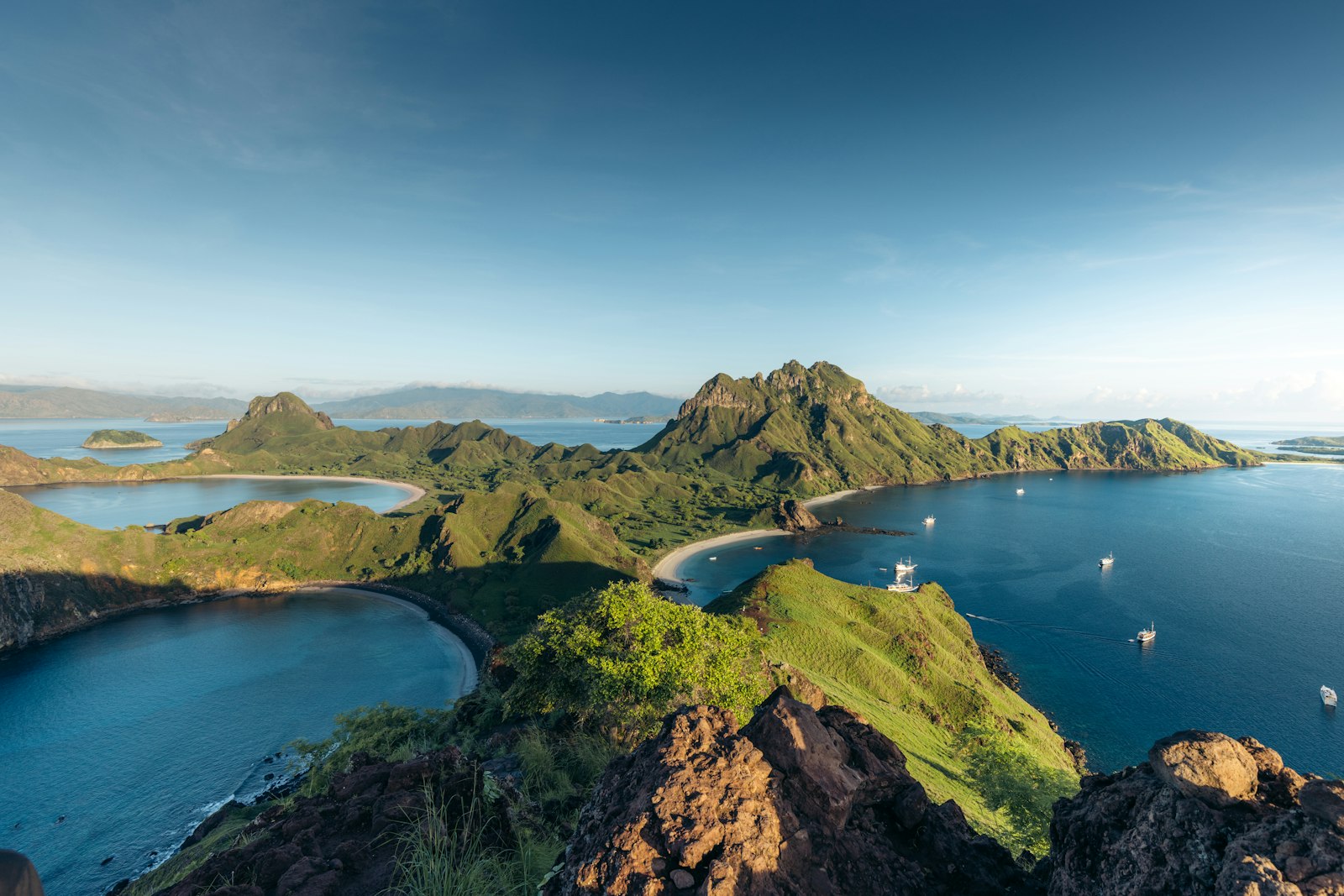
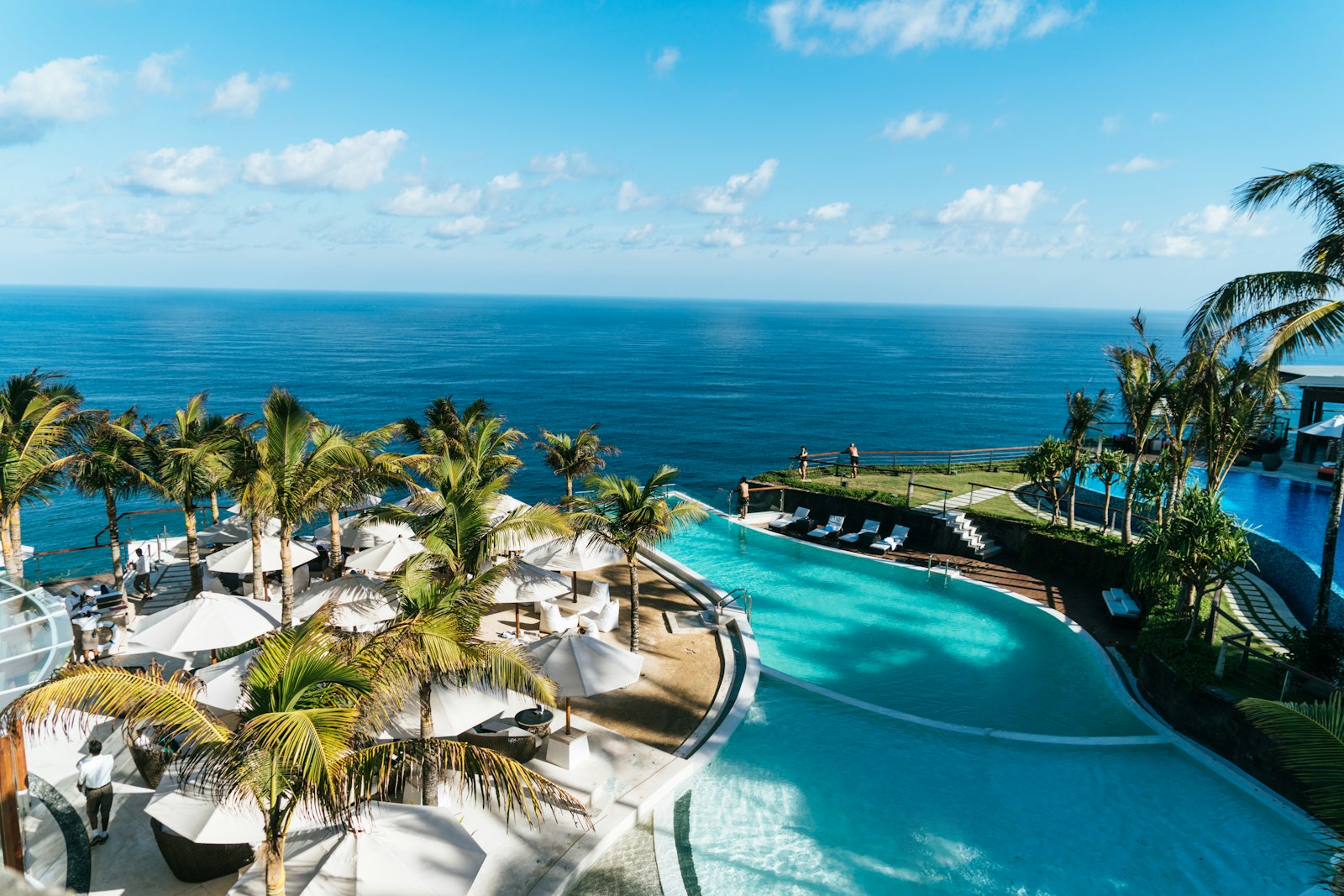
If AYANA is the flagship, Sudamala Seraya is the answer for travellers who want the Komodo coastline without the white-marble lobby. The resort sits on Seraya Kecil, a small island twenty minutes by speedboat from Labuan Bajo harbour, with twenty whitewashed bungalows under alang-alang thatch and a private white-sand beach that doesn't require a press release. The aesthetic is barefoot rather than baronial: bougainvillea spilling over coral walls, terraces of warm Sumba teak, a single seafront pool that doesn't try to compete with the sea.
Sudamala is a Balinese group that has built quietly across the Indonesian east — properties in Senggigi, Sanur, and a sister Komodo resort on the Labuan Bajo mainland — and they understand that the play here is not maximalism. The Panorama Villa, on the island's small hilltop, opens onto 270 degrees of Flores Sea; in the right light at the right hour you can see all the way to Rinca. The PADI dive centre is the real reason serious snorkellers and divers choose Seraya over Waecicu — you wake up already in the park, and the morning boats leave from your beach rather than from a crowded jetty.
Pair Sudamala with a Phinisi liveaboard for a night or two if you have the time; the resort can arrange charters, and sleeping at anchor between Padar and Pink Beach is the version of Komodo that doesn't appear in any TikTok edit.
Ruteng to Bajawa: Manulalu Bajawa
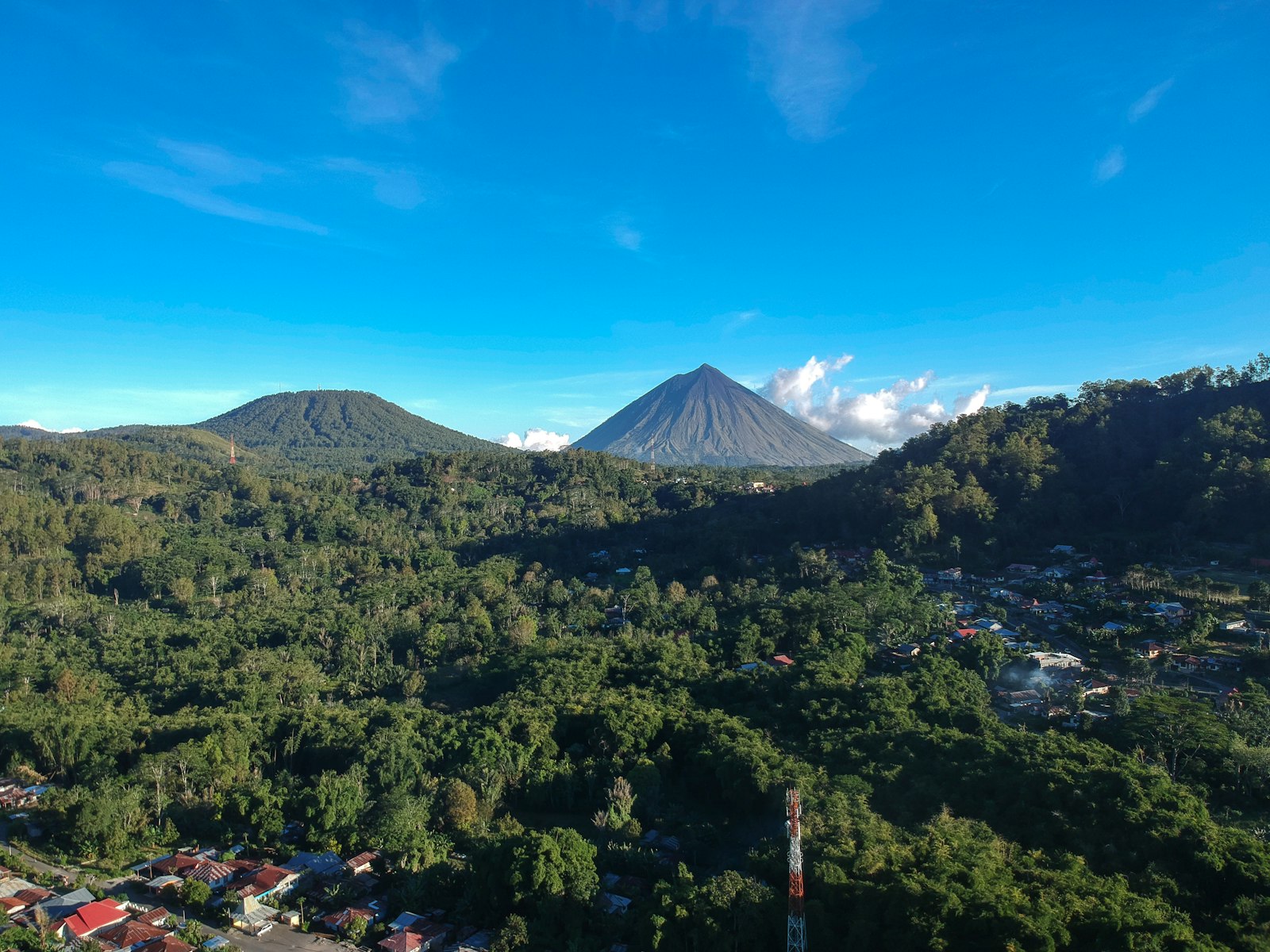
Source: Unsplash · License: Unsplash License · Credit: Reza Irawan
This is where Flores starts to become Flores. Drive east from Labuan Bajo and the landscape changes faster than the road signs can keep up — the dry savannas of West Manggarai give way to wet rice terraces near Ruteng (the famous spider-web lingko fields at Cancar are worth a stop and a polite donation), and then the road climbs into coffee country. Bajawa sits at 1,100 metres on a high plateau ringed by volcanic cones, and the air at dusk smells like wet earth and woodsmoke and arabica drying on tarps.
Manulalu Bajawa is the stay. It's a small family-run property on a ridge twenty minutes south of town, with seven jungle bungalows whose conical thatched roofs reference the ngadhu and bhaga — the ancestor totems that stand in the centre of every Ngada village square. The bungalows are simple: double bed, hot water, a wooden terrace, no television. What you pay for is the view. Inerie, the perfect 2,245-metre cone that rises behind Bena village, fills the horizon at sunrise like a setpiece someone hung there for your benefit; in the right hour the cloud collar sits halfway up its slope and the cone floats above it.
The bungalows are simple. What you pay for is the view.
The owners run the Heaven's Door restaurant a short walk down the hill, where the menu leans into Bajawa coffee — Ngada arabica, grown on the volcanic slopes you're staring at, served strong and unsweetened — and dinner is whatever the kitchen made that day, usually a Floresian-Indonesian hybrid that involves a lot of moringa and grilled fish. Use Manulalu as a base for two nights: one full day for Bena and Luba (the two most accessible Ngada villages, where you should pay the requested entry fee without quibbling and remove your sunglasses before entering the central plaza), and a half-day for the Mangeruda hot springs at Soa.
A note on Bena. It is a working village, not a museum. The megalithic stones in the centre are ancestral. The conical bhaga huts house spirits. Photograph what you're invited to photograph, and if you're not sure, ask. The diaspora's reflex of treating sacred spaces as photo sets is not a posture I'm prepared to indulge, and the Ngada people have been polite about it for too long.
Ende: Grand Wisata Hotel, with a side of history
Ende does not have a boutique hotel, and pretending otherwise would be dishonest. The town is a working port — fishing fleet, ferry terminal, an airport that's mostly used for cargo and the occasional Wings Air flight — and its accommodation runs from the functional (Grand Wisata, Hotel Dwi Putra) to the cheerful but basic. Stay one night, two if you're a coffee person, and use the time to walk the seafront and visit the Bung Karno Exile House.
This matters more than the room. Sukarno — Bung Karno, "Brother Karno" — was exiled to Ende by the Dutch from 1934 to 1938 for his agitations against colonial rule. He spent those four years here painting, writing plays for a local theatre group he named Kelimutu, and, according to the founding mythology of the Republic, sitting under a sukun (breadfruit) tree by the seafront where the five principles of Pancasila — the philosophical foundation of independent Indonesia — came to him. The tree is still there. The house is now a small museum: his easel, his books, the spare iron bed, photographs of the family that hosted him. There is no slick interpretation, no audio guide, no gift shop. There is a caretaker who will sometimes tell you stories if you ask in Bahasa and have ten minutes.
Order kopi ende afterwards from a warung on Jalan Sukarno — ginger-roasted with the coffee beans, brewed strong, served with a tin of condensed milk you pour yourself. The town earns more time than its hotels suggest.
Moni: Kelimutu Crater Lakes Ecolodge
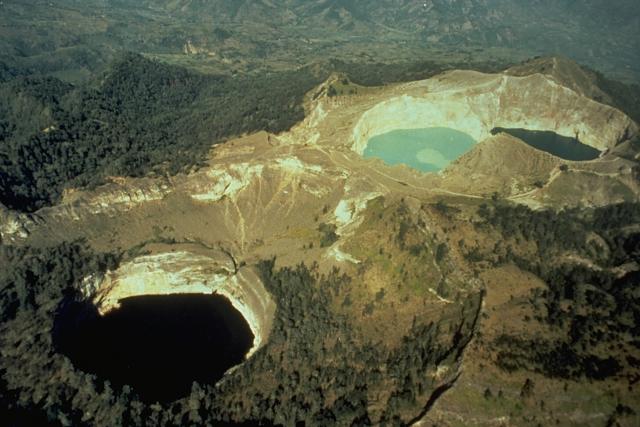
Source: Wikimedia Commons · License: Public Domain · Credit: Tom Casadevall (USGS)
Moni is a one-street village at the foot of Kelimutu, and you are here for one thing: the 4:30 a.m. drive to the summit to watch sunrise crack across the three tri-coloured crater lakes — Tiwu Ata Bupu (the Lake of Old People), Tiwu Nuwa Muri Koo Fai (the Lake of Young Men and Maidens), and Tiwu Ata Polo (the Bewitched Lake). The lakes change colour as their mineral chemistry shifts; on the morning I last stood there in 2024, one was the milk-jade of the Bosphorus and the other was the colour of bottled Coca-Cola. The science is volcanic. The local Lio cosmology — that the lakes hold the souls of the dead, sorted by age and moral standing — is, I think, the more useful explanation.
The Kelimutu Crater Lakes Ecolodge is the place to stay. Twenty-one rooms across standalone bungalows and a small lodge, set in a valley of rice paddies and bordered by a river, fifteen minutes' walk from Moni village and a thirty-minute drive from the summit trailhead. The lodge is solar-powered, the food is honest (the moke — local palm wine — is offered cautiously and should be sipped with similar caution), and the staff will have you up at 4 a.m. with a thermos of coffee and a packed breakfast without complaint. The bungalows themselves are unfussy: cane chairs on a terrace, mosquito nets, the sound of water all night. It is the right register for what you're about to do at sunrise.
One night here is enough for most travellers. Two if you want to walk to the waterfalls (Murundao and Air Terjun Murundao, both within an hour) or sit with a Lio family in the village and learn about ikat weaving from someone who can show you the difference between a tourist piece and one made for a wedding.
Maumere: Sea World Club, or a Phinisi back west
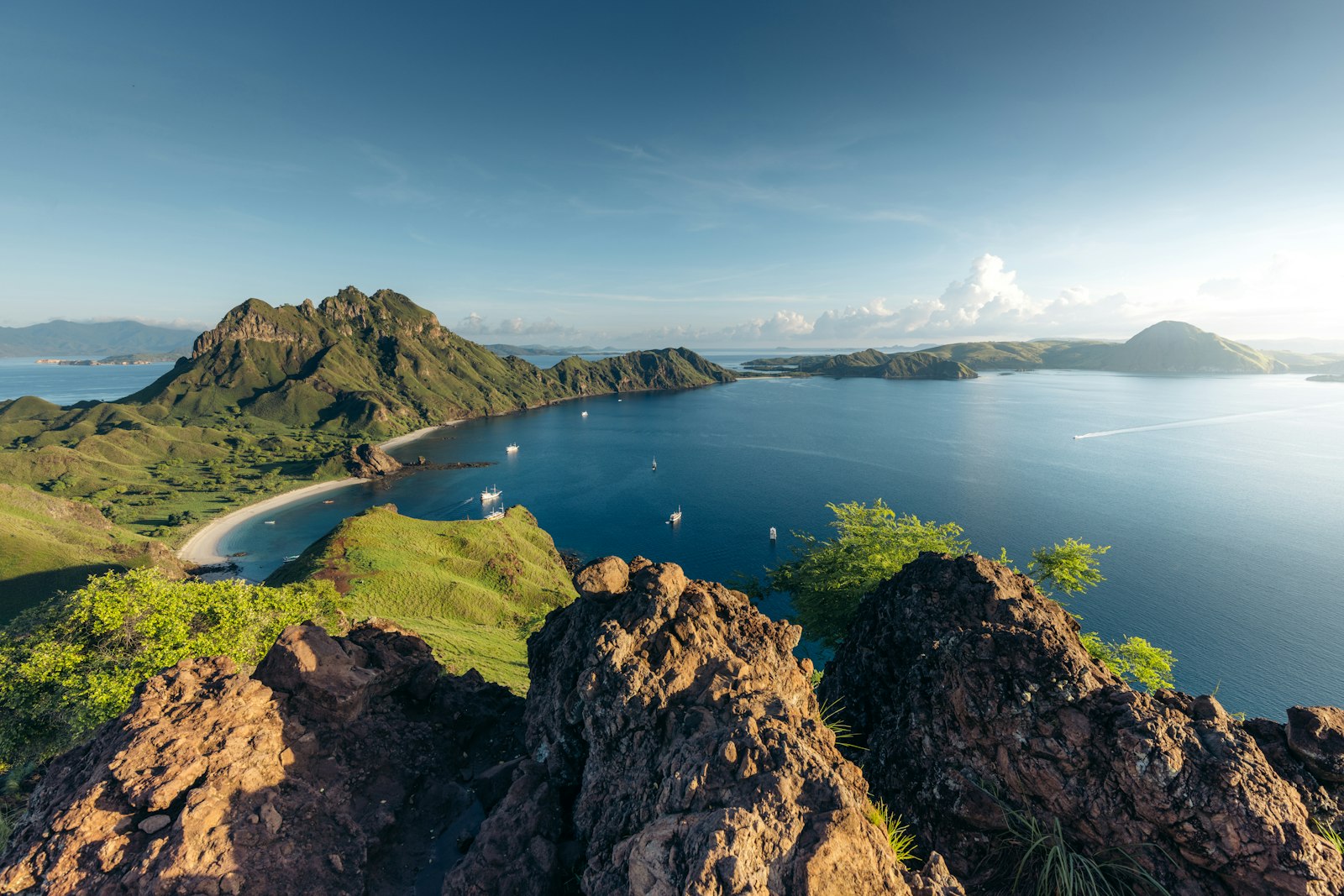
Source: Unsplash · License: Unsplash License
Maumere is the eastern punctuation mark, and it's where most overland travellers fly out. The town itself is recovering — slowly, decades on — from the 1992 earthquake and tsunami that flattened large parts of the coast, and its tourism infrastructure is modest. For one final night, the choices are: Sylvia Hotel in town (3-star, reliable, near the airport), or one of the small beach resorts twenty minutes east toward Waiara. Sea World Club, an old PADI dive operation with bungalows on the reef at Waiara, is the cleanest answer if you want to do one last morning dive on the coral that's coming back since the 1992 die-off.
If you have a few extra days and a flexible budget, the more interesting move is to skip the flight out of Maumere entirely and rejoin a Phinisi for the sail back west to Labuan Bajo — three or four nights at sea, anchoring at Tujuh Belas Pulau (Seventeen Islands National Park) off Riung, swimming with whale sharks if you're lucky in season, and arriving back at Komodo by water rather than by tarmac. Several Bali-based operators (SeaTrek, Plataran's Phinisi fleet) run this route on shoulder dates. It is the closing argument the highway can't quite make on its own.
The closer
The thing about Flores is that the road is the point. The stays are markers — a Phinisi-shaped lobby here, a thatched bungalow under a volcano there, a museum house with a breadfruit tree out front — but the piece of the island that stays with you is the bit between them. The boy with a sickle waving from a coffee terrace. The rosary murmured in a roadside chapel as the school bus passes. The way the cloud falls into the valley at 4 p.m. and the world goes quiet for forty minutes before the call to prayer drifts up from a mosque you can't see.
Choose the hotels. Then choose to stay one night longer in each place than you think you should.
Asian-American travel writer + photographer based in SF. Luxury and culture, design-forward destinations, slow travel.
✦ More from Sarah Chen

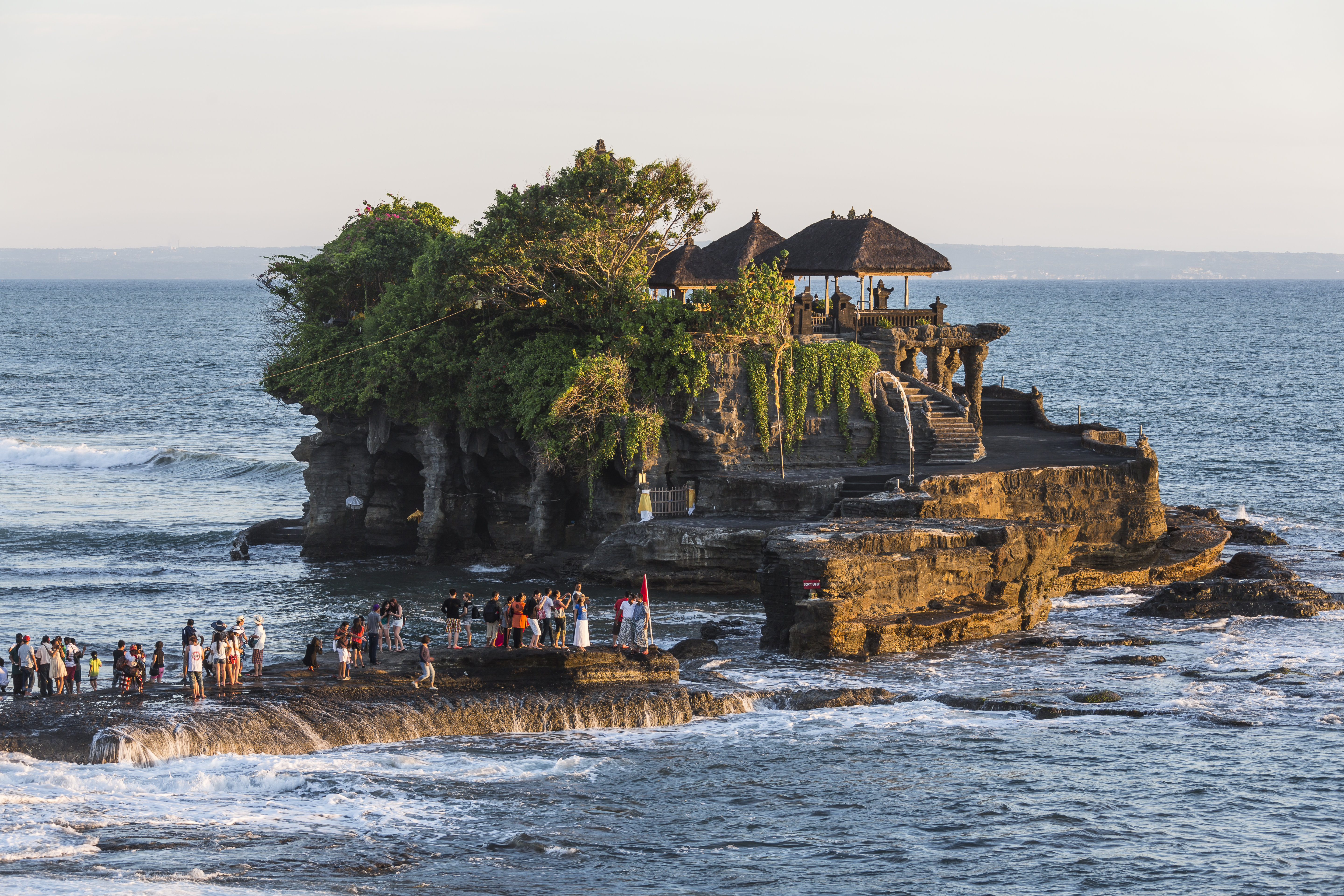
✦ Keep reading
More from this region


More in Indonesia
Where this happens
✦ Discussion
Start the discussion
No replies yet — yours could be the first.