
Where to Stay in Bangkok: A Neighborhood Map for First-Timers
The first thing to understand about Bangkok is that it isn't one city. It's seven or eight stitched loosely together by a river, two elevated train lines, and an unspoken agreement that traffic will never make sense. The advice you've already read — stay in Sukhumvit, avoid Khao San — isn't wrong exactly. It's just flatter than the city deserves. A weekend in the wrong neighborhood doesn't ruin a Bangkok trip; it just means you spent your evenings looking at a different version of the city than the one you came for. So the real question isn't which area is "best." It's which area matches what you came here to do.
I'll get to specific recommendations. But first, the geography — because once you understand how Bangkok arranges itself, the rest of the choices make themselves.
The geography brief: river west, BTS east, and the seam between
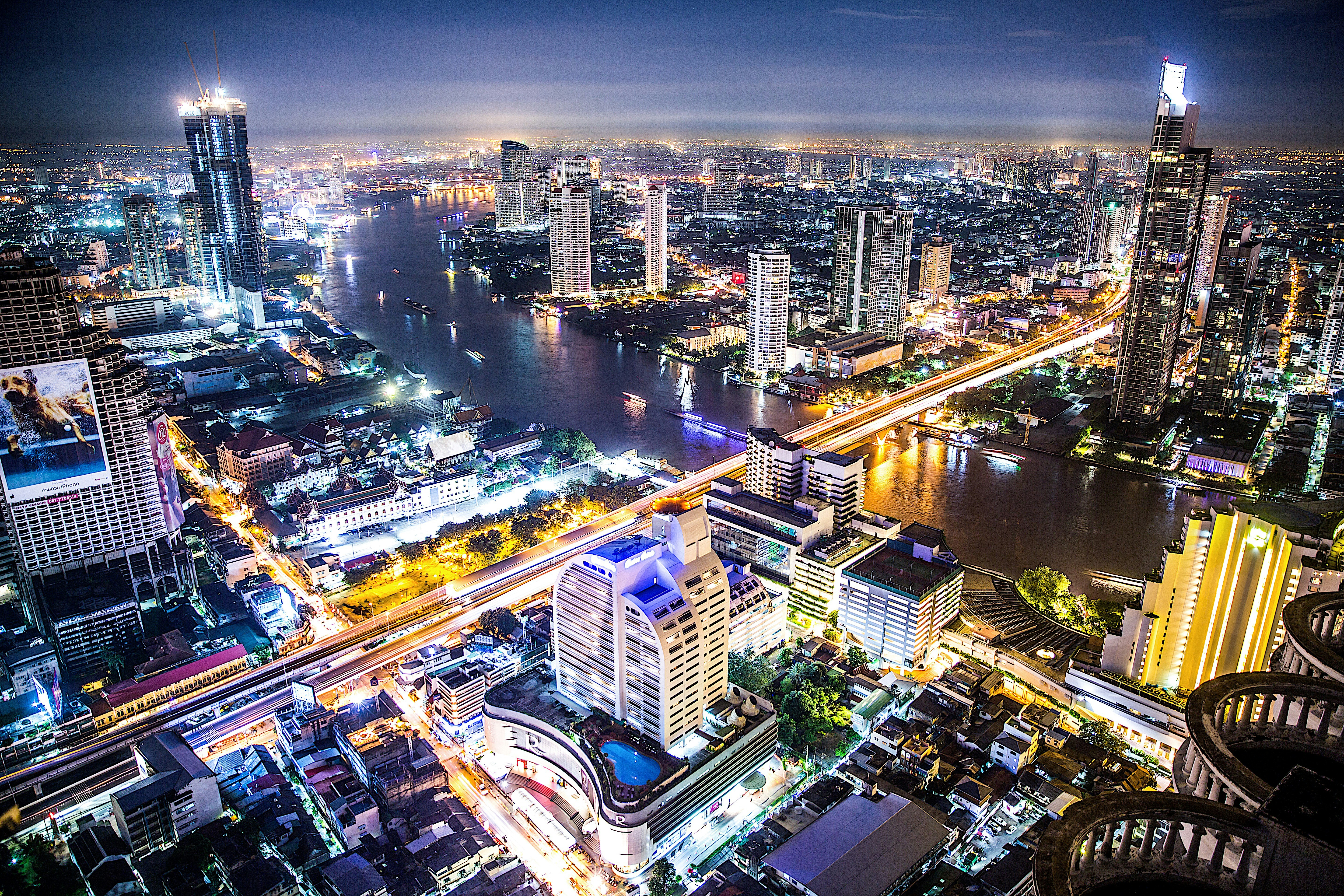
Bangkok divides cleanly along two axes. The first is the Chao Phraya River, which curls through the city in long, lazy meanders and separates the old royal city (Rattanakosin, Banglamphu, the temples your guidebook lists) from the modern east — the steel-and-glass corridor where the BTS Skytrain runs and where most international hotels stand.
The second axis is elevation. Bangkok's surface streets are a slow brown river of taxis and motorbikes. The fast city is twelve metres above it: the BTS (two lines, Sukhumvit and Silom) and the MRT (subway, plus the elevated Pink, Yellow and Purple monorails added through the 2020s). If your hotel is within a five-minute walk of a BTS or MRT station, Bangkok unfolds at thirty kilometres an hour. If it's a fifteen-minute walk in the heat, the same city moves at three. That distinction does more to shape a Bangkok visit than any other single choice.
Bangkok's surface streets are a slow brown river of taxis and motorbikes. The fast city is twelve metres above it.
The river itself is its own transit line — the Chao Phraya Express Boat and the cross-river ferries cost pocket change and deliver you to the old temples, the new creative district along Charoenkrung, and the five-star riverside in a way no taxi can. A useful rule: if you're staying east of the river, get yourself a BTS-walkable address. If you're staying on the river, you don't need the BTS — the boats are your spine.
Sukhumvit (Asok, Phrom Phong, Thonglor): the expat ribbon
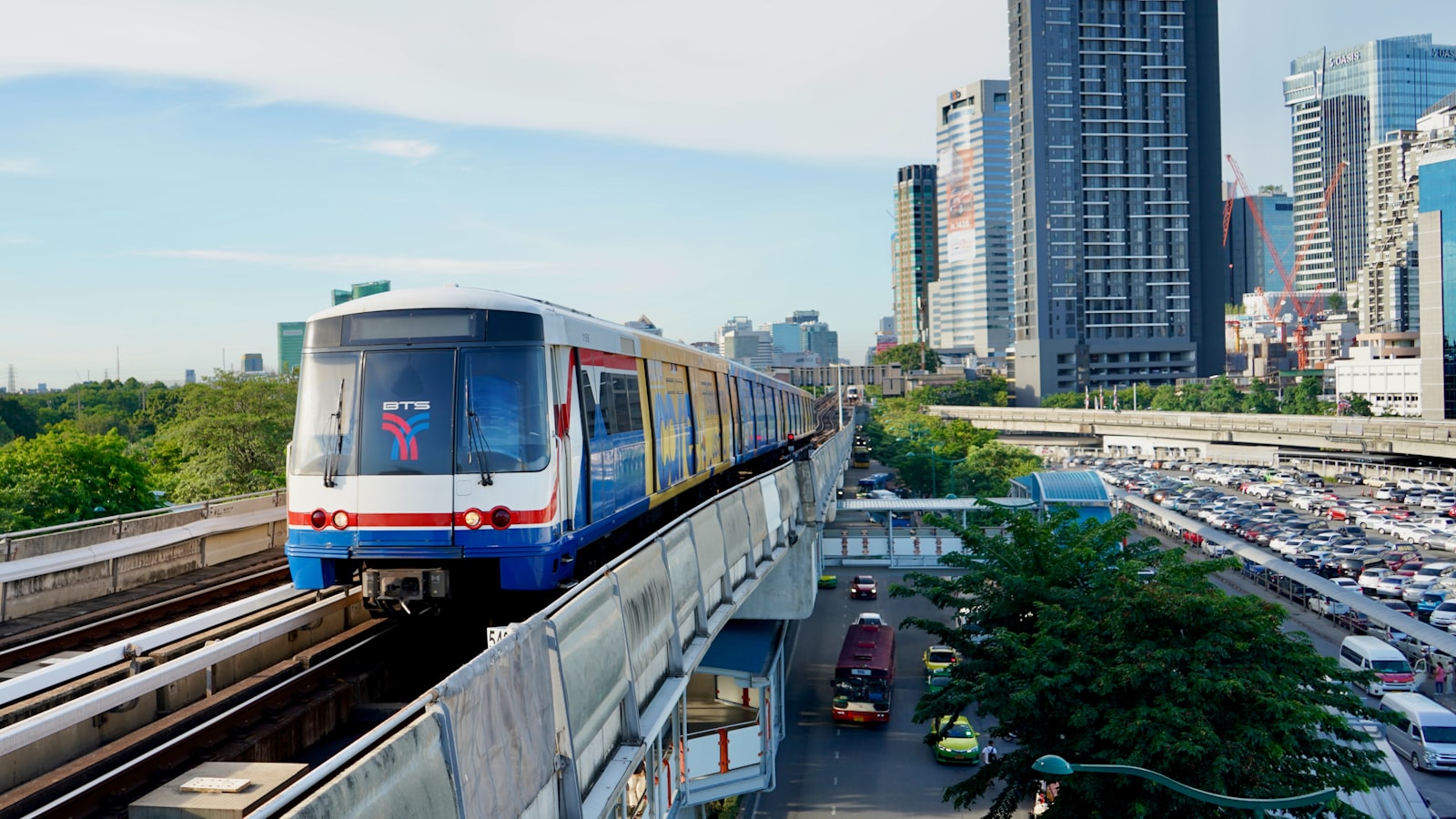
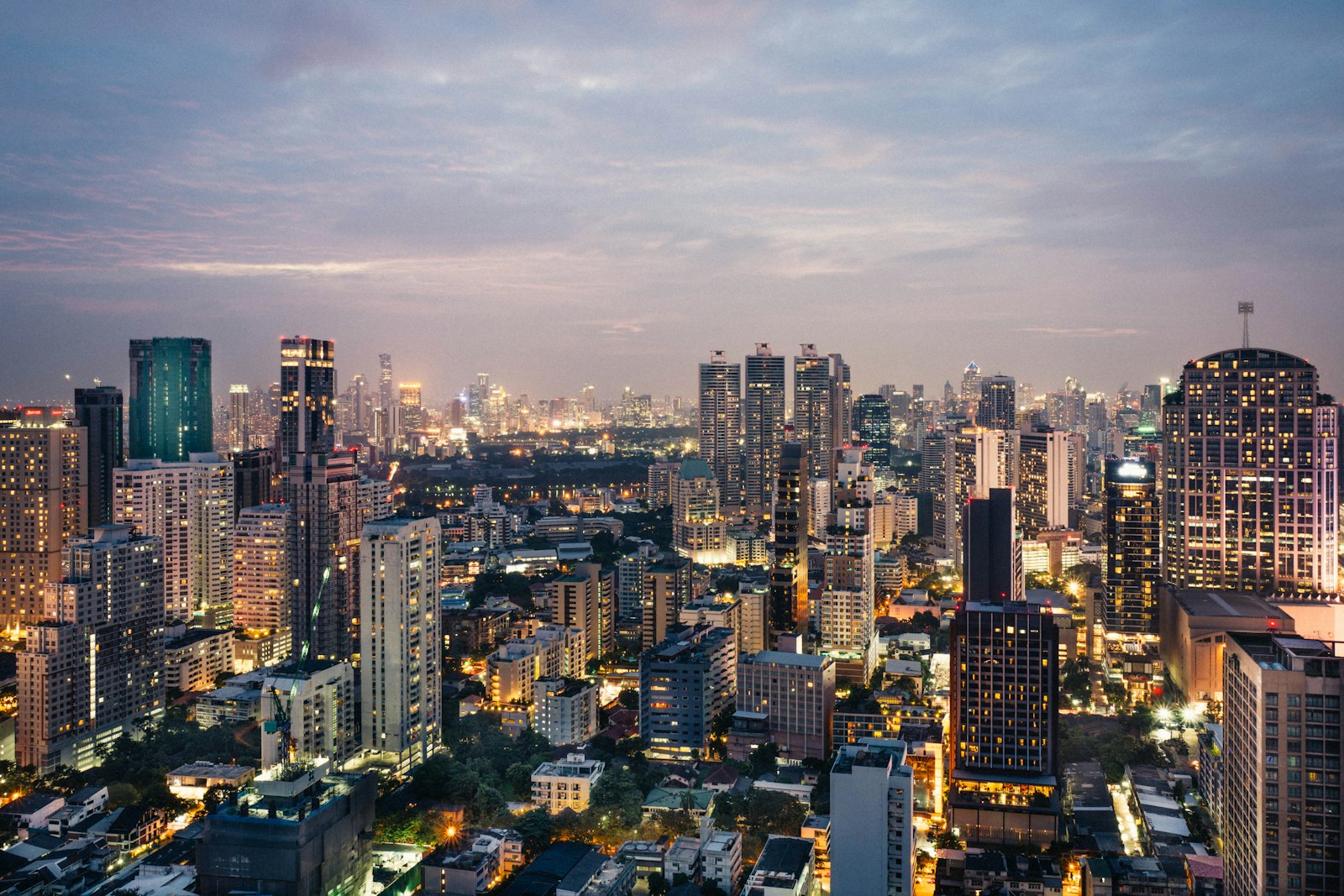
Sukhumvit Road is the longest street in Thailand. Foreigners mostly mean the stretch between Asok and Ekkamai — six BTS stations of mid-rise condos, mall complexes, Japanese izakayas, and the kind of fluorescent 7-Eleven density that becomes its own form of comfort by night three.
This is where most first-time visitors end up, and there's a reason: the BTS access is unmatched, the hotel inventory runs deep at every price point from boutique to absurd, and the food — both street and seated — is some of the best in the city. Asok is the workhorse: the interchange where the BTS Sukhumvit Line meets the MRT, putting Chatuchak market, the Old City, and Silom all twenty minutes away. Phrom Phong, one stop east, is leafier and more refined — the Japanese expat enclave, with EmSphere and Emporium malls bracketing the station. Thonglor, two stops further, is the nightlife and dining axis: Soi 55, where Bangkok's design-forward bars and the newest neo-Thai restaurants cluster.
For luxury, the Park Hyatt above Central Embassy and the Waldorf Astoria at Ratchaprasong are the obvious anchors, both within a short walk of Chit Lom BTS. For something more local-feeling, the smaller properties along Sukhumvit Soi 38 and Soi 49 — restored shophouse hotels, a few boutique towers — give you the same access without the conference-hotel echo.
Who Sukhumvit suits: anyone who wants to drop their bags, ride the BTS, and have dinner-with-a-view options stacked twenty deep. Who it doesn't: anyone hoping their hotel window opens onto something that looks like a postcard. Sukhumvit is a working modern city, and it shows.
Silom and Sathorn: the suits-and-sky-bar belt
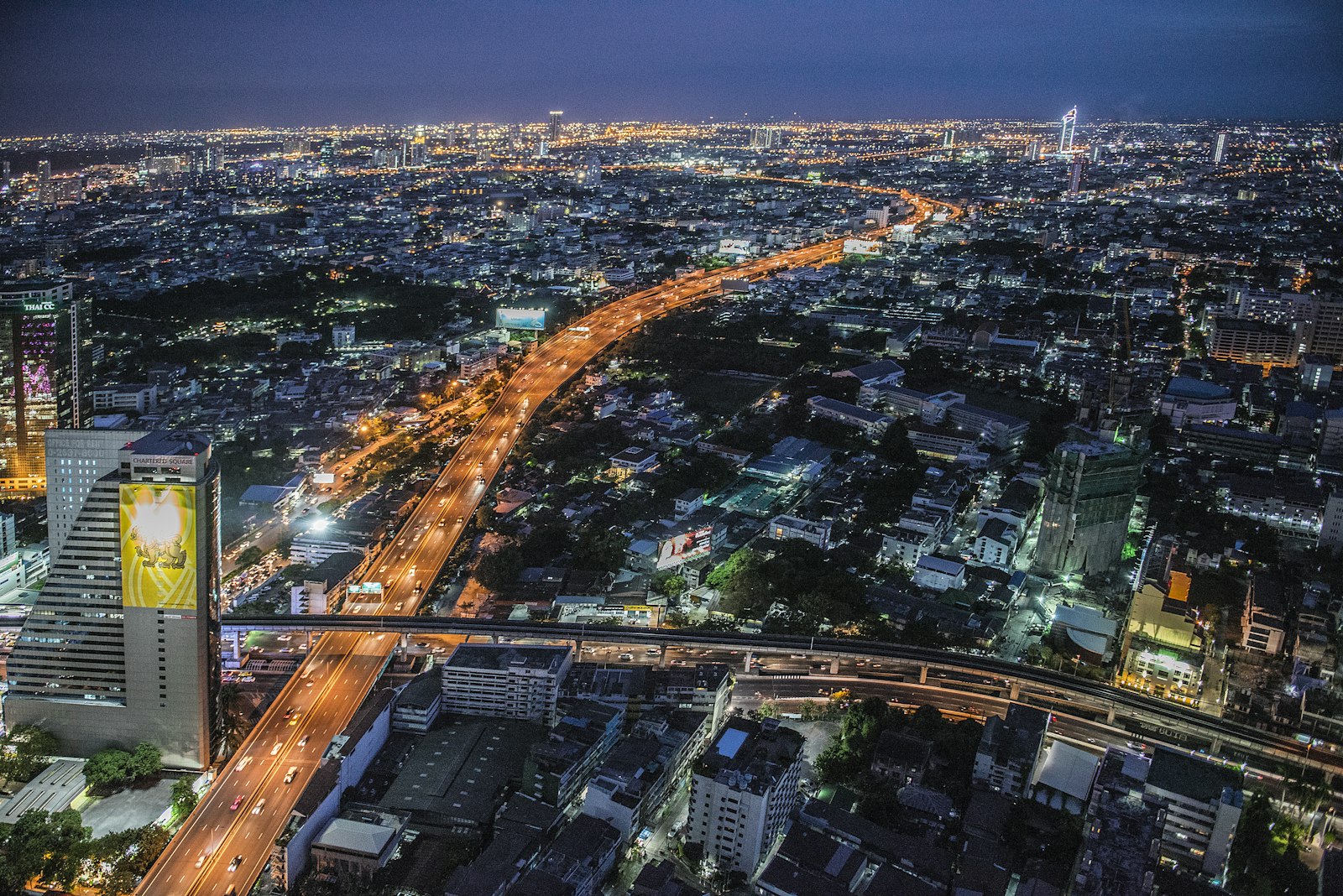
A ten-minute BTS ride south brings you to Silom, Bangkok's old financial district, and its quieter twin Sathorn, the embassy quarter just across the canal. By day this is a city of suits — Bangkok's banks and law firms and the old guard of foreign correspondents. By night, Silom transforms into one of the two most cinematic rooftop strips in Asia.
The icon is Sky Bar at Lebua State Tower, sixty-three floors up at the southwestern tip of Silom, with the gold-cap dome and the views that hosted The Hangover Part II's closing scenes. It's still operating in 2026 — open 5:00 pm to 12:30 am, walk-in only, one-drink minimum. It is also, unavoidably, a tourist machine; the view is the view, but the queue and the dress code are real. If you want the same drink-in-the-sky experience with less Instagram pressure, Vertigo at the Banyan Tree Sathorn one block south delivers a near-identical skyline at lower volume.
Silom and Sathorn also hold some of Bangkok's most considered luxury inventory: the Sukhothai Bangkok, with its lotus-pond courtyard and the kind of teak-and-stone restraint that ages well; the St. Regis above Ratchadamri; and the Banyan Tree itself. These are properties where the design is the destination, not just the address.
Silom is where Bangkok still wears a tie at lunch and unbuttons it at sunset, two floors below where the air is genuinely thinner.
Who Silom-Sathorn suits: business travelers, anyone whose Bangkok itinerary leans on the river and the southern end of the BTS, couples who want a serious hotel and don't mind that the surrounding streets empty out after 9 pm on weeknights. Patpong's go-go bars are also here — a one-block strip best understood as the city's most photographed cliché, easily avoided and easily found.
Riverside (Charoenkrung and Bang Rak): the city's most cinematic stretch
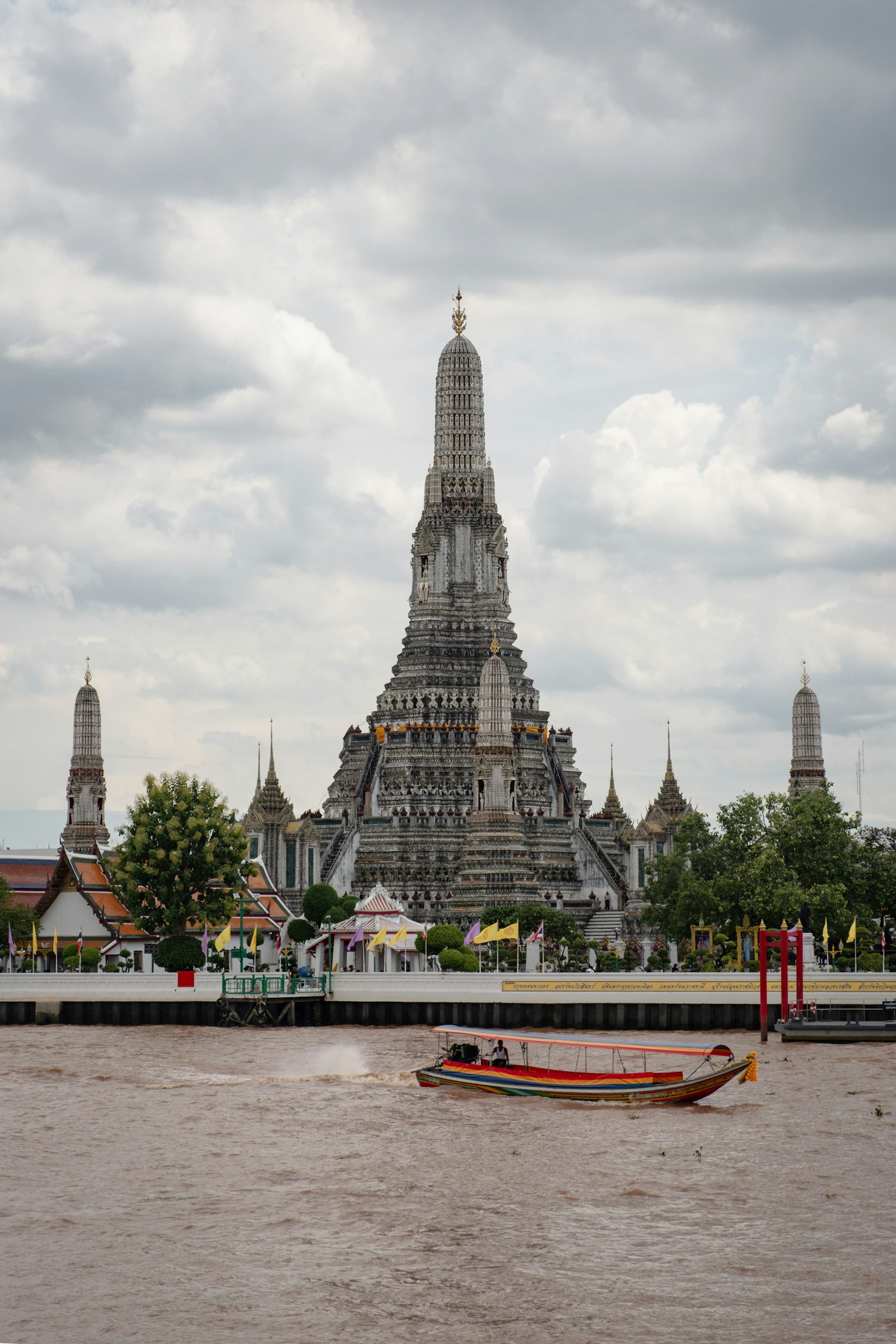
If I were sending a first-time visitor somewhere with the explicit instruction to be moved by Bangkok, I'd send them here. Charoenkrung is the oldest paved road in the city — laid in the 1860s under Rama IV, threading along the river through what was, and in many ways still is, the trading capital of mainland Southeast Asia. The old Chinese shophouses lean into the lanes. The Customs House, the old French embassy, the General Post Office (now home to the TCDC, Thailand's design council) — they're all here, on a stretch of road that has been declared, since 2017, the city's Creative District.
What that means in practice: galleries in former godowns, third-wave cafés cut into 1920s shopfronts, two of the country's most ambitious tasting menus (Le Du and Sorn are technically east of here, but Potong and Wana Yook are within this corridor), and the long parade of five-star riverside hotels lining the Chao Phraya. The Mandarin Oriental — which celebrates its 150th anniversary in 2026, with the Garden Wing renovation completing this year and chef Anne-Sophie Pic taking over Le Normandie — is the grand dame of Asian hotels and the one a serious traveler should at least walk through. Across the water, the Capella Bangkok and the Four Seasons at Chao Phraya offer the same river but a quieter setting. The Peninsula sits on its own private bank, with hotel boats ferrying you across to the BTS at Saphan Taksin.
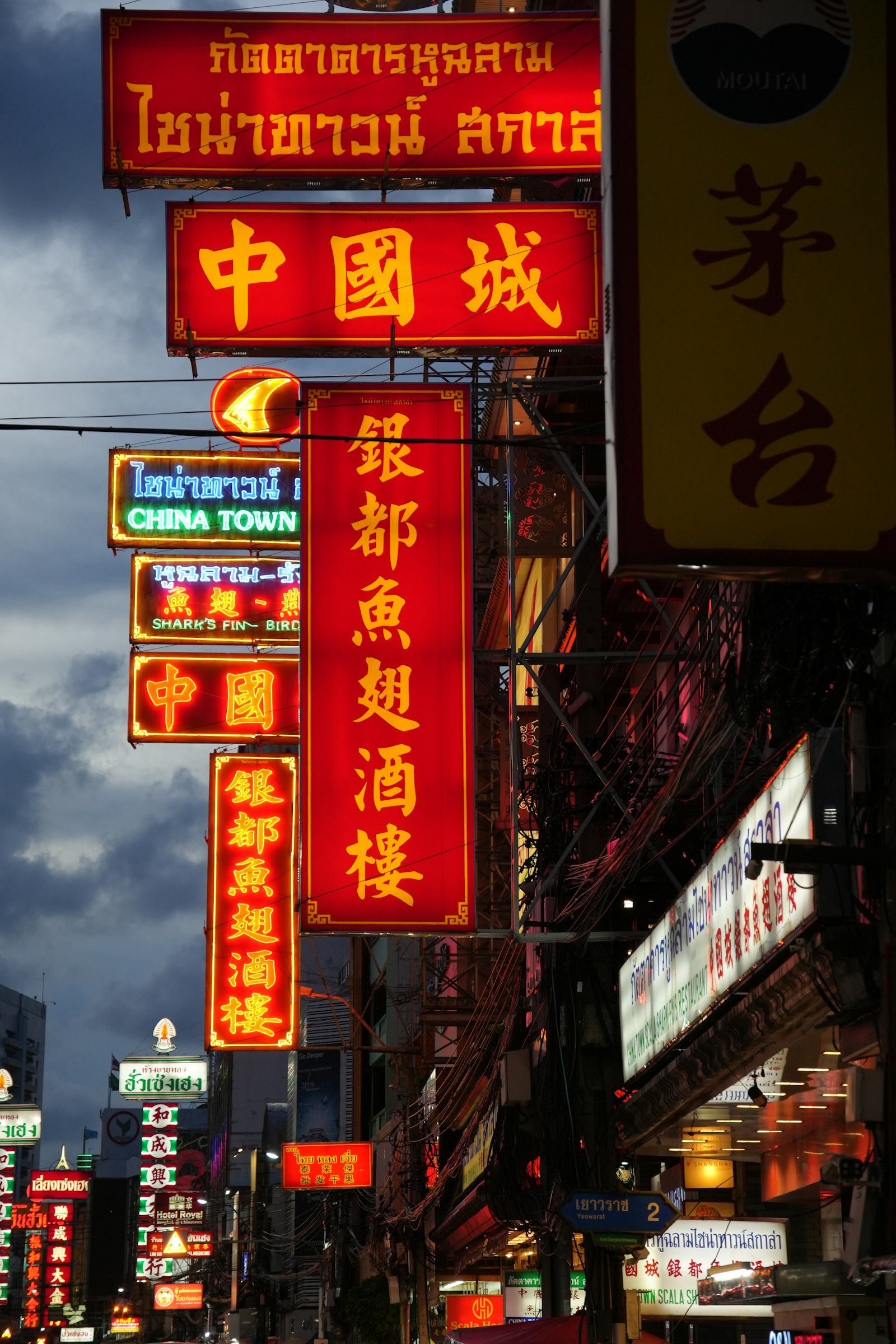
Charoenkrung is also where Yaowarat, Bangkok's Chinatown, runs into the river — five blocks of neon and goldsmiths and the country's most photographed street-food strip after dark. Sang in Teochew means new, and a hundred new dim sum places have opened in the last decade in shophouses where the same families have been pouring tea since the 1940s. The continuity is the point.
Who Riverside suits: photographers, anyone here for the architecture and food rather than the malls, second-time visitors who already did Sukhumvit and want something with more grain. The trade-off: you're a boat or a 12-minute walk-plus-BTS from anywhere east of the river, so plan your days around the water.
Old City (Rattanakosin): a temple at the end of every street
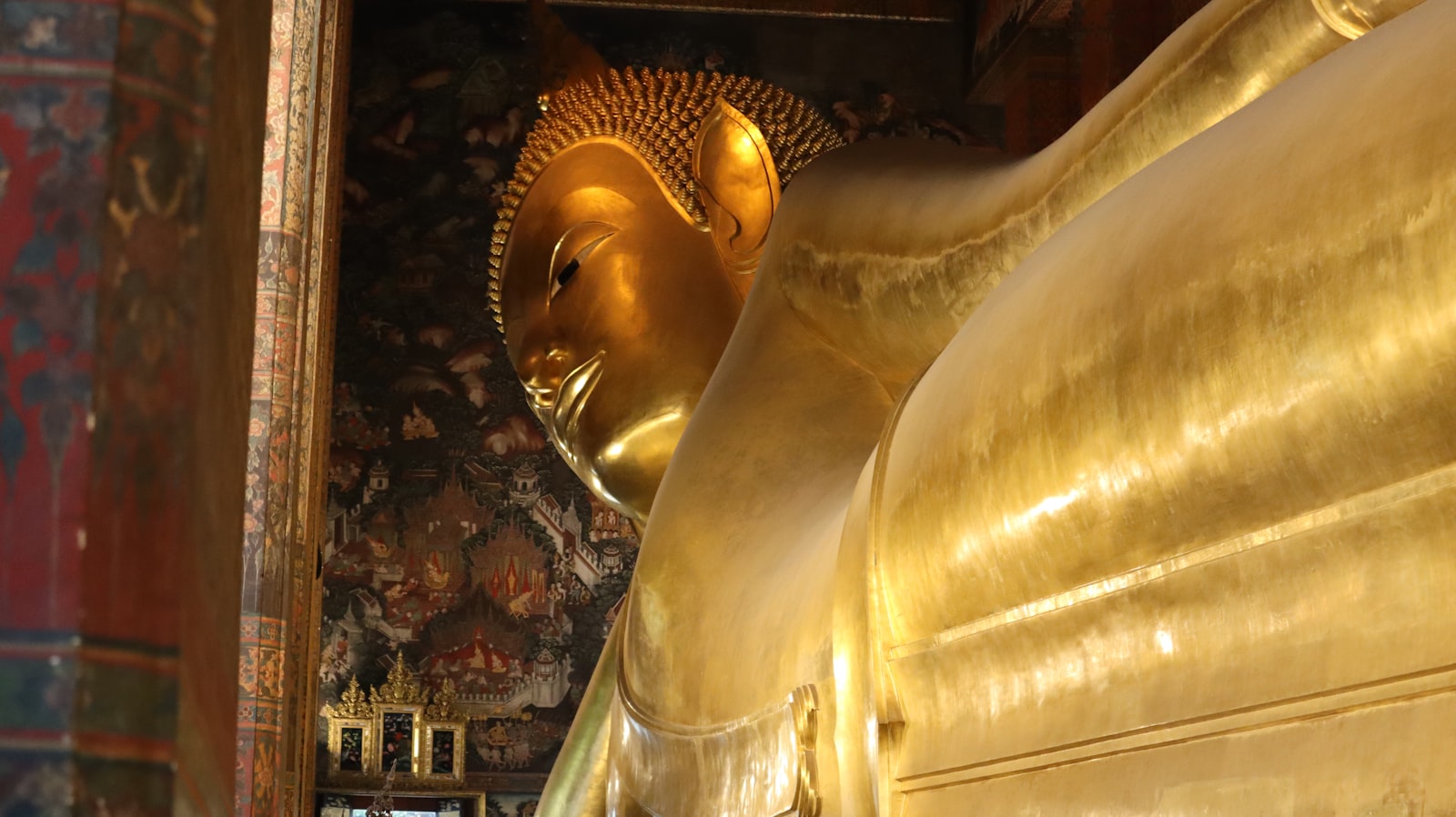
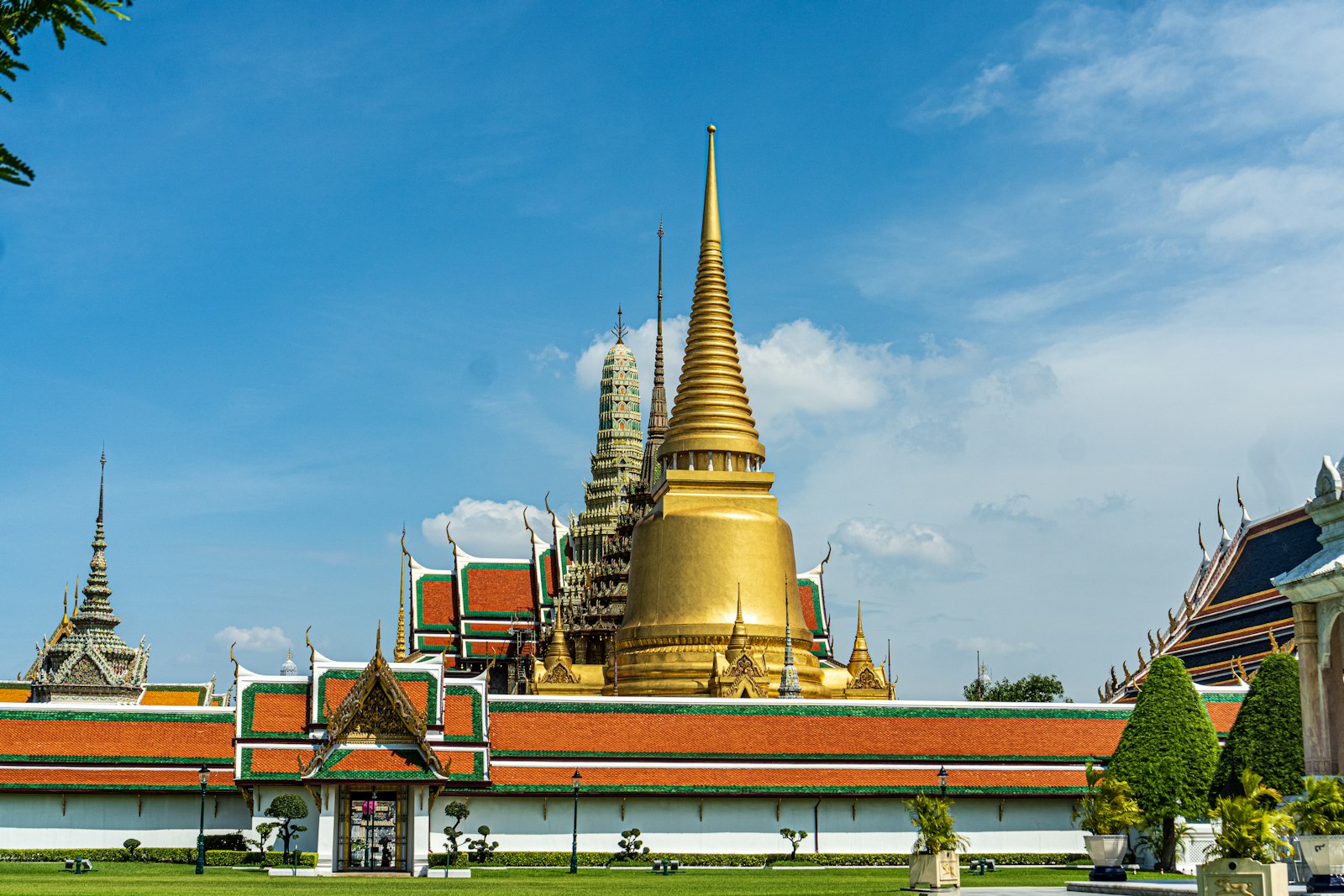
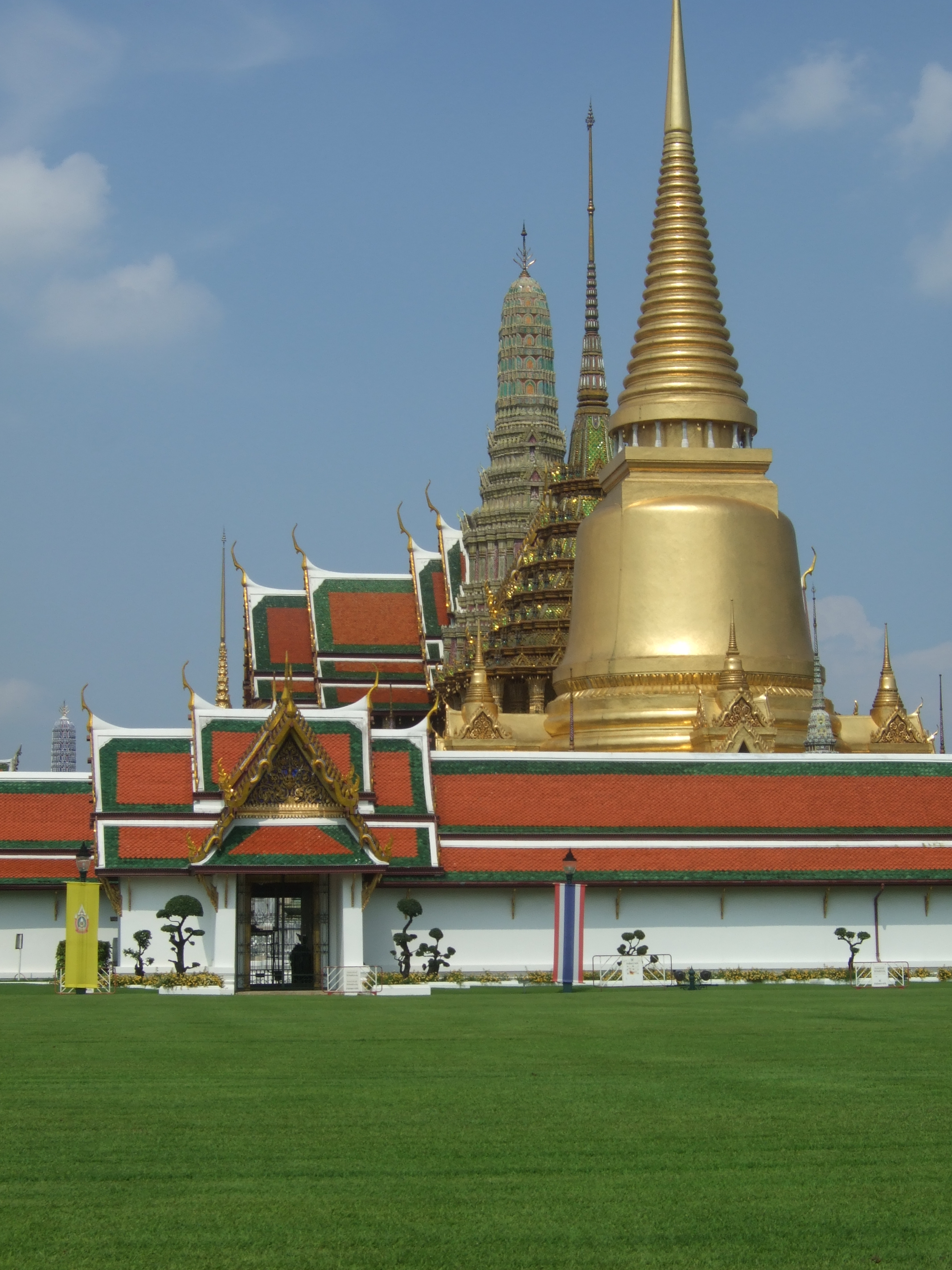
Rattanakosin is the original royal island — the city Rama I founded in 1782, cradled in a bend of the river and ringed by a small canal that you can still trace on the map. The Grand Palace, Wat Pho's reclining Buddha, Wat Phra Kaew, the National Museum: every photo you have ever seen of Bangkok was probably taken here.
The Old City is thin on luxury hotels in the international sense — no Mandarin Oriental, no Park Hyatt — because it's a UNESCO-adjacent zone where you can't build a tower. What it has instead is a small, exquisite inventory of restored shophouse and heritage stays: the Sala Rattanakosin, with rooftop views of Wat Arun across the water; the Riva Surya on the riverbank; Chakrabongse Villas, a former royal residence with five suites in a tropical garden. These are properties where the room count is small and the staff knows your name on day two.
Staying here means waking up at six to walk an empty alley to the temple before the tour buses arrive, then crossing the river on a ten-baht ferry for breakfast on the other side. It is, by some distance, the most beautiful place to stay in Bangkok if your interest in the city is historical or visual. It is also the most cut off from modern Bangkok — no BTS, the closest MRT (Sanam Chai) opened in 2019, and getting to Sukhumvit at 8 pm means a 40-baht boat or a 40-minute cab.
Who the Old City suits: first-time visitors who came specifically for the temples and want them at dawn; photographers; anyone who treats their hotel as a base camp rather than a launchpad. Skip it if you're here for nightlife, malls, or a long itinerary east of the river.
Khao San and Banglamphu: the famed street, less feral than it was
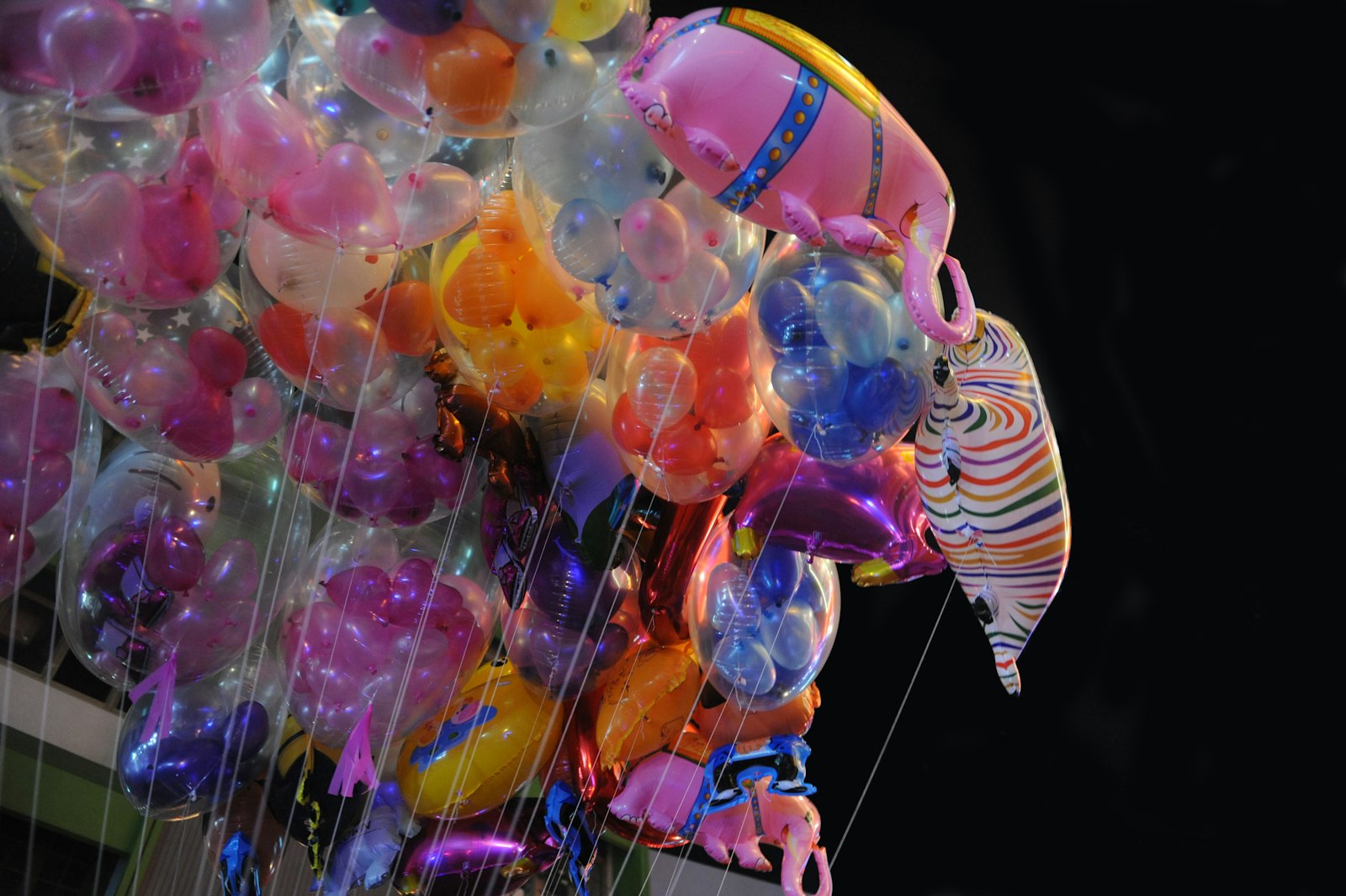
The mythology of Khao San Road — backpacker mecca, bucket-drinks-and-banana-pancake — has outlived the reality by about a decade. The 2024 walkability redesign widened the pavements, regularised the vendor stalls into licensed bays (operating 4 pm to midnight), and ran proper drainage and lighting through the four-hundred-metre strip. It's cleaner, less chaotic, and considerably less interesting than it was in 2005. The bucket drinks are still here. So are the henna stalls and the massage chairs on the curb. But the rawness that made it a generational way station has been zoned and licensed out of it.
What's grown up around Khao San is more interesting. Soi Rambuttri, one block north, is a curving lane of guesthouses and shaded outdoor restaurants that has the feel Khao San used to. The Phra Athit riverside, west of Rambuttri, is genuinely lovely — old shophouses, a Sunday food market, the kind of riverfront that locals still use. Hotel-wise, this is still mostly hostels and three-star guesthouses, but the Riva Surya and Sala Arun edge into the boutique tier, and a few new properties — the Phra Nakhon Norn-len in a restored 1940s home, the Casa Nithra — are quietly excellent.
Who Khao San-Banglamphu suits: travelers who want the Old City's temple access at a lower price point, anyone in their twenties who wants the social density, and writers who like working in a café where every conversation around them is in a different language. Who it doesn't: anyone above forty who values quiet, anyone who needs a BTS station, anyone visiting in March-April when the heat off the asphalt is genuinely difficult.
Ari and Phaya Thai: the local-cool sleeper pick
If you've been to Bangkok before and you're here for a long second visit — or if you're a quietly contrarian first-timer — consider Ari. Two BTS stops north of the Victory Monument, Ari is a leafy, low-rise neighborhood of Thai upper-middle-class families, design studios, third-wave coffee, and small chef-driven restaurants that don't bother with English menus. Nana Coffee Roasters on Soi Ari 4, run out of a refurbished bungalow with thirty-plus single-origin beans on rotation, is the kind of café that would feel at home in Melbourne or Brooklyn but reads here as specifically Thai — the iced kafae yen riff is theirs, not borrowed.
The hotel inventory is thin and that's part of the appeal. There's no five-star here. What there is: a handful of design-forward boutique stays — Mövenpick BDMS Wellness Resort on the Phaya Thai side, the Josh Hotel, and a growing number of well-run serviced apartments. Phaya Thai BTS is also where the Airport Rail Link terminates, which makes Ari one of the easiest neighborhoods to land in if you've just flown in.
Who Ari suits: second-time visitors, design and food obsessives, anyone who wants to feel like they live in Bangkok for a week rather than visit it. Worth saying: the moment you call something a local-cool sleeper pick in a national publication, it stops being a sleeper. Ari isn't undiscovered. It's just calmer than Thonglor, with better coffee.
Where to stay for: a quick matrix
If it's your first time in Bangkok and you have three nights: Sukhumvit, near Asok or Phrom Phong BTS. The access trumps the texture. Spend a day across the river anyway.
If you want luxury — properly: Riverside (Mandarin Oriental, Capella, Peninsula, Four Seasons) or Silom-Sathorn (Sukhothai, Banyan Tree, St. Regis). Both are right answers; the river is more romantic and the BTS belt is more convenient.
If you're here for nightlife: Sukhumvit, ideally Thonglor or Ekkamai. Silom for the rooftops. Avoid Khao San unless you're under 25 — even then, it's less interesting than the bars on Soi 11 in Sukhumvit.
If you're traveling with kids: Sukhumvit (mall access, Kidzania at Siam Paragon, parks at Benjasiri) or Riverside (boat access to Lumpini and the temples). We've covered this in depth in Thailand With Kids: Where to Stay.
For a 24-hour layover: Stay near Phaya Thai or Makkasan — directly on the Airport Rail Link. The Eastin Grand Phaya Thai is purpose-built for this. You'll lose less time in transit than you'll spend reading this article.
For a returning visitor's week: Ari, or split between Riverside and Thonglor.
The three transit lines that actually matter
You don't need to memorise Bangkok's full transit map. You need three:
BTS Sukhumvit Line — the green line running east-west through the city's modern spine, threading every neighborhood from On Nut through Asok and Siam to Mo Chit. If your hotel touches this line, you're set.
BTS Silom Line — the dark green line, also called the Silom Line, running from Bang Wa across to Saphan Taksin (the river pier) up through Silom and Sathorn to Siam interchange. This is your line for the south of the city and the Chao Phraya boat connection.
MRT Blue Line — the underground line that loops through the southeast, hits Sukhumvit at Asok (where it interchanges with the BTS), and continues through Chinatown and out to the Old City at Sanam Chai. This is how you reach Yaowarat or Rattanakosin from Sukhumvit without losing an hour in a cab.
Everything else — the Airport Rail Link, the Pink Line (now officially the Wiwat Nakhon Line, monorail to Min Buri), the Yellow Line to Samrong, the Purple Line to Nonthaburi — is supplemental. Useful if you have a specific reason. Ignorable if you don't.
For a broader Thailand-wide framework — Bangkok versus Chiang Mai versus the islands as base camps — our companion piece, Where to Stay in Thailand: A First-Timer's Map, is the longer view.
The honest answer
If someone asked me where to stay in Bangkok and gave me five seconds, I'd say: Phrom Phong, four nights, do the river on day three. If they gave me a minute, I'd say it depends on whether they came for the city Bangkok shows you or the one it almost hides. The Sukhumvit version is real. So is the river. So is the morning at Wat Pho when the saffron robes catch the first light and the tour groups are still on the bus.
The city is generous enough to be all of these things at once. Your only job is to pick the corner of it you want to wake up in.
Asian-American travel writer + photographer based in SF. Luxury and culture, design-forward destinations, slow travel.
✦ More from Sarah Chen

✦ Keep reading
More from this region


More in Destinations
Where this happens
✦ Discussion
Start the discussion
No replies yet — yours could be the first.