

The Monsoon Draws a Line Across the Map
There is a moment, sometime in late May, when the wind over Southeast Asia changes its mind. The air begins to arrive from the southwest, off the Indian Ocean, heavy and warm and carrying half an ocean's worth of water. Meteorologists call it the southwest monsoon. From a photographer's chair it announces itself first as a change in the light: the high, clean blue of the dry months goes soft and grey, the horizon thickens, and by afternoon the clouds stack into anvils that turn the whole sky the colour of wet slate.
But the monsoon does not fall evenly. It draws a diagonal line across the region, and on one side of that line the rivers swell and the streets flood, while on the other the land is having its driest, clearest weeks of the year. June and July are the season when Southeast Asia is most divided against itself, and knowing which side of the line you want to stand on is the whole game.
So let me give you the honest map. Not the brochure version, where everywhere is sunny and the rice is always golden, but the real one, with its wet half and its dry half and the strange microclimates that refuse to obey either.
Who Is Wet: Thailand, the Andaman, the West Coast
Most of mainland Southeast Asia spends June and July under the monsoon's thumb. Thailand, Cambodia, Laos, much of Myanmar, and the west coast of Peninsular Malaysia all sit in the path of that moisture-laden wind, and they take the brunt of it. This does not mean a grey curtain of rain from dawn to dusk; the classic pattern is a bright, humid morning that builds toward a violent afternoon downpour, then clears to a washed, dripping evening. The rain is dramatic rather than constant.
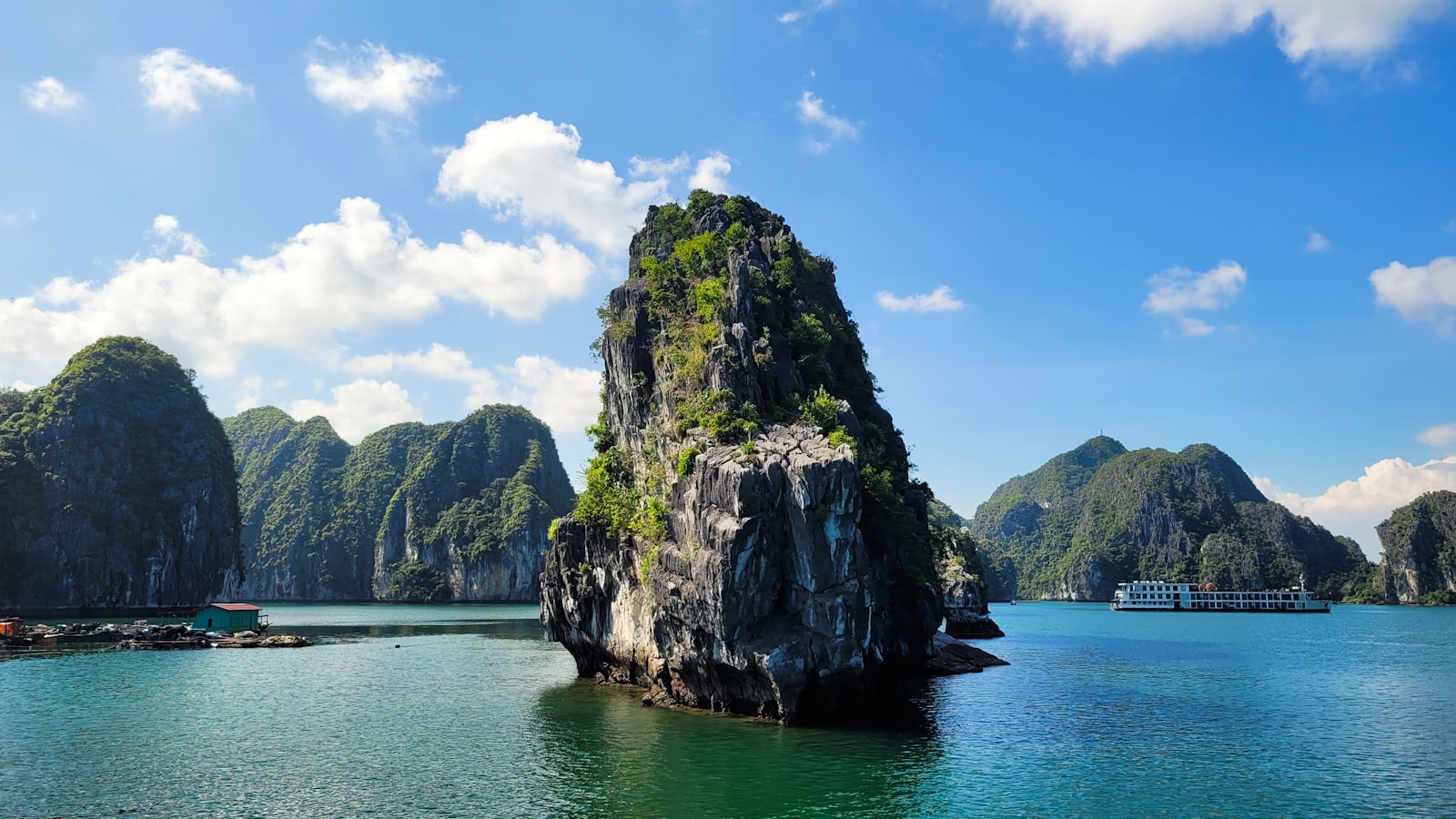
The hardest-hit corner is the Andaman coast. Phuket, Ko Lanta, Krabi and the islands that face open water to the west catch the wind head-on, and from June into October the sea there turns rough and turbid, a flat pewter under flat cloud. The famous limestone karst still rises out of the water, but the light that makes it sing is intermittent at best. If your heart is set on the Andaman, this is not the season for it.
For a photographer the wet half is not worthless. Monsoon light is low-contrast and forgiving, the rice paddies of Isan and northern Laos are an electric, saturated green, and the mist that hangs in the limestone valleys after rain is the kind of thing you cannot manufacture. But you are working around the weather, not with it, and you should pack for patience.
Who Is Dry: The Southern and Eastern Arc
Now cross the line. The same southwest wind that drowns the mainland has, by the time it reaches the islands south of the equator, already wrung itself out. For Indonesia and the long scatter of islands east of Bali, June and July are not the rainy season at all. They are the heart of the dry season, which runs there from roughly April to October. The seasons, in other words, are inverted: when Bangkok is wettest, Bali is at its driest.
A second dry pocket sits along the central coast of Vietnam, sheltered by the spine of the Annamite mountains, which take the eastern monsoon's rain on their far flank and leave Da Nang, Hoi An and Quy Nhon in clear, hot sunshine through July. And there are smaller exceptions still, islands and headlands that quietly opt out of the regional pattern.
If you are reading this trying to answer a single question, which country is the best to visit in June and July, the short version is the southern and eastern arc: Indonesia first, the central Vietnamese coast second. The long version, and the reasons a photographer cares, are below.
Bali and the Islands East of It
Ask which Asian country has the best weather in July and the honest answer, weighed by reliability rather than romance, is Indonesia. While the mainland sweats under its afternoon storms, Bali in July sits at around twenty-six degrees, with rainfall measured in a handful of centimetres for the entire month and a long run of days that simply do not rain. The humidity drops, a dry breeze moves through, and the air acquires a transparency you do not get in the wet months.
That transparency is the whole reason to come. The dry-season light over Bali's interior is hard and precise in the morning, raking low across the terraced hillsides at Jatiluwih and Tegallalang so that every bund and every step of the paddy throws its own shadow. The young rice is a green so bright it reads almost yellow at the edges; the older fields are a deeper jade. By late afternoon the light warms and softens, and the volcanoes that the morning haze had hidden, Agung and Batur, finally show themselves against a clean sky.
This is peak season, and you will not have these places to yourself. Go early. I mean genuinely early, on the path before six, when the terraces belong to the farmers who actually work them and the light is doing its best work anyway. By nine the tour buses arrive and the magic, such as it is, has already happened. The reward for the dry-season traveller is not solitude. It is certainty: you can plan a sunrise three days out and reasonably expect the sky to keep its appointment.
The Komodo Window
Keep going east, out past Lombok and the Gili islands, across the strait to Flores and the islands of Nusa Tenggara, and the dry season only intensifies. July is one of the driest months of the entire year across this archipelago, with an average of something like five wet days in the whole month. The hills turn the colour of a lion's coat, a tawny gold that the brochures, forever chasing emerald, never show you, and it is honestly more beautiful than the green.
This is the window for Komodo National Park, and it is a window defined as much by the sea as the sky. The dry months bring calm water, which matters enormously when your best vantage points are reached by boat. The climb up Padar Island at first light, when the three crescent bays below shift from black to grey to a pale luminous blue as the sun clears the ridgeline, is one of the few genuinely earned views left in this part of the world, and it is only reliably possible when the sea lets you land.
A word of respect, since the park is a living habitat and not a backdrop: the dragons are wild animals on their own ground, the rangers' instructions are not suggestions, and the calm dry-season sea makes it easy to forget that this is a national park first and a photograph second. Shoot accordingly.
Vietnam's Other Coast
If island-hopping is not your trip, the second-best bet in June and July runs along the central coast of Vietnam. The geography here is a quiet trick: the Annamite range intercepts the weather, and while Hanoi to the north and the Mekong Delta to the south are deep in their own humid, showery summer, the strip from Hue down through Da Nang to Quy Nhon enjoys its prime dry stretch. July brings the lowest rainfall of the year, long blue skies, and temperatures that run hot, into the low thirties, tempered by a steady sea breeze off the East Sea.
June is a near-miss worth naming precisely. Da Nang and Hoi An are already reliably dry by then, but Nha Trang, a little further south, can still catch unsettled, rough-sea weather early in the month before it clears. If you want the surest footing, July is the cleaner pick.
For the camera, Hoi An is the prize. The old merchant town is at its best in the dry months, when you can work the lanes at first light without rain on the lens, the lime-washed and ochre walls hold the early sun, and the Thu Bon river lies still enough to mirror the lanterns after dark. Cycle out into the paddies at the edge of town in the last hour of light and you will understand why central Vietnam is the mainland's best-kept secret in midsummer.
Thailand, If You Must
Suppose you have your heart set on Thailand and the calendar will not move. There is a way to thread the needle, and it depends on understanding that the country has two coasts with two different temperaments. The Andaman side, facing the monsoon, is the one to avoid in these months. But the Gulf of Thailand sits in a rain shadow of sorts, and its islands, Ko Samui, Ko Phangan and Ko Tao, stay markedly drier than Phuket through June and July. Their own heaviest rains come later, around October and November.
Drier still is the upper Gulf coast, the unglamorous mainland stretch around Hua Hin and Ban Krut, where the rain that does fall tends to arrive in short, sharp bursts rather than the prolonged grey systems of the west. It is not a guarantee of sunshine. It is a hedge, a way to be in Thailand in the wrong season with the odds nudged back toward you.
And there is a case, a real one, for travelling the wet half deliberately. Room rates fall by a third or more, the temples of the north empty of crowds, and the light after a storm, when the sun breaks low under the trailing edge of cloud and lights up a rain-dark wat against a bruised sky, is a gift the dry season never gives. Some of my favourite frames were made in weather no brochure would dare print.
The Honest Answer, and the Wider Calendar
So: which country is best in June and July? For reliability, for the certainty of light, and for sheer range of things to point a camera at, Indonesia. Bali for the terraces and the volcanoes, the islands east of it for the tawny hills and the calm Komodo sea. Vietnam's central coast is the strong runner-up and the better choice if you want culture and street life over landscape and reef. Everywhere else, you are either making peace with the rain or chasing the microclimates that escape it.
It is worth widening the frame before you book. There is no single best month to visit Southeast Asia, because the region is too large and too divided to share one season; the closest thing to a regional sweet spot is the cool, dry window from roughly November to February, when most of the mainland and much of the archipelago are dry at once. June and July are not that. They are a season of trade-offs, where the right answer is a place, not a date.
But trade-offs are where the good light hides. The traveller who learns to read the monsoon line, to see it as an invitation eastward rather than a wall, gets the dry-season islands at their most luminous while half the region is rained in. Stand on the right side of that line in July, on a Balinese ridge at six in the morning with the volcanoes coming clear, and the question of where to go answers itself.
Italian travel photographer-writer. Architecture, landscape, the light. Slow, deliberate, image-led essays.
✦ More from Marco Rossi


✦ Keep reading
More from this region

More in Trip Planning
Where this happens

✦ Discussion
Start the discussion
No replies yet — yours could be the first.