
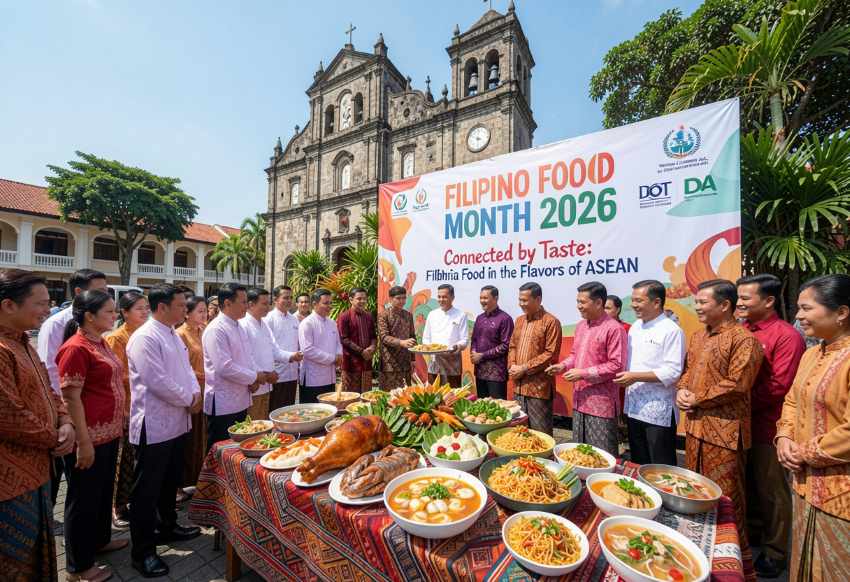
WOFEX Is the Doorway. Filipino Food in 2026 Is the Room.
The first time I walked the WOFEX floor — World Trade Center side, Pasay, 2023 — a woman from a Camarines Sur cooperative handed me a sliver of laing on a toothpick. Dried gabi leaf, coconut cream that had cooked down past porridge into something darker and almost meaty, a single pinprick of siling labuyo heat at the finish. It was 11 a.m. on a Wednesday in a hall full of fluorescent light and frozen-goods reps, and it was one of the most precise bites of Filipino cooking I had that year. Then she told me her aunt makes it better at the eatery behind the Naga City public market. I wrote down the address. That is what WOFEX is for. Not the sampling. The address.
What WOFEX actually is

The factual answer first, because the question deserves one: WOFEX (World Food Expo) is the Philippines' largest food trade show. It runs annually across two venues simultaneously — the SMX Convention Center and the World Trade Center, both in Pasay, a short cab from NAIA — and the 2026 edition is scheduled for 29 July to 1 August, with the final day opened to the general public. WOFEX 2025 pulled more than 800 exhibitors and 42,000+ trade visitors across roughly 20,000 square meters; the organizers are projecting closer to 51,000 in 2026. The headline programming is the Philippine Culinary Cup, the country's only WACS-accredited culinary competition, plus zoned showcases — FineFoods, FoodServe, FoodPackPro, Hotel Summit, the new Drinks + Bakes hall.
This makes WOFEX a B2B show first and a tourist attraction a distant second. If you are a buyer for a hotel group in Jakarta, it's essential. If you're a traveler with four days in Manila, it's a curious half-day at best — and only on the public-access Saturday. The convention floor is not where Filipino cuisine in 2026 is being defined. It is, however, where you can read the industry's pulse in a single afternoon, and that pulse is faster than it has been in a decade.
The pulse, in three numbers
One: in October 2025, the Michelin Guide finally arrived in the Philippines — the inaugural Manila and Environs & Cebu 2026 edition. One two-star (Helm, chef Josh Boutwood), eight one-stars, 25 Bib Gourmands, 108 selected restaurants in total. The country was simultaneously named one of Michelin's 16 "Most Exciting Food Destinations" globally.
Two: more than 40% of professional kitchens in Metro Manila are now run by chefs under 38, according to the Michelin inspectors' 2026 trends note. A meaningful fraction of those have opened in the past 24 months.
Three: in late 2026, the Philippines hosts the UN Tourism World Gastronomy Forum. The hosting is not an accident. It is the result of about ten years of patient kitchen-level work that the global press largely missed while it was happening.
Put together, this is the third wave. The first wave was the postcolonial canon — adobo, sinigang, kare-kare, lechon — codified for Filipinos abroad and largely defended on emotional grounds. The second wave was the Margarita Forés / Claude Tayag generation: heritage cuisine treated with seriousness, often in heirloom-china rooms, and meant to convince Filipinos to take their own cooking seriously. The third wave — Jordy Navarra at Toyo Eatery, Thirdy Dolatre and Kevin Navoa at Hapag, Don Baldosano at Linamnam, Stephen Duhesme at Metiz, Alphonse Sotero at Lampara — is doing something different. It assumes the seriousness. It cooks for diners who already know what laing is. It does not explain itself. It argues.
What the kitchens are arguing about
There are two arguments worth tracking.
The first is regional, not national. "Filipino food" is a useful passport stamp and a misleading menu category. The country has at least seven distinct regional cuisines doing real work — Ilocano, Kapampangan, Bicolano, Tagalog, Visayan (and within that, Cebuano vs. Negrense vs. Ilonggo), Bicol-Mindoro, and the Mindanao traditions, which are themselves several traditions (Maranao, Tausug, Maguindanao, Chavacano-influenced Zamboangueño). The third wave is foregrounding the regions that the diaspora has historically under-represented: Bicol's coconut-and-chili axis, Pampanga's fermentation-heavy charcuterie tradition, Mindanao's Muslim-South cooking, the Cordilleras' pinikpikan and etag.
This is what you taste at Linamnam, where chef Don Baldosano — 27 years old, ten-seat counter, formerly his childhood bedroom in Pasay — won a Michelin star and the Young Chef Award in the inaugural guide. His tasting menu reads as a regional atlas: a Pampanga course leaning on burong asín fermentation, a Bicol course built around natong (the Bicolano name for laing, more accurately), a Visayan kinilaw using tabon-tabon to set the acidity. Hapag in Quezon City, run by Dolatre, Navoa, and front-of-house Erin Recto, does it differently — a single tasting menu that moves through technique-driven reinterpretations, with a Mindanao palaman or a Cordillera grain showing up where you would expect a duck. It is not novelty. It is the equivalent of a Japanese kaiseki built around hyper-regional ingredients, and it asks the diner to know what siling haba is.
The second argument is about fermentation and the pantry. The Filipino larder has more fermented and aged products than the canonical menu suggests — bagoong (shrimp paste, several styles), patis (fish sauce), buro (fermented rice with fish or shrimp), atchara (papaya pickle), tuba (palm wine, used as a marinade more than the menus admit), suka (vinegars, every region has its own — coconut suka, sukang Iloko from sugarcane, sukang Paombong from nipa palm). Toyo Eatery is named for soy sauce for a reason. Jordy Navarra's Bahay Kubo salad — 18 vegetables named in a folk song, plated with restraint — only works because the dressing is doing a fermentation-forward job that mass-market Filipino restaurants almost never attempt. He came up through The Fat Duck in Bray and Bo Innovation in Hong Kong; the technique is European-rigorous, the pantry is local. The two are no longer in tension at this level.
What WOFEX actually shows you about all this
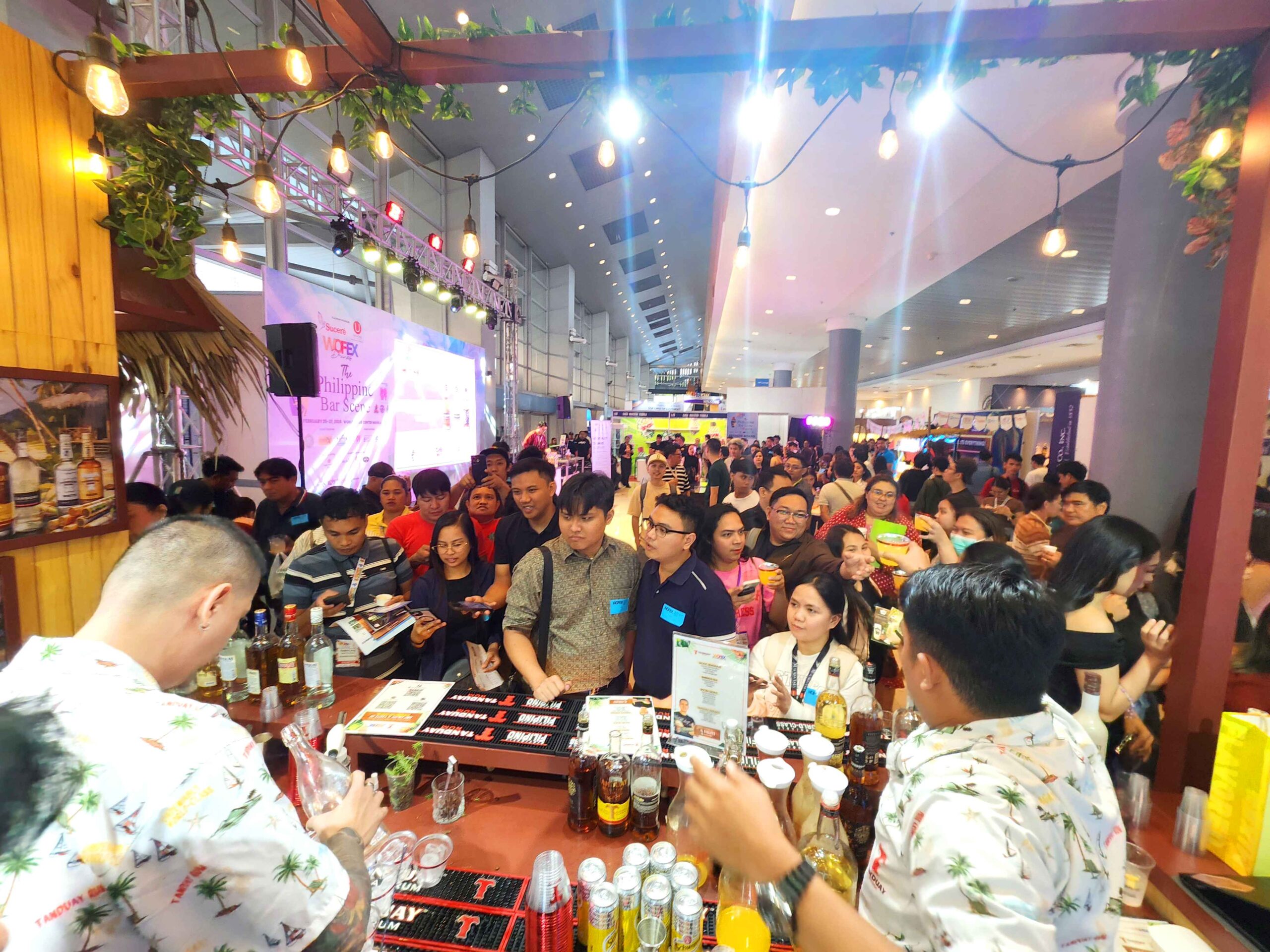
Walk the FineFoods hall and you will see it: tablefuls of regional suka in mismatched bottles, small-batch coconut sugar from Quezon, single-origin cacao from Davao (which is its own conversation — the Philippines is now exporting fine-flavor cacao that's showing up on bean-to-bar menus from Tokyo to Brooklyn), heritage-pig pork from Negros producers selling directly to restaurants. The chefs are there, even if they're not on the program — Jordy walks the floor, Stephen Duhesme walks the floor, the Hapag team walks the floor. What they're sourcing is what you'll eat downtown three days later.
What the Philippine Culinary Cup competition floor shows, by contrast, is the institutional side: hotel-school discipline, classic French technique applied to local ingredients, the talent pipeline that staffs the country's bigger kitchens. Useful to watch. Not where the cooking is at its most interesting.
If you are going to do WOFEX as a traveler, do it on the public-access Saturday (1 August in 2026), spend three hours maximum, focus on the small-producer halls, and write down names. Then go eat.
Where to eat — a ranked, defensible itinerary
Manila and environs
1. Toyo Eatery (Karrivin Plaza, Makati) — one Michelin star, Asia's 50 Best #42 in 2025, Art of Hospitality 2025. Jordy and May Navarra's tasting menu is the most articulate single argument for what Filipino fine dining is in 2026. The Bahay Kubo salad, pork tail adobo, grilled saba banana with bagoong — none of it is showy, all of it is correct. Book three weeks ahead.
2. Helm (BGC) — two Michelin stars. Chef Josh Boutwood is British-Filipino and uses Spanish technique as a structural skeleton; the cuisine is Filipino-leaning rather than Filipino-anchored, which is a fair criticism, but the precision is unarguable. The two stars feel earned on plate-by-plate execution, not on cultural project.
3. Hapag (Quezon City) — one Michelin star. The most quietly intelligent menu in Manila. Goes deepest into the regions — expect a Cordillera or Mindanao course that you will not see anywhere else at this level. Smaller room, smaller bill than Helm, arguably the better night out.
4. Linamnam (Pasay) — one Michelin star, Young Chef Award. Ten seats, Don Baldosano cooking from his old bedroom. This is the room where the next ten years of Filipino fine dining is being written. Booking is brutal; try at midnight Manila time on the day a new month opens for reservations.
5. Lampara (Poblacion, Makati) — Michelin selected. Alphonse Sotero and RJ Ramos run a neo-Filipino bistro that's noisy, fun, and serving regional dishes you wouldn't otherwise find — Sulu-style pyanggang, Pampanga betute (stuffed frog) when in season. The price is half of any of the above.
6. Metiz (Salcedo Village, Makati) — Michelin selected. Stephen Duhesme cooks with the cuts the others ignore — pig's cheek, catfish, offal — at neo-bistro prices. If you eat one casual modern-Filipino meal in Manila, eat it here.
7. Sarsa Kitchen + Bar (multiple locations) — Bib Gourmand candidate territory. JP Anglo's Negrense restaurant, in business since 2013, still serves the city's most disciplined sisig. Order the chicken inasal too.
8. Abé (Serendra, BGC). Larry Cruz's Kapampangan stalwart. Not new, not Michelin, still the right place to send anyone who wants to understand why Pampanga is called the country's culinary capital. Bringhe (Pampanga's paella analog), kamaru (mole crickets, in season), tibok-tibok (carabao-milk pudding).
Cebu
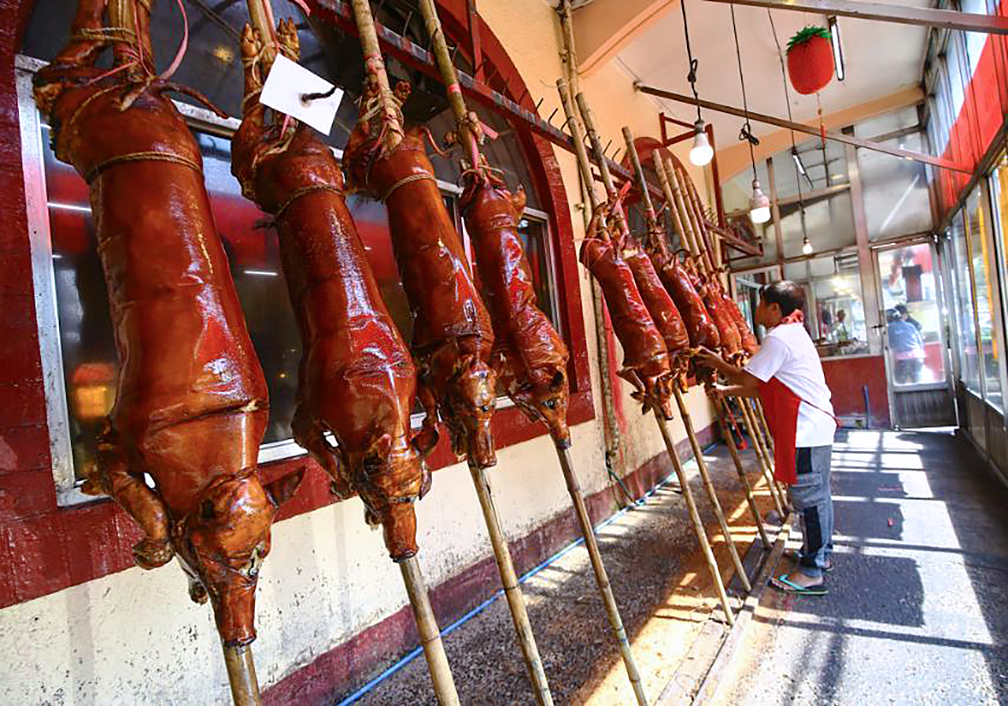
9. Rico's Lechon (multiple Cebu locations). Spicy lechon, original. Heritage pigs, lemongrass-and-tanglad-stuffed cavity, skin shattered correctly. The internationally famous Anthony-Bourdain-anointed Zubuchon does fine work too, but it has become a tourist marker; Rico's is where Cebuanos actually take their visiting cousins. CnT in Guadalupe is the third option if you want the most local, least branded version.
10. The Cebu carenderia trail at Carbon Market. Pochero, humba, kinilaw na tanigue (Spanish mackerel cured in coconut vinegar with ginger and chili). This is where Cebu's daily cooking lives.
On the convention-floor question, finally
Is WOFEX worth a tourist trip? On its own, no. As a frame to understand why Manila has a Michelin Guide now, and as a producer-spotting expedition that informs the rest of your week of eating, yes — for one Saturday afternoon. The trade show is not the cuisine. It is the cuisine's supply chain talking to itself in public.
The verdict
The Philippines is having the food moment that the rest of Southeast Asia had ten years ago — Bangkok in 2014, Singapore in 2016, Ho Chi Minh City in 2022. The window where the best Manila tasting menus are still bookable on two weeks' notice and still cost a fraction of their Tokyo or Singapore equivalents is closing. Hit Toyo, Hapag, and Linamnam in one trip while you still can. Hit Pampanga (Angeles City, an hour north) for kamaru and sisig at the source. Hit Cebu for lechon and for the carenderia stalls at Carbon. Skip the convention floor unless you're a buyer, or unless you happen to be in town for the Saturday public day — in which case go for the small producers, not the corporate stands.
If you can only do one thing
Book Toyo Eatery (20 Karrivin Plaza, 2316 Chino Roces Avenue, Makati) for dinner on a Wednesday or Thursday, three weeks ahead. Order the full tasting. Sit at the bar if a counter seat is available. Drink the Filipino-sugarcane rum pairing. This single meal will reframe your understanding of what "Filipino food" means more efficiently than any guidebook, any WOFEX floor, or any street-food list — because Jordy Navarra is not trying to introduce you to Filipino cuisine. He is assuming you've shown up ready to take it seriously, and he is cooking accordingly. That assumption is the whole story of the third wave.
Food journalist based in Seoul. Restaurant criticism, regional cuisines, comparative analysis. Hawker stalls and tasting menus, same standards.
✦ More from David Park


✦ Keep reading
More from this region


More in Destinations
✦ Discussion
Start the discussion
No replies yet — yours could be the first.