
Thailand in Three Acts: A First-Timer's Stay Strategy
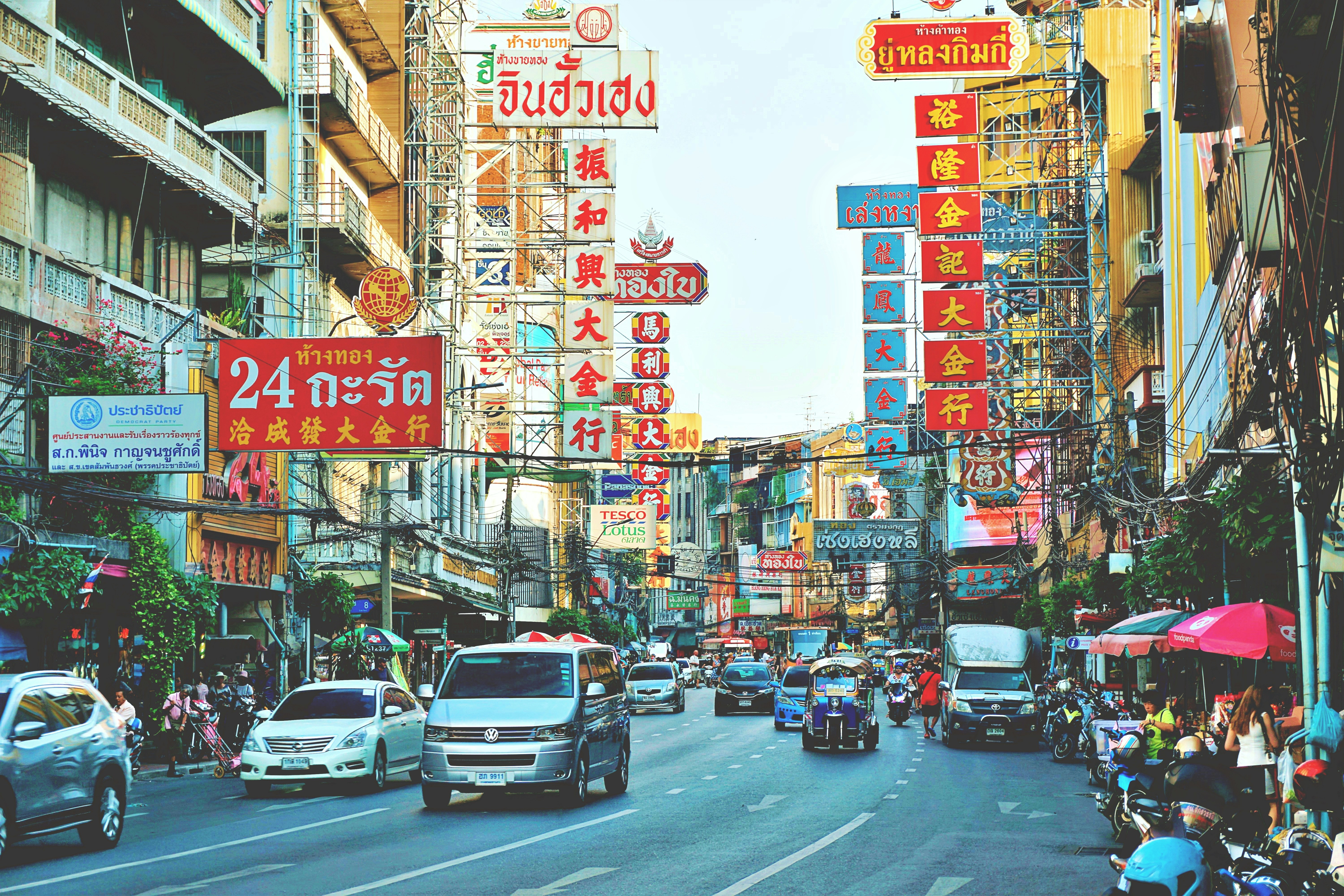
The mistake almost everyone makes on a first trip to Thailand is treating it like a city with annexes. Bangkok and then the rest. You'll see this in the way the question is usually asked — where should we stay in Thailand? — as though the country had a centre of gravity that the rest of the itinerary could orbit around. It doesn't. Thailand is structurally a triptych: a capital that runs on water and money and food, a northern city built on craft and Buddhism and a different rhythm of life entirely, and a south that is not one place but a constellation of islands and headlands with their own micro-climates, micro-cultures, and very different ideas of what a beach holiday means. Ten to fourteen days is enough to do all three, but only if you treat each leg as its own piece — and only if you book the kind of accommodation that locates you inside the leg, rather than floating above it.
This is the argument of the piece, and it determines everything that follows. A Bangkok stay should put you in a neighbourhood; a Chiang Mai stay should put you in a house; a southern stay should put you on a specific kind of beach, on a specific kind of island, with eyes open about which one. Three legs, three logics. Below, the case for each — and the hotels, at three price tiers, that get the logic right.
Thailand is structurally a triptych: a capital that runs on water and money and food, a northern city built on craft and a different rhythm of life entirely, and a south that is not one place but many.
Act One: Bangkok, by the River
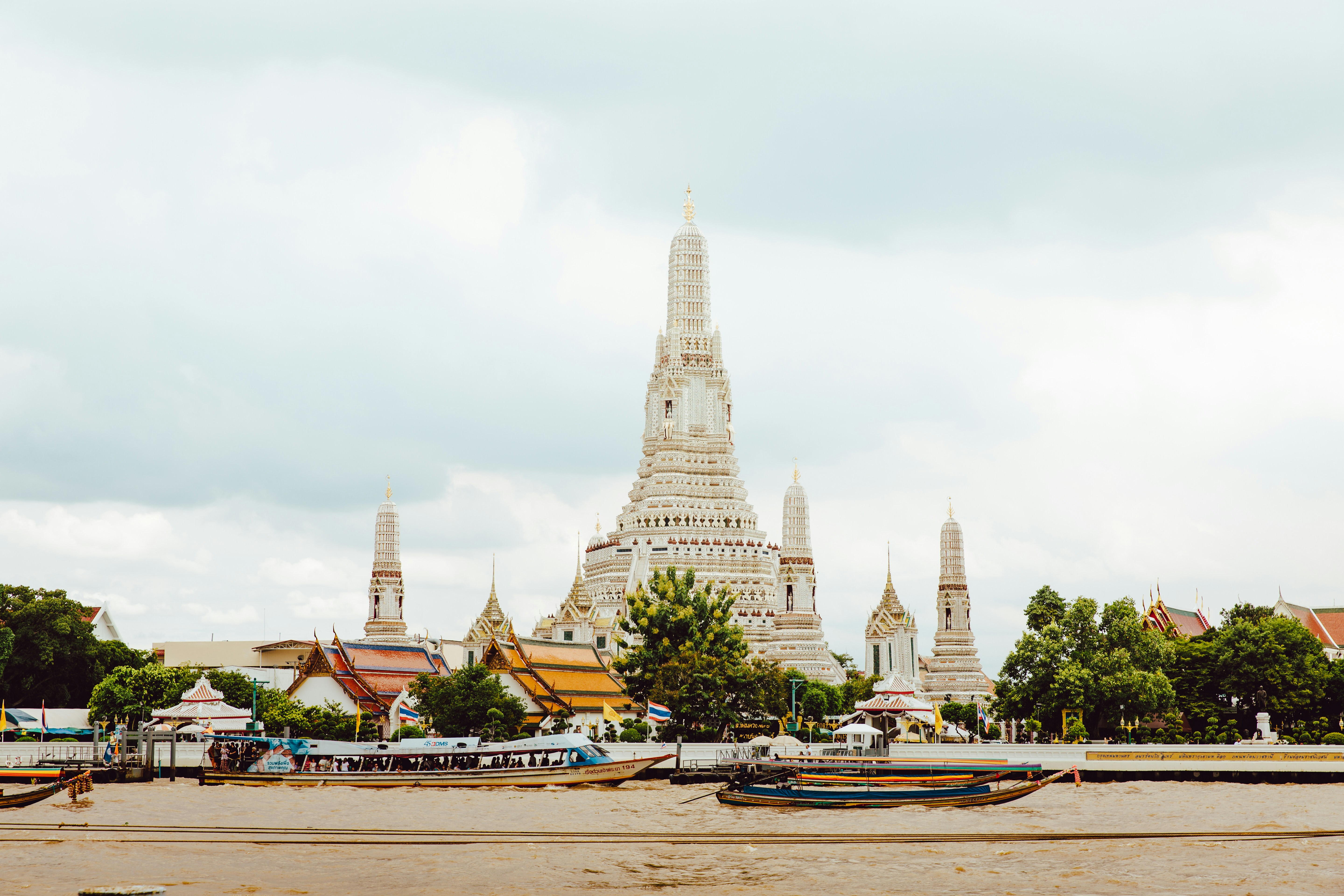
Most first-time visitors are deposited by their booking habit into Sukhumvit — the long arterial of skybridges, malls, and chain hotels that runs east from the city centre. Sukhumvit is convenient and almost entirely placeless. You could be in any Asian capital with a Marriott. The version of Bangkok that rewards a first visit is the older one, the one that grew along the Chao Phraya before the Skytrain existed, where the river is still the actual organising principle of the city. Stay there. The temples, the food, the night markets, the long-tail piers — all of it makes more sense when your hotel has a boat dock.
This is also where Bangkok's hotel scene has done its most interesting work in the last decade. The Chao Phraya corridor, particularly the stretch from Phra Nakhon down to Charoenkrung and the old creative district around the General Post Office, is now the city's most coherent luxury and design neighbourhood. Walk Charoenkrung at dusk and you'll see what's been quietly built: galleries inside repurposed shophouses, third-wave coffee in former goldsmiths, the warm light of yaowarat spilling onto wet stone.
The splurge with sense of place: Capella Bangkok. Capella sits on the Charoenkrung bank with a hundred and one rooms, all of them facing the river. It was named the world's best hotel in 2024, which would normally be a reason to look elsewhere, but the property has earned the recognition — the rooms are large, clean-lined, almost Japanese in their reticence, and the public spaces lean into the water rather than away from it. The Côte dining room, overseen by Mauro Colagreco, would be a destination restaurant in any city. Reasonable rates start above eight hundred US a night and climb steeply from there. If you only do one indulgence on a first Thailand trip, this is a defensible one.
The design-and-culture pick: The Siam. Further upriver, in the old Royal Dusit district, The Siam is the personal project of the Sukosol family — owner Krissada Sukosol Clapp is a Thai actor and musician, and the hotel reads as a private house that happens to take guests. Three acres of riverfront, thirty-nine suites and pool villas, a relocated nineteenth-century Thai teak house called Connie's Cottage parked among them. The interiors are a museum of Thai mid-century antiques and Bill Bensley flourishes; the cooking school and Muay Thai ring are not props. This is the hotel you book if you care more about cultural particularity than brand consistency. Rates begin in the high six hundreds.
The rare budget pick that doesn't sacrifice aesthetic: Riva Surya. On Phra Athit Road, in the old Phra Nakhon quarter near the Grand Palace, Riva Surya is a sixty-eight-room boutique on the river with rates that often slip under one hundred and fifty US. The rooms are simple — muted palette, contemporary Thai furniture, a pool that hangs over the water — and the location is the kind first-timers usually overpay for. Phra Athit itself is one of Bangkok's most pleasing streets: shophouses with original wooden shutters, cafés and bars that fill at dusk with art students and old residents who'd never set foot in a Marriott. You're a fifteen-minute walk from Khao San Road, which you'll wander through once for the sociology and then never return to.
A Pause Between Acts: Ayutthaya, or Sukhothai
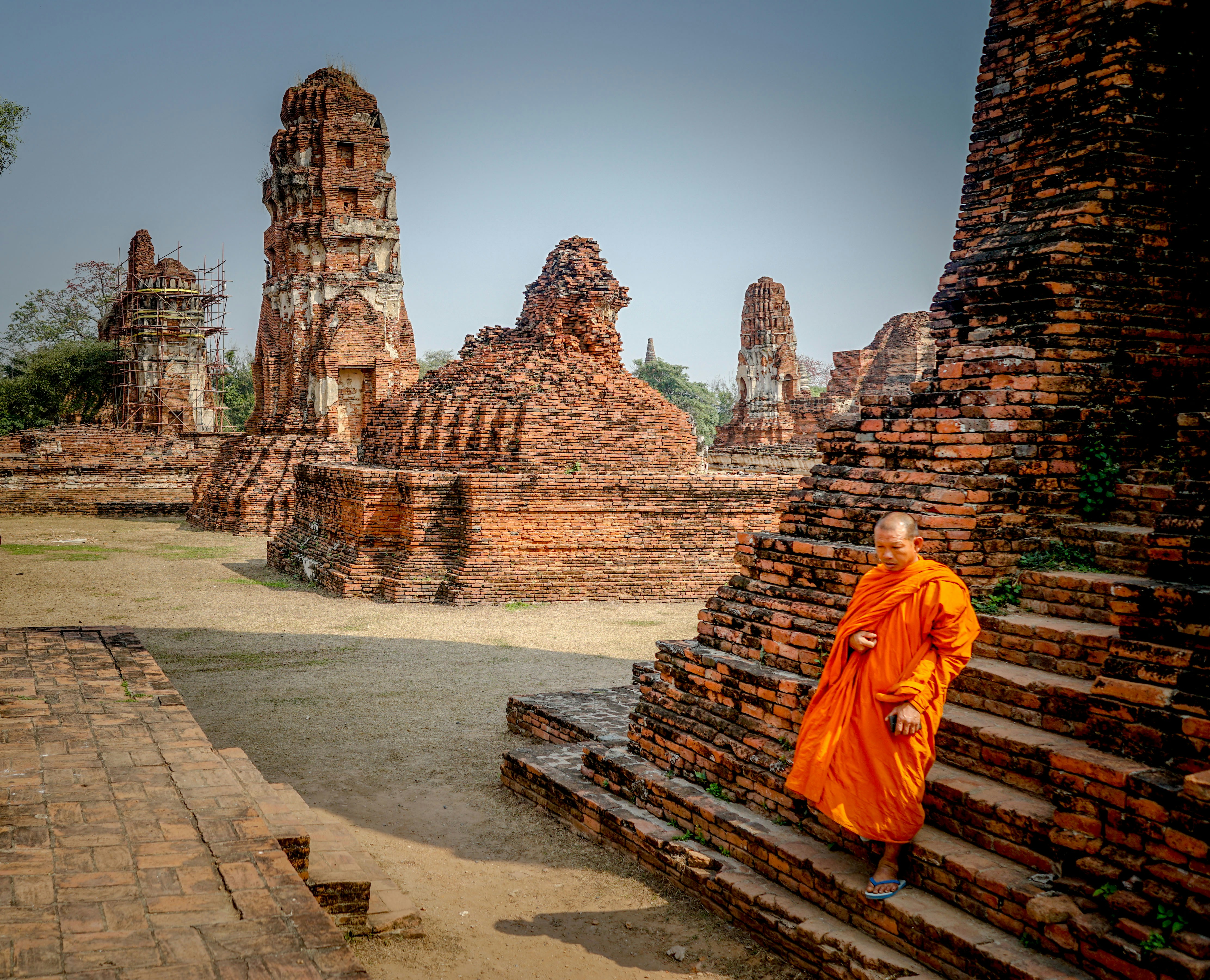
Most first-time itineraries jump straight from Bangkok to Chiang Mai by plane. That's reasonable, but if you have the days, the old capitals are worth a night each — and they reframe everything that comes after. Ayutthaya, sixty miles north of Bangkok, was the seat of a Siamese empire that was sacked by the Burmese in 1767 and never rebuilt. The ruins are extraordinary, and Sala Ayutthaya, a small white-on-white riverside boutique directly across the water from Wat Putthaisawan, is the right place to absorb them. Sunset from the rooftop bar, with the temple's Khmer-style prang lit on the far bank, is one of those scenes you don't argue with.
Sukhothai, further north, requires a longer detour but pays it back with the country's oldest and most lyrical temple complex. Sukhothai Heritage Resort, run by the Vichai family rather than Aman as the prompt I was given implied, is the property to know there — a low-slung agricultural retreat between paddy fields and the airport, designed by Sirivadhanabhakdi-school architects, that approaches the ruins with the gravity they deserve. (There is no Aman in Sukhothai; the confusion is common.) These are not necessary stops on a first trip, but if you have fourteen days rather than ten, one of them earns its place.
Act Two: Chiang Mai, in a House
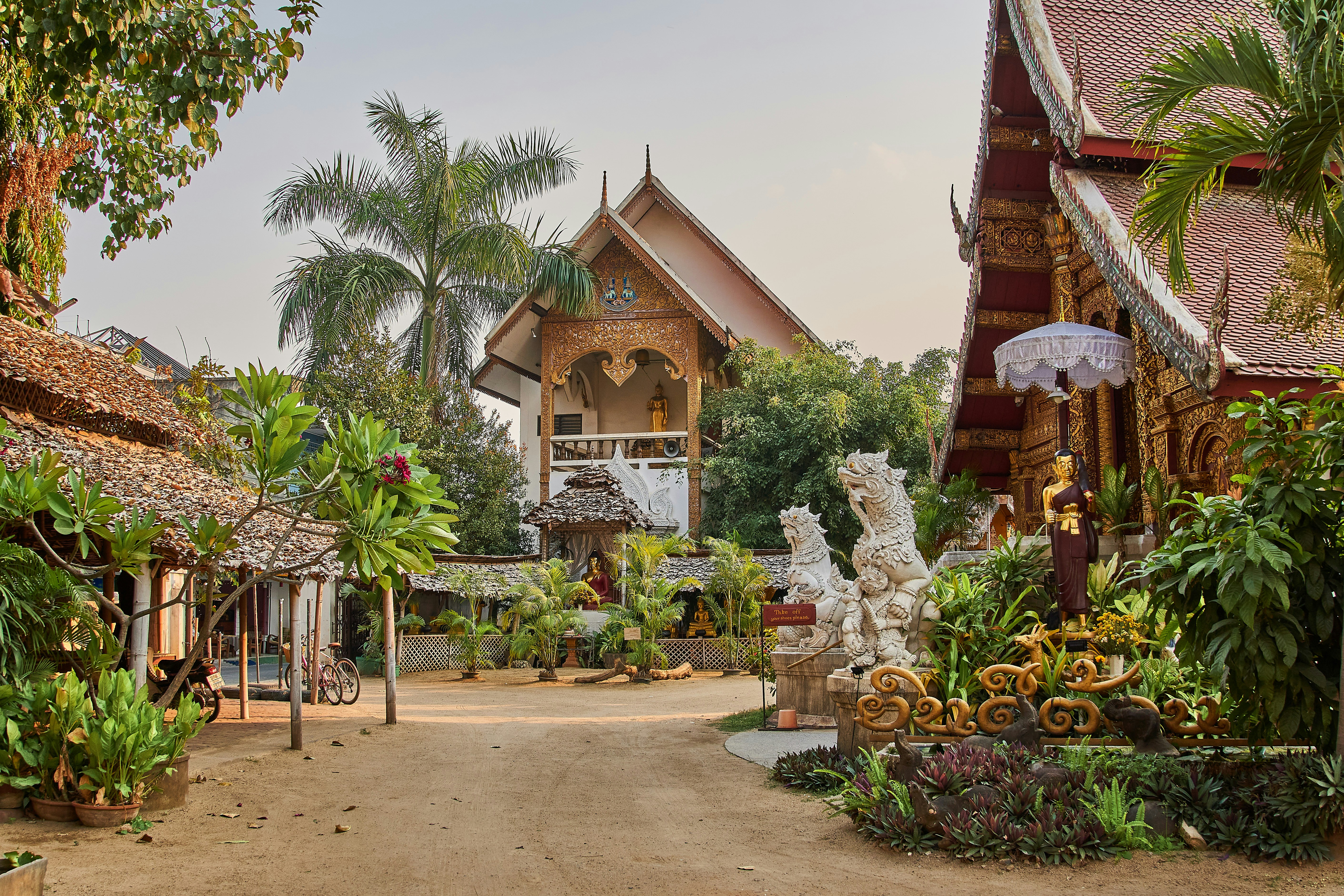
Chiang Mai is where most first-time visitors discover that the Thailand they actually wanted to fall in love with was never going to be found in Bangkok. The pace is slower, the temperatures cooler at night, the food regional and assertively different — khao soi and sai oua and the herbal northern curries that the south doesn't really do. The city itself is small enough to walk and is built around a moated medieval square, the Old City, which is still the dense ceremonial heart. Just west of the moat, the Nimmanhaemin district — Nimman, to everyone — has become Thailand's most concentrated zone of design hotels, third-wave coffee, and Chiang Mai University spillover. The two neighbourhoods are different stays, and the choice between them is one a first-timer should make consciously rather than by accident.
Old City for temple-density and the morning alms walk. Nimman for design, café culture, and the sense that you're staying in the future of Thai aesthetic culture rather than the past.
The design-and-culture pick: 137 Pillars House. On the eastern side of the Ping River, in the old Wat Gate district that was once Chiang Mai's foreign quarter, 137 Pillars House is built around an 1889 teak homestead that was the East Borneo Trading Company's compound — the title refers to the original load-bearing teak columns of the main house. The thirty suites that surround the historic structure are large, calm, and butler-serviced; the workshops in pottery and weaving with local artisans are genuinely good, not gift-shop demos. It's the property that best demonstrates what Chiang Mai luxury is when it's done with the city's own materials and history rather than imported templates.
The splurge with sense of place: Anantara Chiang Mai Resort. Riverside, low-rise, walking distance to both the Night Bazaar and the Old City, the Anantara was originally The Chedi and remains one of the most architecturally serious hotels in town. The lobby's converted British Consulate building, the riverfront infinity pool, the long blackened-timber colonnades — all of it earns its rates, which sit in the four-to-six hundred range depending on season. The hotel does its sundowner gin trolley with a straight face and you should let it.
The rare budget pick: Akyra Manor Chiang Mai. In the heart of Nimman, Akyra Manor is a thirty-room design hotel with a rooftop infinity pool and an architectural restraint that punches several star-ratings above its rate, which often sits under two hundred US. The rooms are minimalist with cantilevered glass tubs and balconies that look directly onto Soi 9 — the busiest of the Nimman side streets — which means you wake to the smell of jok (rice porridge) being made and the bell of the morning monks. It's a properly urban hotel in a way that surprises people who came to Chiang Mai expecting only teak and temples.
The best Chiang Mai hotels do not paper over the city's pace; they amplify it. You will sleep more here. You will also eat better.
Act Three: The South — and Which South Matters More Than the Hotel
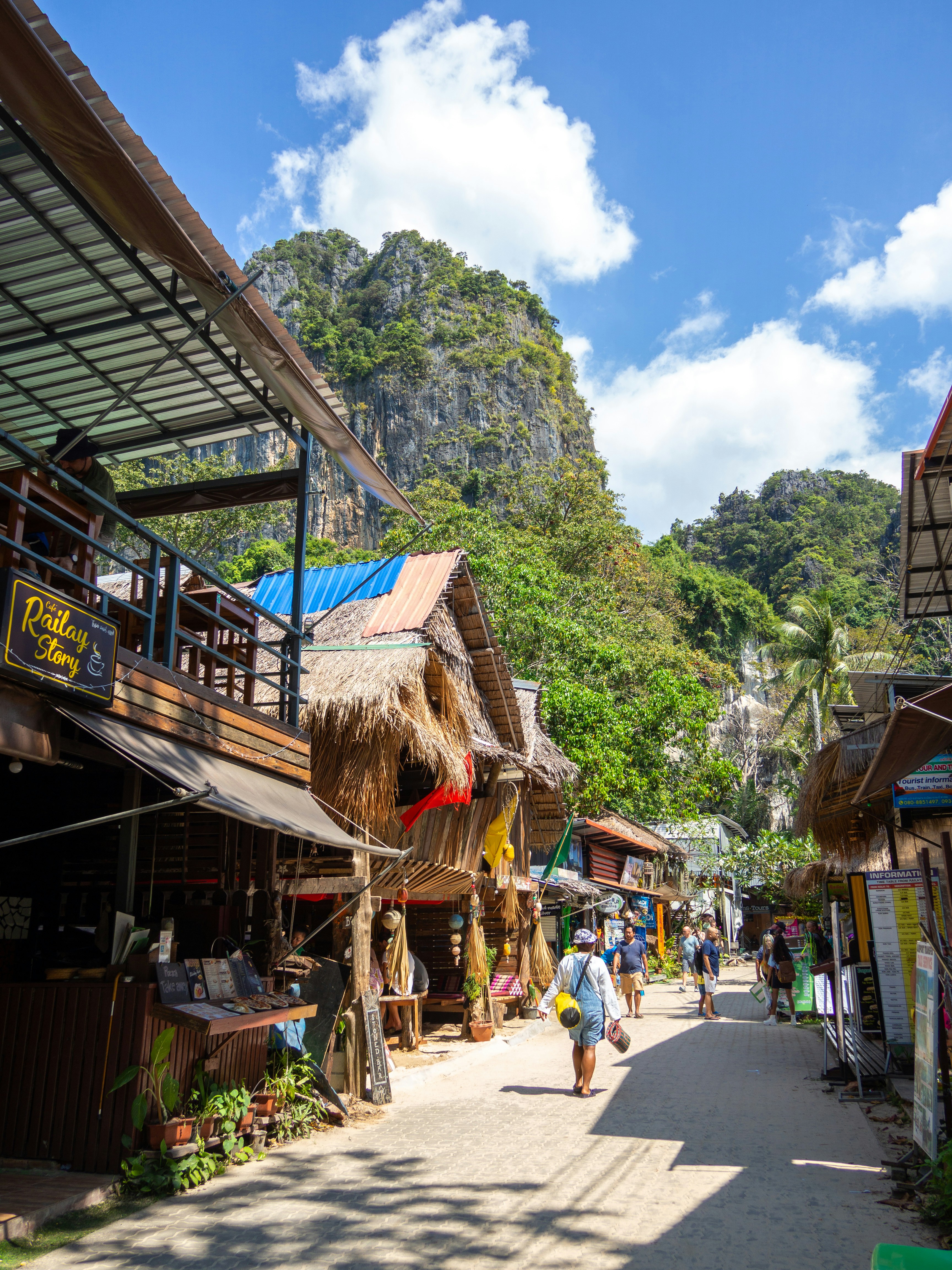
The southern leg is where most first-timers go wrong, and the cause is almost always that they chose a hotel before they chose an island. The marketing machinery of Thai tourism makes Phuket the default; the default is usually wrong. Phuket is large, paved, and in places (Patong, especially) genuinely unpleasant — the strip of Bangla Road is a low-grade carnival of beer bars and bachelor parties that has nothing to do with the country you've just spent a week falling for in the north. The Phuket worth knowing is on the west and northwest coasts (Surin, Kamala, Sirinath) and in the old town of Phuket City itself, which is a Sino-Portuguese shophouse quarter with serious food and zero beach. Decide what you want from the south, and the island chooses itself.
For a first-timer with five days in the region, three useful framings:
If you want dramatic limestone karst scenery and serious quiet, go to Koh Yao Noi or to Railay Beach in Krabi. Phang Nga Bay is the geography you've seen in every Bond-film still of Thailand; both Yao Noi and Railay sit inside it. Koh Yao Noi is the more developed island and has the better hotels; Railay is technically a peninsula but accessible only by long-tail boat, which gives it an island feel.
If you want a barefoot beach holiday with actual swimming, go to Koh Lanta. The west coast beaches are long, golden, and slope gently into water that is genuinely clear, not the milky green of the Phuket side. Lanta is quieter than its reputation and the southern end of the island is one of the calmest stretches of luxury beach in the country.
If you want a town to walk and a beach to swim, go to Phuket — but stay in Phuket Old Town for two nights to actually engage with the place, and at a resort on the northwest coast for the rest. Don't stay at one property the whole time and try to commute.
The splurge with sense of place: Six Senses Yao Noi. On Koh Yao Noi, fifty-six villas terraced into a hillside above Phang Nga Bay, with views directly onto the limestone islands. It is the property that most defined what Thai island luxury looks like in the post-2010 era — barefoot service, serious food, the right amount of environmental theatre, and a setting that is almost embarrassingly photogenic. The hotel has reopened and is operating on its full inventory. Rates start above thirteen hundred US in high season and climb. It's the trip-of-a-lifetime stay; treat it as such.
The design-and-culture pick: Rayavadee, Railay. Inside the Krabi national park, accessible only by boat, surrounded by towering limestone cliffs on three sides and three private beaches on the others. The hundred-odd two-storey pavilions are scattered through forest; service is old-school Thai and the kind of unobtrusive that the new generation of properties has unlearned. Worth noting: ongoing pool and restaurant renovations through summer and autumn 2026, with the main swimming pool closed mid-August through end of September. Book around the work or call to confirm before committing. Rates from around four hundred.
The rare budget pick that doesn't sacrifice aesthetic: Pimalai Resort & Spa, Koh Lanta. On the long Kantiang Beach at the south end of Lanta, Pimalai is the grand-dame luxury property on the island — but its low-season rates, off the western shoulder, slip into the three hundreds and occasionally below. Teak floors, rattan curtains, a beach you can actually swim in, four restaurants, the kind of service where the staff remember not just your name but your coffee order on the second morning. Pimalai is unfashionable in the way the best properties always become unfashionable for a year or two: people have moved on to the newer thing, and the newer thing is not as good.
And in Phuket Old Town: Woo Gallery & Boutique Hotel on Thalang Road, a restored century-old shophouse with five rooms and ground-floor gallery. It's a stay you book for two nights to see Phuket the city — the morning dim sum, the Sino-Portuguese architecture, the Sunday walking street — before you decamp to your beach for the rest.
The First-Timer Mistakes, Named
A short list, kindly meant.
Khao San Road as a base. Khao San is interesting for an hour as anthropology, and that's where its usefulness ends. Stay near it, not on it. Phra Athit is a five-minute walk and forty years older in temperament.
Patong as the South pick. Patong is the part of Phuket most people are unconsciously thinking of when they say they don't want to go to Phuket. If a property's address contains the word Patong, keep looking.
Paying for a private pool you'll never use. Resort marketing has trained a generation to assume the pool villa is the upgrade you want. In tropical Thailand, in a property with a serious spa pool and an actual beach, the private plunge pool is often a glorified ornament — too warm to swim in by noon, too small to do anything in but stand. The money is better spent on a sea-view room, a longer stay, or a meal at the property's best restaurant.
The booking aggregator hotels that all look the same. You know them when you scroll past them: identical king beds, identical accent walls, indistinguishable lobbies. They cluster in Sukhumvit and on the Patong strip and they are a tax on indecision. If a hotel's website cannot tell you what neighbourhood you're staying in, the answer is that the neighbourhood doesn't matter, which means it isn't one.
Treating Thailand as a single hotel decision. Three acts, three logics, three different kinds of stay. You're not choosing the best hotel in Thailand; you're choosing three hotels that together produce the country.
If a hotel's website cannot tell you what neighbourhood you're staying in, the answer is that the neighbourhood doesn't matter — which means it isn't one.
The country rewards the traveller who arrives with structure and lets it dissolve, not the one who arrives without any and tries to assemble one on the fly. Book the triptych. Let the river, the mountains, and the sea each have their own bed.
Asian-American travel writer + photographer based in SF. Luxury and culture, design-forward destinations, slow travel.
✦ More from Sarah Chen

✦ Keep reading
More from this region


More in Destinations
✦ Discussion
Start the discussion
No replies yet — yours could be the first.