
How to Travel to Thailand: Getting In and Getting Around
Two things changed for Thailand in 2026, and both of them will trip you up if you don't know. One: the visa-free stay is being cut from 60 days back to 30. Two: there's no paper arrival card anymore — you fill out a digital one online or you stand in a kiosk queue at the airport like a chump. Everything else about moving around this country is gloriously easy and gloriously cheap. Let me walk you through both halves: getting in, then getting around.
Getting in: the 60-to-30-day visa shake-up
Here's the deal as of late May 2026, and it's genuinely in flux, so read carefully.
For the last couple of years most Western passports — US, UK, all of the EU, Australia, Canada — got 60 days visa-free on arrival. No application, no fee, just show up. On 19 May 2026 the Thai Cabinet voted to cut that back to 30 days for the same big list of countries. The reason they gave was cracking down on people abusing tourist entry to work illegally and run scam operations.
The catch — and this is the part everyone's getting wrong online — is that the cut isn't live yet. It takes effect 15 days after it's published in the Royal Gazette, and as of when I'm writing this, that publication hadn't dropped. So there's a window right now where you might still get the full 60. But I would not bet a single baht on it for a trip booked months out.
What I'd actually do:
Trip of 30 days or under? You're fine either way. Show up, get stamped, done.
Trip longer than 30 days? Don't gamble on the 60-day rule surviving your travel dates. Either plan to extend on the ground (the 30-day exemption keeps the old extension option — one 30-day top-up at any immigration office, around 1,900 baht / ~$58), or apply for a proper 60-day tourist visa (the e-Visa) before you fly. The e-Visa is the safe move if you've already booked two months of accommodation.
Two more boxes to tick regardless: your passport needs 6 months' validity from your entry date, and technically you need proof of onward travel within your allowed stay. Border officers rarely ask Western travelers for the onward ticket, but budget airlines flying into Thailand sometimes do at check-in. A cheap throwaway flight or a bus ticket out covers it.
Verify your exact allowance against your government's Thai embassy page in the week before you fly. This one is moving.
The TDAC: do it online, never pay for it
The old paper TM6 card you used to scribble on the plane is dead. In its place is the Thailand Digital Arrival Card (TDAC), and it's now mandatory for every foreigner entering by air, land, or sea. Every traveler needs their own — yes, including kids and babies.
The rules that matter:
Submit it within 72 hours of arrival — not before, the system won't let you.
Do it at the official site only:
tdac.immigration.go.th. It is 100% free.You'll need passport details, your flight number, and the address of your first night's accommodation. Have a hostel or hotel booked before you start so you've got an address to enter.
Now the scam, because of course there's a scam. Search "Thailand arrival card" and you'll hit a wall of slick third-party sites charging $30–50 to "process" a form that costs nothing on the government portal. They're not illegal exactly, they're just charging you for a free thing. Skip them. The real URL ends in .go.th — that's the giveaway it's the actual Thai government.
Fill it on your laptop the night before with decent wifi, screenshot the QR confirmation, and you'll breeze the counter. Forget to do it and there are kiosks at the big airports — but you'll be tapping at a touchscreen with jet lag while everyone who prepped walks past you.
Landing in Bangkok: don't get fleeced at the airport
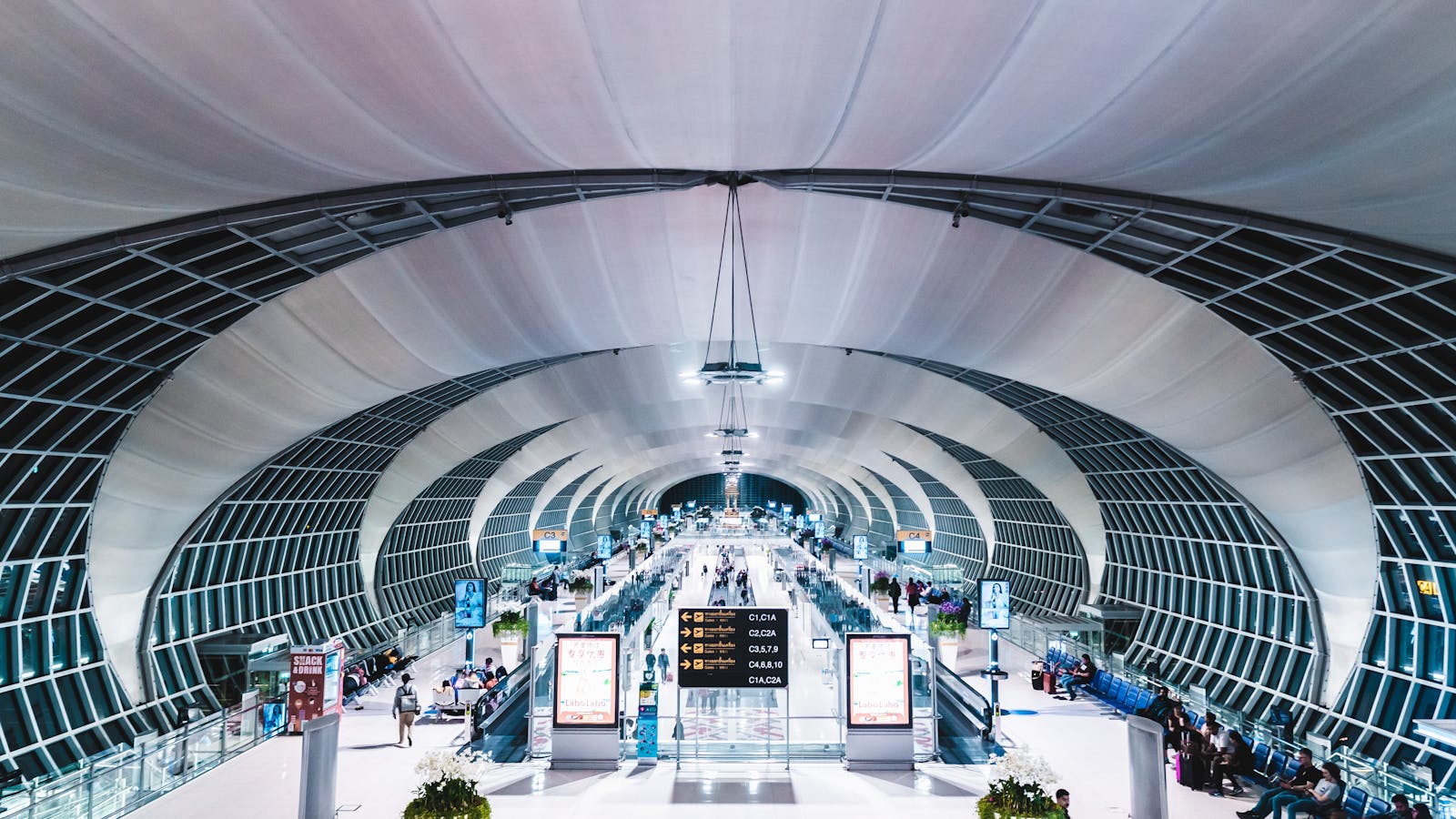
Most people fly into Suvarnabhumi (BKK) — the big one, east of the city. Budget carriers often use Don Muang (DMK) to the north. Getting into town from either is where first-timers leak money.
From Suvarnabhumi, the local-kid move is the Airport Rail Link — the train into the city is roughly 45 baht (~$1.40) to Phaya Thai, where you connect to the BTS Skytrain. Fifteen-ish minutes, beats sitting in traffic, and it costs less than a coffee.
If you've got luggage and a crew, a metered taxi is fine — expect about 280–450 baht on the meter, plus a 50-baht airport surcharge, plus 50–75 baht in expressway tolls. Call it 380–575 baht (~$12–18) all in to central Bangkok.
The scam here is ancient and still works on tired arrivals: the driver "forgets" the meter and quotes you a flat 600–800 baht. Don't argue, just do this — say "meter, please" before you get in, and don't shut the door until you see the red 35 (the starting fare) light up. No meter? Walk back to the official taxi desk and get a different car. Better yet, open Bolt or Grab and book the ride in-app so the price is locked before you move — no negotiation, no meter games.
The night train: still the best way to cross the country
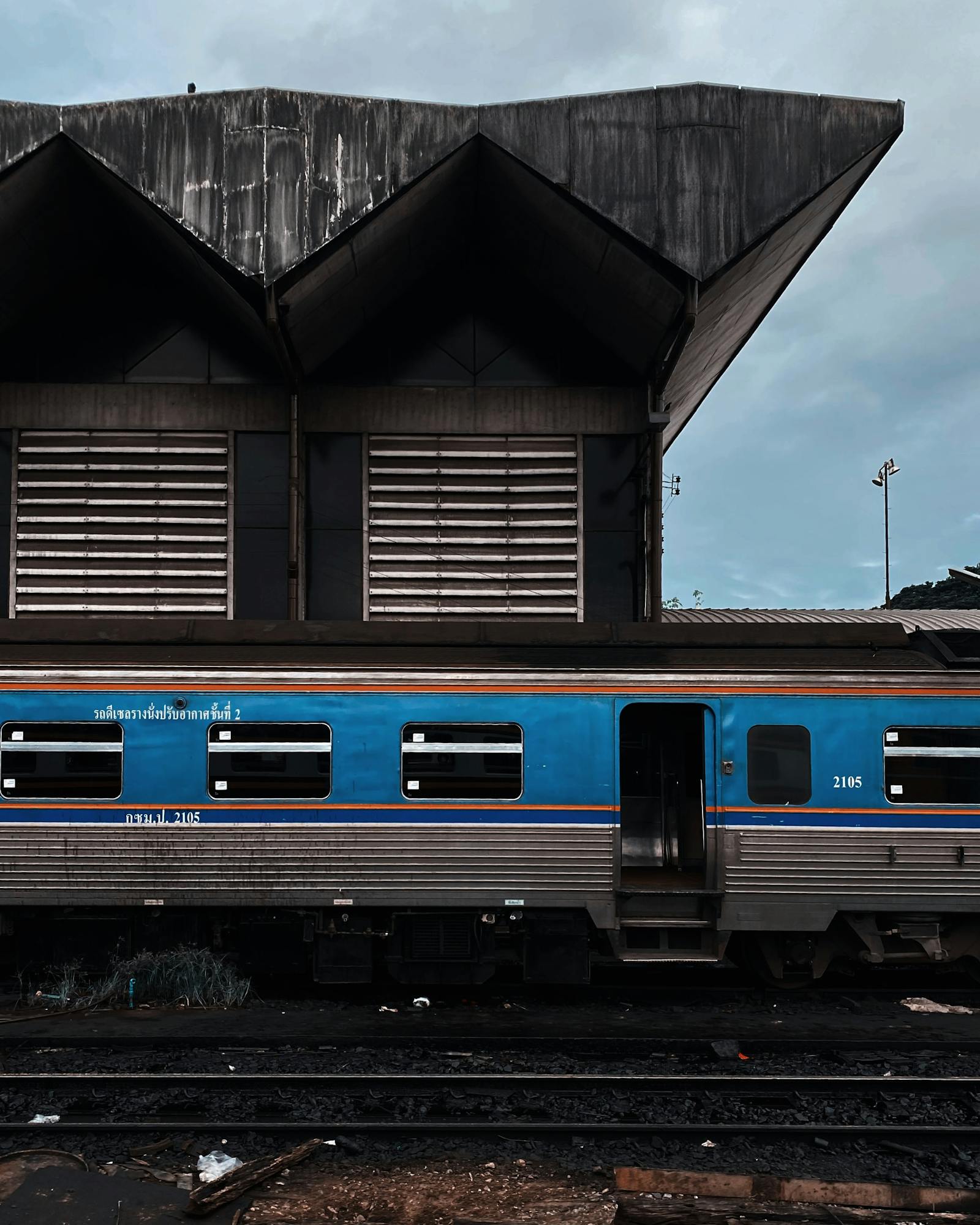
This is my favorite thing about Thai travel and most tourists fly over it. The State Railway of Thailand runs proper overnight sleeper trains, and the 2nd-class air-con sleeper is the sweet spot: a curtained-off berth that folds flat into a bed, clean sheets, power sockets, and a guy who comes through selling beer and pad thai.
The classic run is Bangkok to Chiang Mai, train #9, leaving Bangkok around 18:40 and rolling into Chiang Mai about 07:15. You go to sleep in the capital and wake up in the mountains. The 2nd-class AC sleeper runs about 938 baht for an upper berth, 1,038 for a lower (~$29–32). Lower berths are wider and have a window — worth the extra dollar.
Heading for the islands instead? The Bangkok to Surat Thani night train (#85, departs ~20:40, arrives ~07:30) is your gateway to Koh Samui, Koh Phangan, and Koh Tao — about 894 baht upper / 994 lower (~$28–31), then a ferry the rest of the way.
The trains on these routes — #9, #10, #25, #31 and a few others — got new Chinese-built sleeper cars back in 2016 with screens and charging sockets, so you're not riding a rust bucket. They sell out, though, especially the lower berths in high season. Book ahead on the official SRT D-Ticket app or site (cheapest), or use 12Go if you want nicer UX and don't mind paying ~20–30% more for the convenience. I book direct and pocket the difference.
Buses, minivans, and when to just fly
For everywhere the train doesn't reach, buses do. The intercity VIP buses are genuinely comfortable — wide reclining seats, AC cranked to arctic (bring a layer, I'm not kidding), sometimes a snack and a blanket. A combo like the Bangkok–Koh Tao bus-and-ferry ticket runs about 1,250 baht standard / 1,550 baht VIP (~$38–48).
Minivans are the workhorse for shorter hops — faster than the bus, cramped, and driven like the driver's late for his own wedding. Fine for a few hours, rough for an overnight. They leave from set terminals (in Bangkok, mostly the Mo Chit / Eastern / Southern bus stations).
When does flying win? When the overland slog is brutal and the flight is cheap — and in Thailand it often is. AirAsia, Nok Air, Thai Lion, Thai VietJet run constant cheap domestic hops. Bangkok–Phuket or Bangkok–Chiang Mai can land under 1,000–1,500 baht (~$30–46) if you book a couple of weeks out and travel light. The math: if a flight is 1,200 baht and saves you 11 hours over a night bus, the bus only wins when you actually want to sleep on it and skip a night's accommodation. I take the train for the experience and fly when I'm just trying to get somewhere.
Ferries to the islands

Thailand's islands split into two coasts, and how you get there depends on which.
Andaman side (Phuket, Krabi, Phi Phi, Koh Lanta): Phuket to Koh Phi Phi is a ~90-minute ferry, around 450 baht (~$14) one way. Heads up — Phi Phi now charges a separate national-park entry fee (around 400 baht) on top, which catches people out. Krabi and Phuket are the main launch points and run frequent boats.
Gulf side (Koh Samui, Koh Phangan, Koh Tao): these connect off the mainland at Surat Thani / Chumphon via operators like Lomprayah and Boonsiri. Easiest is a joint bus-and-ferry or train-and-ferry ticket that handles the whole chain in one booking. Coming straight from Bangkok, the overnight bus+ferry combos I mentioned above drop you on Koh Tao around breakfast.
Buy ferry tickets the day before through your guesthouse, at the pier, or on 12Go — and ignore the street agents in tourist zones quoting fishy "all-inclusive" island packages. The boats are scheduled and cheap; you don't need a middleman.
In town: Grab, Bolt, tuk-tuks and songthaews
City to city is sorted. Now the daily grind of getting across town.
Ride-hailing apps are the single best money-saver in Thailand. Download Grab and Bolt before you arrive. In Bangkok, Bolt is usually cheaper — a 10 km ride runs maybe 120–150 baht on Bolt vs 140–180 on Grab. Outside the capital Grab has wider coverage, so keep both. The whole point is the fare is fixed in-app before you go — no haggling, no "meter broken," no tourist tax.
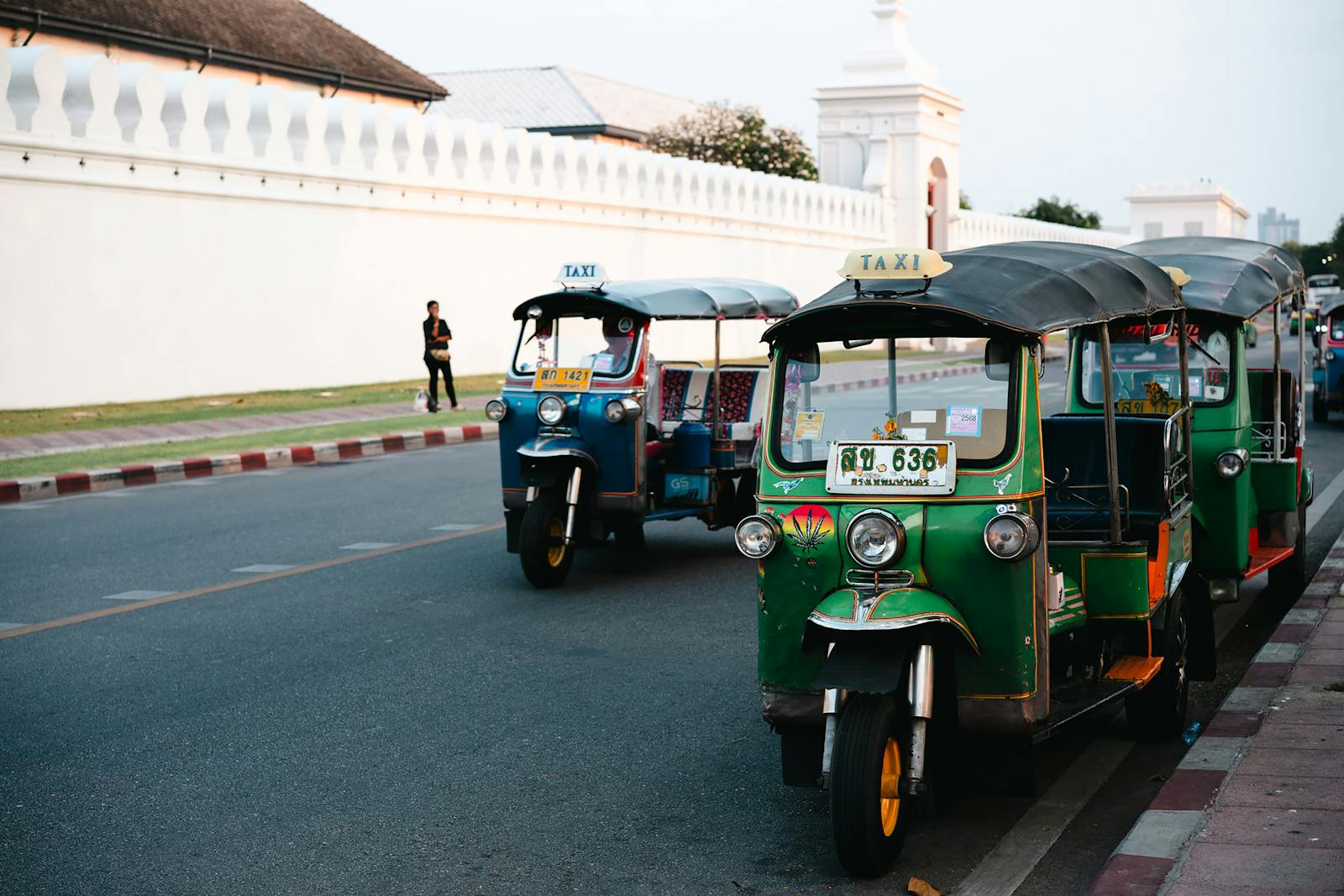
Tuk-tuks are an experience, and you should do one once for the photo and the breeze in your face. But understand they are a negotiation, not a fixed price, and they will often quote more than a metered taxi or a Grab. In Phuket a tuk-tuk hop can be 150–400 baht for a ride a Grab would do for half. Agree the price before you sit down, or just take an app. The "I'll take you to a gem shop / tailor on the way" tuk-tuk offer is a commission scam — always say no.
Songthaews — the red pickup trucks with two benches in the back — are the cheap local move, especially in Chiang Mai and on the islands. They run rough routes for a flat fare, often 30–50 baht around town. Flag one down, tell the driver where you're going, hop in the back, press the buzzer when you want off, pay on exit. They won't always go exactly where you want, but at those prices, who cares.
The bottom line
Getting in is the only genuinely tricky part right now, and it's all paperwork: check whether you've landed in the 30-day or 60-day window for your dates, do the free TDAC at the real .go.th site within 72 hours, and carry an onward ticket. Getting around is the easy, fun part — the night train is the move for crossing the country, budget flights win on the long brutal routes, ferries handle the islands, and Bolt or Grab kill every in-town haggle. Skip the airport taxi touts, skip the $40 fake arrival-card sites, and skip the gem-shop tuk-tuk. You'll move around Thailand for a fraction of what the tour brochures want you to pay.
Vietnamese backpacker, 5 years zigzagging across SE Asia on a shoestring. Budget travel, street food, hidden gems — the honest version.
✦ More from Alex Nguyen


✦ Keep reading
More from this region


More in Destinations
✦ Discussion
Start the discussion
No replies yet — yours could be the first.