
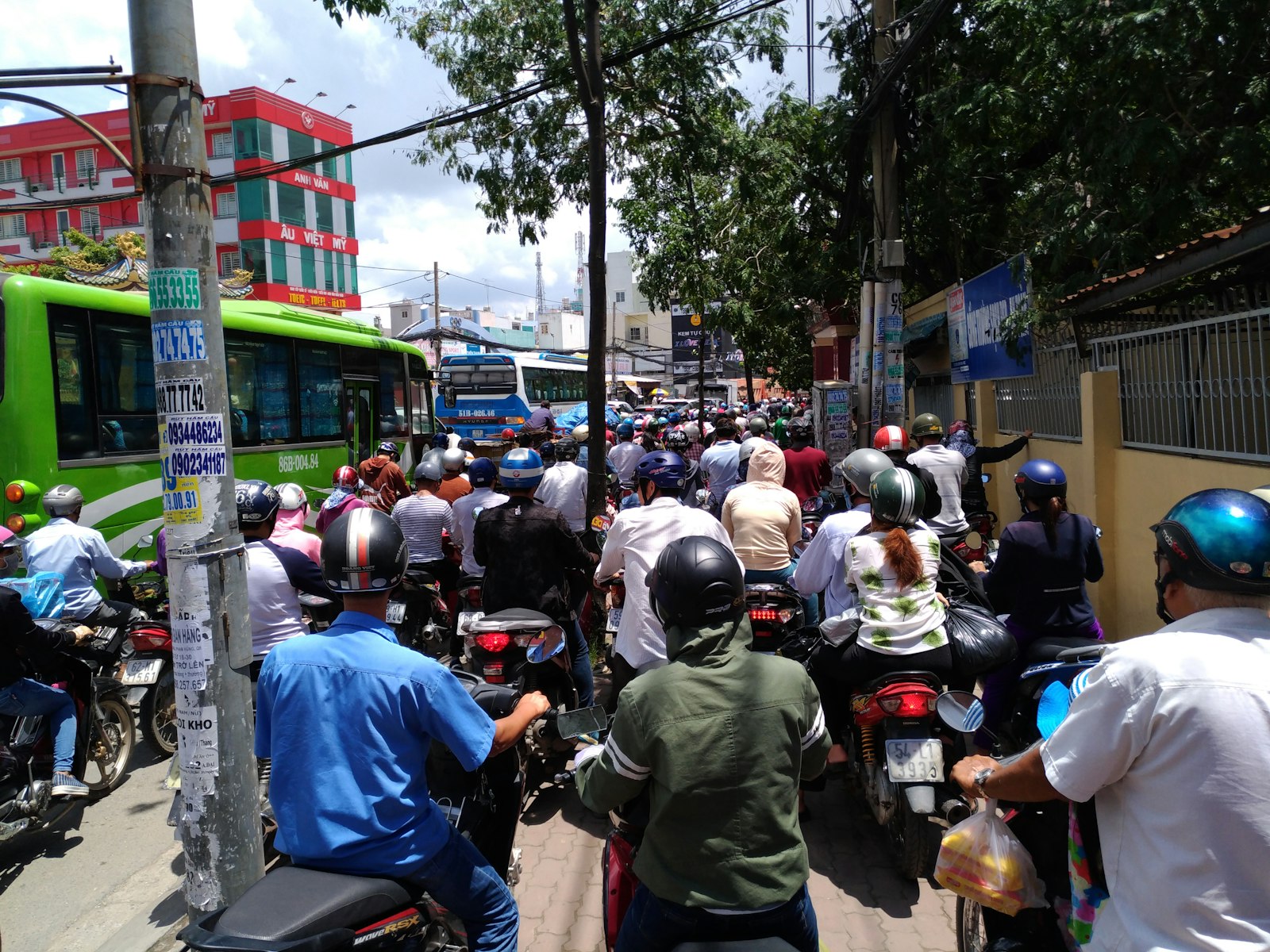
How to Get Around Vietnam: Trains, Buses, Bikes & Flights
Vietnam is roughly 1,650 km top to bottom and it bends like a banana, which means the single biggest decision of your whole trip isn't where to sleep — it's how you move between places. Get it right and the country opens up cheap and easy. Get it wrong and you'll burn three days and a hundred bucks crossing distance you could've flown for $35.
I grew up in Hanoi and I've done every one of these legs more times than I can count. So here's the honest breakdown — train, bus, plane, bike, Grab — with current prices and the calls I'd actually make.
Quick note on money: as of late May 2026 a dollar gets you about 26,300 dong. I'll round to ~26,000 for the conversions below so the math stays clean, but FX drifts — check before you book.
The Reunification train — slower, but the move for the coast
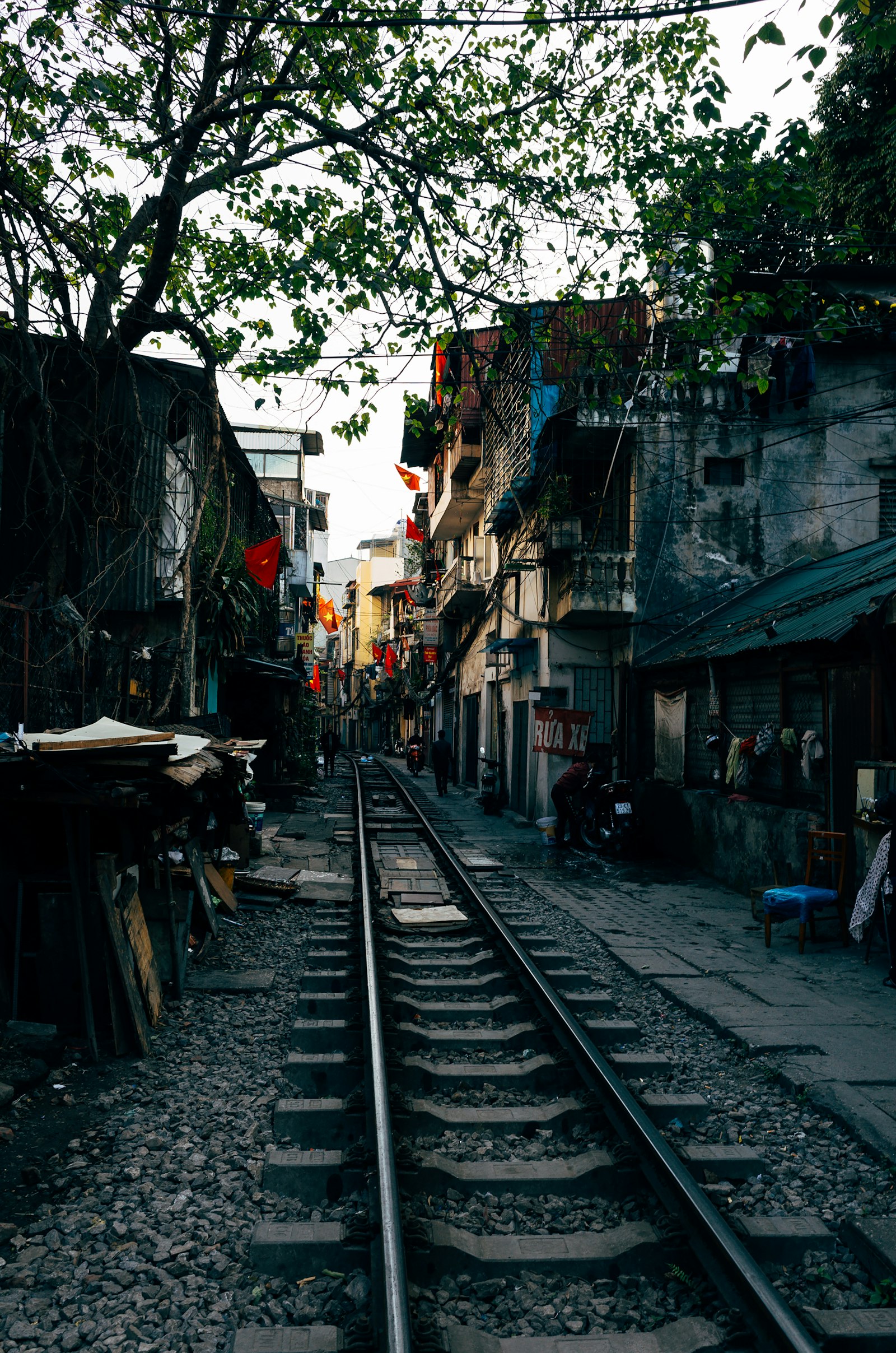
Everyone calls it the Reunification Express. There is nothing express about it. The full Hanoi–Saigon run takes 30 to 35 hours depending on which service you catch, versus two hours in a plane.
But that's not why you take it.
You take it for the stretch between Da Nang and Hue, where the line clings to the cliffs over the East Sea on the Hai Van Pass while every bus on the planet burrows through the tunnel underneath. It's the best three hours of train anywhere in Southeast Asia and I will fight anyone who says otherwise.
Prices, current:
Hanoi → Saigon, 4-berth soft sleeper: around 1,470,000–1,760,000 VND (~$57–68 USD), price depending on whether you're on a top or bottom bunk (bottom costs more).
6-berth hard sleeper: cheaper, more cramped, more local. Fine for a night.
2-berth VIP cabin: only on the SE1/SE2 trains, only ~4 per train. Books out fast.
Da Nang → Hue alone: 250,000–300,000 VND (~$10–12) and worth every dong.
Here's the upgrade most guides are slow to mention: Vietnam Railways has rolled out properly refurbished high-quality trains on the busy legs — the SE19/SE20 on Hanoi–Da Nang and the newer SE21/SE22 on Saigon–Da Nang. White-and-blue repaint, new mattresses, reading lights, charging ports at every berth, Wi-Fi, even a carriage with 180-degree rotating seats. Night and day from the rattling old stock. If your dates line up with one of those, take it over the standard SE1–SE10.
One scam-dodge: book on dsvn.vn (the actual railway), or use Baolau or 12Go if you want an English interface and don't mind a small markup. Sites like vietnam-railway.com and vietnamrailways.net are not the railway — they're resellers dressed up to look official.
My call: don't ride the rails the whole length unless you genuinely love trains. Do ride Da Nang–Hue, and grab a soft-seat (not a sleeper) for that one — the windows are bigger and you came for the view. Sit on the sea side: right-hand side heading north to Hue.
Night buses — cheap, everywhere, and a coin flip on sleep
The sleeper bus is the backbone of backpacker Vietnam. Lie-flat (sort of) pods, a blanket, a curtain on the nicer ones, and it doubles as your accommodation for the night — which is the whole money hack.
Real prices:
Short-ish hops (Hanoi–Da Nang, Hoi An–Nha Trang): 300,000–450,000 VND (~$12–17).
The brutal long hauls (Hanoi–Saigon): 600,000–1,200,000 VND (~$23–46), but please don't. That's 35+ hours on a bus.
VIP cabin buses (private pod, door, often a USB port): 350,000–500,000 VND (~$13–19) on popular routes.
Tiers, plainly: a standard 36–42 berth sleeper has no curtains and no charging — fine but basic. A limousine bus drops to 32–34 berths with curtains and USB. A cabin bus gives you 20–22 actual private pods. Pay the extra 100k for the cabin on any overnight leg; you'll sleep, and that's the entire point.
Book through Vexere (the local app, best coverage and real reviews) or 12Go. Avoid letting your hostel front desk "arrange" it unless you trust them — the markup can be brutal and they'll stick you on whatever bus pays the best commission, not the best bus.
My call: night buses are unbeatable for the 6–8 hour legs where a flight's airport faff would eat the time savings — think Hanoi to Phong Nha, or Da Lat down to Mui Ne. Anything over 12 hours, fly.
Domestic flights — the leg most backpackers under-use

Here's the thing nobody tells the wide-eyed first-timer trying to do it all overland: Vietnamese domestic flights are absurdly cheap, and the country is long enough that you should absolutely use them.
VietJet and Bamboo Airways are the budget players; Vietnam Airlines is the flag carrier and a touch pricier with bags included. Sample one-way fares booked a few weeks out:
Saigon → Hanoi: from ~$33, often 1,800,000–2,500,000 VND (~$70–95) if you're booking last-minute.
Saigon → Da Nang: from ~$26 (around 680,000 VND) on a VietJet sale.
Hanoi → Da Nang: 2,400,000–3,200,000 VND (~$92–123) on the budget carriers.
Compare that to a 35-hour bus or train for the Hanoi–Saigon haul and the flight isn't just faster, on a sale it can be the same money. The math is wild once you internalize it.
What they don't tell you about VietJet: the headline fare is bait. Everything is an add-on — checked bag, seat selection, the works. Travel carry-on only or your $33 flight becomes $70. And VietJet's on-time record is, let's say, aspirational — pad your connections.
My call: fly the one or two legs that are pure distance (the north-south jump especially), and go overland for the bits where the journey is the point. Don't be a hero on a bus for 35 hours to save what a flight costs on sale.
Grab vs taxis — the within-city question
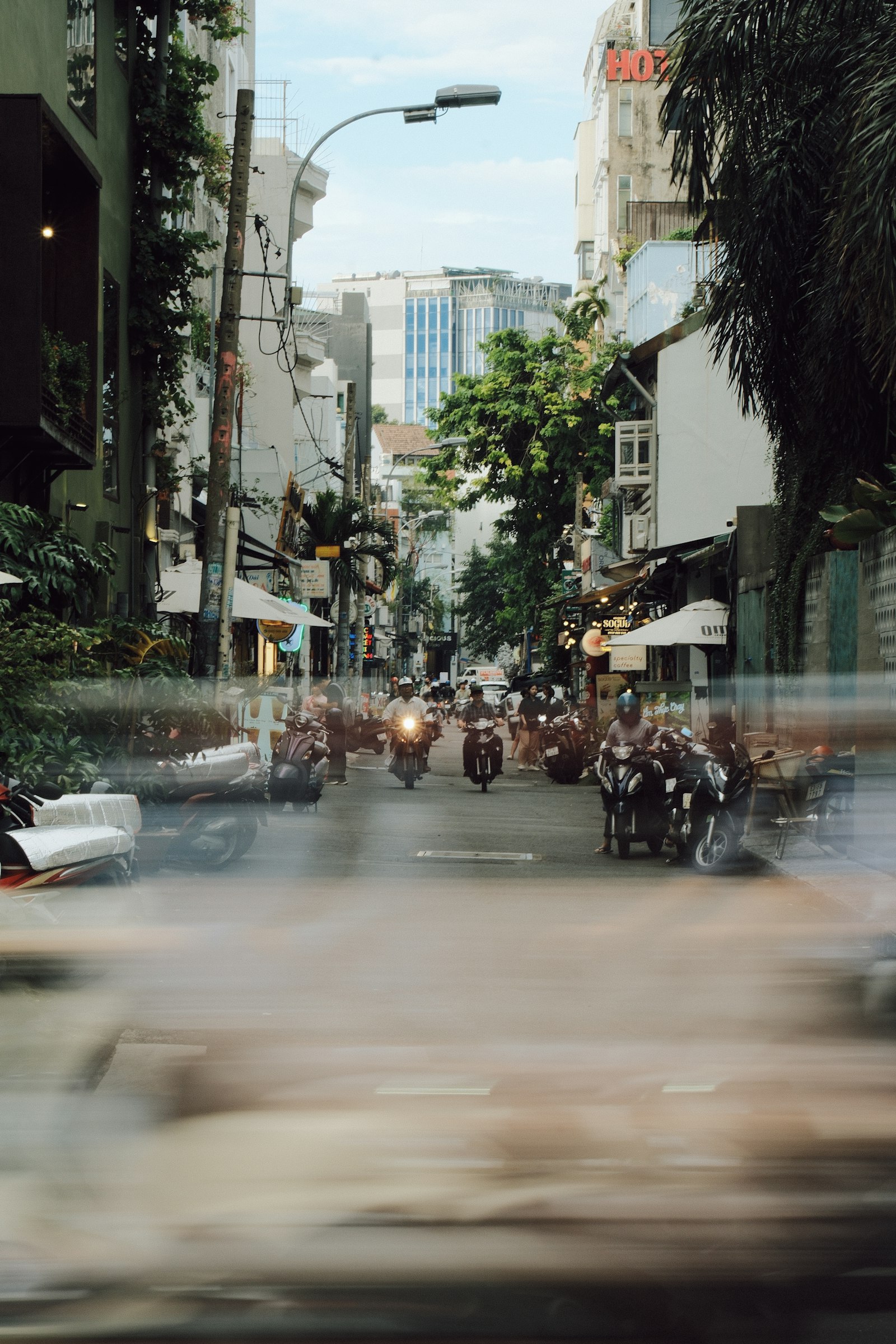
Inside a city, Grab is the answer 95% of the time. It's the regional Uber: app-based, fixed price up front, no haggling, no "broken meter," no scenic detour to run up the fare. You can summon a car (GrabCar) or — the move for solo travelers in traffic — a motorbike (GrabBike) where you hop on the back.
Rough rates as of 2026:
GrabCar: ~15,000 VND base + 15,000–18,000 VND/km. A typical 5 km city hop runs ~80,000–110,000 VND (~$3–4).
GrabBike: ~8,000 VND base + 12,000–14,000 VND/km. That same 5 km, ~30,000–45,000 VND (~$1.20–1.70). Faster in gridlock, too.
Airport surcharge: add 15,000–25,000 VND.
On metered taxis: stick to Mai Linh (green) and Vinasun (white) if you must take a street cab — they're the legit ones. Everything else, especially the unmarked cars circling airport arrivals, assume a rigged meter until proven otherwise. Honestly though, just open Grab. The price is locked before you get in and that kills the entire argument.
My call: GrabBike for one person beating traffic, GrabCar when it's raining or you've got a backpack. Skip street taxis unless Grab's surging in a downpour.
Renting a motorbike — and the Ha Giang "easy rider" cheat code

Renting a bike is how you actually feel Vietnam — the rice paddies, the coast road, the mountain passes. A semi-auto is ~180,000 VND/day (~$7), a Honda Winner X 150cc ~350,000 VND/day (~$14), a proper XR150L trail bike ~550,000 VND/day (~$20). Most shops want a 1–3 million VND cash deposit and throw in a helmet and raincoat.
Now the part you cannot skip. Legally, you need a 1968-Convention International Driving Permit plus your home license to ride anything over 50cc. The catch: a lot of Western countries (the US, Australia, Canada, NZ, Japan, Singapore) issue the 1949 version, which Vietnam doesn't recognize — and you can't buy a valid IDP once you're in-country. Get caught without the right paperwork and you're looking at a 2–5 million VND fine, possible 7–15 day bike impound, and — the one that actually matters — void travel insurance if you crash. Plenty of people ride anyway. I'm not your mum, but I'm telling you the real downside, not the hostel-bar version.
Which brings us to the Ha Giang loop — the most spectacular 3–4 day ride in the country, limestone karsts and switchbacks up near the Chinese border. If you've never ridden, or you don't have the license, the easy rider option is genuinely the smart play: you sit on the back, a local driver who knows every blind corner does the riding, and you just take photos and hang on.
Easy rider (you as passenger), 3–4 days: roughly $100–130 all-in — bike, fuel, driver-guide, usually homestays and some meals.
Self-drive rental for the loop: from ~180,000 VND/day plus your own fuel and accommodation.
When I did the loop in 2024 I rode my own, but I send every nervous first-timer to the easy riders without hesitation. Those mountain roads are not where you learn to ride a manual.
My call: rent a bike for chill stuff — a day looping the rice fields around Mai Chau, the coast between Hue and Hoi An. For Ha Giang specifically, easy rider unless you genuinely know what you're doing on a bike.
What I'd actually do
If you're doing the classic three-week Hanoi-to-Saigon run, here's the mix that beats grinding it all overland:
Fly the big north–south jump (Hanoi↔Saigon, ~$35–70). Don't waste 35 hours on it.
Ride the train Da Nang–Hue for the Hai Van Pass — soft seat, sea side. Non-negotiable.
Night bus the 6–8 hour legs — Hanoi to Phong Nha, Da Lat to Mui Ne. Book the cabin tier.
Grab inside every city. GrabBike if it's just you.
Ha Giang as an easy-rider loop unless you can actually ride.
Mix the modes to the leg. That's the whole secret. Nobody's handing out medals for surviving the longest bus.
Sources:
Vietnamese backpacker, 5 years zigzagging across SE Asia on a shoestring. Budget travel, street food, hidden gems — the honest version.
✦ More from Alex Nguyen


✦ Keep reading
More from this region


More in Destinations
✦ Discussion
Start the discussion
No replies yet — yours could be the first.