
Why go
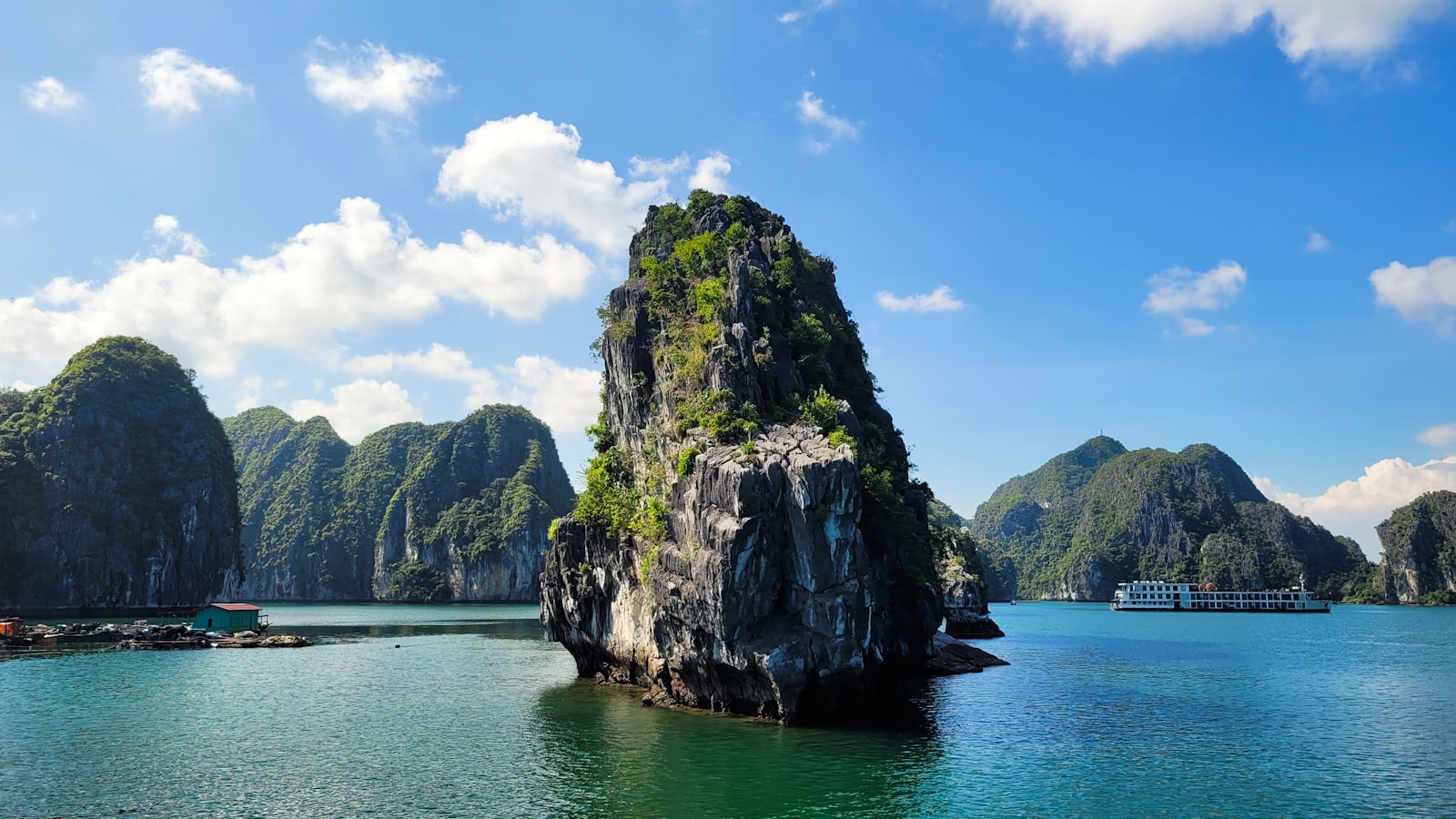
There are roughly 1,600 limestone towers standing in this stretch of the Gulf of Tonkin, and the surprise — even after you've seen the postcards a hundred times — is the scale. These are not rocks in water. They are drowned mountains, the eroded teeth of a karst plateau that sank, leaving the summits as islands. UNESCO listed the bay in 1994, and the listing made it famous in a way that cuts both ways: the classic central route can feel like a parking lot of identical white junks by midday. But arrive at the right hour and the geology does what it has always done. At dawn the towers stack into flat grey planes, each one paler than the last, like a Chinese ink scroll where the artist kept thinning the brush. By late afternoon the same cliffs go warm — a dusty gold on the seaward faces, deep shadow in the channels between. I keep coming back not for the boat or the buffet but for that compression of distance: layer behind layer behind layer, the haze doing the work a wide lens never quite can. Come for the rock. Stay for the way the light lies across it.
When to go
October to April is the dry, cool half of the year and the reason to plan around it. November and December are my pick: clear-ish skies, calm sea, water at its most settled, and a low slanting sun that rakes the cliffs instead of flattening them. January and February bring a soft winter haze — drizzle and fog that can sit until mid-morning, then lift. Don't write it off. That mist is not 'bad weather'; it's the layered, monochrome bay the painters chased, and it photographs beautifully if you stop fighting it. March and April warm up and stay pleasant. The wet season runs roughly May to September: hot, humid, with short violent afternoon storms and the real risk of a tropical depression closing the bay entirely — operators cancel sailings when the port authority pulls permits, usually with little notice. August is statistically the worst for storms. The trade-off: June to August is also when the water is warm enough to actually swim (25–29°C) and when prices soften, sometimes to two-thirds of peak. Shoot the shoulder months; swim in the wet; accept the fog in winter.
How to get there
Almost everyone comes from Hanoi, and the journey is no longer the ordeal it was. Since the expressway opened, the drive is about 2.5 hours each way. Most cruises bundle a transfer: a shared shuttle bus, or — worth the upgrade — a 9-seat 'limousine' van with reclining seats, hotel pickup in the Old Quarter, water and a guide, around 15–25 USD (380,000–640,000 VND) per person one way. If you book a cruise package, this is usually folded into the price; confirm the pickup point and time in writing. Two destinations, two harbours: the classic central Halong route departs from Tuan Chau or the Halong cruise port; the Lan Ha Bay route departs from Got pier / Cat Ba. For Cat Ba Island independently, you can also reach it by a bus-boat-bus combination or the faster Cat Ba Express limousine-and-speedboat service. Driving yourself is pointless — there's nowhere useful to park and the bay is only accessible by boat anyway. Book the cruise first, let it dictate the transfer.
Where to stay
Three honest options. One: sleep on the boat. An overnight cruise (2 days/1 night) is the reason most people come, and it's the right call — a day trip spends half its hours in a van. But the cruise market is tiered and the tiers are real. The route, the caves, the anchorage are roughly the same whether you pay 120 or 450 USD; what you're buying up the ladder is cabin size, hull stability, food, and crew. A solid mid-range 2D1N runs around 150–200 USD (3.8–5.1 million VND) per person; genuine 5-star with a balcony cabin, 250 USD and up. Below about 120 USD, scrutinise reviews hard — the catalog photos were taken the day the ship launched. Two: base on Cat Ba Island and day-trip into Lan Ha Bay — cheaper, more independent, good for climbers and kayakers, with hotels from budget to a few resorts. Three: Halong City hotels on the mainland — practical, cheap, and almost beside the point; you came for the water, not the karaoke strip.
What to eat
Be realistic about cruise food. On a mid-tier boat it's a competent, repetitive seafood spread — spring rolls, a whole steamed fish, prawns, morning-glory, fried rice — pleasant, rarely memorable, and pitched at a roomful of nationalities. The good boats lift this with a proper set menu and a cooking demonstration that's more fun than it sounds. What you'll pay attention to is the drinks bill: beer and wine on board are marked up steeply, and the 'all-inclusive' line rarely includes them — this is exactly where a 35-USD deal becomes a 400-USD shock. Ask what's covered before you sail. The better eating is on land. Cat Ba town's harbour has small seafood restaurants where you pick from the tank — grilled scallops with peanut and scallion, clams steamed with lemongrass, the local 'cha muc' (Halong's prized grilled squid cake, springy and faintly sweet), and fresh oysters from the floating farms you'll have cruised straight past. Prices in VND, paid on land, are a fraction of the bar tab afloat. Eat lightly on the boat; eat properly on Cat Ba.
Things to do
The set menu, first. Sung Sot ('Surprise') Cave on Bo Hon Island is the bay's largest show cave — 10,000-plus square metres, fifty steps up from the jetty, lit theatrically — and it's worth seeing despite the crowds; go in the first or last group of the day, not at noon. Ti Top Island gives you the classic aerial: a stiff climb of a few hundred steps to a viewpoint over the scattered junks, best in late-afternoon gold, crowded at every other hour. Then leave the script. The real reward is a kayak — paddle through Luon Cave's low tunnel into a hidden lagoon, where the cliffs close around you and the engine noise finally stops. And choose your water deliberately: the central Halong route is the busiest; Lan Ha Bay to the south (off Cat Ba) is greener, quieter, dense with little beaches and the Dark and Bright caves; Bai Tu Long to the northeast is emptier still, with the Vung Vieng floating village and Thien Canh Son cave. If you want the bay the brochures promise, book the route that isn't on the brochure.
Italian travel photographer-writer. Architecture, landscape, the light. Slow, deliberate, image-led essays.
✦ More from Marco Rossi


✦ Discussion
Start the discussion
No replies yet — yours could be the first.