
Budget Airlines in Southeast Asia: How to Fly Cheap
A Bangkok–Hanoi flight popped up at 1,750 baht (about $54) last week when I was poking around for a friend. Two hours in the air versus a 24-hour train. Sounds like a no-brainer, right?
Then I clicked through. By the time the site had bolted on a 20kg bag, a seat, and a "processing fee", that 1,750 had become 3,400 ($104). The train suddenly looked a lot smarter.
That's the whole game with budget airlines in Southeast Asia. The headline fare is real — it's just the bait. Here's how to actually fly cheap across this region in 2026, who to trust, and when to keep your wallet shut and take the bus.
The carriers, ranked by who actually earns your money
There are a lot of low-cost carriers out here. These are the ones you'll actually book.
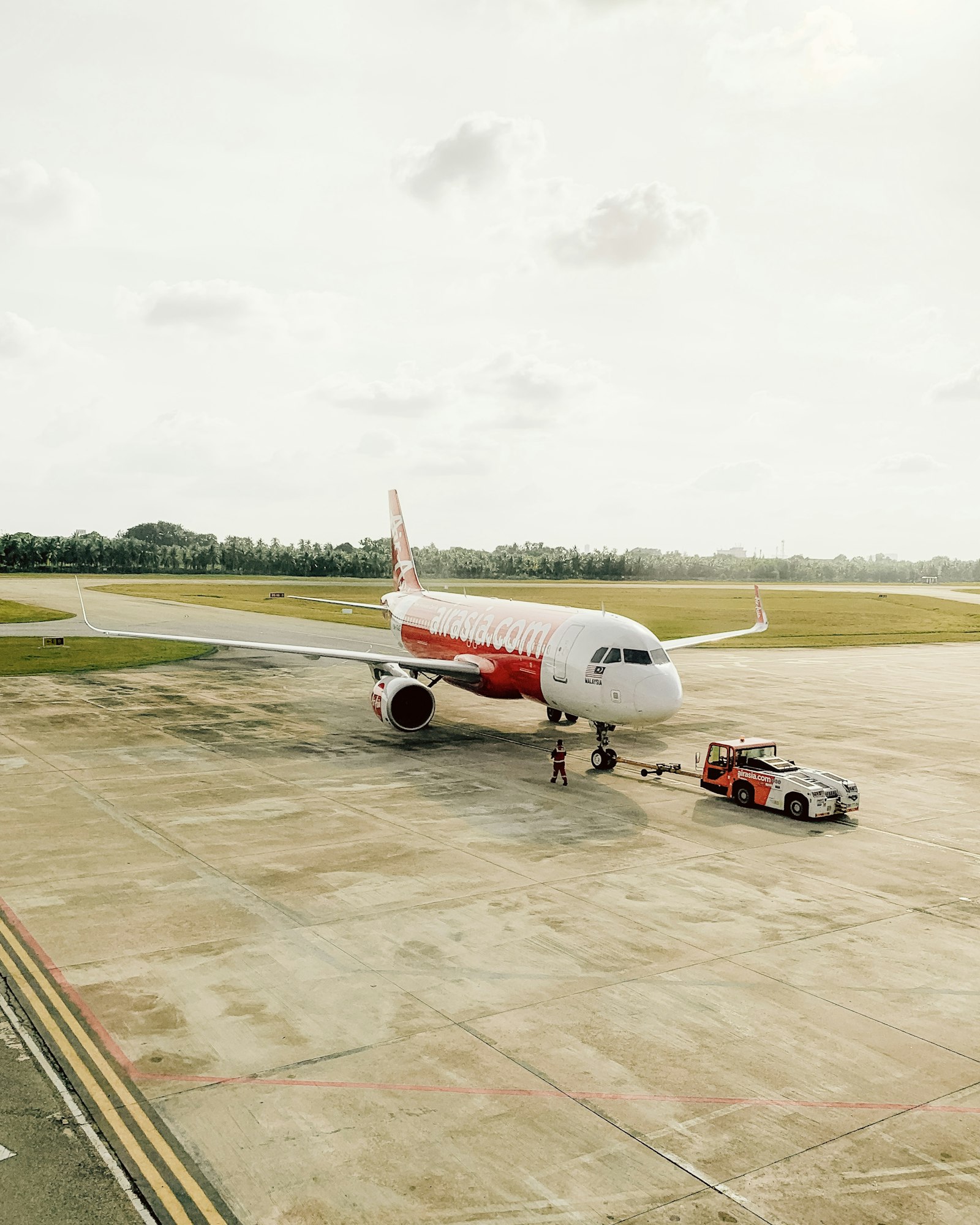
AirAsia is the giant. Its home base, KLIA2 in Kuala Lumpur, is the world's largest purpose-built budget terminal, and the network reaches 165-plus destinations across the region. If you're hopping between countries — KL to Bangkok, Bali to Singapore, Phuket to wherever — AirAsia almost always has the route and usually the cheapest seat. The app is fine. The fares are genuinely low. The catch is everything around the fare, which I'll get to.
VietJet owns the cheap-Vietnam game. Hanoi, Da Nang, Saigon, plus a fat international map into Bangkok and beyond. Fares are stupid cheap — I've seen Saigon–Bangkok under $40. The trade-off is reliability: VietJet has a reputation for delays, and on a tight connection I wouldn't trust it. For a standalone hop with a buffer day, it's great.
Scoot (Singapore) is the one I'll actually recommend to a nervous flyer. It's Singapore Airlines' budget arm, Skytrax named it the world's best long-haul low-cost carrier in 2025, and you get 10kg of cabin baggage — 3kg more than the others. That extra 3kg is the difference between packing carry-on only and paying for a checked bag. Don't sleep on it.
Cebu Pacific is the move inside the Philippines — that country is islands, so you fly, and 5J connects everything. On-time performance was sitting around 84% late in 2025, down from the year before, so build in slack. Still your cheapest way around the archipelago.
Lion Air / Thai Lion covers Indonesia and Thailand cheap, and unlike most of the pack, Thai Lion's economy fares often include a checked bag (commonly two 20kg pieces, but it's route-dependent — confirm at booking). The flip side is Lion Air's group has one of the patchiest punctuality records in the region. Cheap, gets you there, just don't plan your life around the departure time.
RIP Jetstar Asia, by the way — Qantas shut its Singapore-based budget arm down on 31 July 2025, killing 16 intra-Asia routes. If an old blog or a mate tells you to "just grab the Jetstar from Changi", that ship has sailed. Scoot and AirAsia mopped up most of those routes.
Where the cheap fare quietly disappears
This is the part nobody wants to explain, so here it is straight. The fare is the floor. Everything else is a tollbooth.
Baggage is the big one. Standard cabin allowance across AirAsia, VietJet, Scoot and the rest is 7kg, with a bag no bigger than 56 x 36 x 23cm. They mostly don't weigh it at the gate for short hops — but they can, and on a packed flight they will. Checked bags are never free on the cheapest fares. The trap is when you buy: a 20kg bag pre-booked online runs maybe SGD 30–50 on Scoot ($24–39), but rock up to the counter without one and you're looking at SGD 70–90 ($55–70). On AirAsia the gap is just as brutal — gate excess is charged per kilo and it stings. Pre-buy your bag the moment you book, or commit hard to carry-on only.
The pre-ticked add-ons. AirAsia's checkout is the worst offender. It'll quietly pre-select a 20kg checked bag, nudge you toward a paid "Hot Seat", and slide in travel insurance and a meal. Read every line before you pay. Untick the stuff you don't want.
The "processing fee". A card/convenience fee that shows up on the final page, right before you confirm. Travelers have been calling it a scam for a decade and it's still there. There's not always a clean way around it, but it's a real line item — bake it into your mental math so the fare doesn't surprise you.
A $40 fare with a $25 bag, a $5 seat and a $4 fee is a $74 fare. Once you internalize that, you book smarter.
When the night bus or train quietly wins
I love a cheap flight. But flying isn't free even when the ticket is, and sometimes the overland option is the actual move — not for the romance, for the math and the logistics.
Take Hanoi to Saigon. The flight is 2 hours and runs $40–120 all-in once you've added a bag. But factor in the $10–25 Grab to Noi Bai airport, getting there 2 hours early for an international-style budget check-in, and the $10 ride into the city at the other end, and your 2-hour flight is a 6-hour door-to-door day that's killed your travel-day anyway.
The Reunification Express sleeper does the same route in 32–35 hours for roughly $40–80 in a soft sleeper. It's a long haul — too long for most people on a two-week trip — but you trade a wasted travel day for a moving hotel and 1,726km of Vietnam out the window. On shorter legs the train wins outright: a daytime hop where the flight saves you 90 minutes but costs triple isn't worth the airport hassle.
Same logic for the slow boat to Laos from northern Thailand, or any night bus under ~8 hours. The rule I use: if the flight plus both airport transfers plus the early check-in saves you less than half a day over the bus or train, and the overland fare is meaningfully cheaper, take the ground. You sleep through it, you skip a hostel night, and you don't feed the baggage machine.
When flying does win: any island-to-island in the Philippines or Indonesia, any leg over ~600km on a short trip, and anywhere the overland alternative is a 30-hour bus. Don't be a hero. Fly the long ones.
Booking timing: when the cheap seats actually exist

There's no magic, but there are patterns that hold up.
Book three to eight weeks out for intra-SEA hops. Last-minute is where budget carriers make their money — fares climb hard inside two weeks. For peak periods, push that window to three-plus months.
Fly midweek. Tuesday, Wednesday and Thursday departures are reliably cheaper than weekends. Friday is the most expensive day to fly out.
Dodge the holiday spikes. Lunar New Year (Tết in Vietnam — late January or February depending on the year), Eid, Songkran in mid-April, and Chinese Golden Week turn cheap fares into eye-watering ones. Fares often soften in the week or two after a major holiday, so if your dates flex, fly into the lull.
Set a price alert and pounce. Google Flights and Skyscanner will watch a route for you. Budget fares move daily; when one drops, it doesn't sit there.
One more: prices are in local currency on the airline's own site, and the dong has slipped past 26,000 to the dollar in 2026 (it was nearer 25,000 not long ago), so a VND fare converts to slightly fewer dollars than your old mental model expects. Small edge, but it's in your favour right now.
The airport-of-shame problem
Here's the one that ambushes first-timers. Budget airlines often don't fly from the main international airport — they fly from the cheaper, further, scruffier one across town. Plan for it.
In Bangkok, AirAsia, Thai Lion and Nok fly from Don Mueang (DMK), not the shiny Suvarnabhumi (BKK). DMK is functional and a bit rough, with cheaper food and fewer frills — totally fine, but it's a different airport on the other side of the city. If you booked a budget flight assuming you'd land at BKK, you'll be at DMK, and a cross-city transfer in Bangkok traffic is a real 60–90 minutes.
The killer scenario: a self-connected itinerary where you land budget at one airport and your next flight leaves from the other. You haul your bags out, cross the city, and re-check in from scratch — and if leg one is late (looking at you, the delay-prone carriers), you miss leg two with zero protection, because separate budget tickets aren't through-checked. Either fly the whole chain from one airport, or leave yourself a fat buffer. A self-transfer under 4 hours between Bangkok's two airports is a gamble I wouldn't take.
Same trap in Kuala Lumpur (KLIA2 is AirAsia's world, separate from the main terminal), Manila, and Jakarta. Check which airport and which terminal before you book the onward leg.
What I'd actually do
Carry-on only if you possibly can — it sidesteps the single biggest fee and the slowest queue. Book three to eight weeks out, midweek, and pre-buy the bag at checkout if you genuinely need one rather than leaving it for the gate.
Default to AirAsia for cross-country reach, Scoot when you want a calmer experience and that extra 10kg cabin allowance, VietJet for dirt-cheap Vietnam hops with a buffer day built in, and Cebu Pacific around the Philippines. Untick the pre-selected junk at checkout, every single time.
And before you book any flight under about 8 hours overland, do the door-to-door math against the night bus or sleeper train. Half the time the cheap flight isn't actually the cheap option — it just looks like one until the airport transfer eats your afternoon.
Vietnamese backpacker, 5 years zigzagging across SE Asia on a shoestring. Budget travel, street food, hidden gems — the honest version.
✦ More from Alex Nguyen


✦ Keep reading
More from this region


More in Trip Planning
✦ Discussion
Start the discussion
No replies yet — yours could be the first.