
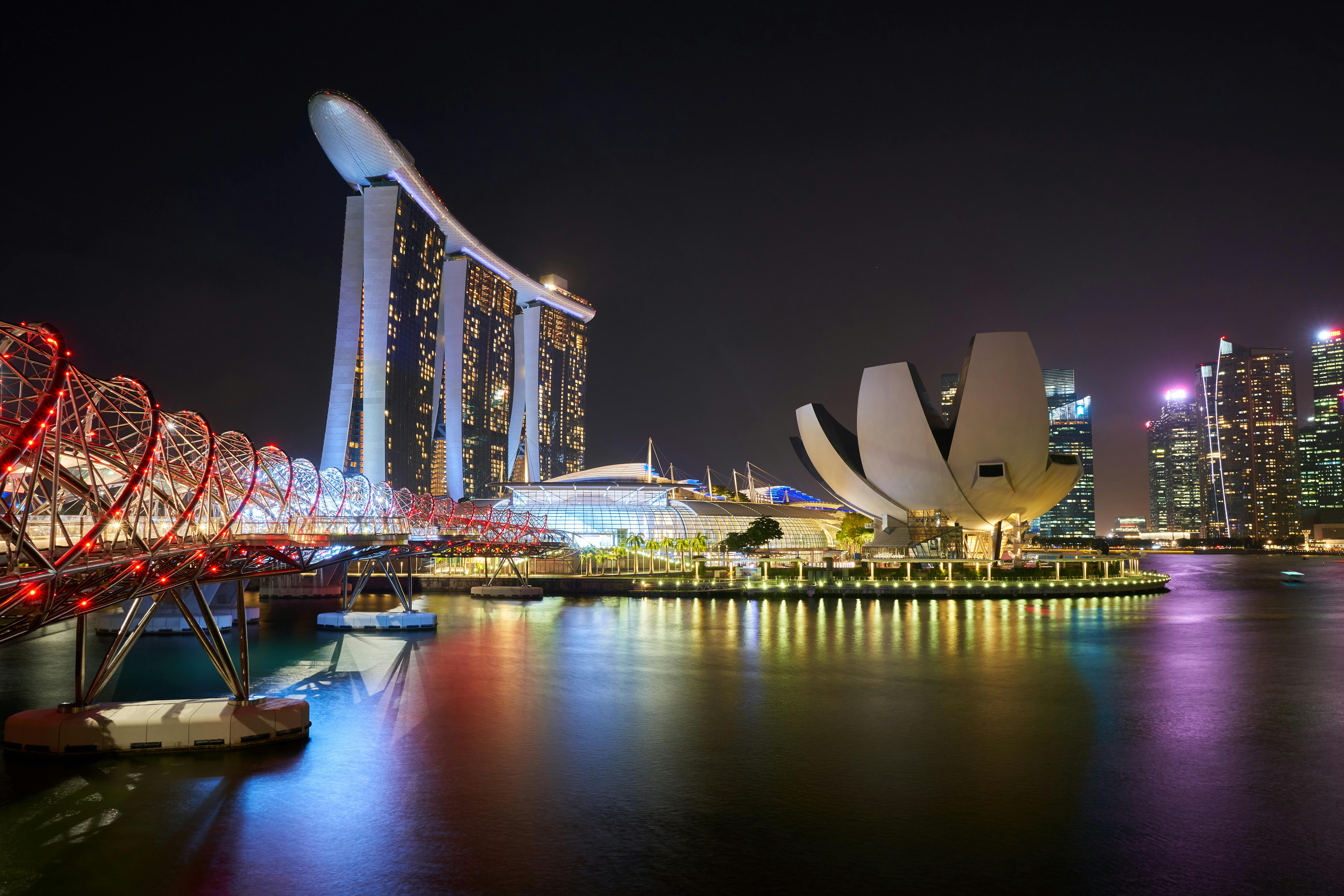
The Best Time to Visit Singapore: A City Without Seasons
The light comes up over the Singapore Strait at about ten past seven, and it does this within four or five minutes of ten past seven every morning of the year. There is no late-summer dawn here, no thin grey winter one. The island sits at one degree of latitude — close enough to the equator that the sun rises nearly vertical and sets nearly vertical, twelve hours of each, give or take nine minutes between the longest day in June and the shortest in December. A photographer who has spent years chasing the slow, raking dawns of higher latitudes has to unlearn something to work here. There is no golden hour in Singapore. There is a golden twenty minutes, and then the sun is up and the day is hot.
So when a reader asks for the best month to visit Singapore, the honest answer is that the calendar matters less than it does almost anywhere else in the region — and that what does change is subtler, and worth knowing.
Singapore doesn't have seasons. It has moods, and they arrive on the wind.
What actually changes: the wind, not the calendar
The island has two monsoons, and the difference between them is not the temperature — that holds stubbornly at thirty-one or thirty-two degrees by afternoon, every month, with humidity that rarely drops below seventy per cent. What changes is where the wind comes from, and therefore when, and how hard, it rains.
From December into early March the Northeast Monsoon blows down out of the South China Sea, and these are the wettest months on the island — December alone averages around 330 millimetres of rain, against an annual total near 2,100. The early phase, December and January, brings what forecasters call monsoon surges: days when the cloud doesn't lift, when rain comes in long grey sheets through the afternoon and on into the evening. From late March to May the wind dies into the first inter-monsoon lull, and this is the hottest, heaviest stretch of the year — still air, towering afternoon thunderheads, the kind of humidity you wear like a second shirt. Then from June to September the Southwest Monsoon brings a marginally drier spell, its rain delivered mostly by Sumatra squalls — fast, violent storm lines that sweep in off the strait in the pre-dawn dark and are usually spent by mid-morning. A second inter-monsoon, October into November, closes the loop before the northeast wind returns.
None of this makes a bad time to come. Rain in Singapore is rarely the all-day washout of a temperate climate; it is theatrical and brief, a wall of water at four in the afternoon, gone by five, the streets steaming. But it shapes the light, and the light is the thing.
December and January: the rains, and the gift of flat light
If you have any choice in the matter, do not write off the wet months. The Northeast Monsoon is, to my eye, the most photographically interesting time to be here — and the cheapest, since it falls outside the peak-fare windows that bracket it.
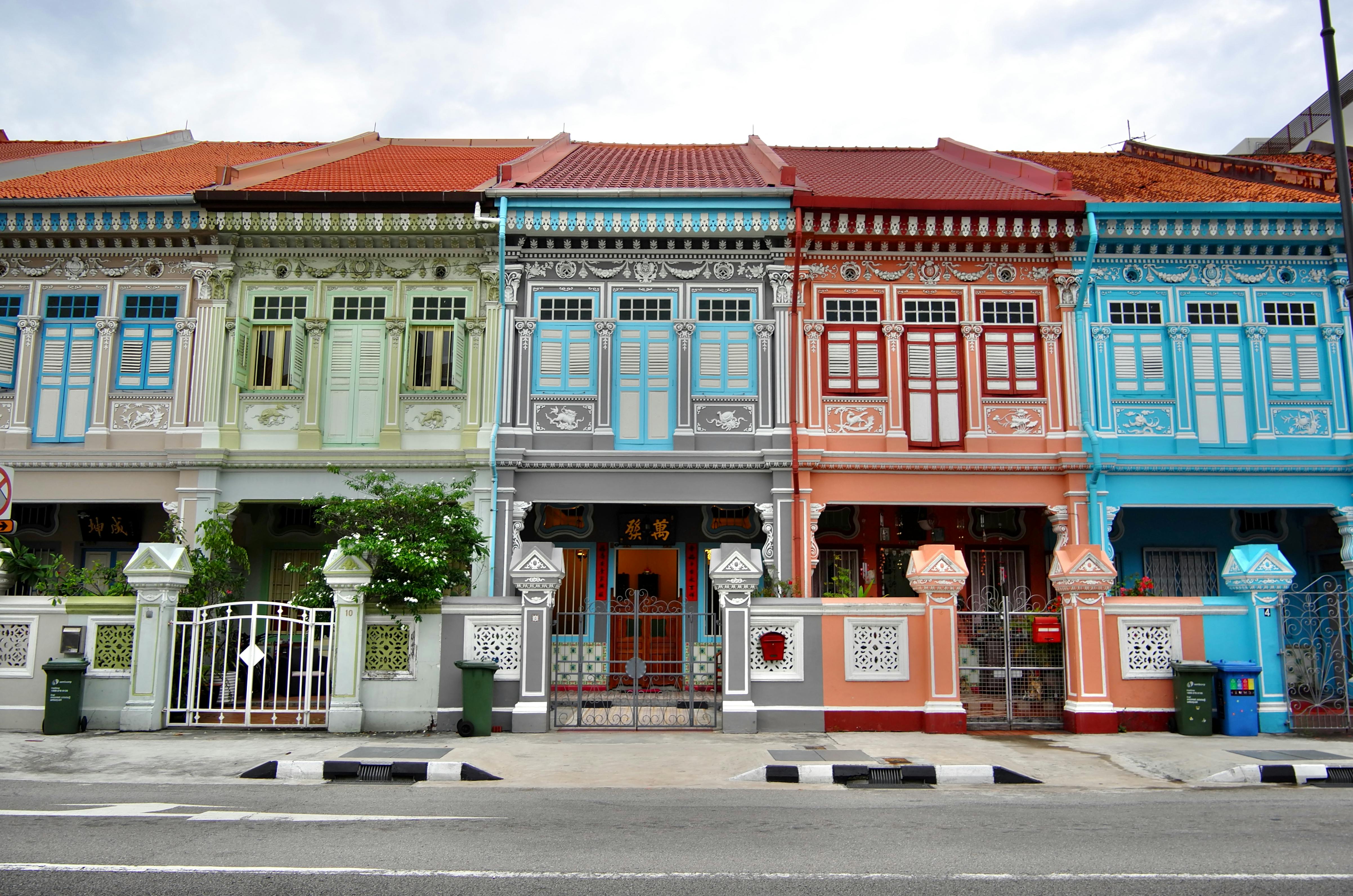
Overcast is a softbox the size of the sky. On a flat grey monsoon morning the harsh tropical contrast lifts, the shadows open, and colour saturates the way it never does under hard noon sun. This is the light to photograph the shophouses in — the long Peranakan terraces of Joo Chiat and Katong, Koon Seng Road in particular, where the facades run in sage green and coral and a turquoise the colour of oxidised copper, every louvered shutter and ceramic tile and ogee window-head rendered without glare. Hard sun flattens those colours to chalk. Cloud makes them sing.
You pay for it in unpredictability. A surge week can keep the lid on for days, and the afternoon storms are genuine — lightning, wind, the lot. But Singapore is the easiest city in Southeast Asia to wait out weather in: the rain hits, you step into a hawker centre or one of the older kopitiam, and forty minutes later the world is washed and shining. Bring one good rain shell and a microfibre cloth for the front element, and let the storms become part of the day rather than the enemy of it.
Overcast is a softbox the size of the sky — and the shophouse colours have never looked better than under it.
February to May: the dry window, and the hardest light of the year
If you want the lowest chance of rain, February is statistically the driest month — around 105 millimetres — with the fewest afternoon storms and the clearest skies. It is no accident that this is when much of the city's outdoor life happens, and when Chinese New Year falls; in 2026 the festival lands on 17–18 February, and for a week or so beforehand Chinatown's streets along New Bridge Road and Eu Tong Sen Street are strung with lanterns and the markets run late and loud. It is a fine time to come, and the busiest — book ahead.
But understand what "dry" buys you. From roughly late March through May the inter-monsoon brings the year's most punishing light: a near-vertical sun, contrast you cannot tame, heat that turns the middle of the day into something to be survived indoors rather than photographed. This is when the equatorial maths bites hardest. Your working hours shrink to the bookends of the day, and you must be disciplined about them.
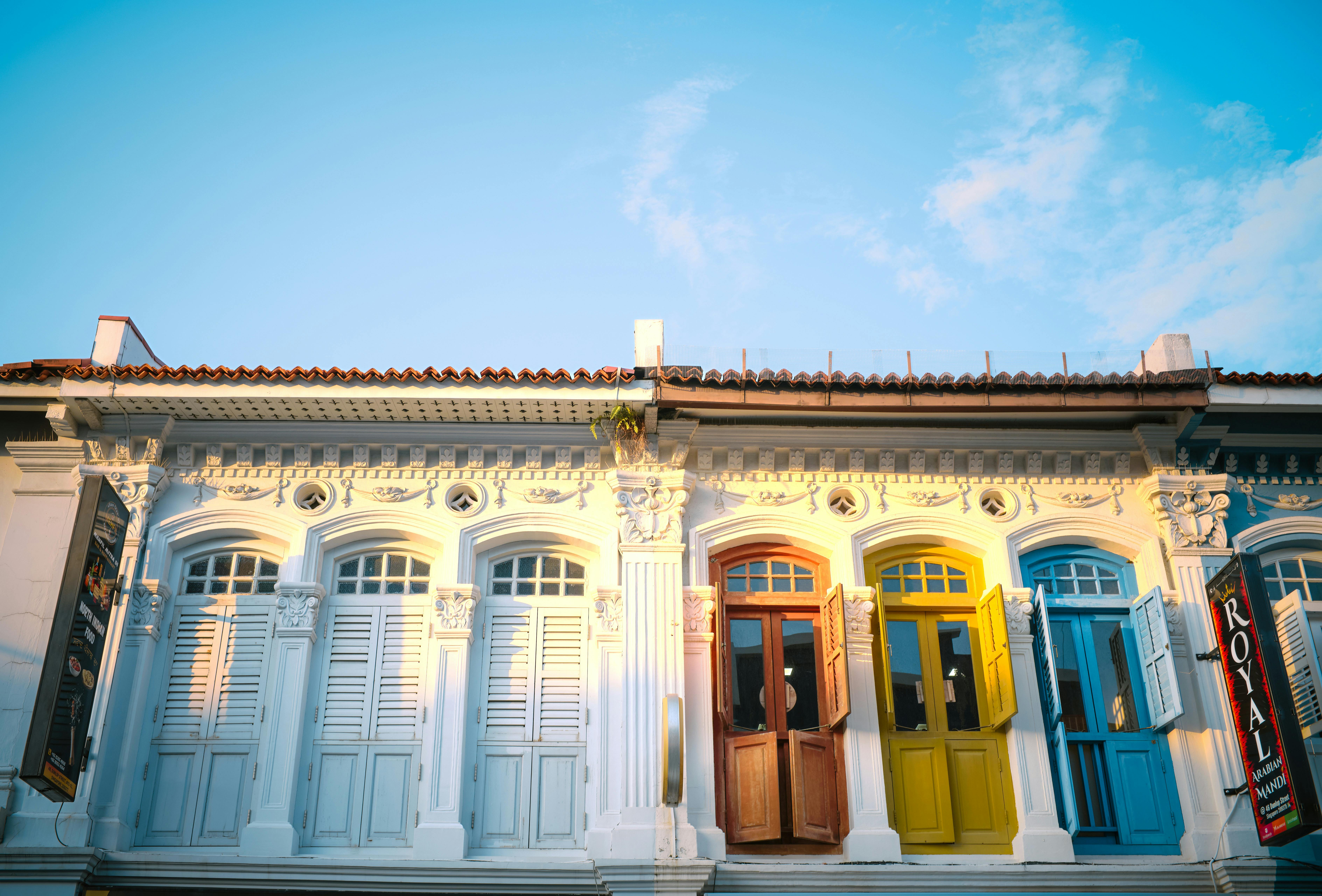
The good news is that the bookends are reliable to the minute. Be at your location for first light around seven, or for the last sun at about a quarter past seven in the evening — the latest sunset of the year, oddly, comes not in summer but in March and again in July, both nudging 7:17pm. In those twenty-minute windows the side-light rakes low across a shophouse facade and finds every moulding, every coat of lime-wash, the warm terracotta of the roof tiles. Shoot the architecture then. Spend the furnace hours where the locals spend them: in the cool of a museum, a hawker centre, an old hotel lobby with the fans turning.
June to October: the haze you should know about
Here is the part the glossy guides tend to skip. From roughly June to October, Singapore carries a real risk of transboundary haze — smoke that drifts across the strait from agricultural and forest fires on Sumatra and Borneo, drawn in on the Southwest Monsoon wind. The worst of it historically falls between July and September, with August often the peak, when the air-quality index can climb into genuinely unhealthy territory and the skyline dissolves into a sour beige murk.
It does not happen every year, and it is not a reason to stay away — but 2026 warrants a flag. Forecasters expect El Niño conditions to develop through June and July, coinciding with a positive Indian Ocean Dipole, a combination that historically raises both the dry-spell risk and the haze risk across these months. If you are travelling between June and October, build in flexibility, and check the National Environment Agency's haze portal before you commit to a long outdoor shooting day. A bad haze day is not melancholy or atmospheric; it is flat, colourless, and bad for your lungs. On those days, go indoors and wait.
When the air is clear — and most days it is — this is a perfectly good stretch to visit, drier on balance than the December rains, with that distinctive equatorial habit of the storm arriving before dawn and clearing the air for the rest of the day. The Sumatra squall that wakes you at six is, by nine, a memory and a freshly scrubbed sky.
September and October: the lights come on
If you are drawn to the city after dark — and Singapore is, finally, a night city — the back half of the year is its richest.
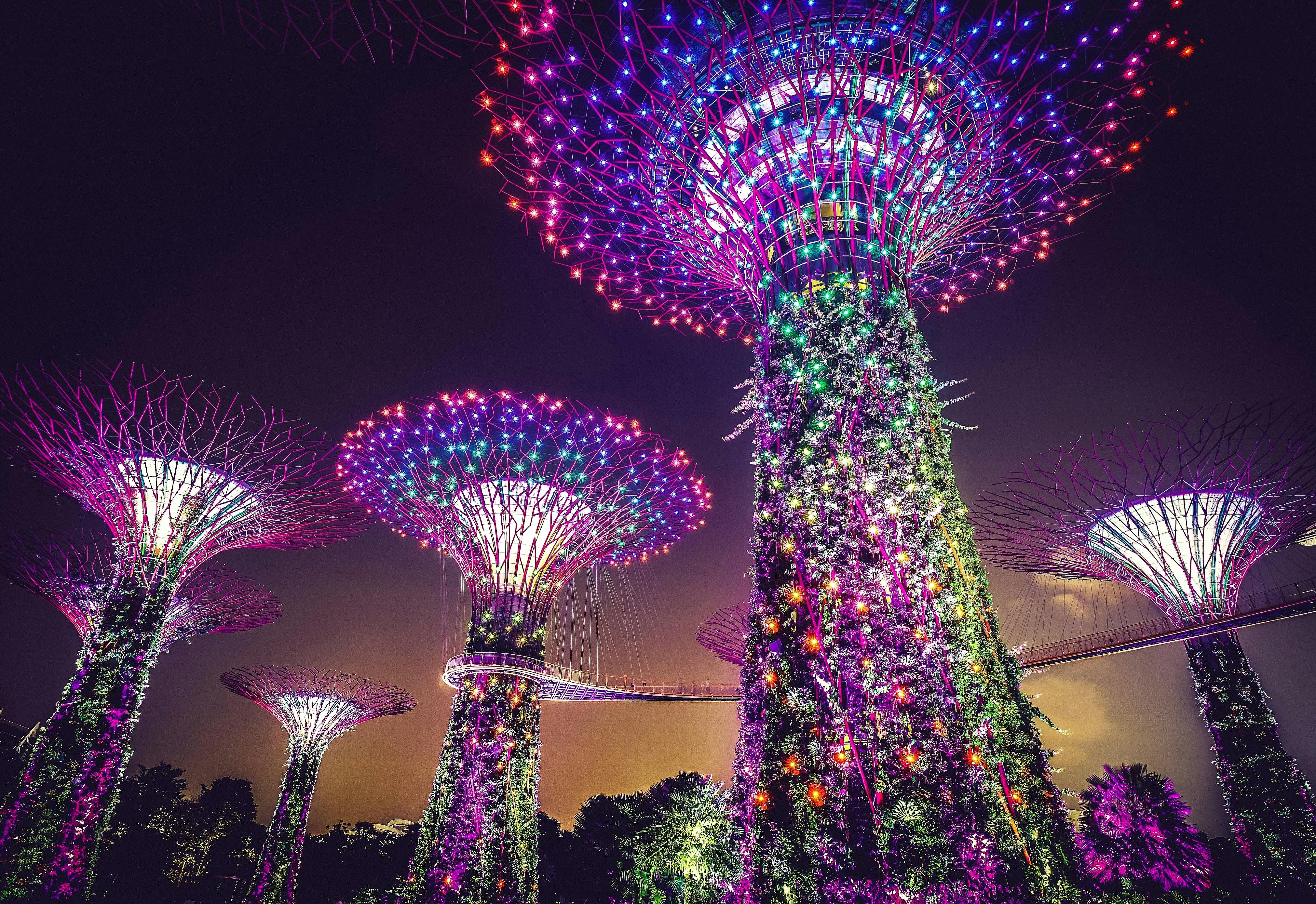
The Mid-Autumn Festival falls on 25 September in 2026, and for a few weeks around it the lantern displays go up: Chinatown's streets glow, Jurong Lake Gardens lights its water, and Gardens by the Bay fills the Supertree Grove and Bayfront Plaza with oversized illuminated lanterns. The Supertrees themselves run their nightly light show regardless of season — a fifteen-minute wash of colour through those steel-and-vine canopies, best caught in the moments just after blue hour drains from the sky, when the deep cobalt overhead still holds against the artificial colour below. Come twenty minutes before the show, set up low, look up.
Then, in 2026, the Formula 1 night race returns on 9–11 October — later in the calendar than its long-held September slot, worth noting if you've timed past trips by memory. The Marina Bay street circuit runs under floodlight against the full skyline, and the whole bay becomes, for a weekend, the most photographed few square kilometres in Southeast Asia. Hotel rates spike accordingly; if the racing isn't your reason for coming, this is the one weekend to route around. Deepavali follows on 8 November, by which point Serangoon Road in Little India has been strung with its arches of light for weeks — sodium-yellow and LED, the crowds soft with motion blur if you drag the shutter.
So — when should you come?
For the clearest skies and the lowest rain, come in February, and accept the crowds and the hard noon light as the price. For the softest, most workable light and the lowest fares, come during the December–January rains, and treat the afternoon storms as punctuation rather than disruption. For the night city in full voice, come for late September into October — but watch the haze forecast through the summer, and decide for yourself whether an F1 weekend is a draw or a thing to dodge.
What you cannot do is wait for a season that will never arrive. Singapore does not give you autumn light or the long blue dusk of the north. It gives you twelve hours of sun, a wall of warm rain most afternoons, and a city that has learned, more elegantly than almost anywhere, to live inside its own weather.
Come for the city, not the climate. The climate is the same the whole year through; only the wind, and the light it carries, ever really changes.
Set your alarm for the twenty minutes after first light. That is when Singapore is most itself — washed, quiet, and briefly cool — before the heat closes over the day like a lid.
Italian travel photographer-writer. Architecture, landscape, the light. Slow, deliberate, image-led essays.
✦ More from Marco Rossi


✦ Keep reading
More from this region


More in Destinations
✦ Discussion
Start the discussion
No replies yet — yours could be the first.