

When the Light Is Right: A Photographer's Year in Vietnam and Cambodia
At six-fifteen on a January morning, the western causeway of Angkor Wat is still cold underfoot. The sandstone holds the night's chill the way a stone bench in a cathedral holds it — long after the air has begun to warm. Then the eastern towers redden by a quarter-stop, then by a half, and within four minutes the western face of the temple shifts from a slate grey to the colour of a struck match. This is what people mean when they say dry-season light in mainland Southeast Asia. It is not a chart. It is a particular event, in a particular month, on a particular face of a particular building completed around 1150 CE under Suryavarman II — and it does not happen in July.
Most guides to "the best time to visit Vietnam and Cambodia" will hand you a grid of months and rainfall millimetres. That grid is true, and it is also not very useful. Vietnam is a country fifteen hundred kilometres long, with three distinct climates stacked vertically; Cambodia has its own monsoon clock running on the Mekong's hydraulic patience. The right answer is not a single window. It is a series of moments — when the karsts emerge from mist, when the rice ripens to bullion, when the river runs backwards into a lake — and the year is the route between them.
What follows is a photographer's calendar, not a tour operator's. Travel inside it.
January: Angkor in the Cold Hours
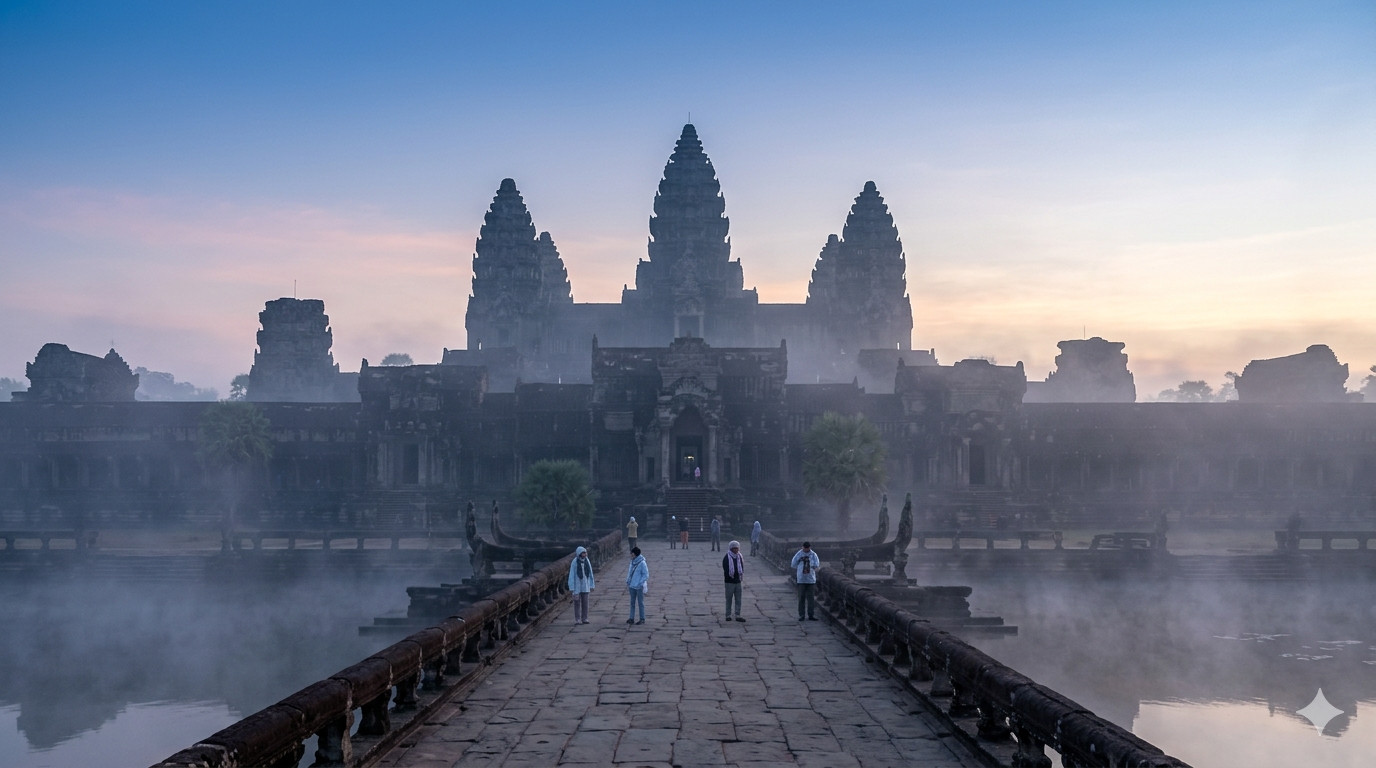
Cambodia's dry season runs roughly November through April, but the photographer's window inside that window is narrower. December and January are the cleanest — low humidity, almost no rainfall, skies that hold a flat unbroken blue overhead by ten in the morning and a deep cobalt by the time the sun begins to drop. Daylight near Siem Reap, sitting at roughly 13°N, barely shifts across the year: sunrise lands close to 6:25am all winter, sunset close to 6pm.
What changes is the angle. In December and January the sun rises to the south of Angkor Wat's main axis, which means the temple's western face — the one you photograph from across the moat — is hit by direct golden light from the side rather than backlit into silhouette. The sandstone, a fine-grained yellow-brown rock quarried from the Kulen plateau, picks up this side-light the way old leather does: warm, slightly oily, with the carved devatas thrown into relief by shadow rather than flattened by frontal sun.
The sandstone shifts from slate to the colour of a struck match, and within four minutes the building has finished its daily transformation from object to event.
Bayon, the face-tower temple inside Angkor Thom completed under Jayavarman VII in the very late twelfth century, wants the opposite end of the day. Go around four in the afternoon, when the western light rakes the lidded eyes of the great stone faces and gives the carved smiles back their dimensionality. The faces are flat at noon. At four they are present.
If you have one week in Cambodia, take it here, in this season. The shoulder months of November and February work too — slightly hazier, slightly warmer — but December and January are the photographer's months. By March the heat climbs past 35°C and a fine dust haze settles over the temple complex; by April the sandstone reads chalky in midday light, and you are working uphill.
Late October: The Tonle Sap, Running Backwards
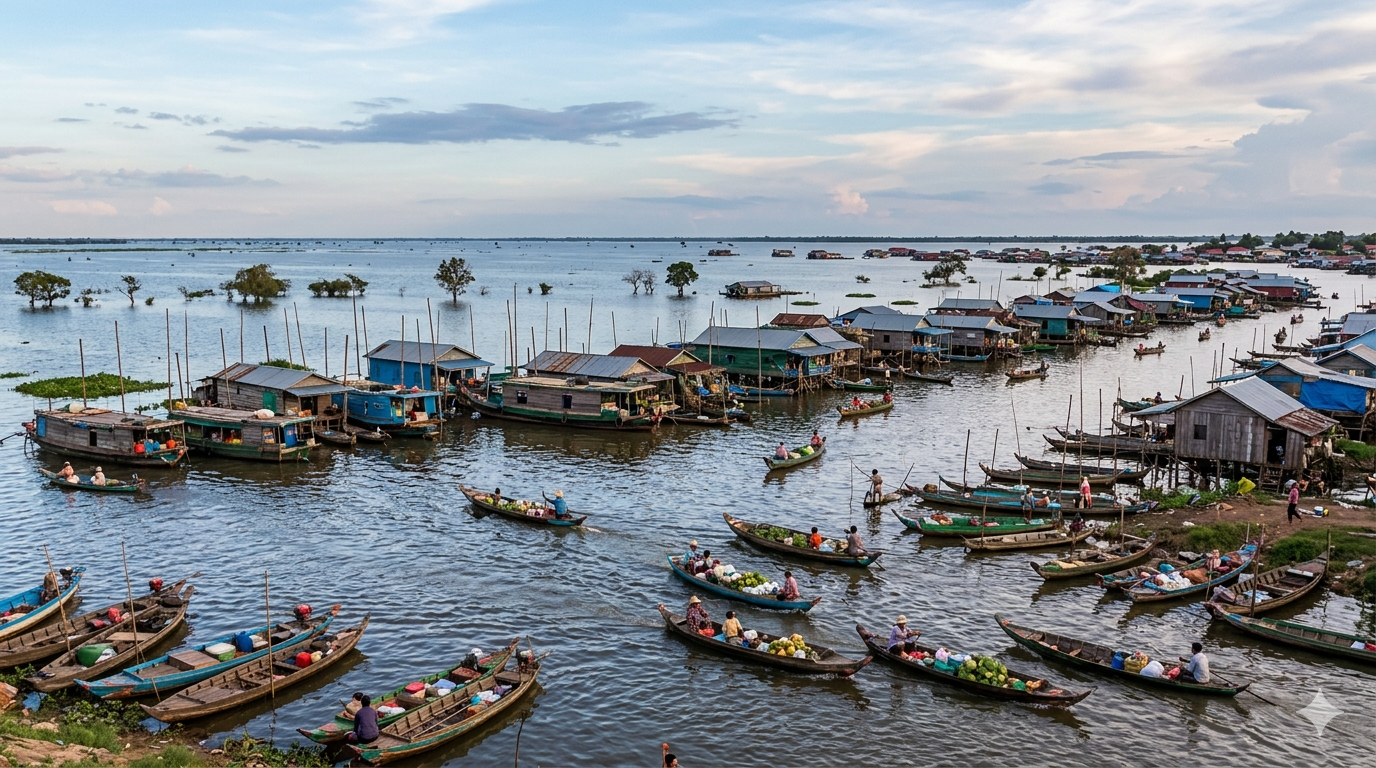
A footnote inside the Cambodia year worth its own paragraph. From roughly May through October, the Mekong rises so far that it pushes water back up the Tonle Sap river and into the great lake of the same name, expanding it from around 2,500 square kilometres in the dry season to over 12,000 at peak. The lake's depth jumps from about one metre to nearly ten. The reversal usually peaks in September and October.
What this means for a photographer: late October, just before the lake begins to drain back into the Mekong, is when the stilt villages of Kompong Phluk and Kompong Khleang stand in the most water. Houses on six-metre legs sit in their proper element. The light is post-monsoon — clearer than the wet months, still soft, the sky still occasionally piled with the last of the rain clouds rather than ironed flat into dry-season blue. Shoot from a slow boat. Long lens. Mid-morning, before the sun goes hard.
February and March: Halong Bay in the Ink-Wash Months
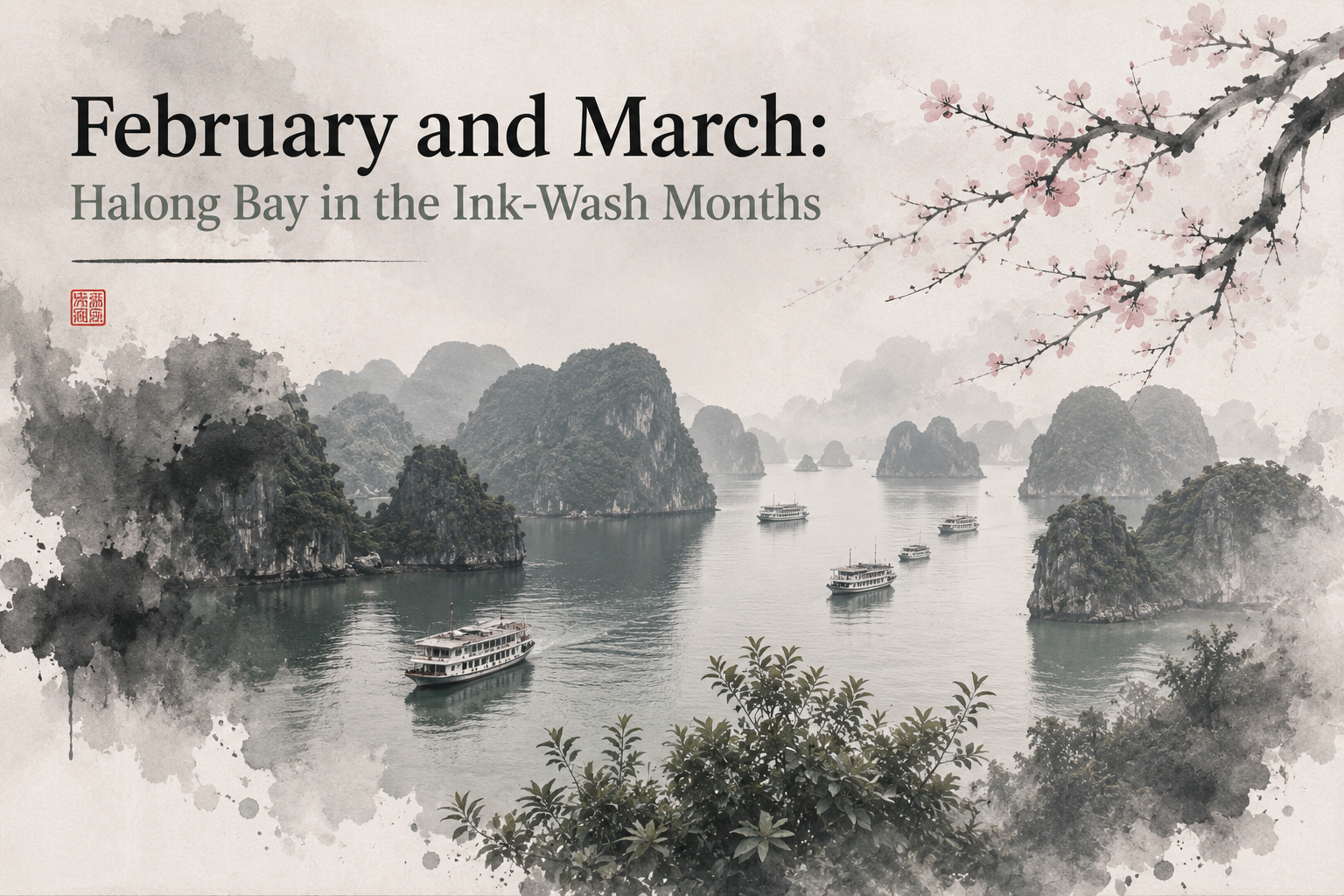
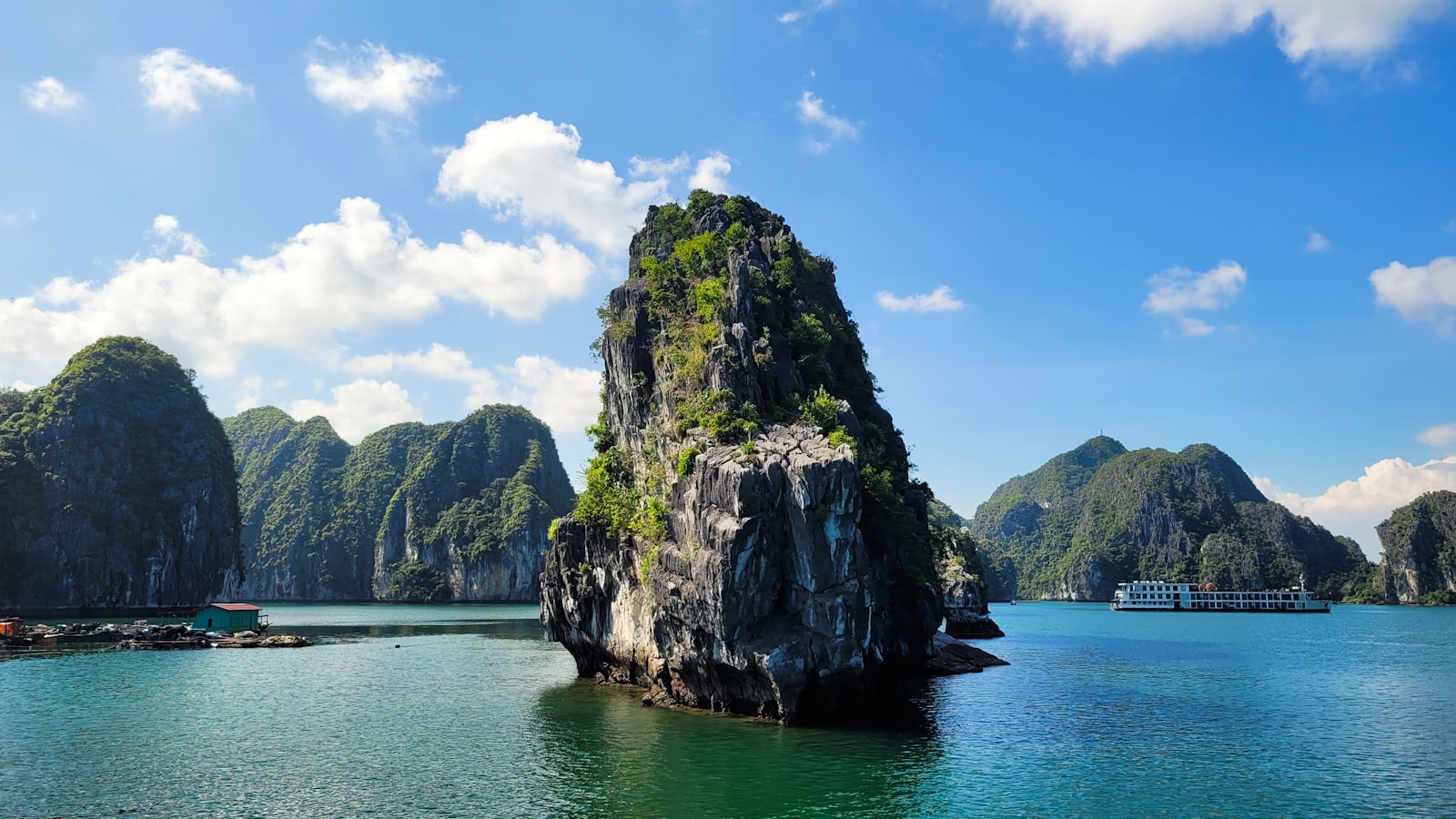
The orthodox advice on Halong Bay sends you to October and November, when visibility is sharp and the karsts read as crisp green columns against a blue sky. That is one kind of photograph. The other kind — the one that has been made for centuries by Vietnamese ink-wash painters working in monochrome — needs fog.
February and March in the bay deliver morning mist that wraps the limestone towers and dissolves their middle distance into pale grey, leaving only the silhouettes of the nearest karsts and the faintest ghosts of those a kilometre behind. The water reads as a green-tinted teal, the colour of oxidised copper, when the sun does break through. The temperature is mild, around 20°C, and the sea is calm.
The trade-off is honest: half your mornings will be socked in completely. The other half will give you images that the dry October light cannot. Pick your season to your picture. If you want clarity, go October. If you want atmosphere — the karsts as brushwork rather than as objects — come for the spring haze.
Mid-September: The Gold of Sapa
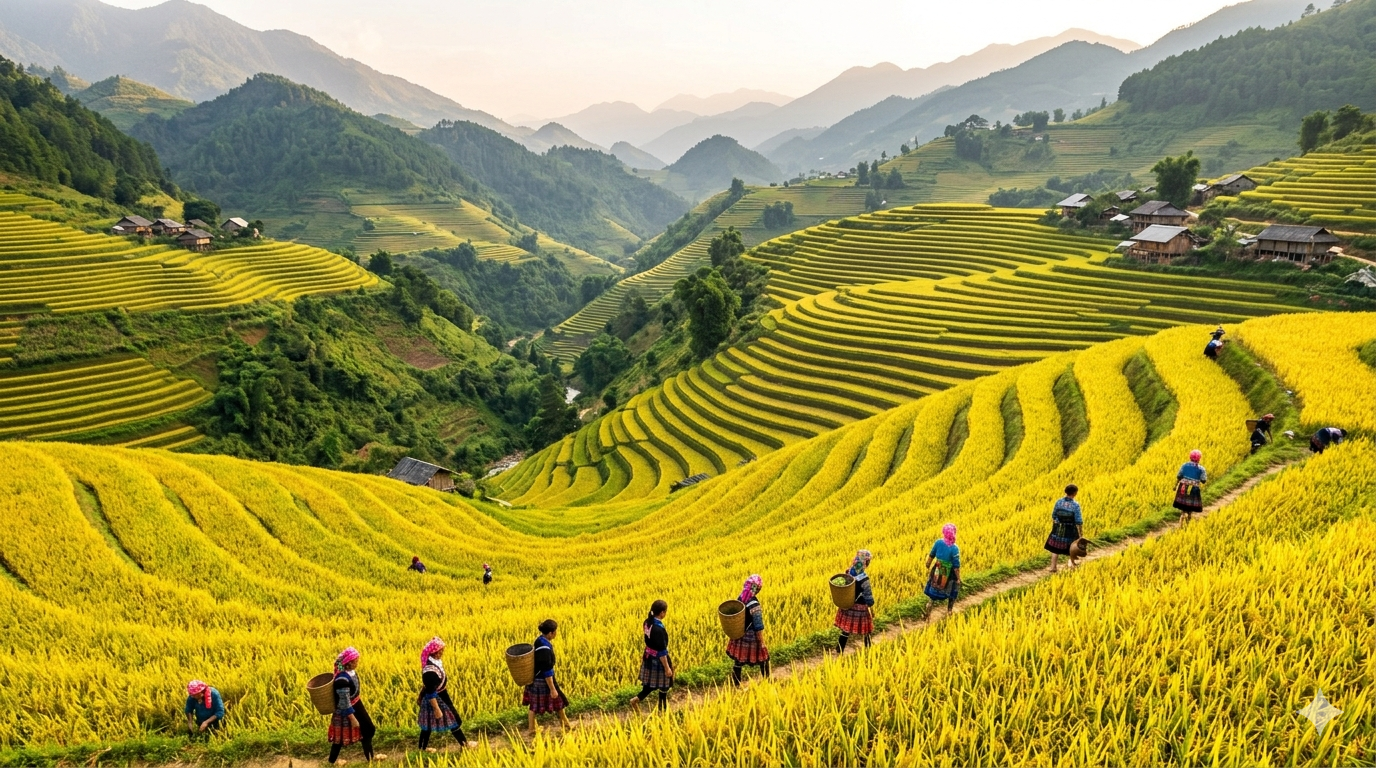
The terraced rice fields of the Hoàng Liên Son range, cut into the slopes above the Muong Hoa Valley by the Hmong over more than twenty generations, change colour on a schedule. They are flooded mirrors in May, vivid green through July and August, and then — usually in the first three weeks of September — they ripen to a saturated, almost metallic yellow. By the end of the month most of the harvest is in.
The window is narrow. Two weeks, perhaps three, with year-on-year variance of a few days depending on the previous monsoon. Aim for the second week of September and you are usually safe.
Photograph these terraces in side-light, never overhead. The low sun of late afternoon — around five — picks up the edges of each retaining bund and gives the whole hillside a topographic third dimension that flat midday light obliterates. A telephoto lens compresses the slope into stacked horizontals; the drone shot, while popular, tends to flatten the terraces back into a green-and-gold pattern and lose the depth that side-light builds.
Two weeks of yellow, and then the hill is brown again. The whole valley moves on a calendar most travellers never see.
January Again: Hanoi Under the Haze
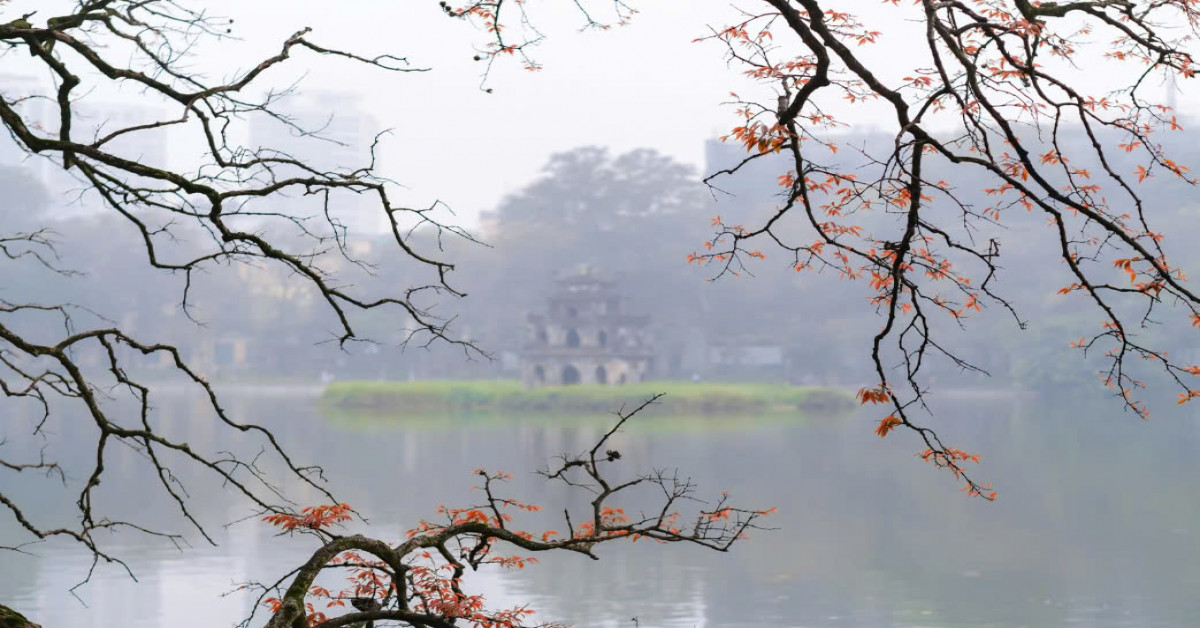
The Vietnamese north has a real winter — not cold by European standards, but a damp, low-skied, drizzling cool that is no relation at all to the country's southern climate. Hanoi in December and January hovers around 15 to 17°C, with mornings that often arrive wrapped in a flat white fog over Hoan Kiem Lake and the narrow lanes of the Old Quarter. Rainfall is minimal, but the atmosphere is wet.
Photograph the Old Quarter at first light. The sodium streetlamps are still on, dropping a yellow cast onto lime-washed shophouse plaster and terracotta tile, while the fog softens every middle distance into watercolour. The French Quarter to the south — long boulevards, cream stucco, plane trees that lose their leaves — does something quieter in winter: it stops looking tropical altogether and begins to resemble a provincial Mediterranean city in November.
This is the antidote to the tropical-postcard reflex. Vietnam in winter is not blue water and white sand; it is haze and sodium and the particular jaundiced quality of a sky that has held the same overcast for a week.
March: Hoi An in the Slack Tide of the Year
Central Vietnam runs on a different clock entirely. Where the north is wet in summer and dry in winter, the central coast — Hue, Da Nang, Hoi An — is dry from February through August and wet from September through January, with October typically the wettest month of the entire Vietnamese year and the season for serious typhoon risk.
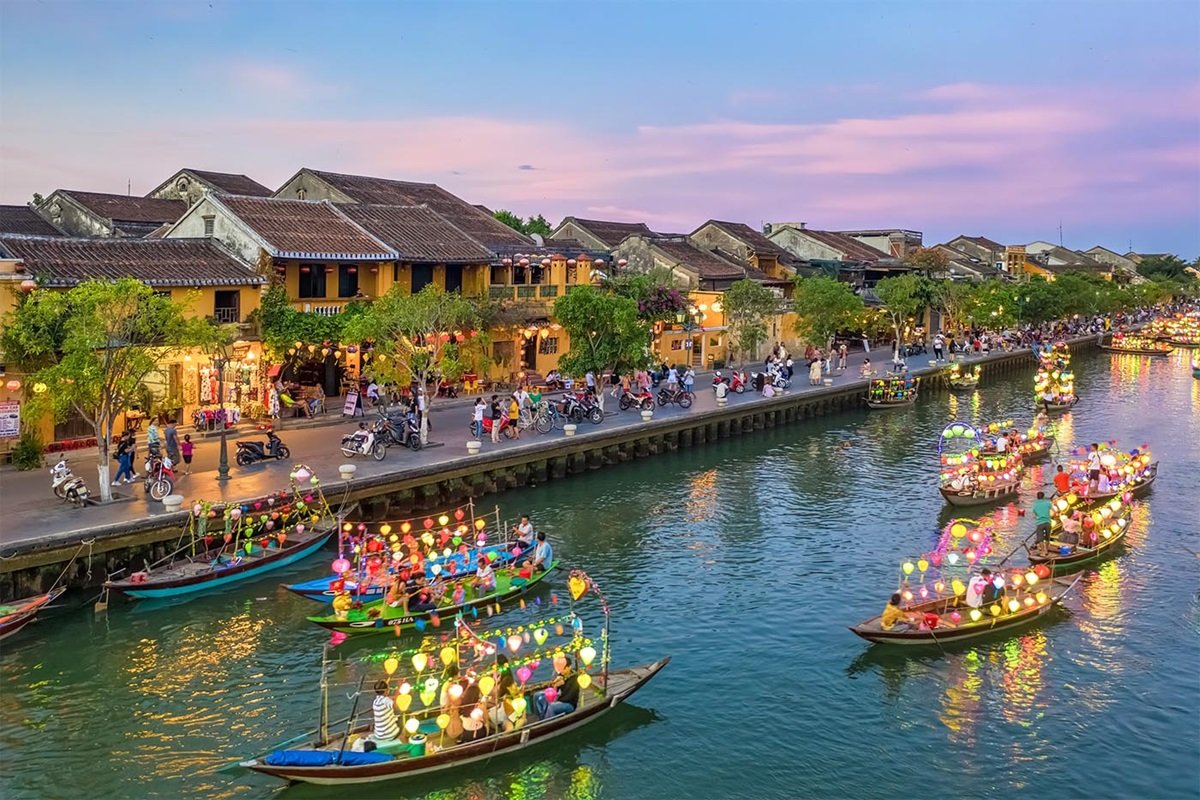
This inverted calendar matters. The northern haze months are central Vietnam's peak. February through May, before the heat climbs into the mid-thirties, is when Hoi An's yellow-ochre lime-washed walls — the colour itself a holdover from the late-sixteenth-to-eighteenth-century trading port of Faifo, when Japanese and Chinese merchants made this stretch of riverfront one of the busiest in Southeast Asia — receive the dry-season sun and hold it.
Photograph Hoi An in the afternoon, in March, before the lanterns are lit. The lanterns are not the picture. The wall is the picture. That particular ochre, cracked into a thousand small fissures by a century and a half of monsoon and reglazing, returns more light than the limewash logically should.
December: The Mekong Delta at Low Water
The Vietnamese end of the Mekong runs nearly the inverse of the Tonle Sap. The delta's low water season — December through August — is when the river is most predictable: tranquil, brown-green, low enough that the main channels are crowded with sampans even if the narrower side-channels become unnavigable. The floating markets at Cai Rang near Can Tho run year-round, but their best light is December and January, between 5 and 7am, when the day's first sun comes raking horizontally across the river surface and turns the sterns of the boats into long backlit silhouettes.
Hire your own slow sampan, sit low, work wide. The market is not a spectacle staged for the camera; it is a working trade between farmers and middlemen at the time of day that suits them. Photograph it like that.
The Year, Joined Up
If I had to write the photographer's annual route — and a single trip rarely catches all of this, so consider it a two-or-three-year project — it would run roughly like this: mid-September into the rice harvest at Sapa; late October over to the Tonle Sap before the flood drains; December down the Mekong Delta; January at Angkor and Hanoi in the cold haze; February into March for Halong Bay in mist and Hoi An in dry light.
What you avoid by traveling this way is the lazy "best time to visit" answer that treats Vietnam and Cambodia as one weather system with one ideal window. They are not. They are several countries' worth of light, on several different clocks, and the year is long enough to hold them all if you treat it as a series of appointments with specific places at specific hours.
The light does the rest.
Sources:
Italian travel photographer-writer. Architecture, landscape, the light. Slow, deliberate, image-led essays.
✦ More from Marco Rossi


✦ Keep reading
More from this region

More in Destinations
✦ Discussion
Start the discussion
No replies yet — yours could be the first.