

The Short, Honest Answer
Yes, a U.S. citizen can legally enter Myanmar in 2026. The tourist eVisa is being issued again, tour operators are running itineraries to Bagan, Yangon, Mandalay and Inle Lake, and nothing about your American passport stops you at the gate. That is the entry-mechanics reality, and it is the part most people get wrong.
The complication is not your paperwork. It is everything around it. The U.S. State Department keeps Myanmar at Level 4, its highest warning, the same tier as active war zones. The country has been in a civil conflict since the 2021 military coup, a major earthquake hit the center of the country in March 2025, and a large share of the tourism economy still flows toward a military regime that most of the world refuses to recognize.
So the question is not really can you go. You can. The honest questions are whether you should, what you would be walking into, and where your money would actually land. I want to give you the calibrated version of all three, because the internet is serving you either breathless 'don't you dare' panic or tour-brochure cheerfulness, and neither one helps you decide.
No, the U.S. Did Not Ban the Myanmar Visa
This is the single most confused point I see, so let me untangle it cleanly. In mid-2025 the U.S. government added Myanmar to a list of countries facing a sweeping travel ban. That ban restricts Myanmar nationals from entering the United States. It bars most Burmese citizens from immigrant visas and limits several nonimmigrant categories, with the administration citing a roughly 30 percent visa overstay rate and lack of cooperation from the regime as the justification.
Notice the direction of travel. That policy controls who can come into America. It says nothing about Americans going the other way, and it cannot, because the United States does not issue the visa you need for Myanmar. Myanmar does. Your tourist visa is granted by the Myanmar Ministry of Immigration and Population, an entirely separate government, and the U.S. has no authority to switch it off.
So when a friend or a forum post tells you 'the U.S. banned the Myanmar visa,' they are half-remembering a real policy and pointing it the wrong way. The ban is real. It is genuinely painful for Burmese students, families and refugees trying to reach the U.S., and that human cost is worth knowing. But it has zero effect on your eligibility, as a U.S. tourist, to apply for and receive a Myanmar eVisa.
Are Tourists Allowed In Right Now? The eVisa Mechanics
Yes. After the magnitude 7.7 earthquake near Mandalay on March 28, 2025, Myanmar temporarily suspended tourist eVisa processing on April 3 while immigration systems recovered. That suspension was lifted on April 22, 2025, and the eVisa has been the default entry channel through 2026. Business visas kept running even during the pause.
The tourist eVisa costs 50 U.S. dollars, covers a single entry, and gives you 28 days in the country. The approval letter is valid for 90 days from issue, so you have a comfortable window to actually travel after it lands. Processing is officially around three working days, though many approvals come through in 24 to 48 hours, and you should get an email acknowledgement within an hour of paying.
Apply only through the official government portal at evisa.moip.gov.mm. There is a thicket of lookalike commercial sites that charge a markup for the same form, and some are outright sketchy, so check that you are on the .gov.mm domain before you enter a passport number. Your passport needs at least six months of validity. With the eVisa you can enter at Yangon, Mandalay or Nay Pyi Taw international airports, or at the Tachileik, Myawaddy and Kawthaung land crossings, though I would not route a first trip through a remote land border given the security picture near several of them.
On the airline side, a practical note: many international carriers reach Yangon via Bangkok, Singapore or Kuala Lumpur, and that connection through a regional hub is the normal way in. Independent travel is possible in the main tourist zones, but some areas legally require a licensed guide or pre-arranged permits, which is one reason most foreigners visit on an organized itinerary right now.
What the Level 4 Advisory Actually Says
The U.S. State Department renewed its Burma travel advisory on May 8, 2026, and it remains Level 4: Do Not Travel. That is the top of the four-tier scale, the same designation applied to countries in open war. I am not going to soften that, because the reasons behind it are concrete rather than vague.
The advisory cites armed conflict, civil unrest, arbitrary enforcement of local laws, wrongful detentions, landmines and unexploded ordnance, and limited and unreliable healthcare. It also flags the most important practical line for an American: the U.S. government has very limited ability to assist citizens in Myanmar. There is no cavalry. If you are detained, injured in a remote area, or caught near fighting, consular help is thin and there is no mechanism for a government-arranged evacuation.
Read a Level 4 the way an insurer would. It does not mean every street is a battlefield, because it plainly is not. It means that if something goes badly wrong, you are largely on your own, and that the legal environment is unpredictable in ways you cannot fully control. That reality should also shape your travel insurance: most standard policies exclude countries under a Do Not Travel advisory, so you need a specialist policy that explicitly covers Myanmar, including medical evacuation, or you are effectively uninsured the moment you land.
Is Myanmar Safe for U.S. Tourists? The Region-by-Region Read
Here is where I have to be straight about my own limits. I have not traveled in Myanmar since the coup, so I am not going to perform firsthand authority I do not have. What follows is triangulated from the State Department advisory, recent operator reporting, and travelers and guides I trust who have been in the past year. Take it as a careful synthesis, not a postcard from me.
The civil war is real and it is geographically uneven. The heaviest fighting is concentrated in Sagaing, Rakhine, Chin and Kayah (Karenni) states, parts of northern Shan, and stretches of the Thai border region around Myawaddy. These are not places for a tourist, full stop. Active clashes, landmines, conscription sweeps and shifting front lines make them genuinely dangerous, and the advisory singles several of them out by name.
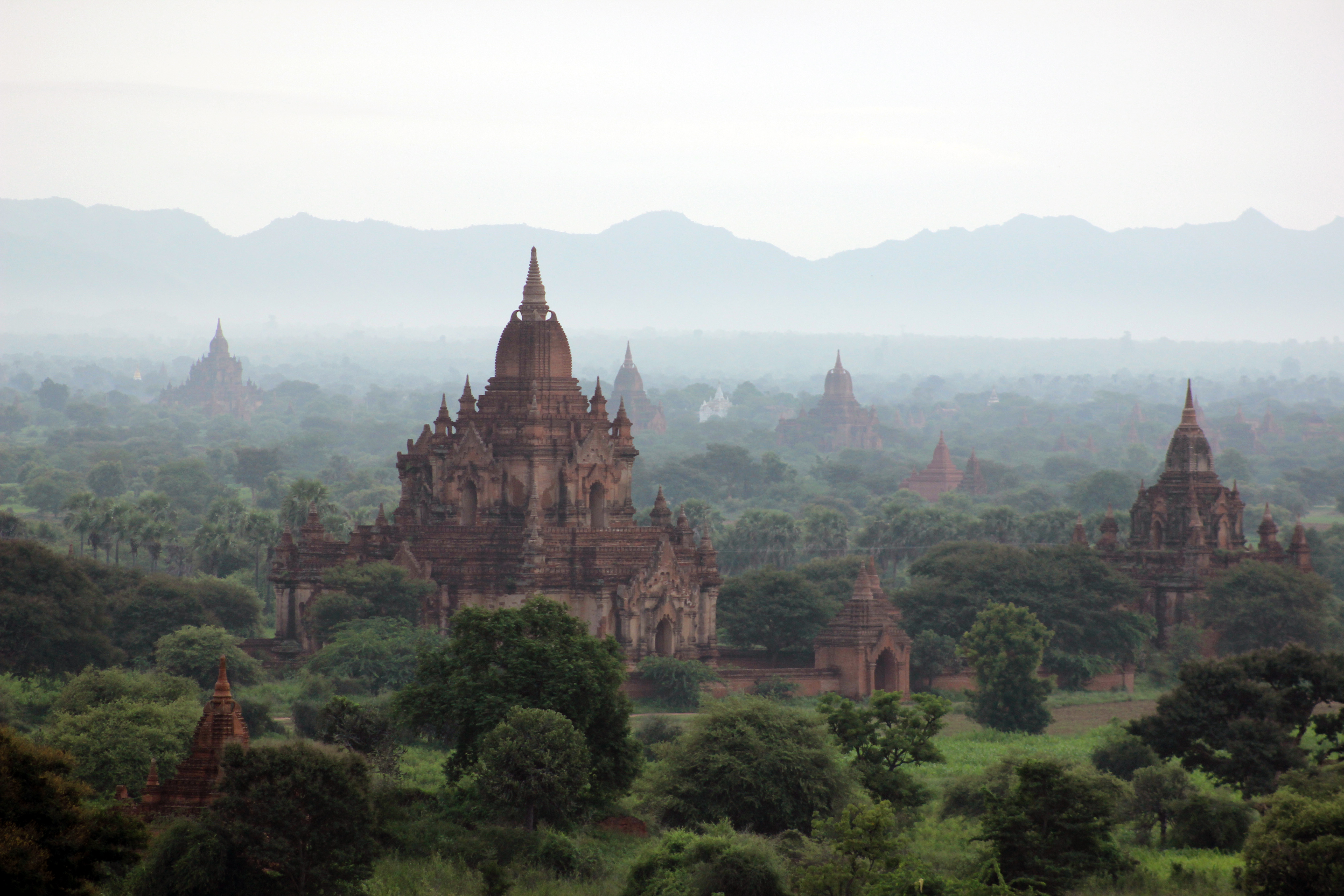
The classic tourist core, by contrast, has stayed comparatively calm: Yangon, the city of Mandalay, the temple plains of Bagan, and Inle Lake. Bagan came through the 2025 earthquake far better than the epicenter near Sagaing and Mandalay, its major temples are intact, and the vast majority remain open to visitors. Inle Lake lost some floating infrastructure to the quake but has largely recovered. People do visit these places safely. But 'comparatively calm' is doing real work in that sentence. Things can shift on significant political dates, around anniversaries of the coup, and with no warning, and the country operates under a state of emergency with checkpoints, curfews and surveillance that you cannot opt out of.
If you go, the practical posture is conservative and low-profile. Travel with a reputable operator who tracks security daily and can pivot an itinerary. Avoid protests, military sites and anything you might be tempted to photograph near them. Do not post about politics or the regime while you are in the country, including on your own private accounts, because phone checks happen and people have been detained over far less. Carry cash in clean U.S. dollars, since the banking and card system is unreliable and international sanctions complicate transfers. And register your trip with the U.S. embassy so that, thin as the safety net is, you are at least on the list.
The Conscription and Dual-Nationality Trap
This caveat does not apply to every reader, but where it applies it matters enormously, so I am giving it its own section. In February 2024 the regime activated a long-dormant conscription law. It can compel men aged 18 to 35 and women aged 18 to 27 into at least two years of military service, with extensions of up to five years under the state of emergency.
Myanmar does not recognize dual nationality. If you are a U.S. citizen who was born in Myanmar, or whom the authorities could regard as a Myanmar citizen by descent, you can in principle be treated as a Burmese national the moment you enter, which means your U.S. passport may not shield you and you could be exposed to citizen obligations, conscription among them. The State Department warns about exactly this scenario.
If that is your situation, do not improvise. Talk to an immigration lawyer and to the embassy before you book anything, and understand that the calculus for a Myanmar-American is fundamentally different from the calculus for a traveler with no Burmese ties. This is the clearest example of why 'is Myanmar safe' has no single answer: it depends heavily on who is holding the passport.
Where Your Money Actually Goes
For me this is the decision-maker, more than the security read. Tourism in Myanmar is not ethically neutral, because a meaningful slice of the money flows toward the military regime and the conglomerates it controls. State-owned hotels, certain official entry and zone fees, military-linked airlines and the holding companies the generals own can all end up taking a cut of a conventional trip. The democratic movement and many Burmese activists have, at various points, asked outsiders to weigh that carefully before coming.
It is not a clean boycott-or-go binary, and pretending otherwise is its own dishonesty. Plenty of Burmese in tourism, the guesthouse owner, the freelance guide, the boat driver on Inle, the family restaurant, lost their livelihoods overnight after the coup and the pandemic, and they want visitors back. The ethical path, if you choose to go, is to route as much of your spending as possible to them and as little as possible to the regime.
Concretely, that means small locally owned guesthouses over state-affiliated or military-linked hotels, independent licensed guides paid directly, family-run restaurants, and community enterprises and artisans you pay in cash. It means asking your operator, pointedly, who owns the hotels on the itinerary and where the entry fees go, and walking away if they cannot answer. Do the arithmetic on your own trip rather than outsourcing your conscience to a brochure. And steer well clear of any 'volunteer' or orphanage-tourism add-on, which in Myanmar's current chaos is a documented vector for exploitation, not help.
The Bottom Line
Let me give you the unhedged version. Can you go? Yes. The U.S. did not and cannot ban your Myanmar visa, the eVisa is open, and tourists are entering and visiting Bagan, Yangon, Mandalay and Inle right now. Those are facts, and anyone telling you the door is shut is mistaken.
Would I go in 2026? Personally, not yet, and not casually. A Level 4 advisory with negligible consular backup, an active civil war, a state of emergency, and an unavoidable ethical question about funding the regime is a lot to absorb for a holiday, and I would not send a first-time solo traveler there today. What would change my mind is a genuine de-escalation of the conflict, a downgrade of the advisory, and a clear, regime-light way to spend, ideally a community-based itinerary vouched for by Burmese organizers I trust.
If you are set on going anyway, do it with eyes fully open: a reputable security-aware operator, specialist insurance that names Myanmar, clean dollars in cash, zero political posting, the conscription question resolved if it touches you, and your money steered hard toward Burmese hands and away from the generals. That is not me telling you no. It is me refusing to tell you it is simple, because it is not, and you deserve the version that respects that.
Solo female traveler from Bangalore. Safety advocate, responsible tourism, women-run cooperatives — empowering, never alarmist.
✦ More from Priya Sharma


✦ Keep reading
More from this region


More in Destinations
✦ Discussion
Start the discussion
No replies yet — yours could be the first.