
Best Time to Visit Myanmar: A Month-by-Month Read
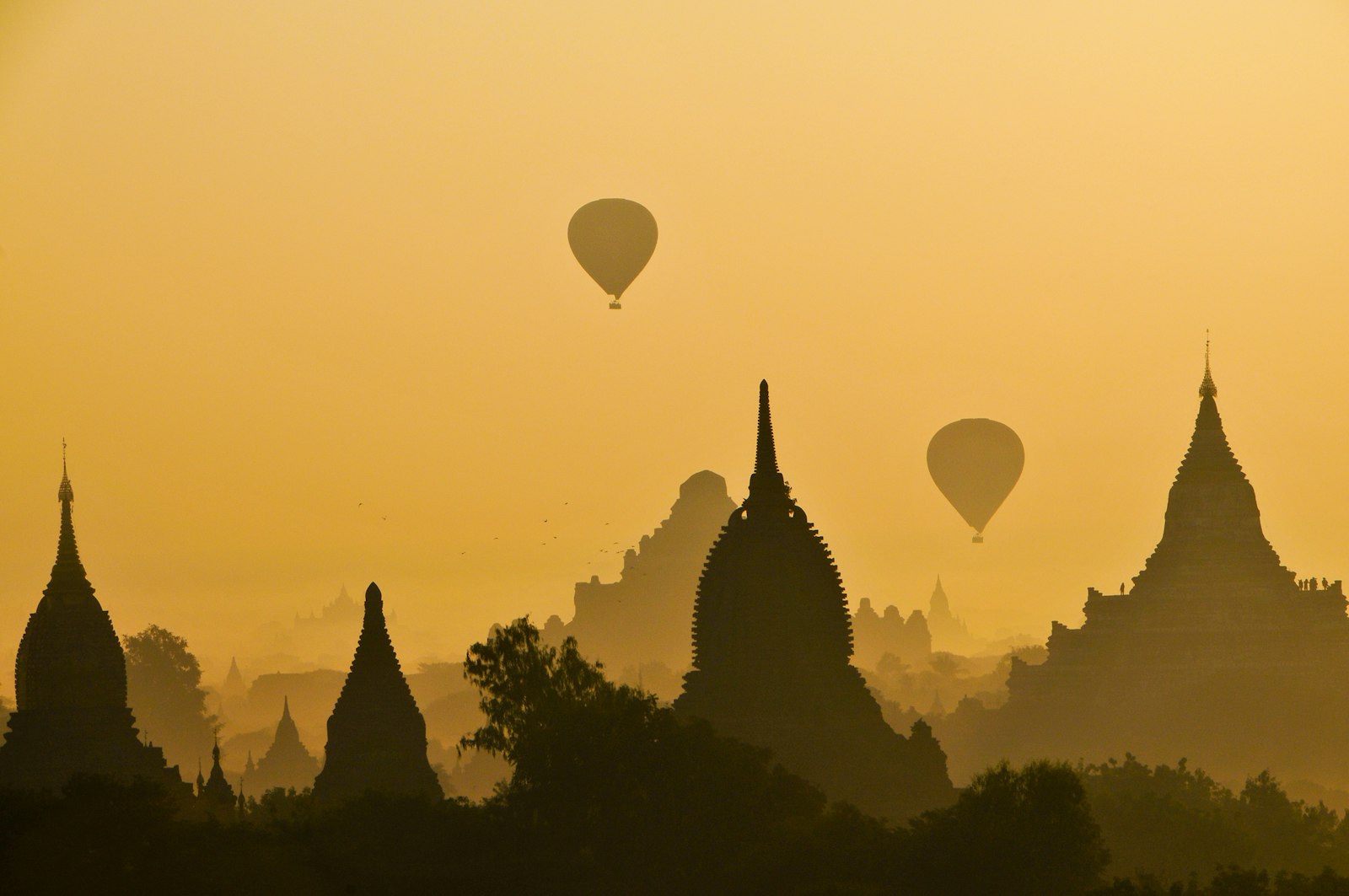
The light arrives before anything else. In late December, an hour before the sun clears the horizon at Bagan — sunrise lands near 6:40 in these weeks — the temple plain is not gold yet but a cold violet-grey, the brick stupas rising out of a low ground mist that pools in the hollows between them like spilt milk. Then the sun lifts, and the whole field turns the colour of dark honey, and the dust in the air does the rest, scattering the light into something you can almost hold. This is the season people picture when they picture Myanmar. It is also only one of three the country runs through in a year, and each one rewrites the place entirely.
Before the seasons, an honest word. As of mid-2026 Myanmar sits under a Level 4 "Do Not Travel" advisory from the US State Department, with the UK and Australia advising against all travel, owing to armed conflict and civil unrest that has continued since the 2021 coup. The core circuit — Yangon, Mandalay, Bagan, Inle — has generally continued to function, but conditions can change at short notice, insurance is complicated, and the ethics of travel here are not simple. Read this as a guide to the country's light and weather — the knowledge you'd want whenever a visit becomes wise — rather than an encouragement to book now. Check your government's current advice first, and read it carefully.
Myanmar runs through three seasons in a year, and each one rewrites the place entirely.
The three seasons, and what they do to the country
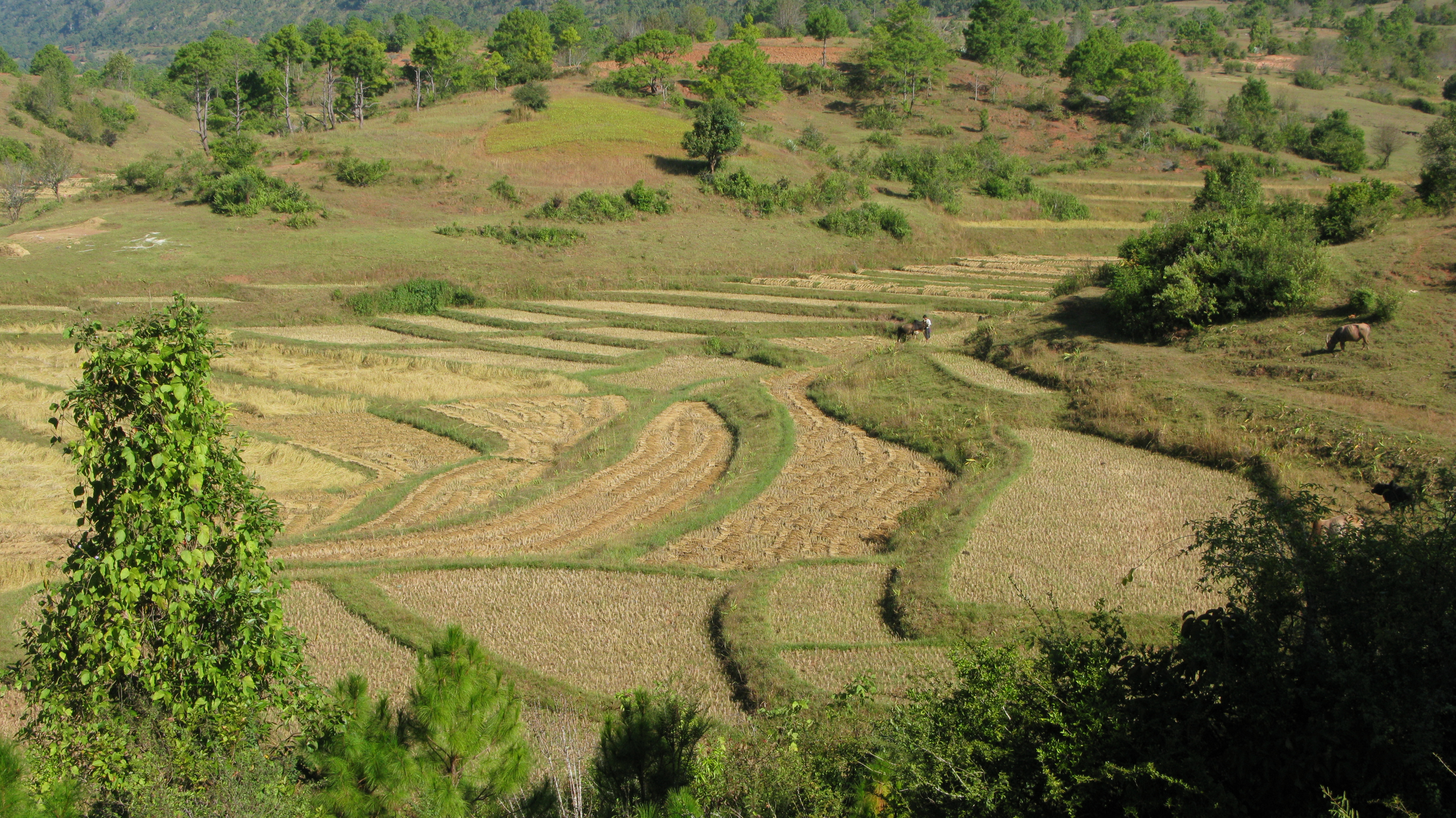
Myanmar has three, not two. There is the cool dry season, roughly late October to mid-February, when the northeast brings dry air down off the Asian landmass and the central plains turn clear and crisp. There is the hot dry season, mid-February to mid-May, when the same plains bake — Bagan and Mandalay routinely climb past 40°C in April, the hottest stretch of the year. And there is the southwest monsoon, mid-May to late October, when the rains come up off the Bay of Bengal and the country goes green.
Geography splits the experience as hard as the calendar does. The central dry zone around Bagan and Mandalay is genuinely arid — under 1,000mm of rain a year, and parts of it nearer 500mm — so even in the wet months it stays comparatively passable. The coast and the Ayeyarwady delta, by contrast, take the monsoon full in the face: over 5,000mm a year on parts of the Rakhine coast, among the wettest places in Southeast Asia. And the Shan hills around Inle Lake sit high enough — the lake is close to 900 metres — that nights turn properly cold in December, while the northern mountains of Kachin and Chin can drop below 15°C and, higher up, see snow. One country, three climates, running at once.
What this means for a camera, and for a traveller, is that there is no single "best month." There is the month that suits the light you want.
November to February: the dry-season clarity
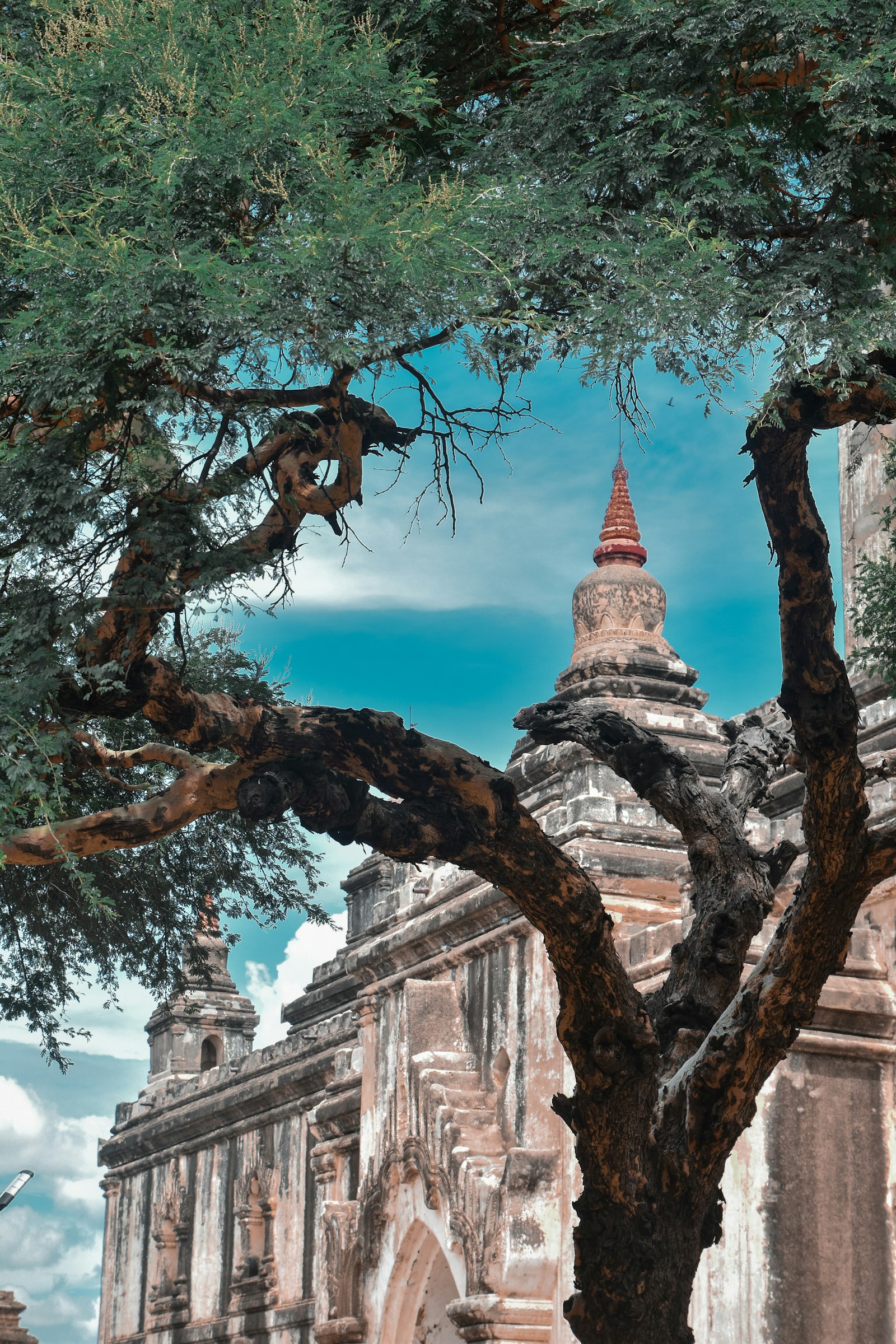
If you came for the picture in your head, this is the window. The air over the central plains is dry and clean, the skies hold a hard cobalt with few clouds, and the low winter sun rakes across everything at a shallow angle that finds every ridge of stucco and every weathered course of brick. At Bagan the sun comes up around 6:15 in November, drifting to roughly 6:45 by January and back again — and at the other end of the day, central Myanmar's winter sunsets fall early and fast, near 5:30 in December, a little after 5:45 by late January. The dark comes quickly here; there is no long European dusk. Plan the evening shot tight.
This is also Bagan's balloon season. The companies fly roughly from October to mid-April, when the air is dry and stable enough to lift safely, and the rides go up at first light — that is the entire point. From a basket a few hundred feet over the plain, the eleventh- and twelfth-century temples — the place was the seat of the first kingdom to unify these lands, and the building ran for some two and a half centuries — surface out of the mist one by one as the light strengthens. It is among the more photographed sights in Asia for a reason that survives the cliché: the scale only reads from above, two thousand-odd surviving monuments scattered across a plain the eye cannot take in from the ground.
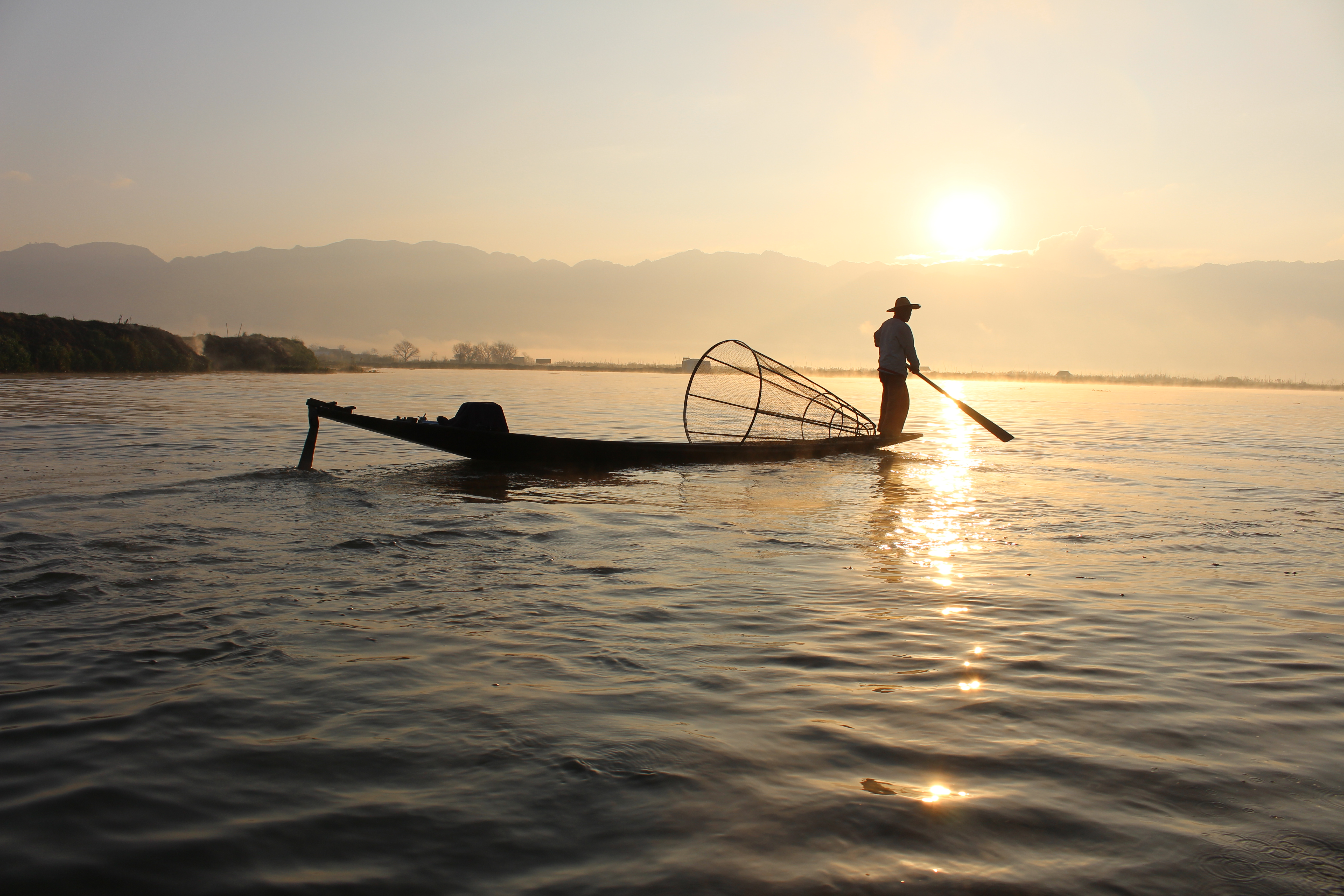
Inle is at its kindest now too. Mornings on the lake are cold and still, the water a pewter sheet under mist, and the leg-rowing fishermen of the Intha — who balance on the stern and wrap one leg around the oar to keep both hands free for the net — work out across it as silhouettes before the sun burns the haze off. They are working, not posing; the courtesy is to photograph them as the labour it is, from a respectful distance, and to ask before you go close.
The dark comes quickly here. There is no long European dusk — plan the evening shot tight.
The trade-off is company. November through February is high season, and the named sunrise spots at Bagan draw a crowd well before light. The cool-season clarity is real, and so are the other people standing in it. The fix is the photographer's oldest one: walk further, get up earlier, point the camera at the temple no one has heard of.
March to May: the hot, white-skied months
By March the cool air has gone and the haze has settled in. This is the hot dry season, and on the central plains it is genuinely punishing — April is the furnace, with Bagan and Mandalay regularly over 40°C and the light going flat and white under a sky thick with dust and the smoke of agricultural burning. The dramatic raking gold of December is harder to find; midday is a write-off. You shoot the first and last hour and you retreat into shade for the rest, the way the country itself does.
It is not all loss. The haze that flattens the midday light also softens the long-lens shots into something atmospheric — distant pagodas stacking up in receding planes of grey, like a wash drawing. And mid-April brings Thingyan, the Buddhist New-Year water festival, 13–16 April in 2026, when the whole country throws water at itself to wash the old year away. It is loud, soaking, communal, and — protect your gear accordingly — almost impossible to shoot without becoming part of it.
For the heat-averse, this is the season to climb. The Shan hills around Inle, and higher still the old colonial hill stations, stay far more temperate than the baking plains. If you must travel Myanmar in April, travel it uphill.
June to October: the green season and the monsoon
Then the rains come, up off the Bay of Bengal around the middle of May, and the country changes colour. The dry plains soften; the paddy fields flood and turn an electric, saturated green; the light goes diffuse and even under low cloud — flattering to faces and foliage, frustrating for the big architectural set-pieces that want a hard sun. The coast and delta are at their wettest and least practical now. But the central dry zone, true to its name, stays comparatively manageable: Bagan and Mandalay see far less rain than the rest of the country, and the storms, when they come, tend to be short and theatrical rather than all-day grey.
This is the contrarian's season, and there is a real argument for it. The crowds thin to almost nothing. The temples you had to share in January you may have to yourself in August. And monsoon light has its own register — the wet brick of a Bagan stupa goes deep oxblood-red, near-black where it's soaked, the stucco saints catching a soft sidelight between downpours; storm cloud builds in towers behind the spires; and the brief clear windows after rain are some of the cleanest air of the year, the dust washed out of it. A green-season Bagan is a different photograph from a dry-season one, not a worse one.
You pay for it in logistics. River levels and weather can disrupt internal flights and boats, balloons do not fly, and the saturated, sometimes flooded ground around the sites limits where you can stand. Go in the rains for solitude and for green; do not go expecting the cobalt-sky temple shot.
So which month?
If you want the picture in your head — the cobalt sky, the raking gold, the balloons at first light — go in the cool dry season, November to February, and accept that you will share it. If you want that same clarity with fewer people and a sharper edge of heat, the shoulder weeks of late October and late February to March split the difference. If you want green, solitude, and storm light, and you are travelling mostly in the central dry zone where the monsoon lands gently, the rains have a quiet case to make. And whenever you go, the truer instruction is the one that has nothing to do with the month: be at the temple before the light is, and stay until after it has gone.
The plain does not perform on a schedule. But the sun keeps the oldest appointment there is, and the brick has been waiting nine hundred years to catch it.
Sources: Britannica — Myanmar Climate, Climate of Myanmar — Wikipedia, Myanmar weather by month — myanmar.com, Bagan sunrise & sunset guide — myanmar.com, Mandalay sunrise/sunset — Gaisma, Bagan hot-air balloon guide — The Wanderlust Within, Best time to visit Inle Lake — myanmar.com, Maha Thingyan 2026 — timeanddate, Burma Travel Advisory — travel.state.gov
Italian travel photographer-writer. Architecture, landscape, the light. Slow, deliberate, image-led essays.
✦ More from Marco Rossi


✦ Keep reading
More from this region
More in Destinations
✦ Discussion
Start the discussion
No replies yet — yours could be the first.