

Are Southeast Asia Package Tours Worth It? Agency vs DIY
You've probably already seen the two camps. One says only suckers pay for a tour in a region this easy — just buy a flight and figure it out. The other says you'll waste your precious two weeks on logistics and miss everything. Both are selling you something, and neither is telling you the part that actually decides it: a package is a tool, and tools are worth it only for the job they're built for. Here's how to tell whether your trip is that job.
The honest answer
For most independent travelers with time and a working knowledge of how to read a bus timetable, Southeast Asia is one of the easiest regions on earth to do yourself — and DIY will be cheaper, more flexible, and frequently more interesting. This is the home of the "Banana Pancake Trail" for a reason. Backpacker infrastructure is dense, English is widely spoken in tourist corridors, Grab and Bolt work in every major city, and you can book a sleeper bus or a domestic flight from your phone the night before.
So the default answer is: you probably don't need a package for Thailand, Vietnam, Cambodia, Indonesia, or Malaysia if you have at least two unhurried weeks.
But "probably don't need" is not "never worth it." A package or a good local agency genuinely earns its keep in five specific situations, and pretending otherwise is just as lazy as the brochure that says you'll be helpless without one. The rest of this piece is about telling those situations apart — and, if you do book, making sure your money lands somewhere decent.
When a package actually makes sense
Be honest about which of these is you. If none of them are, scroll to the DIY section.
You have a tight timeline and multiple countries. This is the strongest case. If you have ten days and you want Cambodia and northern Vietnam, the friction of border crossings, visa-on-arrival queues, and internal flights will eat a disproportionate share of your trip. A well-run multi-country itinerary buys back those hours. The math flips with time: at three weeks, that same friction is just part of the adventure and you'd be paying a premium to skip the good bits.
Myanmar, right now. This is the one country in the region where I'd lean toward a local agency for almost everyone, and not for convenience — for judgment. The political and security situation remains volatile in 2026, conditions shift region to region, and a reputable local operator will know which routes are currently sensible and which are not in a way no guidebook can keep up with. Solo independent travel is possible but is not advised under current conditions. If you go, go with local eyes on the ground.
Families with young kids, or travelers with accessibility needs. When a missed connection means a meltdown at 2am, or when "we'll just grab the local bus" isn't viable because it has no ramp and no fixed stop, the value of someone else absorbing the logistics is real and worth paying for. This isn't laziness; it's load management.
A genuine language barrier in places where it bites. Most tourist Southeast Asia runs on enough English to get by. But if you're going deep — rural Laos, parts of central Vietnam, eastern Indonesia — and you don't share a language, a guide is the difference between a transaction and a conversation.
A specialist experience you can't safely DIY. Multi-day treks in Myanmar's Shan State, certain dive certifications, remote Borneo river trips. Some things genuinely need local expertise and infrastructure. Pay for those à la carte; you don't need to wrap your whole trip in a package to get them.
Notice what's not on this list: "because Southeast Asia is dangerous" or "because I'm a woman traveling alone." It broadly isn't, and you broadly aren't safer in a tour bubble — see our country safety guides for the calibrated version. Buy a package for logistics, not for a fear you've been sold.
Getting around: DIY in practice

Here's what the package replaces, so you can judge whether you'd rather do it yourself.
Intercity transport is the big one, and it's genuinely easy. Sleeper buses, trains, budget airlines (AirAsia, VietJet, Scoot) and ferries are all bookable online — 12Go aggregates trains, buses and boats across the region with real seat selection, and it's the single tool I'd install first. Domestic flights between, say, Bangkok and Chiang Mai or Hanoi and Da Nang routinely come in under $40 if you book a week or two out.
In-city, Grab is the regional Uber and covers cars, motorbike taxis, and food. Bolt and inDrive compete in several cities and are often cheaper. Using them removes the entire category of taxi-meter haggling that a tour quietly spares you.
The thing a package really saves is decision fatigue and dead time — the afternoon lost to figuring out which bus, the morning queuing for a visa stamp. If that sounds like a holiday-ruiner to you, that's a legitimate reason to outsource it. If it sounds like the texture of travel, you'll resent paying to have it removed.
One genuine DIY tax worth naming: solo travelers pay more per head than couples or groups, because accommodation and private transfers don't halve. A small-group tour can occasionally undercut a solo independent trip on the activity-and-transfer line — not on the whole trip, but on that slice. Run your own numbers before you assume DIY is always cheaper for one.
How to vet an operator (local-direct beats a middleman)

If you decide a tour is right, who you book with matters as much as whether you book at all. The single highest-leverage move is to book the local operator directly rather than through a Western reseller. Many big-name international packages are sold by a company in London or Sydney that simply subcontracts a local "destination management company" (DMC) on the ground — and you pay the markup for that handoff. Booking the DMC direct often means a lower price and more of your money staying in the country.
Direct doesn't automatically mean ethical, though. A local operator can still underpay guides or run an animal-cruelty "attraction." Vet on both axes. Ask, in writing:
"Are your guides your direct employees, and are they local to this region?" Vague answers or "freelance, paid per trip" with no day rate are a flag.
"What's your responsible-tourism or sustainability policy?" A real operator has one and will send it. Look for recognised marks — Travelife certification, GSTC (Global Sustainable Tourism Council) criteria, or B Corp status. Among the larger operators, EXO Travel (B Corp and GSTC-aligned) and Intrepid (B Corp since 2018) publish theirs.
"How do you handle waste and water on multi-day trips?" Single-use-plastic-heavy operations tend to be careless across the board.
Hard red flags — walk away:
Any animal "experience" involving touching, riding, or performing. Elephant rides, tiger selfies, performing dolphins or monkeys, civet-coffee farms. If the marketing photo is a tourist holding the animal, don't book it. Ethical wildlife is viewing at a distance at a registered sanctuary, full stop.
Orphanage visits or orphanage "volunteering." This is non-negotiable. An estimated 70–90% of children in Cambodian orphanages have a living parent, and the orphanage count rose roughly 65% as visitor donations turned it into a business. Friends-International's ChildSafe movement is blunt about it: children are not tourist attractions. If a package includes one, that tells you everything about the operator.
Pressure tactics and opaque pricing. "Book today or lose the rate," refusal to itemise what's included, or a deposit demand before you've seen a written itinerary.
And on "giving back" generally: real impact is structural, not a half-day photo op. If an operator offers a community visit, ask whether the community is paid a fixed fee and consents to the visits — not whether you'll get to hand out pens.
If you book DIY, where to actually spend
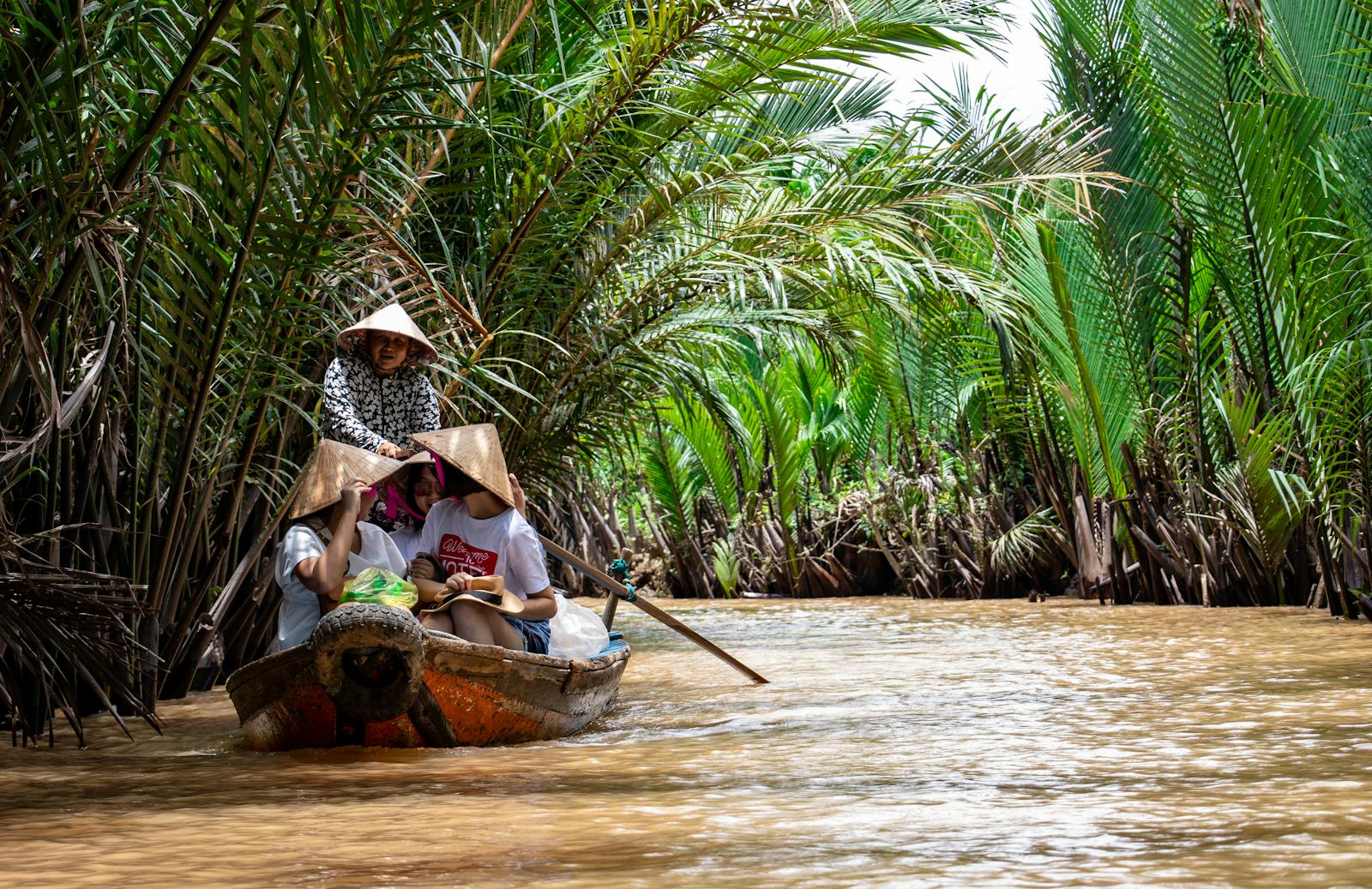
Doing it yourself doesn't let you off the responsible-travel hook — it just moves the decisions to you, one transaction at a time. The good news is independent travel makes it easier to put money directly into local hands.
Book homestays and family guesthouses over international chains where you can; the money stays local and the experience is usually better.
Hire local guides à la carte at the sites that warrant one — a licensed guide at Angkor (you can arrange one on arrival in Siem Reap) turns a hot walk past old stones into an actual education, and pays a local professional directly.
Eat where locals eat and buy from makers, not middlemen. Women-run cooperatives and craft collectives across the region — from weaving co-ops in Laos to batik makers in Indonesia — sell direct; your purchase there lands very differently than the same item in an airport shop.
The same vetting rules apply to the day tours you book on the ground as to a full package: no touching the animals, no orphanages, fair pay for guides. You'll be making these calls one booking at a time, which is more work — and more control.
The bottom line
I'd DIY, for most people, most trips. If you have two weeks or more, a phone, and the willingness to lose the occasional afternoon to a bus schedule, Southeast Asia rewards independent travel with lower costs, total flexibility, and more of your money reaching the people who live there.
I'd book a package — specifically, a local operator direct, vetted on guide pay and animal/child ethics — in exactly these cases: a genuinely tight multi-country timeline, Myanmar under current conditions, traveling with young kids or accessibility needs, a real language barrier off the tourist track, or a specialist experience that needs local infrastructure. Outside those, you're mostly paying to skip the parts of travel that turn out to be the point.
Either way, the decision that matters more than "agency or DIY" is whose pocket your money lands in. Get that right and both paths are good ones.
Sources:
Solo female traveler from Bangalore. Safety advocate, responsible tourism, women-run cooperatives — empowering, never alarmist.
✦ More from Priya Sharma


✦ Keep reading
More from this region


✦ Discussion
Start the discussion
No replies yet — yours could be the first.