
How to Read a Government Travel Advisory for Southeast Asia
You typed your destination into a search bar, added "travel advisory," and now a government website is telling you to "exercise increased caution" or, worse, to "reconsider travel." Your stomach dropped. Here is the thing nobody tells you before that moment: a travel advisory is not a yes-or-no verdict on your trip. It is a risk document written by a government with very specific incentives, and reading it well is a skill. Once you have it, the same advisory that scared you off Thailand becomes a precise, useful map of where to go and where not to. Let me show you how to read one properly.
The honest answer
Travel advisories are useful, and they are also blunt instruments. Both are true.
Three English-language systems matter most to the readers who land here: the UK's FCDO (Foreign, Commonwealth & Development Office), the US State Department, and Australia's Smartraveller (run by DFAT). They each rate countries, but they do not agree with each other, they do not use the same scale, and none of them is trying to tell you whether your trip — your route, your dates, your risk tolerance — is a good idea. They are telling you the aggregate risk picture for an entire country, weighted heavily toward worst-case scenarios, with their own citizens' liability in mind.
Here is the move that separates a panicked reader from a prepared one: read past the headline level to the regional detail. A country can carry an alarming top-line rating that is driven entirely by one province you were never going to visit. Southeast Asia is full of exactly this pattern, and I will walk you through the live examples below.
So who is this for? Anyone who has ever cancelled or nearly cancelled a trip because of a scary-sounding advisory — and anyone who reads "Level 2" and assumes that means "fine," which is its own mistake. The goal is to make your own call, not to outsource it to a government website or to a stranger on Reddit.
What to know before you go
Start by knowing what scale you are even looking at, because the three systems are built differently.
US State Department and Smartraveller both use four numbered levels. They are nearly identical in structure, which makes them easy to compare:
Level 1 — Exercise normal precautions (State) / Exercise normal safety precautions (Smartraveller). Roughly: about as risky as a large city back home.
Level 2 — Exercise increased caution (State) / Exercise a high degree of caution (Smartraveller). Heightened risk worth being aware of. Most of Southeast Asia sits here.
Level 3 — Reconsider travel (State) / Reconsider your need to travel (Smartraveller). The government is asking you to seriously weigh whether this trip is necessary.
Level 4 — Do not travel. Life-threatening risk; the government may not be able to help you.
The FCDO works completely differently, and this trips people up constantly. There are no numbers. The FCDO instead tells you, geographically, where it "advises against all but essential travel" (shown amber on its maps) or "advises against all travel" (red). Everywhere else is unlabelled — which does not mean "dangerous" or "safe," it means the FCDO has no travel-against advice there. So when someone says "the FCDO has issued a warning for X," ask which part of X, because the FCDO almost always draws it at the regional or even town level.
Two things that genuinely cost you more if you ignore them:
Insurance follows the advisory. This is the practical bite, especially for UK and Australian travelers. The FCDO states plainly that "your travel insurance could be invalidated if you travel against advice from FCDO." If you travel into a "do not travel" / "advise against all travel" zone, most policies will not cover you there — not for a stolen bag, not for a hospital bill. Check your specific policy wording against the specific zones before you book anything near a flagged area.
A risk indicator tells you what kind of risk. This is the most underused feature of the State Department system. Any country at Level 2 or above gets letter codes: C (crime), T (terrorism), U (civil unrest), K (kidnapping), N (natural disaster), E (a time-limited event like an election), O (other). A Level 2 for "C" (petty crime in tourist areas) is a completely different trip from a Level 2 for "T" or "K." Read the letters, then read the paragraph that explains them.
Getting around safely
The skill that matters most on the ground is separating the country-wide headline from the region-specific reality. Southeast Asia gives us textbook cases — here are three I checked in May 2026.
Thailand sits at State Department Level 2 overall. If you stop reading there, you might think Bangkok, Chiang Mai, and the islands all carry the same flag. They do not. The Level 2 is driven substantially by the deep-south provinces — Yala, Pattani, and Narathiwat — where there is a long-running insurgency and periodic violence. Those provinces are not on a normal SEA itinerary, and almost nobody reading this is routing through them. The advisory is doing its job; you just have to read which part of the country it is talking about.
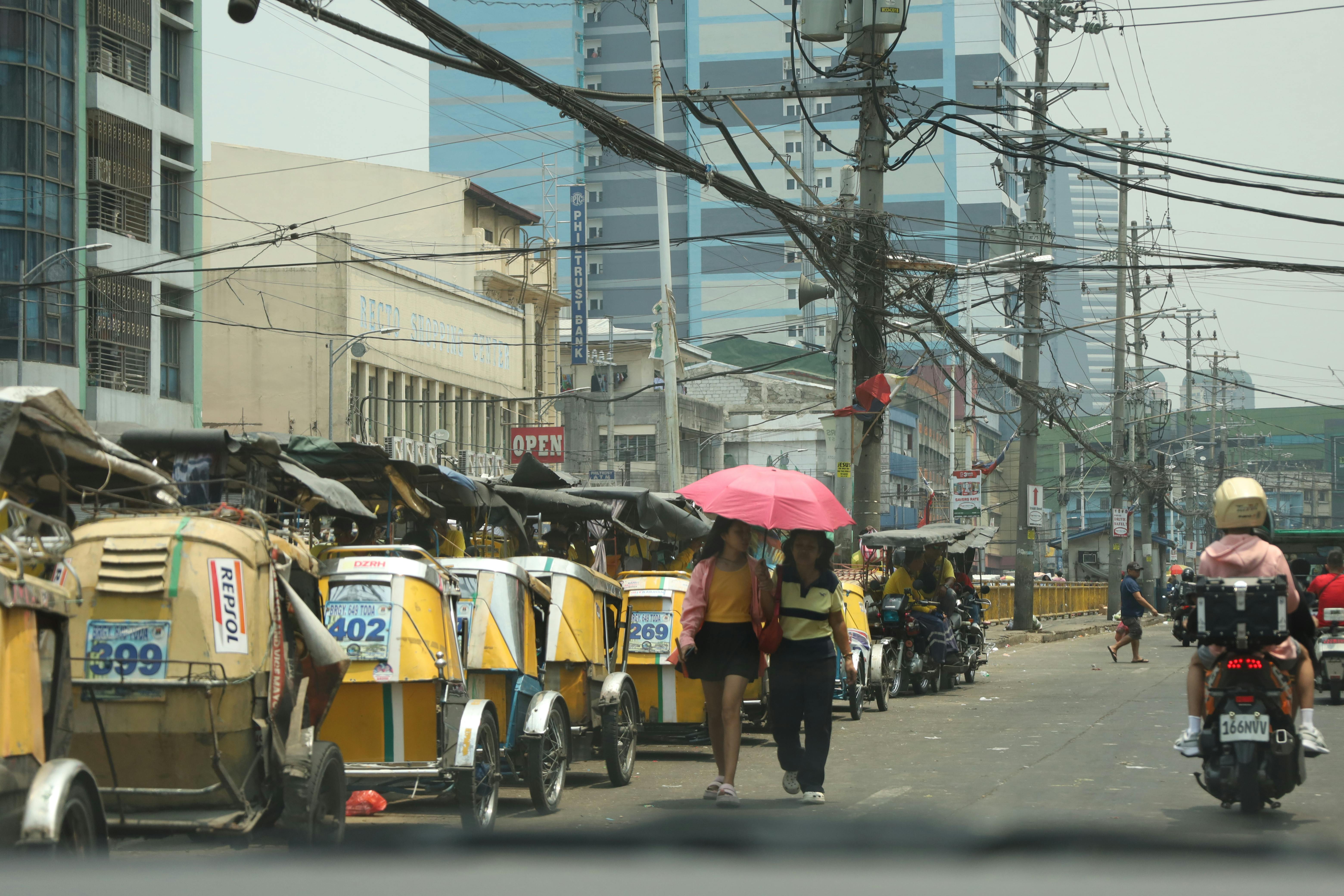
The Philippines is the clearest example of why the headline lies by omission. Overall: Level 2. But stacked inside that same advisory are three different levels. The Sulu Archipelago and Marawi City are Level 4 — do not travel (active conflict, real kidnapping history). Most of the rest of Mindanao is Level 3 — reconsider travel. And Manila, Cebu, Palawan, Siargao — the places most travelers actually go — sit at the nationwide Level 2, meaning ordinary urban caution. One country, four security pictures. If you read "Philippines: Level 2" and booked Palawan, you read it right. If you read "parts of the Philippines: do not travel" and cancelled Palawan, the advisory technically scared you out of a trip it was not warning you about.
Myanmar is the genuine whole-country case, and it is worth naming so you can see the contrast. As of early 2026, Smartraveller says do not travel and the FCDO advises against all but essential travel to large parts of the country — because of ongoing armed conflict, an unstable security situation that can deteriorate at short notice even in major cities, and a real risk of arbitrary detention, including of foreigners. This is not a "one bad province" advisory. When the warning is about the whole state apparatus, the government's inability to help you, and detention risk, that is the kind you take at face value. I would not go right now, and I would not tell you to.
The pattern: most SEA advisories are Level 2 because of localized issues — petty crime in tourist zones, a flagged border region, occasional protests — not because the country is dangerous to move around in. Read down to the region, match it against your actual route, and the advisory turns from a wall into a map.
Where to stay
This section is usually about hotels. For an advisory, it is about where the warning lives inside the document — because the structure is the same on every country page, and once you know it you can read any of them in two minutes.
On a State Department page, the level and risk-indicator letters are at the very top. Skip past them to the section that breaks down sub-regions — that is where the Level 3 and Level 4 carve-outs are spelled out by province and city. That breakdown is the part that actually maps to your itinerary.
On an FCDO page, go straight to the "Warnings and insurance" section. It lists every area the FCDO advises against travelling to — that is your hard "no-go for insurance purposes" list. Everything else on the page is context and practical info, not a travel-against warning.
On a Smartraveller page, the overall level is at the top, with region-specific higher levels flagged through the page and on the map. Smartraveller also lets you subscribe for email updates — either as-published or a daily digest — which is the single best way to catch a change before you fly rather than after.
One myth to kill while we are here: a "last updated" date that is months old does not mean the advisory is stale. Smartraveller says this directly — if an advisory has not changed in months, it usually means nothing has happened to require a change, not that they forgot. Counterintuitively, a freshly updated advisory can be the more alarmist one, because something just prompted a review. Do not assume old = wrong and new = serious.
If something goes wrong
Knowing how to read the advisory is step one; knowing what the advisory connects you to is step two.
Register your trip. The US runs STEP (Smart Traveler Enrollment Program) — free, and it means the nearest embassy can reach you during a crisis and you get alerts for your specific destination. Australia folds registration into the Smartraveller subscription. The UK does not run a registration scheme, so UK travelers should at minimum bookmark the FCDO page for their country and turn on update notifications. Whatever your passport, save your own country's embassy or consulate contact for your destination before you land — not when you need it.
Know the local emergency number, because it is not always the one you assume. A quick note for SEA specifically: Thailand's tourist police line is 1155 (English-speaking, and genuinely useful — separate from the general 191). The Philippines uses 911, same as the US. Indonesia's general emergency line is 112. Vietnam splits its services: 113 police, 115 ambulance. Write the right one for your destination into your phone notes before you go; do not rely on muscle memory from home.
For women specifically: an advisory will rarely tell you about street harassment, drink-spiking, or how a solo female traveler's experience differs from the aggregate — those risks are real in parts of SEA but they live below the resolution of a national advisory. Cross-reference the government level with women-specific sources: recent threads in solo-female-travel communities, the embassy's own safety pages (which sometimes note assault patterns the headline level does not), and local women's organizations at your destination. The advisory is the floor of your research, not the ceiling.
Where your money goes
A quick responsible-tourism note, because advisories shape travel flows in ways that hit communities directly. When a Level 3 or "advise against all travel" tag lands on a region, tourism there can collapse overnight — and it often lags the actual security situation, staying elevated long after the ground reality has improved. The places that get blanket-flagged are frequently the ones whose local economies most need visitors back.
I am not telling you to walk into a genuine conflict zone to be a good ally — please do not. But it is worth understanding that the same bluntness that over-warns you can quietly punish a community for the problems of a province hundreds of kilometers away. Where an advisory has eased a region back down a level, that is often exactly where your money does the most good per dollar: book the locally-owned guesthouse, the women-run cooperative, the community-based homestay, rather than assuming a recovering destination is still off-limits. Read the current advisory, not the one in your memory from a headline two years ago.
The bottom line
Read past the number. That is the whole skill.
A travel advisory is a genuinely valuable input — it is sourced, it is updated, and it is free — but it is an input, not a verdict, and it is calibrated to protect a government's liability as much as your holiday. My actual process, every trip: check all three systems (FCDO, State, Smartraveller) because their disagreements are informative; read down to the region and match it against my real route, not the country name; check the risk-indicator letters to see what the risk is; confirm my insurance covers where I am actually going; register where I can; and then layer women-specific sources on top, because the advisory will never see me as a solo woman — only as a citizen.
Do that, and "exercise increased caution" stops being a scary phrase and becomes what it actually is: a reminder to do your homework, which you have now done. Go — and go with your eyes open.
Sources: FCDO — About FCDO travel advice (GOV.UK); US State Department — Travel Advisories; US State Department — Philippines Travel Advisory; US State Department — Thailand Travel Advisory; Smartraveller — How we write our travel advice; Smartraveller — Myanmar; Smartraveller — Subscribe for updates; US State Department — STEP; Northwestern — Evaluating the State Department Advisory System; AFAR — What government travel advisories really mean.
Solo female traveler from Bangalore. Safety advocate, responsible tourism, women-run cooperatives — empowering, never alarmist.
✦ More from Priya Sharma


✦ Keep reading
More from this region


More in Travel Tips
✦ Discussion
Start the discussion
No replies yet — yours could be the first.