
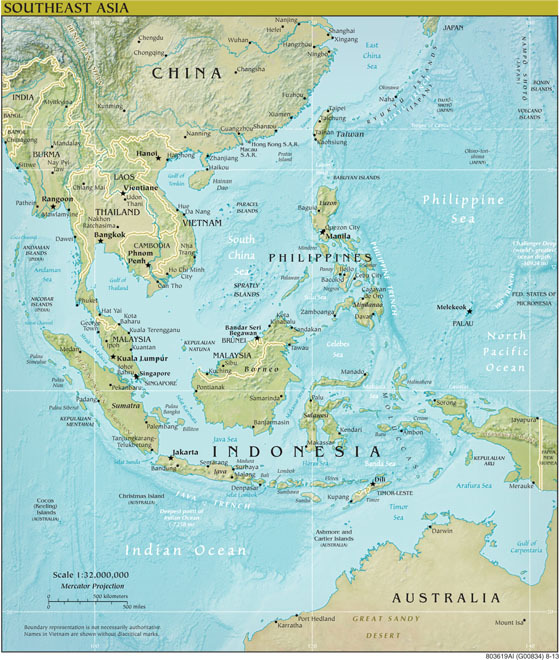
Start with the days you actually have, not the map
Every itinerary I've ever built — for my own family of five, for the trip where my parents and my sister's kids came along, for friends emailing me at 11pm in a panic — starts with the same boring number. Not the destinations. The days. How many do you genuinely have on the ground, door to door, minus the two travel days that vanish at each end? Be honest. A "two-week holiday" with flights from Australia is usually eleven or twelve usable days once you subtract the outbound red-eye and the wrecked morning you arrive.
Once you have that real number, the single most useful rule I know is this: one country per week, roughly, if you want to actually feel like you've been somewhere. Ten to twelve days? Pick one country, maybe two if they're neighbours with an easy hop. Three weeks? Two countries, comfortably, or three if you're moving fast and don't mind it. The instinct is to cram — Thailand AND Vietnam AND Cambodia AND Angkor because you're "already over there." Resist it. The thing that makes Southeast Asia magic is the unhurried bit: the second morning at the same warung when the owner remembers your kid's order. You don't get that on a country-a-day sprint.
So before you open a single booking site, write down your real day count and divide. That number tells you how many places you can stand in. Everything else is detail.
The pace mistake almost everyone makes
Here is the error I see in nine out of ten draft itineraries people send me: too many stops, each one too short, with the travel time between them quietly uncosted. On paper it reads as four wonderful places in ten days. In practice it's four half-days of actual enjoyment, separated by three days of packing, transiting, and finding the next set of beds while everyone is hot and snappish.
Do the arithmetic out loud. A stop that looks like "two nights" is really one full day, because you arrive mid-afternoon on day one and leave mid-morning on day three. Subtract a meltdown, a nap, or a tropical downpour and you've got an afternoon. So when I plan, I count full days on the ground per place, not nights, and I treat anything under two full days as a glorified stopover — fine for a logistics night near an airport, not fine for a place you flew across the world to see.
My working rule: minimum three nights anywhere you genuinely want to experience, and never more than one big move every three or four days. Slower is not lazier. Slower is the difference between a holiday and an endurance event, and with kids or grandparents in the group it's the whole ballgame.
Let the season pick your route, not the other way around
Southeast Asia doesn't have one weather pattern, it has several, and they don't line up. That's the planning lever most people miss. The same fortnight that's glorious on one coast can be a washout three hours away, so the smart move is to sequence your route around the weather rather than picking destinations first and praying.
The broad strokes: Thailand, Cambodia, Laos and northern Vietnam share a roughly November-to-February cool-dry sweet spot, which is also peak season and peak prices. The catch is the regional splits. Thailand's Andaman side (Phuket, Krabi) and its Gulf side (Koh Samui, Koh Phangan) run on opposite monsoon clocks — when one's getting hammered, the other's often fine. Central Vietnam around Hoi An has a nasty wet stretch from roughly September to December that catches families out because the rest of Vietnam looks great then. Bali's drier months are about April to October.
You don't need to memorise all of it. You need to do one thing: once you've chosen your countries, check the specific month for the specific coast or region you're visiting, and let that decide which direction you travel and which order you stack the stops. If you're combining a beach and a city, put the beach in the window when its weather is best and build the rest around it. The route should serve the season, not fight it.
Book in this order: flights, beds, then almost nothing
Once the shape is set, the order you book things in matters more than people think, because booking too much too early is how you end up locked into the over-packed itinerary you'll later wish you hadn't.
First, lock the international flights in and out — those are the expensive, inflexible bookends, and the price moves most. A useful trick for multi-country trips is the open-jaw: fly into one city and out of another, so you're not backtracking to where you started. Fly into Bangkok and home from Bali, say, and let the trip flow one direction.
Second, book the first two or three nights' accommodation, the ones around your arrival, and any place that genuinely sells out — a specific family room, a small boutique you've set your heart on, anything over a public holiday. Third: stop. For everything in the middle, I deliberately leave gaps. Beds across most of the region are bookable a day or two ahead outside peak weeks, and the freedom to stay an extra night somewhere you love, or bail early from somewhere you don't, is worth far more than the smug feeling of a fully-booked spreadsheet. The exception is internal transport on fixed-date long weekends and around Lunar New Year, Songkran and other big festivals, when trains and flights vanish — book those ahead.
Overland or fly? Be honest about the hours
This is where romantic itineraries go to die. The overland dream — buses across borders, the train clacking through rice paddies — is real and wonderful, and I've done plenty of it. But the hours are longer than the map suggests, and you need to cost them honestly before you commit.
Some overland legs are genuinely easy. A direct bus like Giant Ibis from Bangkok toward Siem Reap lets you stay on the same vehicle through the border, and the train down the Malay peninsula toward Singapore is a proper pleasure. But "six hours" on a regional bus can mean nine with the border faff, a breakdown, and a lunch stop, and that's a brutal day with a four-year-old. Two months is the unhurried minimum to do mainland Thailand, Laos, Cambodia and Vietnam overland without rushing — if you've got two weeks, overlanding all four is a fantasy.
So be ruthless about it. Budget carriers — AirAsia out of Bangkok and Kuala Lumpur, VietJet within Vietnam — turn an exhausting overland day into a ninety-minute hop, often for the price of the bus. Domestic Vietnam flights like Saigon to Da Nang routinely run in the twenty-five-to-fifty-five-dollar range; cross-border hops are a little more. My rule: if an overland leg is over five or six hours, I price the flight, and unless the bus or train is itself the experience I want, I fly and spend the saved day on the ground. Note too that the island parts of the region — most of Indonesia, the Philippines, Malaysian Borneo — you simply have to fly to. There's no overland option to plan around.
Build in slow days on purpose
The single upgrade that has improved my family's trips more than any destination is the deliberately empty day. Not a travel day, not a sightseeing day — a nothing day, scheduled in, defended like an appointment. Pool in the morning, laundry, a long lunch, an unplanned afternoon. Roughly one in every four or five days.
People resist this because it feels like waste when you've flown so far. It's the opposite. The empty days are the buffer that absorbs everything that goes wrong — the stomach bug, the missed connection, the day it rains so hard you can't leave the room — without blowing up the rest of the plan. They're also where the actual memories tend to land, because they're the only times nobody's watching a clock.
Practically, this is also when you handle the boring logistics that otherwise eat your good days: find a laundry (most towns have a cheap wash-dry-fold within a block of any guesthouse), restock nappies and sunscreen, let everyone catch up on sleep. Plan the slow days in from the start and you won't have to steal them from the good ones later.
The visa and admin layer
Sort the paperwork early, because it's the one part of the plan with hard external deadlines you can't slow-travel your way around. The rules shift, so treat what follows as a prompt to check your own passport's current situation rather than gospel — but the shape of it is stable.
For most Western passports, Thailand waves you in visa-free for a generous tourist window (it's been bumped up in recent years, so confirm the current length for your nationality before you count on it). Vietnam wants an e-visa for most travellers — apply online ahead, it's around twenty-five US dollars for single entry and takes a few days, so don't leave it to the airport. Cambodia does both an e-visa and a thirty-dollar visa on arrival at the international airports, though the land-border posts are less reliable and occasionally close, so the e-visa is the calmer choice with kids. Laos is straightforward, with visa on arrival at most entry points and an e-visa system.
Two universals that catch families out: passports must be valid at least six months beyond your travel, and every member of the group needs their own, including the baby — so check the kids' expiry dates the day you start planning, because a child passport renewal can take weeks. Print or screenshot every visa approval; the immigration officer in front of you does not care that it's in your email somewhere.
The with-kids version of all of this
Everything above holds for a family, just dialled further in the same direction: slower, fewer stops, more buffer. The non-negotiable shift is pace. Where a couple might do five places in two weeks, we'd do three, and we'd pick a base-and-spoke shape over a constant move — settle somewhere for four or five nights and do day trips out, rather than dragging the whole circus to a new set of beds every other day. Unpacking once is worth a great deal when one of the travellers is four.
Sequence the route for energy, not just weather. We front-load the trip with the easy, restorative stuff — a few days at a pool to break the jet lag and let small bodies reset — before anything ambitious like temples or a long travel day. Build the empty days in at a ratio of one in three rather than one in five, because kids bank tiredness and it comes due without warning. And when you're costing overland legs, halve your own tolerance: a bus journey you'd happily read through is a different animal with a toddler who needs the toilet, so the threshold for just flying it drops hard.
Multi-generation groups follow the same logic from the other end. On the trip where my parents came, the limiter wasn't the four-year-old, it was making sure my 72-year-old dad had shade, a seat, and a slow morning. Plan to the least flexible person in the group — youngest or oldest — and everyone else has a better time for it.
A template you can copy
Here's the whole framework as one repeatable sequence, the thing I actually run in my head every time. Step one: write down your real usable days, minus travel. Step two: divide by roughly seven and that's your country count — round down, always. Step three: check the season for each region you've chosen and let the weather set your direction and order. Step four: book the international flights open-jaw, lock two or three arrival nights, and leave the middle loose. Step five: cost every overland leg in honest hours and fly anything over five or six unless the journey is the point. Step six: drop in a slow day every fourth or fifth day before you fill anything else. Step seven: sort visas and check every passport's six-month validity the week you start.
That's it. Notice what's missing: a rigid day-by-day grid. The best Southeast Asia itineraries are a firm skeleton — flights, a few anchor bookings, a weather-led direction — with deliberately soft tissue in between. The skeleton stops the trip falling apart; the soft tissue is where the holiday actually happens.
Build it in that order and you'll dodge the two failures that wreck most first trips: the over-packed sprint, and the rain-soaked stretch you could have planned around. Do those two things and Southeast Asia does the rest. It is, genuinely, one of the easiest and most rewarding parts of the world to travel with a family — the hard part is just getting out of your own way on the plan.
Australian family-travel writer based in Brisbane. Mother of three. Family-friendly SE Asia, multi-gen trips, the boring practical bits.
✦ More from Emma Wilson


✦ Keep reading
More from this region


✦ Discussion
Start the discussion
No replies yet — yours could be the first.