
Why go
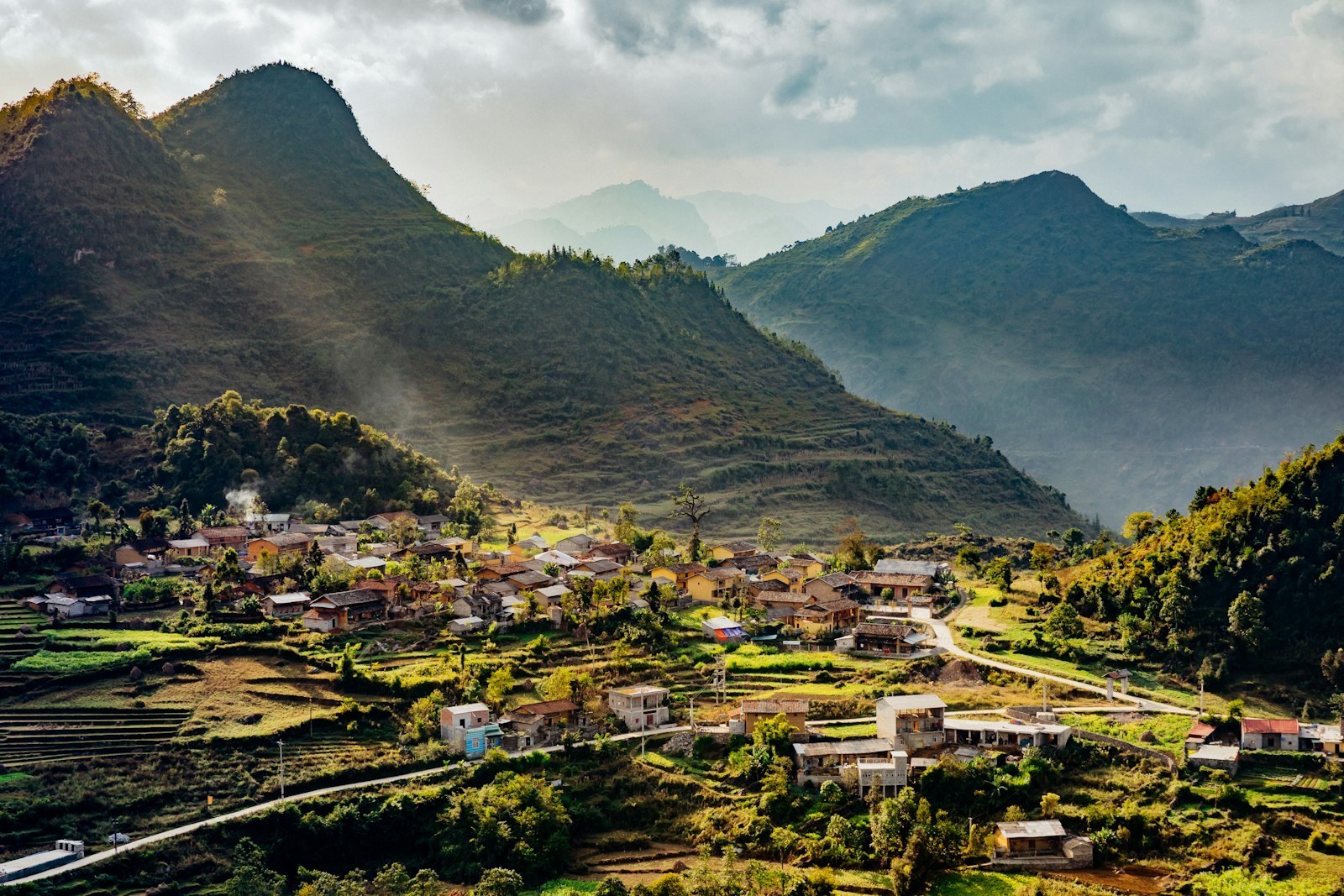
Because nothing else in Vietnam hits like this. The Ha Giang loop is a 350-ish km motorbike circuit through the far north, up against the China border, and it's the closest thing to flying I've felt on two wheels. You climb out of Ha Giang town and within an hour the karst mountains just explode — limestone teeth stacked to the horizon, terraced rice draped over everything, H'mong kids waving from the roadside. The headline act is the Ma Pi Leng pass, where the road carves a ledge above the Nho Que river a thousand metres below. I've shown people photos and they think it's edited. It isn't. What makes it special isn't just the scenery, though — it's that it's still genuinely lived-in. You're riding through working villages, not a theme park. It tipped touristy around 2023, sure, but go midweek and you'll still have whole stretches to yourself. This is the trip people fly to Vietnam for and don't know it yet.
When to go
Best window is roughly late September to mid-November — dry roads, rice terraces going gold, air clear enough to see for miles. That's when I'd book if I could pick. March to May is the runner-up: drier than summer, flowers out, fewer crowds than the autumn rush. Skip June through August unless you like riding in rain — the wet season turns those mountain switchbacks slick and the landslides are real, not theoretical. I got caught in a downpour near Du Gia one July and white-knuckled it for two hours. Winter (December–February) is doable but cold up high — like genuinely 5°C-and-foggy cold on the passes, so pack layers most backpackers forget to bring. One more thing: the big Sunday ethnic markets (Dong Van, Meo Vac) are worth timing your loop around. Roll into Meo Vac on a Saturday night so you catch the market Sunday morning before the day's ride. That's the move.
How to get there
From Hanoi, the play is the night bus or sleeper bus straight to Ha Giang town — about 6–7 hours, leaving around 9–10pm, landing you at dawn. Book a sleeper, not a seat; I made the seat mistake once and arrived a wreck. Expect roughly 280,000–350,000 VND (about US$11–14) one way as of 2025 — book through your Hanoi hostel or Bookaway rather than walking up, prices are similar and you skip the chaos. Limousine vans (9-seaters) cost a bit more, around 350,000–450,000 VND (US$14–18), and shave time. There's no airport and no direct train — bus is genuinely the only sane option. From Ha Giang town you pick up your bike and start the loop; most people roll their accommodation, bike rental, and the bus into one package booked before they leave Hanoi. Quick warning: foreigners technically need the right licence to ride here and police do checkpoint-check. If you're not confident on a manual semi-auto in mountains, take an easy rider (you ride pillion behind a local). No shame in it.
Where to stay
Homestays, full stop. The whole rhythm of the loop is sleeping in family-run homestays in the villages — communal dinners, rice wine you didn't ask for, mattresses on the floor or simple private rooms. A dorm mattress runs about 80,000–120,000 VND (US$3–5), a basic private double around 200,000–350,000 VND (US$8–14), usually with breakfast and a big family dinner for another 100,000–150,000 VND. Yen Minh, Dong Van, and Meo Vac are the standard overnight stops. Du Gia is the backpacker party node now — fun if you want it, skip it if you don't. In Ha Giang town itself, hostels are where everyone stages the night before and after. My advice: don't over-book. Lock your first night, stay loose after that — half the magic is rolling into a village at dusk and asking the first homestay with a light on. Avoid the brand-new concrete 'homestays' that are really just guesthouses with a label; the real ones have a family eating dinner when you arrive.
What to eat
Loop food is mountain food — hearty, simple, built for cold nights. The homestay dinners are the main event: heaped rice, stir-fried greens, tofu, river fish, pork, and the inevitable thắng cố if you're brave (a H'mong stew of horse offal — I tried it once, respect to it, won't be rushing back). Don't sleep on cháo ấu tẩu, the bitter porridge unique to Ha Giang made from a local tuber, supposedly good for tired muscles after a day in the saddle. Markets are where you graze: grilled corn, sticky rice in banana leaf, bánh cuốn steamed and served in warm bone broth instead of dipping sauce — that's the Ha Giang twist and it's excellent for breakfast. And the rice wine. Every homestay host will pour you rượu ngô (corn wine) and toast you until you tap out. Pace yourself — you're riding mountain passes at 8am. One shot of hospitality, not five.
Things to do
Ride. That's the headline and the whole point — the loop itself is the attraction, not a checklist of stops. But a few things genuinely earn the detour. The Ma Pi Leng pass viewpoint and the Sky Path walking trail along the cliff — pay the small fee, walk a chunk of it, your photos will never do it justice. A boat trip on the Nho Que river through Tu San canyon (around 100,000–150,000 VND, US$4–6) puts you at the bottom looking up, which flips the whole perspective. The Lung Cu flag tower marks Vietnam's northernmost point if you want the bragging rights. Vuong Palace, the old H'mong king's house from the poppy-trade days, is a worthwhile hour. And the Sunday markets at Dong Van and Meo Vac — go for the people, not the souvenirs. Beyond that? Stop a lot. Pull over for no reason. The best moment of my loop was a roadside cà phê with a grandmother who spoke zero English and laughed at my terrible parking.
Vietnamese backpacker, 5 years zigzagging across SE Asia on a shoestring. Budget travel, street food, hidden gems — the honest version.
✦ More from Alex Nguyen


✦ Discussion
Start the discussion
No replies yet — yours could be the first.